
Overcome film production challenges in Switzerland: 2026

TL;DR:
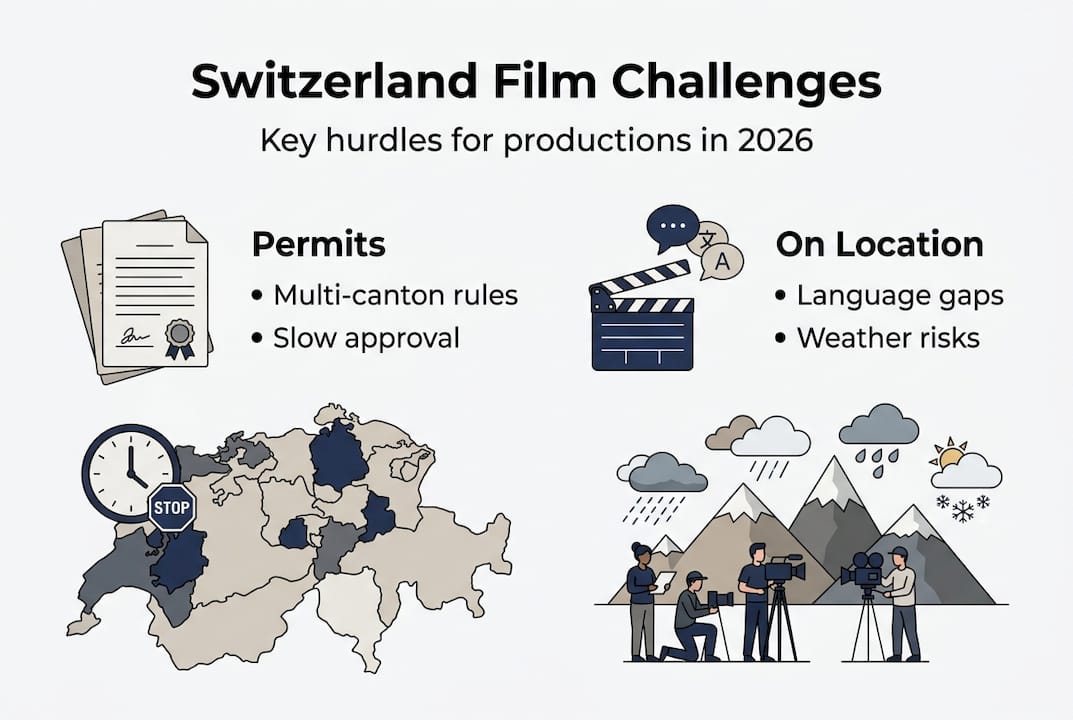
Switzerland’s permit process is complex, requiring separate applications for each canton and location.
Multilingual crews and local support are essential to navigate language barriers and legal requirements.
Proper planning for costs, weather, and logistics is crucial to avoid delays and budget overruns.
Switzerland looks like a filmmaker’s dream on paper. The Alps, pristine lakes, medieval cities, and world-class infrastructure all promise an effortless shoot. But international production teams arriving without deep local knowledge often hit a wall fast. 26 cantons means 26 different sets of rules, four official languages, and some of Europe’s highest crew day rates. The gap between Switzerland’s reputation for efficiency and the reality of its layered administrative system catches even experienced producers off guard. This guide breaks down the real obstacles and gives you practical strategies to navigate them without losing your schedule or your budget.
Table of Contents
Key Takeaways
Point | Details |
Cantonal permitting complexity | Require different permits for each Swiss canton and plan ahead for local rules. |
Multilingual requirements | Language barriers affect paperwork and crew management—use local language coordinators. |
High costs and contingencies | Budget for premium crew rates and unavoidable delays, especially in the Alps. |
Local expertise is critical | Hiring regional fixers and coordinators manages logistics and accelerates production. |
Navigating Switzerland’s federal film permit maze
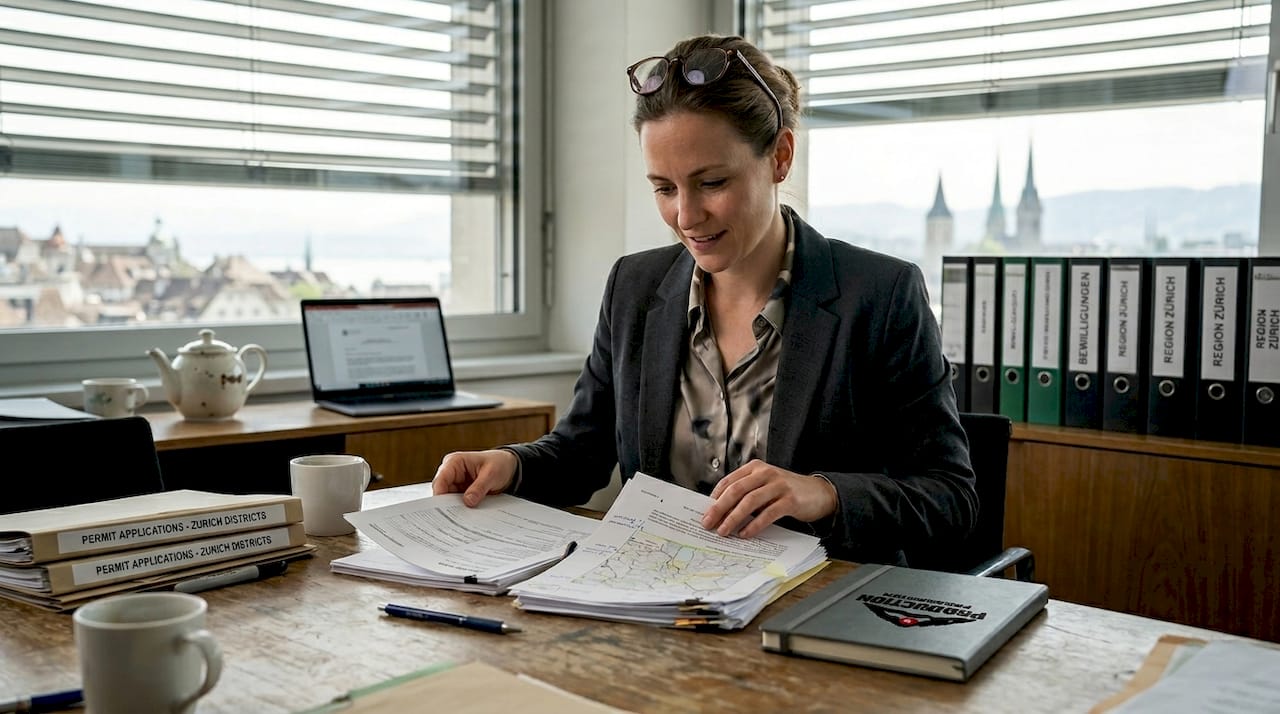
Permits are where most international shoots first run into trouble. Switzerland’s canton-specific permitting rules mean there is no single national film office that handles everything. Each of the 26 cantons operates its own administrative system, with different forms, different languages, different fees, and different processing timelines. A shoot that crosses cantonal borders requires separate applications for each region, and missing one can stall your entire production.
Understanding the basics of getting a film permit in Switzerland is essential before you book anything. Processing times typically run one to three weeks, though Zurich moves faster at around ten days. Fees range from CHF 176 to CHF 880 depending on the location and scope of the shoot. And if your project involves aerial footage, drone permits are a completely separate process requiring approval from FOCA, the Federal Office of Civil Aviation, which adds another two to four weeks. You also need to check film license requirements that may apply depending on your production type.
Here is a quick comparison of permit conditions across four common shooting cantons:
Canton | Processing time | Typical fee range | Primary language |
Zurich | ~10 days | CHF 200–600 | German |
Ticino | 2–3 weeks | CHF 176–880 | Italian |
Valais | 2–3 weeks | CHF 200–700 | French/German |
Lucerne | 1–2 weeks | CHF 176–500 | German |
Key steps to secure permits without delays:
Identify every canton your shoot touches before pre-production begins
Contact each cantonal film commission individually to confirm current requirements
Submit drone applications to FOCA as early as possible, ideally 4+ weeks out
Request public space closures at least 6 weeks in advance
Keep copies of all approved permits on set at all times
“Filming permits require 1–3 weeks processing (Zurich: 10 days), with fees CHF 176–880; drones need separate FOCA approval.”
Pro Tip: Contact each cantonal film commission at least 6 weeks before your shoot date. For complex locations or public space closures, 8 weeks is safer. Rushing permit applications is one of the most common and most avoidable causes of production delays in Switzerland.
Language barriers and the need for multilingual crews
Once permits are in sight, another logistical hurdle emerges: Switzerland’s official languages add complex layers to every stage of production. Switzerland has four official languages: German, French, Italian, and Romansh. In practice, this means the paperwork you receive, the negotiations you conduct, and the crew you manage may all operate in different languages depending on which region you are working in.
In major urban centers like Zurich and Geneva, English is widely spoken and most production-related communication can happen without a translator. But step outside those cities and the picture changes quickly. Rural cantons, particularly in the Italian-speaking Ticino or French-speaking Valais, often conduct official business exclusively in the local language. Permit applications submitted in English may be returned or delayed. Location agreements negotiated without a fluent local speaker can lead to misunderstandings that cost you time and money.
Tasks that consistently require local language support on Swiss shoots:
Permit applications in cantonal offices, especially outside Zurich and Geneva
Location negotiations with private landowners, municipalities, and heritage sites
Crew contracts and union agreements, which may be governed by local labor law
Vendor and supplier communication, including equipment rental and catering
On-set coordination when working with locally hired crew members
Working with local crew agencies that already have multilingual coordinators on staff is one of the fastest ways to solve this problem. They know the regional protocols, speak the right languages, and can handle paperwork that would otherwise sit in a queue for weeks.
“Four official languages necessitate multilingual paperwork, negotiations, and crews; English is limited in rural areas.”
Pro Tip: Hire a local fixer or production coordinator who is fluent in the primary language of each canton you are shooting in. This single investment typically saves far more than it costs by preventing permit delays, miscommunications, and last-minute location access issues.
Tackling costs, crew rates, and unpredictable budgets
Navigating red tape and language barriers reveals the next major producer concern: costs and unplanned budget overruns. Switzerland is one of the most expensive production environments in the world, and the numbers can surprise even producers who have worked in other high-cost markets.
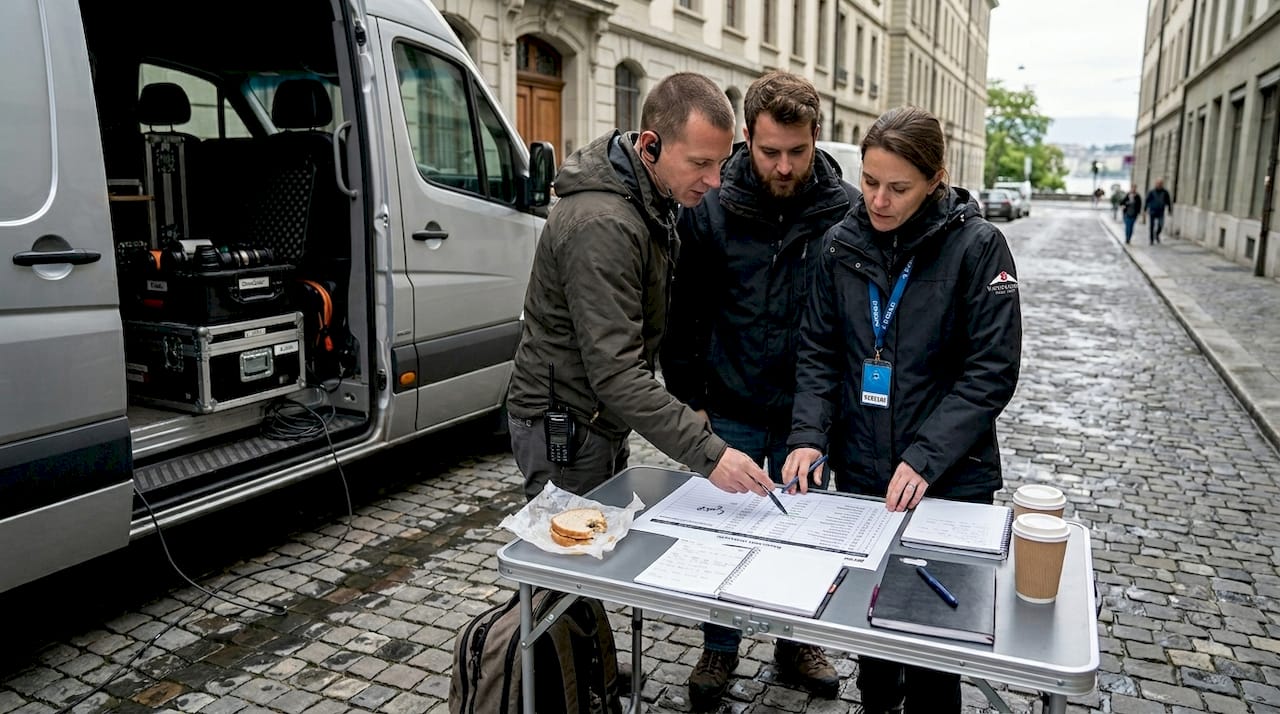
Crew day rates run CHF 500 to CHF 1,000 per person, and that is before you factor in overtime, meal allowances, or specialized roles. Weather contingency for Alpine shoots should be built in at a minimum of 20% of your total budget. Zurich offers production incentives, but they require a minimum local spend of CHF 200,000, which puts them out of reach for smaller projects.
A realistic budget breakdown for a mid-size Swiss shoot might look like this:
| Budget category | Estimated range | Notes | |—|—|—| | Crew (5 days, 6 people) | CHF 15,000–30,000 | Varies by role and experience | | Permits and fees | CHF 1,000–5,000 | Multi-canton shoots cost more | | Equipment rental | CHF 3,000–10,000 | Specialty gear adds cost | | Travel and accommodation | CHF 5,000–15,000 | Alpine locations push costs up | | Weather contingency (20%) | CHF 5,000–12,000 | Non-negotiable for outdoor shoots |
Three steps to plan and control your Swiss production budget:
Lock your locations early. The longer a location decision takes, the more your pre-production costs grow. Firm location choices let you get accurate permit fees and logistical estimates.
Build contingency into every line item. Weather, access delays, and cantonal surprises are not edge cases in Switzerland. They are standard risks that need budget coverage.
Work with a local production partner who knows current market rates. Guessing at crew rates or equipment costs from outside Switzerland almost always leads to underbudgeting.
For a detailed look at what drives costs, the production cost breakdown on our site gives you current figures by category. You can also find practical guidance on keeping to a film project budget when working in high-cost environments.
Pro Tip: Prioritize your shooting schedule around location access windows. Shooting Alpine exteriors in summer and urban interiors in winter, for example, reduces weather risk and keeps your contingency buffer intact.
Logistics and weather: why Swiss access and timing matter
Even with costs under control, producers must anticipate and mitigate one final frontier: extreme weather and logistical barriers unique to Switzerland’s geography. The Alps are visually spectacular, but they are also operationally demanding. Weather can shift in hours, road access to mountain locations can close without warning, and the logistics of moving crew and equipment to remote sites require planning that goes well beyond a standard urban shoot.
Weather delays in the Alps are not rare events. They are a predictable part of shooting in Switzerland’s mountain regions, and productions that do not plan for them typically absorb the cost in overtime, rescheduling fees, and crew holding time. Remote locations also present access challenges that urban crews are not used to. Narrow mountain roads, seasonal closures, and the absence of nearby equipment suppliers mean that every logistical detail needs to be confirmed in advance.
Logistical factors to pre-plan for every Swiss shoot:
Road and trail access for each location, including seasonal closures and weight restrictions
Public space usage permits for streets, parks, and heritage areas
Seasonality and how it affects both weather risk and permit requirements
Crew transport from accommodation to remote sites, including backup options
Equipment delivery windows, especially for locations with limited vehicle access
For multi-canton shoots, assign a dedicated coordinator to each region. This person handles local permit follow-ups, manages vendor relationships, and serves as the on-the-ground point of contact when issues arise. It sounds like an added cost, but it consistently prevents the kind of cascading delays that blow budgets and schedules.
If you are scouting options, our guides to outdoor filming locations and top photo spots Switzerland give you a strong starting point for identifying sites that balance visual impact with logistical feasibility.
Pro Tip: Urban shoots in Zurich or Geneva are significantly faster to organize than rural or natural sites. If your timeline is tight, consider whether a city-based location can deliver the visual quality you need without the access complexity of a mountain shoot.
What most filmmakers get wrong about Swiss productions
Here is the uncomfortable truth: most production problems in Switzerland are not caused by bad luck. They are caused by assumptions. International filmmakers arrive expecting the same efficiency they associate with Swiss watches and Swiss banks, and they assume that reputation translates directly into a frictionless production environment. It does not.
The federal structure is genuinely complex. Assuming that one approved permit covers a multi-canton shoot is a costly mistake. Assuming that English is enough outside Zurich or Geneva is another. And assuming that a 20-year veteran crew can navigate Swiss drone laws without local guidance has derailed more than a few productions that looked bulletproof on paper.
The teams that succeed here invest early in local coordinators, secure permits well in advance, and treat contingency planning as a core part of their creative process, not an afterthought. Switzerland rewards preparation and punishes assumptions. That is the hard-won lesson that separates smooth Swiss shoots from expensive ones.
Seamless Swiss production: Get expert support
Armed with these insights, partnering with expert local support is the most reliable next step for any ambitious Swiss shoot. Managing permits across multiple cantons, coordinating multilingual crews, and keeping budgets on track in one of Europe’s most complex production environments is a full-time job before the cameras even roll.
[
We handle all of it. From end-to-end permitting and video production pricing guidance to sourcing trusted local crew and managing real-time logistical challenges, our team is built for exactly this kind of work. With over 20 years of on-the-ground Swiss production experience, full-service Switzerland production support means you stay focused on your creative vision while we take the operational complexity off your plate. Reach out for a free consultation and let us show you what a stress-free Swiss shoot actually looks like.
Frequently asked questions
How long do film permits take in Switzerland?
Film permits typically require 1–3 weeks for approval, with Zurich processing in about 10 days. Complex shoots involving public closures or multiple cantons need up to 6–8 weeks of advance planning.
Is English enough for Swiss filming paperwork?
No. Many forms and negotiations require German, French, or Italian, especially outside major cities. Local language support is not optional; it is essential for avoiding delays and compliance issues.
How much should I budget for crew and weather delays?
Plan for CHF 500–1,000 per crew member per day, and add a minimum 20% contingency buffer for weather delays, particularly for any shoot involving Alpine or outdoor locations.
How can I streamline multi-canton film shoots?
Appoint dedicated coordinators per canton and work with local fixers who know regional permit processes. Urban cantons like Zurich are faster to manage than rural or nature-based sites that require additional approvals.
Recommended
