
Pre-production checklist Switzerland: 6 essential steps

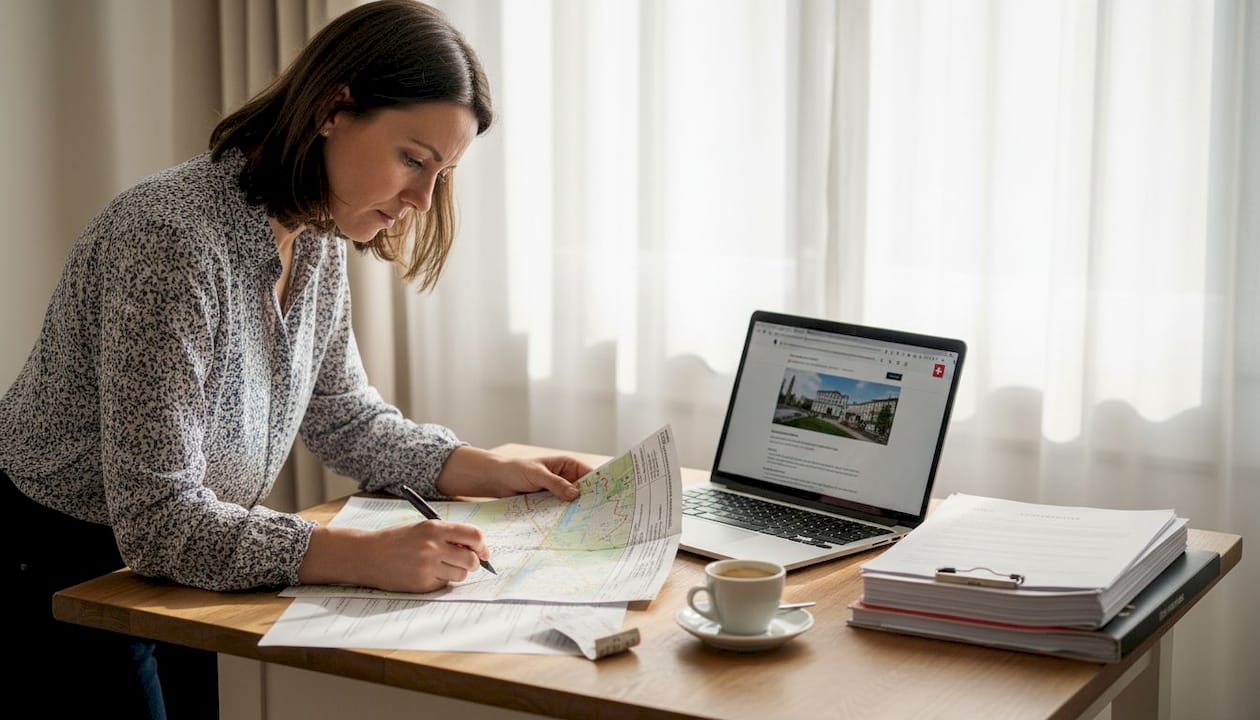
Planning a film shoot in Switzerland can feel like juggling a dozen moving parts at once. Between canton-specific regulations, multilingual paperwork, and tight permit windows, even experienced international production teams can find themselves overwhelmed before the first camera rolls. The good news? With the right checklist and local expert guidance, you can keep your production compliant, efficient, and on budget. This article walks you through every critical pre-production step so you can focus on your creative vision, not the logistics.
Table of Contents
Key Takeaways
Point | Details |
Start early with permits | Contact cantonal film commissions at least six weeks in advance to avoid delays. |
Budget for fees and contingencies | Permit costs range from CHF176-880, and a 20% contingency covers weather or unexpected delays. |
Engage local experts | Fixers and multilingual staff are invaluable for handling logistics and compliance. |
Prepare complete documentation | All visas, insurance, and release forms must be ready in multiple languages before the shoot. |
Use official commissions | Leverage local film commissions for streamlined support, incentives, and networking. |
Understand Swiss pre-production essentials
Switzerland is not a single, uniform filming environment. It is a federal country made up of 26 cantons, each with its own permitting rules, administrative language, and local protocols. What works in Zurich may not apply in Ticino or Valais. That complexity is the first thing international filmmakers need to internalize.

The four official languages, German, French, Italian, and Romansh, mean that communication with local authorities often requires multilingual support. English is not always an option, especially in rural areas. This is why canton-specific research via commissions is non-negotiable, and why working with a trusted local fixer or production manager is one of the smartest investments you can make.
Here is what you need to know before you start:
Switzerland has 26 cantons, each with distinct permit requirements and administrative processes.
Language barriers are real. German, French, and Italian are the primary working languages for permits and negotiations.
Urban vs. rural complexity varies significantly. Zurich is generally more streamlined for international crews, while nature reserves and historic sites add layers of approval.
Film commissions are your primary resource, not just private fixers. They provide free support, connections, and permit guidance.
Start early. Engaging a fixer or commission at least six weeks before your shoot date is the baseline, not the ideal.
For a broader Switzerland video production overview, including regional breakdowns and production culture, that resource is a strong starting point.
Pro Tip: If your shoot spans multiple cantons, assign a dedicated production coordinator for each region. Trying to manage cross-canton logistics from a single point of contact is one of the most common causes of permit delays.
With the logistical landscape in mind, let’s break down your must-have pre-production steps.
Contact the relevant film commission early
Your first action after confirming a Swiss shoot should be identifying which canton your primary location falls in and contacting that canton’s film commission directly. This single step can save you weeks of confusion.
The Zurich Film Commission is one of the most accessible entry points for international productions. It handles 600+ productions per year and offers free services including permit facilitation, location connections, and crew networking. Permit processing in Zurich typically runs 10 business days, making it one of the fastest cantons for approvals.
Other cantons have longer timelines. Geneva and Vaud generally require two to three weeks for permit processing. Basel can process short-shoot permits in as few as 14 days. Rural and nature-heavy cantons may require even more lead time.
Starting your commission outreach at least six weeks before your shoot date is not just best practice. It is the minimum buffer needed to avoid schedule-breaking delays.
Key commissions to know:
Zurich Film Commission: Free services, fast processing, ideal for urban and commercial shoots.
Geneva Film Commission: Strong support for international co-productions.
Ticino Film Commission: Essential for Italian-speaking region shoots.
Lucerne Film Commission: Covers central Switzerland and alpine locations.
For a detailed walkthrough of getting Swiss film permits, including canton-by-canton guidance, that resource covers the full process. You can also reference the official Swiss film coproduction guide for incentive and co-production structures.
Secure filming permits and understand costs
With your commission’s guidance, securing the right permits and understanding costs comes next. Permit fees and timelines vary significantly across cantons, so budgeting accurately requires canton-specific research.
Canton | Processing time | Estimated permit fee (CHF) |
Zurich | 10 business days | 176 to 500 |
Geneva | 2 to 3 weeks | 300 to 880 |
Vaud | 2 to 3 weeks | 250 to 700 |
Basel | 14 days (short shoots) | 176 to 500 |
Rural/Nature sites | 4 to 6+ weeks | Variable, often higher |
Permit fees range from CHF 176 to 880 depending on the canton, shoot complexity, and duration. That range matters for your budget planning.
Beyond the permit fee itself, factor in these additional costs:
Administrative processing fees charged by some municipalities.
Mandatory insurance required by most cantons before a permit is approved.
Location fees for private or semi-public spaces.
Overtime charges if your shoot runs beyond the permitted window.
Closing a public space requires at least six weeks of advance notice in most cantons. Missing that window means rescheduling, which costs far more than the permit itself. For detailed Swiss filming permit details and practical Swiss production budget tips, both resources will help you build a realistic cost model.
Scout locations and plan logistics
With permits underway, shift focus to finding the perfect locations and planning on-the-ground logistics. Switzerland offers extraordinary visual variety, from alpine landscapes to medieval city centers, but each environment comes with its own logistical demands.
Here is a structured approach to location scouting and logistics planning:
Identify your location categories. Urban, historic, alpine, and rural locations each require different permit types and scouting approaches.
Hire local scouts. A scout who knows the region will save you days of research and flag issues you would never anticipate remotely.
Negotiate in the local language. Location agreements in German, French, or Italian are standard. Bring multilingual support or use a fixer who can handle this.
Map crew transport and accommodation. Remote locations in particular require detailed logistics planning for travel, lodging, and catering.
Build a weather contingency budget. Add at least 20% to your location budget to cover weather-related delays, especially for outdoor and alpine shoots.
Document everything. Scout reports, signed permissions, and location agreements should all be centralized and accessible to your entire team.
Drones add another layer of complexity. Public space closures require 6 weeks notice, and nature or historic sites require extra approvals beyond standard permits. Plan for these edge cases early.
Pro Tip: Use a shared digital folder accessible to all department heads for location documents, scout photos, and permit copies. When something changes on shoot day, everyone has the information they need instantly.
For a ready-to-use Swiss shoot checklist PDF and a breakdown of key checklist essentials, both resources are built specifically for international crews.
Handle crew, equipment, and special authorizations
Smooth logistics also depend on assembling the right crew and securing all special authorizations. Switzerland has a strong local talent pool, but rates reflect the country’s high cost of living.
Role | Daily rate (CHF) | Notes |
Director of Photography | 800 to 1,000 | Experienced, union-aligned |
General crew | 500 to 1,000 | Varies by role and experience |
Fixer/production manager | 600 to 900 | Essential for international shoots |
Drone operator | 700 to 1,200 | Must hold FOCA authorization |
DOP rates run CHF 800 to 1,000 per day, with general crew ranging from CHF 500 to 1,000 depending on the role. These are not negotiable in the way rates might be in other markets.
Key crew and authorization considerations:
Zurich PICS incentives may offset costs for qualifying international productions. Check eligibility early.
Drone permits must be obtained through FOCA, Switzerland’s Federal Office of Civil Aviation. This is a separate FOCA permit from your standard filming permit and requires its own application timeline.
Nature reserves and historic sites require special permissions beyond standard canton permits.
Multilingual crew members are essential for shoots spanning multiple language regions.
For full details on Swiss drone permit rules and an international crew checklist tailored to Swiss shoots, both resources cover the specifics in depth.
Finalize paperwork, releases, and insurance
With your team and logistics set, wrap up all formalities, paperwork, and documentation to guarantee a lawful, worry-free shoot. This final phase is where many international productions cut corners, and it is where problems surface on shoot day.
Follow this sequence to close out your pre-production paperwork:
Confirm Schengen visa status for all international cast and crew. The Schengen visa allows up to 90 days of stay and must be secured well in advance.
Obtain production insurance covering equipment, public liability, and any canton-specific requirements. Most cantons require proof of insurance before issuing a permit.
Draft release forms in the correct language. German, French, or Italian releases are required depending on your shoot location. English-only releases are not legally sufficient in most Swiss jurisdictions.
Confirm customs documentation for all equipment being imported. Carnets and temporary import permits must be in order before gear crosses the border.
Aggregate all documents into a single, organized production folder. Permits, contracts, insurance certificates, and visa copies should all be accessible to your line producer and department heads.
Additional items to verify before arrival:
Equipment carnet for temporary importation of gear.
Signed location agreements with property owners or municipalities.
Crew contracts compliant with Swiss labor regulations.
Emergency contact list for local authorities, fixers, and commission contacts.
For a complete view of full-cycle production planning and ongoing Swiss production insights, both resources support your planning from pre-production through wrap.
Professional support for your Swiss shoot
Managing every item on this checklist is entirely possible. But for international productions working against tight timelines, the margin for error is slim. One missed permit, one language barrier, one overlooked authorization can derail a shoot that took months to plan.
[
That is where expert local support makes the difference. We handle permits, crew sourcing, location scouting, logistics, and documentation so you can stay focused on your creative vision. Whether you need help estimating Swiss production pricing or want full end-to-end Swiss production support, our team brings over 20 years of on-the-ground experience to every project. Get in touch for a free consultation and take the guesswork out of your Swiss shoot.
Frequently asked questions
How far in advance should I start pre-production for a shoot in Switzerland?
You should begin pre-production at least six weeks ahead to accommodate permit timelines, commission outreach, and logistics planning. For complex multi-location or nature shoots, eight to ten weeks is a safer buffer.
What are typical film permit fees and processing times in Switzerland?
Permit fees range from CHF 176 to 880 and processing takes one to three weeks depending on the canton. Zurich is the fastest at 10 business days.
Is a local fixer necessary for shoots in Switzerland?
A fixer is highly recommended, especially for international crews navigating canton-specific processes and language barriers. They save time, prevent costly mistakes, and keep your shoot on schedule.
Do I need a separate permit for drone shooting in Switzerland?
Yes, drone use requires a separate FOCA permit and must comply with Swiss aviation regulations. Apply for this well in advance of your shoot date.
What paperwork is required for international crews filming in Switzerland?
Crews need Schengen visas, insurance, releases drafted in Swiss languages, equipment carnets, and all permits documented before arrival.
Recommended
