
Switzerland for Fashion Shoots: Locations and Planning Guide

TL;DR:
Switzerland offers unmatched outdoor locations like Riffelsee and the Aletsch Glacier for dramatic fashion photography, alongside state-of-the-art studios like Studio Morii and Studio 18%. Effective planning and early booking, combined with flexible production methods such as virtual staging, help manage the country’s unpredictable weather and permit requirements. Leveraging local expertise ensures smooth logistics, enabling brands to capture Swiss aesthetics efficiently and creatively.
Switzerland is the premier destination for fashion shoots combining dramatic alpine scenery, world-class studio facilities, and forward-thinking production methods in a single country. From the Matterhorn’s mirror reflection at Riffelsee to the industrial minimalism of Studio 18% in Geneva, the range of fashion photography venues Switzerland offers is unmatched in Europe. Whether you are scouting outdoor fashion shoots Switzerland-wide or planning a controlled studio campaign, the country delivers visual variety that few locations can match. This guide covers the best locations in Switzerland for photoshoots, studio options, logistical realities, and the hybrid production techniques reshaping how brands tell stories with a Swiss aesthetic.
What are the top scenic locations in Switzerland for fashion shoots?
Switzerland’s outdoor locations give fashion photographers a level of visual drama that no studio can fully replicate. The country’s alpine terrain, glacial lakes, and terraced vineyards each offer a distinct mood, which means a single Switzerland photography tour can yield editorial content spanning multiple seasons and styles.
Here are the standout Switzerland scenic spots for fashion photography:
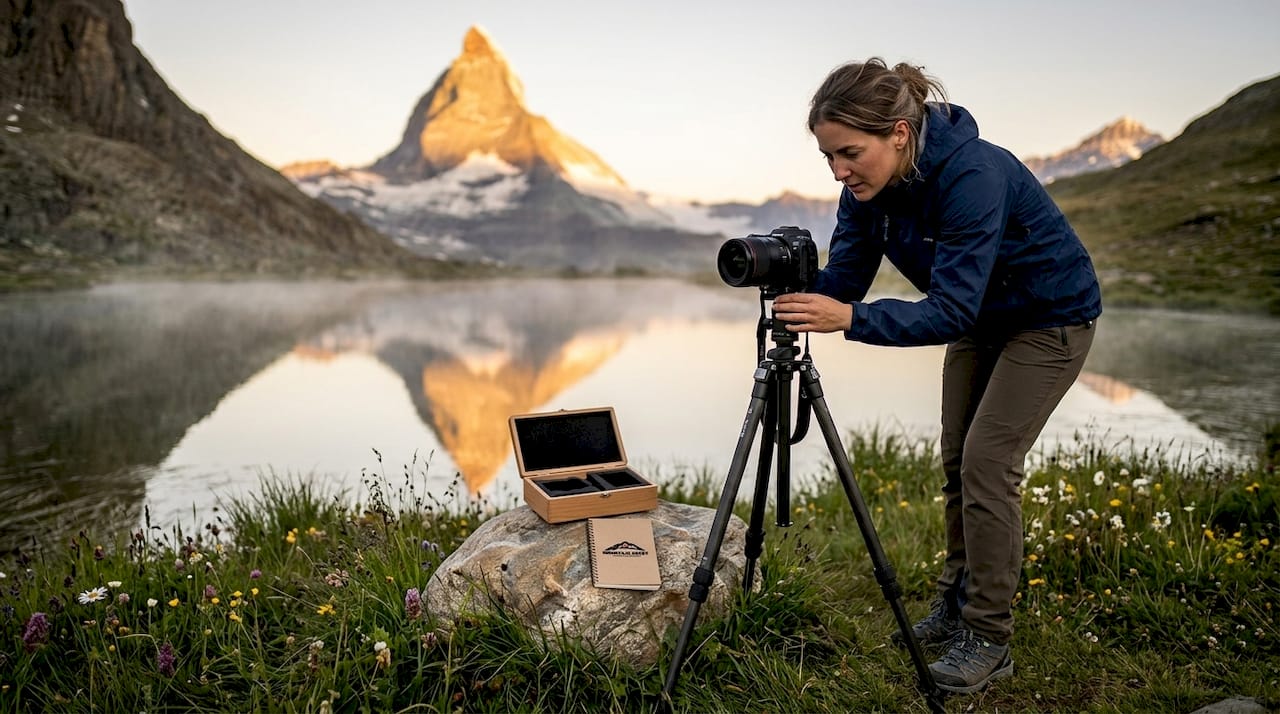
Riffelsee, Zermatt. Riffelsee is the top reflection shot location for the Matterhorn, with calm water at early morning and dusk creating near-perfect mirror surfaces. The lake sits roughly a 10-minute walk from the Rotenboden stop on the Gornergrat cog railway, making it one of the most accessible high-altitude locations in the Alps. For fashion work, the reflection doubles your visual canvas, placing a model between two versions of the same mountain.
Great Aletsch Glacier. The largest glacier in the Alps extends 23 kilometers with viewpoints at Moosfluh, Bettmerhorn, and Eggishorn ranging from 2,500 to 4,000 meters altitude. It carries UNESCO World Heritage status, which adds a layer of cultural weight to any brand campaign shot there. The scale of the ice field creates a backdrop that makes even the most minimal garment look monumental.
Lac de Taney. This mountain lake in the Valais canton rewards photographers who plan ahead. The 3-hour hike from Vouvry or 1-hour walk from the final bus stop at Miex is a hard logistical constraint that shapes your entire shoot day. Walking the full perimeter of the lake unlocks multiple shooting angles, from open water reflections to dense forest frames.
Pyramids of Euseigne. These geological hoodoos in the Val d’Hérens are a genuinely unique fashion shoot location with no direct equivalent in Western Europe. The earth pyramids create a surreal, almost sculptural backdrop that works particularly well for avant-garde editorial and luxury accessories campaigns.
Terraced vineyards of Lavaux. The UNESCO-listed Lavaux wine region above Lake Geneva offers layered terraces, warm stone walls, and lake views that photograph beautifully in late afternoon light. The location is accessible by train from Lausanne, which simplifies crew logistics considerably.
Pro Tip: At Riffelsee, schedule around wind conditions rather than just golden hour. Still water is the product you are shooting for, and calm air at dawn often matters more than the color of the sky.
How do Switzerland’s professional studios support fashion shoots?
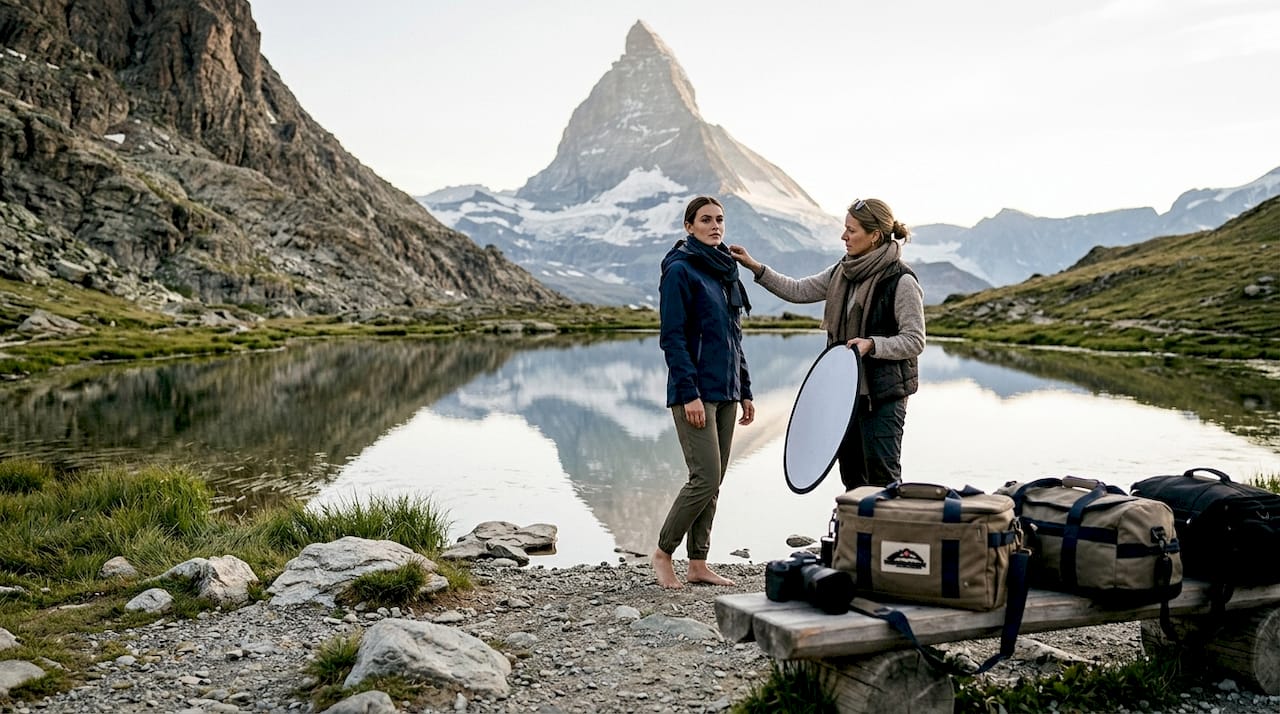
Outdoor locations in Switzerland are spectacular, but alpine weather is genuinely unpredictable. A professional studio is not just a backup plan. It is a core part of any well-structured Swiss fashion shoot schedule.
Two studios stand out for fashion and editorial work:
Studio | Location | Size | Key Features |
Studio Morii | Arnegg (near Gossau) | Natural materials, soft color palettes, flexible rental terms for brands and creators | |
Studio 18% | Geneva | Cyclorama, styling areas, flexible production desks, elevated industrial character |
Studio Morii near Gossau is purpose-built for brand and editorial shoots. Its natural materials and soft color palette create a neutral canvas that lets garments and accessories carry the visual weight. The flexible rental terms make it practical for both single-day editorial sessions and multi-day campaign productions.
Studio 18% in Geneva, created by Sapid Studio, takes a different approach. The 190 sqm space leans into an elevated industrial character with high-quality natural light and direct sightlines across the full production set. The cyclorama and dedicated styling areas mean you can run wardrobe changes and set adjustments simultaneously, which protects your shooting schedule when time is tight.
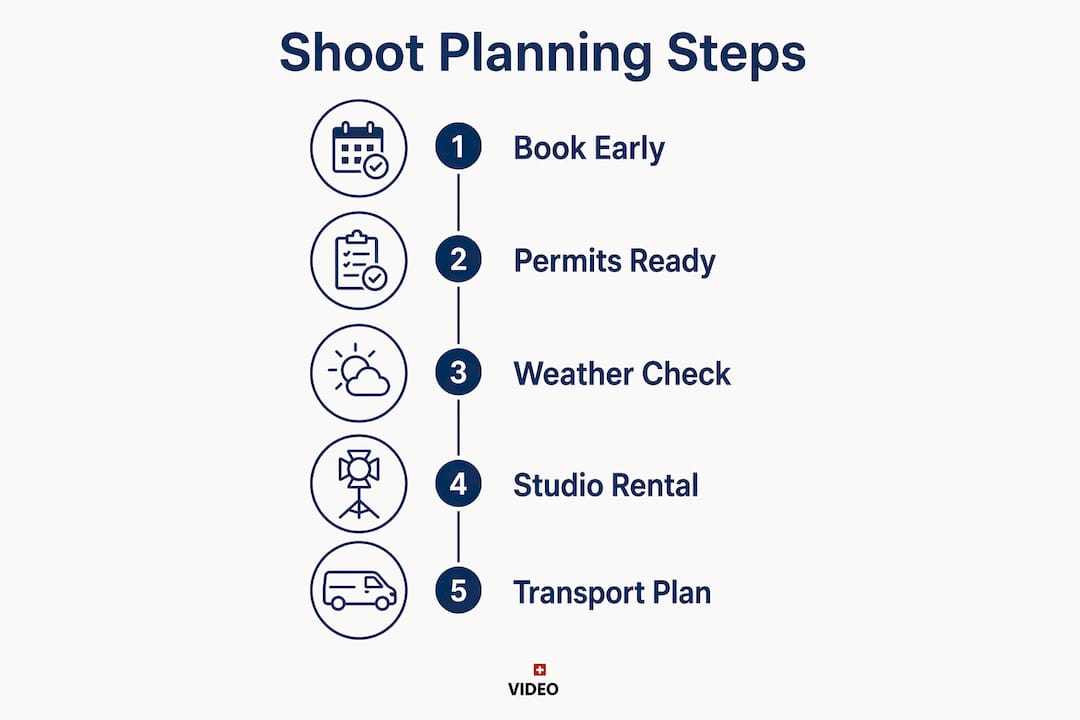
Both studios sit within reasonable distance of major transport hubs, which matters when you are coordinating international crews. Geneva’s airport connectivity is particularly strong for brands flying in talent from Paris, Milan, or London.
What logistical considerations affect fashion shoots in Switzerland?
Swiss alpine locations are not forgiving of poor planning. The physical realities of the terrain directly determine how many looks you can shoot in a day, how much equipment you can carry, and whether your call sheet is achievable.
Here is a practical framework for photoshoot planning tips Switzerland-wide:
Map your transit times first. The 10-minute walk to Riffelsee and the 3-hour hike to Lac de Taney are not suggestions. They are hard constraints that define your arrival window and limit the number of wardrobe changes per location. Build these into your call sheet before you schedule anything else.
Schedule around wind, not just light. At high-altitude lakes, calm water conditions for reflection shots occur most reliably at early morning and dusk. If your hero shot depends on a mirror reflection, your entire day must be structured around those windows.
Plan wardrobe for the hike, not just the shoot. Garments that need to arrive wrinkle-free at a location three hours from the nearest road require protective cases, dedicated porters, or a support vehicle at the trailhead. This is a budget and crew line item that teams frequently underestimate.
Identify your weather contingency before you land. Alpine conditions can change within an hour. Having a studio booking confirmed for the same week as your outdoor shoot is not excessive caution. It is professional production management.
Align permits with location access. Some alpine areas and UNESCO sites require advance permits for commercial photography. Securing these weeks ahead prevents the kind of last-minute scrambling that derails shoot days. For teams unfamiliar with Swiss permit processes, working with a local Swiss Alps filming specialist removes that uncertainty entirely.
Pro Tip: Treat alpine route lengths as you would a studio setup time. They are non-negotiable blocks in your schedule, and compressing them creates cascading delays across every subsequent shot.
What innovative production methods are used in Swiss fashion shoots?
Not every brand needs to send a full crew to a glacier to capture a Swiss aesthetic. Virtual production is changing that calculation in a meaningful way.
The 2026 Casablanca Paris Pre-Fall campaign is the clearest recent example. Photographer Per Appelgren used a virtual production stage to blend physical set elements with digital alpine landscapes, creating sand dunes, monumental architecture, and star-filled skies within a controlled studio environment. The result was cinematic imagery with a Swiss-inspired aesthetic that required none of the logistical complexity of a full alpine location shoot.
The advantages of this hybrid approach are concrete:
Weather independence. A virtual production stage eliminates the single biggest risk factor in outdoor Swiss fashion shoots. You control the sky, the light, and the environment.
Permit simplification. Shooting on a stage with digital backgrounds removes the need for location permits at protected sites like UNESCO World Heritage areas.
Cinematic continuity. Hybrid production workflows allow brands to maintain consistent visual language across a campaign without being dependent on repeatable real-world conditions.
Creative flexibility. Digital environments can be adjusted between shots, giving art directors the ability to iterate on backgrounds in real time rather than waiting for the right natural conditions.
Virtual production does not replace location work for every brand. But for campaigns where the Swiss aesthetic is a reference point rather than a documentary requirement, it is a production tool worth serious consideration.
How to plan and book fashion shoots in Switzerland efficiently?
Efficient planning for Swiss fashion shoots comes down to early decisions and the right local partnerships. The locations and studios that produce the best results book out quickly, particularly during summer when alpine conditions are at their most reliable.
Key steps for booking and planning:
Book alpine locations and studio rentals at least 8 to 12 weeks in advance. Popular spots like Riffelsee and the Aletsch viewpoints see heavy demand from commercial productions during June through September. Studio 18% in Geneva and Studio Morii near Gossau have limited availability during peak season.
Budget for travel and altitude logistics separately. Gondola fees, cog railway tickets, and porter costs for equipment are real line items. The production costs in Switzerland vary significantly depending on location altitude and crew size.
Engage a local production partner early. A Swiss-based production company handles permit applications, equipment sourcing, crew coordination, and location scouting in one relationship. This is especially valuable for international teams who cannot make advance scouting trips.
Build a shot list organized by location proximity. Grouping shots by geographic cluster reduces transit time and maximizes your shooting hours. A day that moves from Riffelsee to Zermatt village to a nearby studio is far more efficient than one that crosses cantons.
Use Switzerland’s transport infrastructure as a planning asset. The Swiss rail network connects most major shoot locations to urban centers, which means crew and equipment can move reliably without dedicated vehicles in many cases.
For international brands and photographers, working with full-service production support in Switzerland takes the guesswork out of every one of these steps.
Key takeaways
Switzerland for fashion shoots delivers the most value when outdoor locations, professional studios, and hybrid production methods are planned as an integrated system rather than separate options.
Point | Details |
Top outdoor locations | Riffelsee, Aletsch Glacier, Lac de Taney, and Lavaux vineyards each offer distinct visual moods for fashion photography. |
Studio options | Studio Morii (110 m²) and Studio 18% (190 sqm) provide controlled environments with natural light and full production infrastructure. |
Logistical planning | Transit times to alpine locations are hard constraints that must be built into call sheets before scheduling looks or wardrobe changes. |
Virtual production | Hybrid workflows like the Casablanca Paris Pre-Fall '26 campaign reduce weather and permit risk while maintaining Swiss aesthetic continuity. |
Early booking | Secure alpine locations and studio rentals 8 to 12 weeks ahead, and engage a local production partner to handle permits and crew coordination. |
Why Switzerland rewards photographers who plan for the unexpected
By Pieter
After years of coordinating shoots across Swiss terrain, the thing that surprises international teams most is not the beauty. They expect that. What catches them off guard is how quickly conditions change and how much that matters when you have a model in a couture gown at 2,800 meters.
My honest view is that the photographers and brands who get the most out of Switzerland are the ones who treat the country’s unpredictability as a creative constraint rather than a problem. The best Swiss fashion images I have seen were not made despite the weather or the logistics. They were made because the team had planned well enough to stay calm when things shifted, and that calm translated directly into the work.
The emergence of virtual production as a genuine creative tool is something I find genuinely exciting. It does not replace the experience of shooting at Riffelsee at dawn. Nothing does. But it gives brands a way to work with Swiss visual references year-round, without betting a campaign budget on a three-day weather window in August.
My practical advice: always have a studio day in your schedule, even if you never use it. The peace of mind it creates changes how your whole team operates on location. And that confidence shows up in the images.
— Pieter
Plan your Swiss fashion shoot with expert support
Organizing a fashion shoot across Switzerland’s alpine locations, studios, and permit zones is a significant logistical undertaking. Videoproductionswitzerland handles the full production picture for international crews, from location scouting and permit applications to equipment sourcing and crew coordination across every Swiss canton.
[
Whether you are planning outdoor fashion shoots in Valais or a controlled studio campaign in Geneva, Videoproductionswitzerland brings over 20 years of on-the-ground experience to your project. Review the Swiss production pricing to understand what a full-service engagement looks like for your budget, then get in touch to discuss your specific shoot requirements. Your creative vision deserves reliable execution.
FAQ
What are the best outdoor locations for fashion shoots in Switzerland?
Riffelsee near Zermatt, the Great Aletsch Glacier viewpoints, Lac de Taney, and the Lavaux vineyards are the top outdoor fashion shoot locations in Switzerland, each offering distinct visual moods from alpine reflections to UNESCO-listed terraced landscapes.
How far in advance should I book a Swiss fashion shoot location?
Book alpine locations and studio rentals 8 to 12 weeks in advance, particularly for summer shoots between June and September when demand from commercial productions is highest.
Do I need permits for fashion shoots in Swiss alpine areas?
Yes. Commercial photography at many Swiss alpine locations and UNESCO World Heritage sites requires advance permits. A local production partner can secure these weeks ahead to prevent delays on shoot days.
What studios are available for fashion photography in Switzerland?
Studio Morii near Gossau offers 110 m² of daylight rental space, while Studio 18% in Geneva provides a 190 sqm minimalist studio with a cyclorama, styling areas, and flexible production desks suited for full campaign productions.
What is virtual production and how is it used in Swiss fashion shoots?
Virtual production combines physical studio sets with digital backgrounds to create cinematic environments. The Casablanca Paris Pre-Fall '26 campaign used this method to produce Swiss-inspired imagery without full on-location logistics, reducing weather risk and permit complexity.
Recommended
