
Transport Excavators in Switzerland 2026: Cut Delays 15%

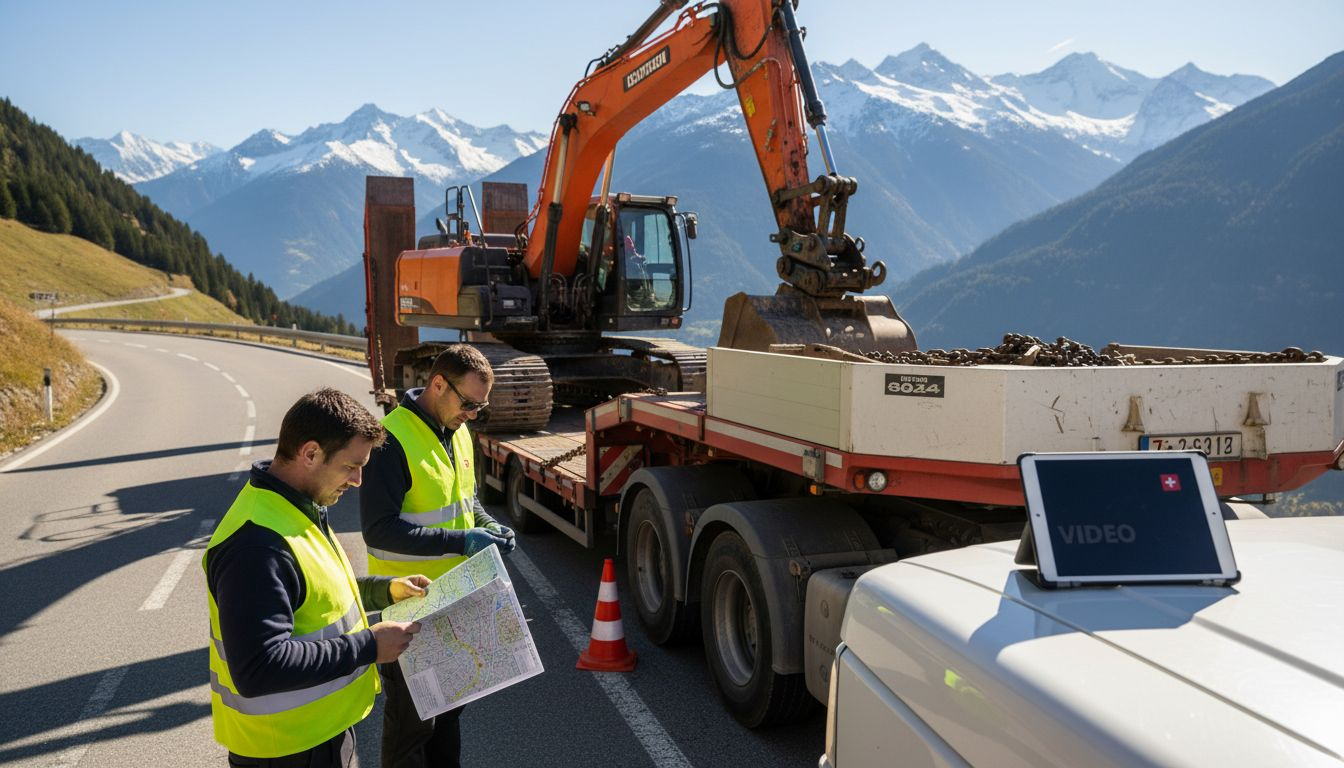
Transporting excavators for film productions in Switzerland presents significant logistical challenges that can derail tight shooting schedules. Delays in equipment transport can cost productions thousands per day in lost shooting time, making proper planning essential. This guide walks you through every step of excavator transport in Switzerland, from securing permits to coordinating delivery, ensuring your equipment arrives safely and on schedule for your shoot.
Table of Contents
Key Takeaways
Point | Details |
Permits are mandatory | Oversize load permits required for excavators exceeding Swiss width, height, or weight limits |
Precision prevents problems | Accurate measurements and specialized trailers ensure safe, compliant transport |
Proper loading saves money | Correct securement techniques prevent equipment damage and legal complications |
Route planning is critical | Swiss terrain demands careful navigation around weight limits and narrow roads |
Timing protects budgets | Synchronized transport schedules eliminate costly production downtime |
Preparation: What You Need Before Transporting an Excavator
Before any excavator moves an inch toward your Swiss filming location, detailed preparation protects both your equipment and production timeline. Skipping this phase invites delays, fines, and damaged machinery.
Start by measuring your excavator precisely. Accurate equipment measurements including length, width, height, and weight must be documented to select appropriate trailers and secure loads safely. Record these dimensions with manufacturer specifications and photograph the equipment’s current condition for insurance documentation.
Next, identify whether your excavator requires special permits. Switzerland requires special oversize load permits for excavators exceeding 8.5 feet in width, 13.5 feet in height, or 80,000 pounds in gross vehicle weight. Understanding permit requirements for oversize loads in Switzerland early prevents last-minute scrambles that halt production.
Your preparation checklist should include:
Complete dimensional measurements with manufacturer verification
Photographic condition documentation from multiple angles
Insurance coverage confirmation for transport phase
Permit application submission for oversize or overweight loads
Specialized low-loader trailer reservation with proper licensing
Experienced hauler selection familiar with Swiss regulations
Choosing the right transport provider matters enormously. Look for haulers experienced with film permits for oversized equipment who understand production timelines. These specialists know Swiss regulations inside out and maintain relationships with permitting authorities that smooth approval processes.
Pro Tip: Book your hauler at least four weeks before your shoot date. Specialized equipment transport in Switzerland requires coordination with multiple agencies, and rushing increases error risk.
Gather all equipment measurements and transport preparation documentation in one accessible folder. Digital copies stored in cloud systems prevent loss and allow quick sharing with transport teams, permit offices, and insurance providers.
Step-by-Step Excavator Transport Process in Switzerland
Once preparation is complete, executing the transport requires systematic attention to safety and regulatory compliance. Each step builds on the previous one to ensure your excavator reaches your filming location undamaged and on time.
Pre-Transport Assessment
Confirm all measurements match current excavator configuration
Verify permit approvals are finalized and documented
Conduct final equipment condition inspection with photographic evidence
Review insurance coverage activation for transport window
Loading and Securing
Loading represents the highest risk moment in excavator transport.
and reduces vibration risks during transit. Position the excavator on the trailer with weight distributed according to manufacturer specifications, typically centered over axles.
Secure the equipment using:
Heavy-duty chains rated for excavator weight at designated tie-down points
Blocking materials preventing forward, backward, and lateral movement
Secondary straps as backup restraints
Boom and bucket positioning locked in transport configuration
Using licensed professional haulers with experience handling oversized excavators eliminates guesswork from this critical phase. These specialists follow standardized protocols that protect your investment.
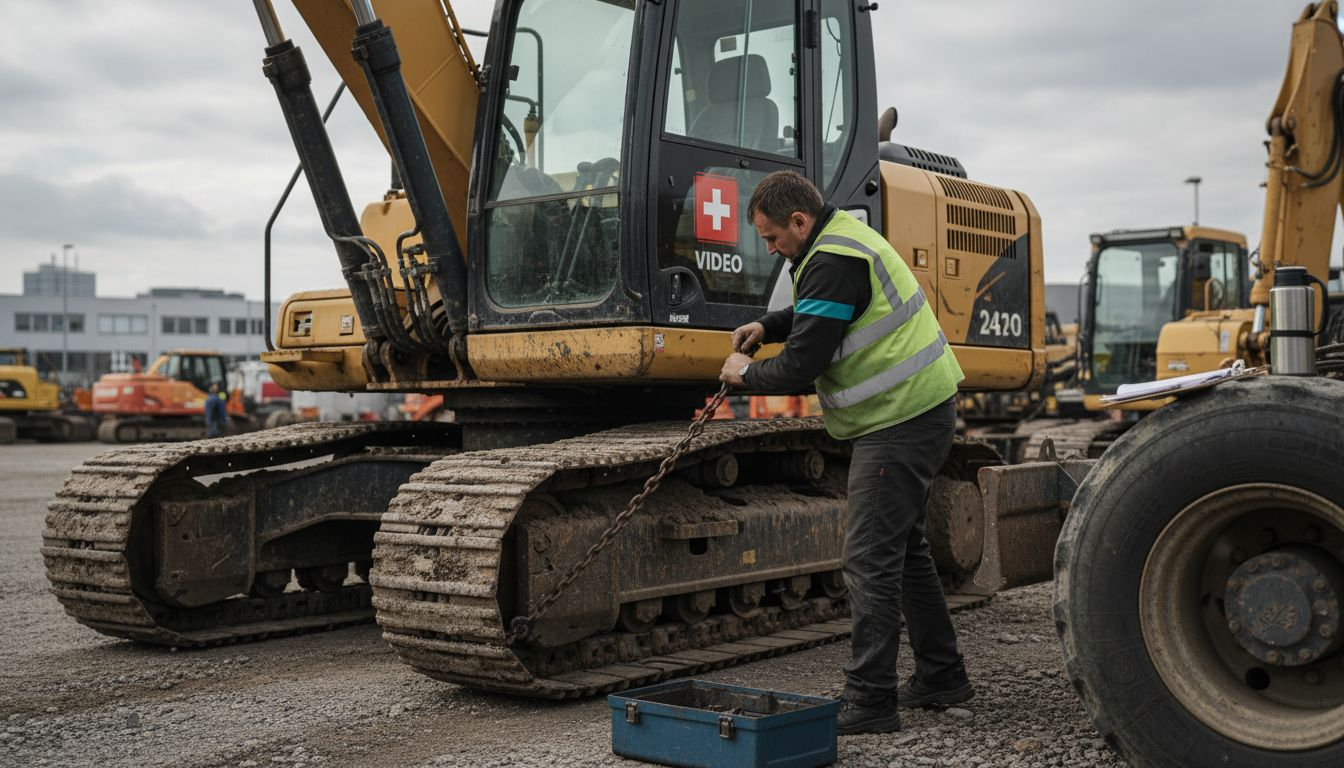
Pro Tip: Insist on witnessing the loading process. This gives you verification that securement meets standards and provides video documentation useful for insurance claims if issues arise.
Route Planning and Execution
Route planning must include identification of narrow roads, bridge weight restrictions, and overpasses to avoid obstacles. Switzerland’s alpine terrain presents unique challenges with steep grades, tunnels with clearance limits, and seasonal road closures.
Work with your hauler to map primary and backup routes. Consider:
Bridge weight capacity verification at every crossing
Tunnel and overpass height clearances with safety margins
Road width adequate for trailer turning radius
Time restrictions in urban areas or tourist zones
Weather forecasts for mountain pass conditions
Escort vehicles may be legally required depending on excavator dimensions. Swiss authorities mandate escorts for loads exceeding certain thresholds, and licensed professional haulers arrange these automatically.
Coordination with Production Schedules
Timing synchronization prevents the costly scenario where your excavator arrives days before needed, requiring secure storage, or worse, arrives late and delays shooting. Build heavy equipment transport best practices into your production calendar.
Schedule delivery:
24-48 hours before excavator call time for final positioning
During daylight hours when crew can inspect and prep equipment
With buffer time accounting for potential route delays
Aligned with other equipment deliveries to minimize site congestion
Maintain direct communication channels between transport team and production coordinator. Real-time updates allow schedule adjustments if weather or traffic impacts arrival. This coordination aspect is where coordinating transport with production schedules becomes crucial for maintaining shoot momentum.
Document successful delivery with timestamp photos showing excavator condition and location. This creates accountability and provides baseline for equipment return logistics.
Common Mistakes and Troubleshooting During Excavator Transport
Even experienced production teams make excavator transport errors that cascade into expensive problems. Recognizing these pitfalls before they occur keeps your shoot on track.
Insufficient Load Securing
Incorrect securement causing load shift or equipment damage accounts for over 15% of heavy equipment transport failures. This happens when teams rush loading or use inadequate restraints. Signs include visible slack in chains, blocking materials not flush against equipment, or asymmetric weight distribution.
Fix it by stopping transport immediately if you notice securement issues. Re-anchor chains at proper tension, add additional blocking, and photograph corrected configuration. Never assume “good enough” with multi-ton equipment.
Permit Oversights
Failure to obtain required permits commonly results in legal delays and transport halts. This mistake stems from underestimating Swiss regulatory requirements or assuming excavator dimensions fall within standard limits.
Prevent this by submitting permit applications based on actual measurements, not estimates. Build permit processing time into your production timeline, typically allowing two to three weeks. Keep digital and physical permit copies accessible to transport drivers for roadside inspections.
Route Restriction Violations
Ignoring posted weight limits, height restrictions, or time-based access rules triggers fines and forced route changes. Swiss authorities strictly enforce infrastructure protection regulations, especially on historic bridges and alpine roads.
Troubleshoot by conducting advance route surveys or using specialized route planning software that flags restrictions. Your hauler should verify every bridge and tunnel clearance before departure. If restrictions block your planned route, identify alternatives immediately rather than attempting passage and risking citations.
Pro Tip: Subscribe to Swiss road authority alerts for your transport date. Construction, weather closures, or special events can suddenly restrict routes you’ve already planned.
Timing Misalignment
When excavator delivery doesn’t sync with production needs, you face storage costs, rental extensions, or shoot delays. This often results from poor communication between logistics and production departments.
Solve this through shared digital calendars with milestone notifications. Tag critical dates like permit deadlines, loading windows, and on-site arrival times. Assign single point accountability for transport coordination who attends production meetings and logistics briefings.
Load Balancing Errors
Improper weight distribution increases accident risk and accelerates trailer wear. Excavators with extended booms or asymmetric attachments require careful positioning to maintain center of gravity over axles.
Correct balancing issues before departure using weight scales at loading facilities. Adjust excavator position incrementally until readings show even distribution. Document final positioning for future transports of identical equipment.
Reference avoiding transport failures resources and apply permit acquisition tips proactively. Learning from common securement mistakes documented by transport specialists prevents repeating expensive errors.
Expected Timelines, Costs, and Safety Outcomes for Excavator Transport in Switzerland
Understanding realistic expectations for transport duration, budget allocation, and safety standards helps you plan effectively and avoid surprises that derail productions.
Timeline Expectations
Transport timelines in Switzerland range from 1 to 3 weeks, including permit processing and route clearance. This window accounts for permit application review, route approval from relevant authorities, and physical transport execution.
Break your timeline into phases:
Permit application and approval: 7-14 business days
Route planning and clearance verification: 3-5 days
Equipment loading and securement: 4-6 hours
Physical transport to location: 1-2 days depending on distance
On-site positioning and inspection: 2-4 hours
Rush scenarios compress timelines but increase costs significantly through expedited permit fees and premium hauler rates. Build cushion time into production schedules rather than relying on best-case timelines.
Cost Factors
Excavator transport costs in Switzerland vary based on multiple variables that you can anticipate and budget for accurately.
Cost Component | Typical Range | Primary Drivers |
Permit fees | CHF 200-800 | Excavator size, route complexity |
Specialized trailer rental | CHF 600-1,500/day | Equipment specifications, rental duration |
Licensed hauler service | CHF 150-300/hour | Distance, difficulty, escort requirements |
Escort vehicles | CHF 400-900 | Regulatory mandates, route length |
Insurance riders | CHF 300-1,200 | Equipment value, coverage limits |
Distance affects costs linearly, but complexity increases expenses exponentially. Alpine routes requiring multiple escorts and seasonal timing premium rates substantially. Request itemized quotes from multiple haulers and compare not just total costs but included services.
Managing transport costs effectively requires balancing economy with reliability. Choosing the cheapest option often backfires when inexperienced haulers cause delays or damage.
Safety and Compliance Benefits
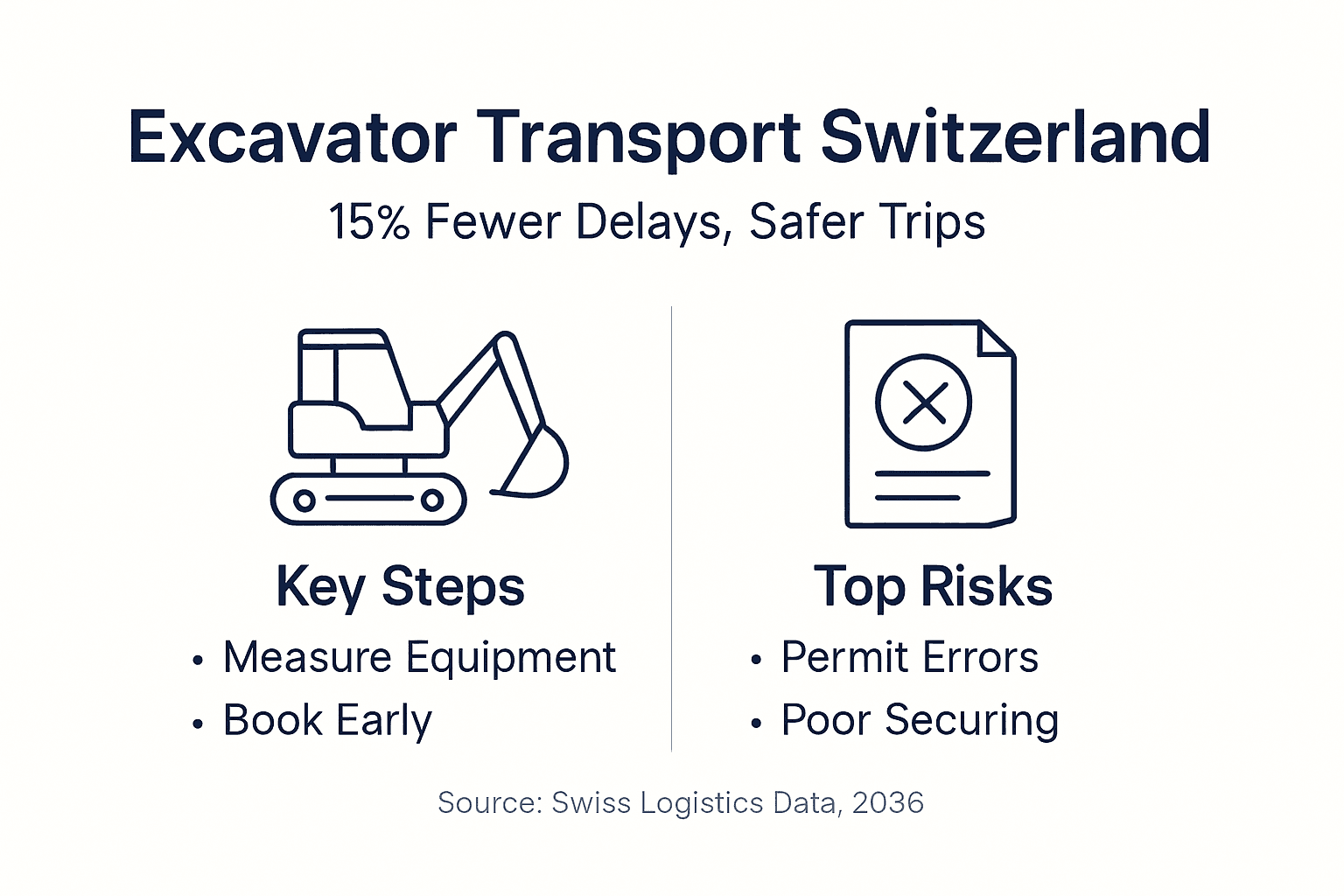
Compliance with Swiss safety regulations significantly reduces risk and potential insurance claims. Proper procedures protect not just equipment but also public safety and your production’s legal standing.
Adhering to standards delivers:
Reduced equipment damage rates below 2% for properly secured loads
Lower insurance premiums through demonstrated risk management
Eliminated regulatory fines and transport interruptions
Protected production schedules through predictable, on-time delivery
Safety investments pay dividends beyond immediate transport. Building relationships with compliant haulers and maintaining detailed transport documentation establishes your production company’s reputation for professionalism. This credibility smooths future permit applications and equipment rentals.
Incorporate planning transport schedules into broader production workflows. Reference transport timelines and costs when budgeting projects and understand safety compliance benefits as protective investments rather than expenses.
Streamline Your Excavator Transport with Expert Swiss Film Support
Navigating excavator transport logistics while managing international film production demands divides your attention across too many complex tasks. Partnering with experienced Swiss video production support consolidates these challenges under expert management.
[

Our team handles permit acquisition, specialized hauler coordination, and timeline synchronization so your excavator arrives exactly when and where you need it. We work with trusted transport providers who understand both Swiss regulations and production requirements, eliminating communication gaps that cause delays. From initial film permit guidance through final equipment positioning, we manage every detail.
With over 20 years coordinating complex Swiss shoots, we’ve developed relationships with authorities and logistics specialists that accelerate approvals and solve problems before they impact your schedule. This integrated approach keeps video production costs in Switzerland predictable while ensuring your heavy equipment arrives safely and on time.
Contact our full-service video production support team to discuss your excavator transport needs and receive a detailed logistics plan tailored to your shoot requirements.
Frequently Asked Questions About Transporting Excavators in Switzerland
What permits do I need to transport an excavator in Switzerland?
You need oversize load permits if your excavator exceeds 8.5 feet wide, 13.5 feet tall, or 80,000 pounds gross weight. Submit applications through cantonal road authorities 2-3 weeks before transport. Include exact measurements, route details, and transport dates. Some routes require additional municipal approvals.
How should I secure an excavator during transport to prevent damage?
Secure excavators using heavy-duty chains at manufacturer-specified tie-down points with proper tension. Add blocking materials preventing movement in all directions and position the boom in locked transport configuration. Use secondary straps as backup restraints and verify securement before departure and at rest stops.
How do I plan transport routes through Swiss alpine terrain?
Identify all bridge weight limits, tunnel clearances, and road width restrictions along your route before departure. Map alternative routes for weather closures or construction delays. Coordinate with local authorities about seasonal restrictions and verify that sharp turns accommodate your trailer’s turning radius.
What timeline should I expect for excavator transport coordination?
Allow 1-3 weeks total, including permit processing, route approval, and physical transport. Submit permit applications 14 days before needed transport date and schedule loading 24-48 hours before your excavator call time. Build buffer time for potential weather or traffic delays.
How can I coordinate excavator delivery with my filming schedule?
Share your production calendar with transport teams and establish direct communication channels for real-time updates. Schedule delivery during daylight hours with crew available for inspection and build 24-hour buffer before excavator call time. Use shared digital calendars with milestone notifications to keep all parties synchronized.
What should I do if my excavator transport encounters delays?
Immediately notify your production coordinator and assess whether alternative routes or expedited permits can recover time. Contact your hauler to understand delay causes and revised arrival estimates. Adjust shooting schedules if necessary and document delay reasons for insurance claims. Maintain backup equipment plans for critical scenes requiring excavators.
Recommended
