
Video production services in Switzerland: your guide


International filmmakers venturing into Switzerland often face unexpected logistical hurdles: permit delays, language barriers, and premium costs that can derail even well-planned shoots. Yet Switzerland’s film production infrastructure offers specialized local support that transforms these challenges into manageable processes. From Zurich’s streamlined commission services to multilingual crews fluent in four languages, the Swiss production environment delivers reliability and expertise that international crews need. This guide walks you through the essential services, costs, permits, and strategic partnerships that make Swiss video production accessible and efficient for global filmmakers.
Table of Contents
Choosing the right production partners and leveraging Swiss incentives
Why choose full-service video production support in Switzerland?
How long does it take to get filming permits in Switzerland?
Are drone permits required separately for filming in Switzerland?
How can international filmmakers benefit from Swiss production incentives?
Key Takeaways
Point | Details |
Hubs and language support | Zurich provides streamlined permit service and multilingual crews fluent in four languages to ease international shoots. |
Fixers and permits | Local fixers handle permits, visa coordination, location scouting, and on set problem solving to navigate Switzerland’s complex administration. |
Costs and budgeting | Budgets reflect premium pricing with daily crew rates from CHF 500 to 1000 and equipment costs varying by gear. |
Incentives and quotes | Pro tips include requesting itemized quotes and using production incentives such as the PICS cashback to offset costs. |
Switzerland’s film production hubs and local expertise
Zurich stands as Switzerland’s primary production hub, offering the most developed infrastructure for international shoots. The city hosts the Film Zurich commission, which streamlines permit applications and connects filmmakers with verified local resources. Geneva follows closely, particularly for French-language productions and projects requiring proximity to international organizations. Lausanne rounds out the trio with specialized support for documentary and commercial work in the Lake Geneva region.
Local fixers serve as essential partners who navigate Switzerland’s complex administrative landscape. These video production experts handle the full spectrum of pre-production logistics: permit processing takes 1-3 weeks with costs ranging CHF176-880, Schengen visa coordination for crew members allows up to 90 days of shooting, and equipment rental arrangements with vetted local suppliers. The fixer’s role extends beyond paperwork to include location scouting, crew recruitment, and real-time problem solving during production.
Pro Tip: Engage your local fixer at least six weeks before your shoot date. This timeline accommodates permit processing, allows for location approvals, and provides buffer time for unexpected regulatory requirements specific to your canton.
The permit process varies significantly by canton, but Zurich’s centralized system offers the clearest pathway for international crews. The Film Zurich commission provides direct support for:
Filming permit applications with expedited review for commercial projects
Location approval coordination across municipal and cantonal authorities
Access to production incentive programs including the PICS cashback initiative
Connection to local crew databases and equipment rental houses
Guidance on insurance requirements and liability coverage
Costs, crew rates, and budgeting for Swiss productions
Swiss video production carries premium pricing that reflects the country’s high living standards and specialized expertise. Short-format projects start at CHF5,000, while television documentaries typically range between CHF250,000 and CHF500,000 depending on scope and duration. These figures include crew, equipment, location fees, and basic post-production services.
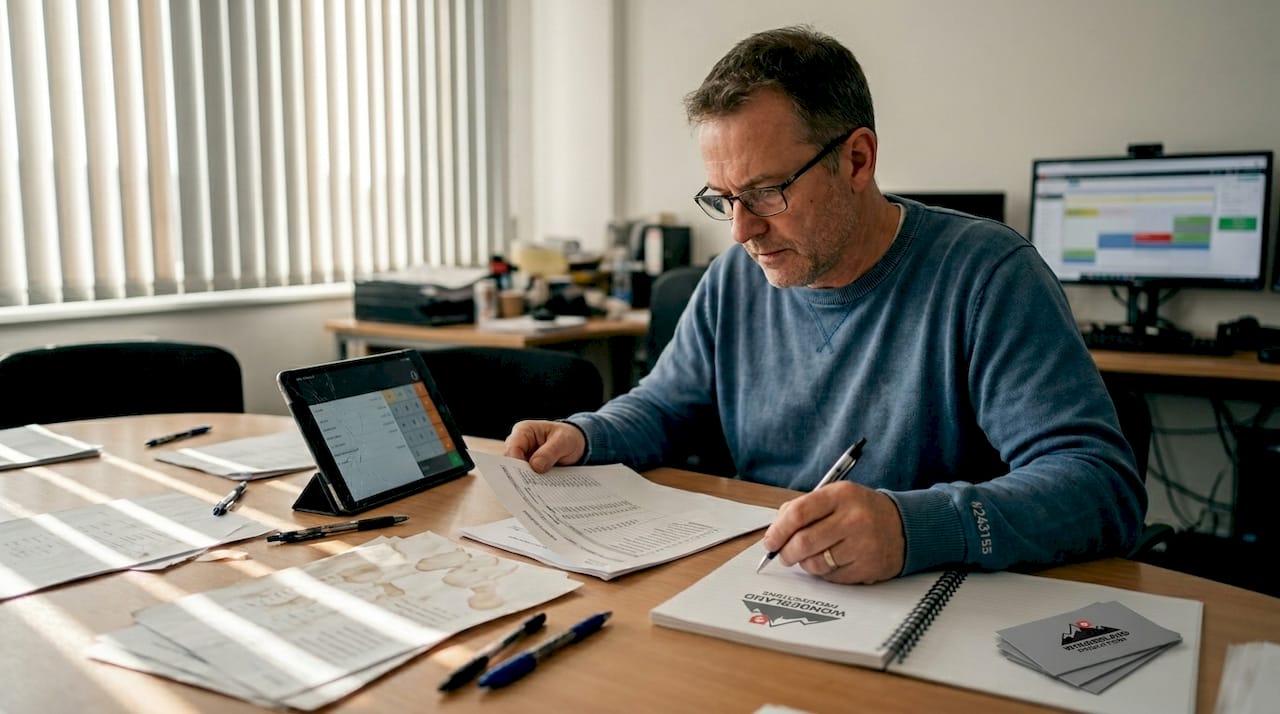
Crew day rates form the largest variable cost in Swiss productions. Professional crew members charge CHF500-1000 daily, with director of photography rates at the higher end and production assistants at the lower range. Freelance cameramen operate on hourly structures, typically charging CHF95-410 per hour based on experience level and equipment provided. Sound technicians, gaffers, and grip specialists fall within similar ranges, creating predictable budgeting frameworks for international producers.
Production Element | Cost Range (CHF) | Notes |
Director of Photography (day rate) | 800-1000 | Includes basic camera package |
Camera Operator (day rate) | 600-800 | Equipment rental separate |
Sound Technician (day rate) | 500-700 | Basic audio kit included |
Production Assistant (day rate) | 400-500 | Local knowledge essential |
Gaffer/Key Grip (day rate) | 600-800 | Lighting package additional |
Freelance Cameraman (hourly) | 95-410 | Rate varies with experience |
Pro Tip: Request itemized quotes that separate crew rates from equipment rental. This transparency allows you to compare proposals accurately and identify where you can optimize costs by bringing specific gear from your home country.
Equipment rental adds substantial expense to Swiss productions. High-end cinema cameras rent for CHF800-1500 per day, lighting packages range from CHF500-2000 depending on complexity, and grip equipment typically costs CHF300-800 daily. Transportation for crew and equipment within Switzerland requires budgeting CHF200-500 per day for van rentals, with fuel and parking adding another CHF100-200.
Budgeting tools specific to Swiss production help international filmmakers plan accurately. The Prodswiss estimator provides baseline calculations for different project types, though actual costs often run 10-15% higher due to location-specific variables. When planning your budget:
Add 20% contingency for permit delays or weather-related schedule changes
Factor cantonal variations in fees, particularly for public space usage
Include accommodation costs for crew, which average CHF150-300 per night in production hubs
Budget for meal allowances at CHF50-80 per person per day
Account for translation services if contracts or releases require multilingual documentation
The premium Swiss costs deliver value through efficiency and reliability. Productions rarely face equipment failures, crew no-shows, or permit revocations that plague shoots in less developed markets. This reliability translates to on-time delivery and predictable video production costs that justify the initial investment.
Navigating permits, regulations, and multilingual crews
Switzerland’s federal structure creates permit complexity that catches many international filmmakers off guard. Cantonal regulations vary significantly, with some regions requiring detailed shooting plans while others accept simplified applications. Zurich maintains the most filmmaker-friendly system, processing standard permits within 10 business days for straightforward commercial shoots. Geneva and Vaud cantons require more documentation, particularly for projects involving public spaces or historical sites.
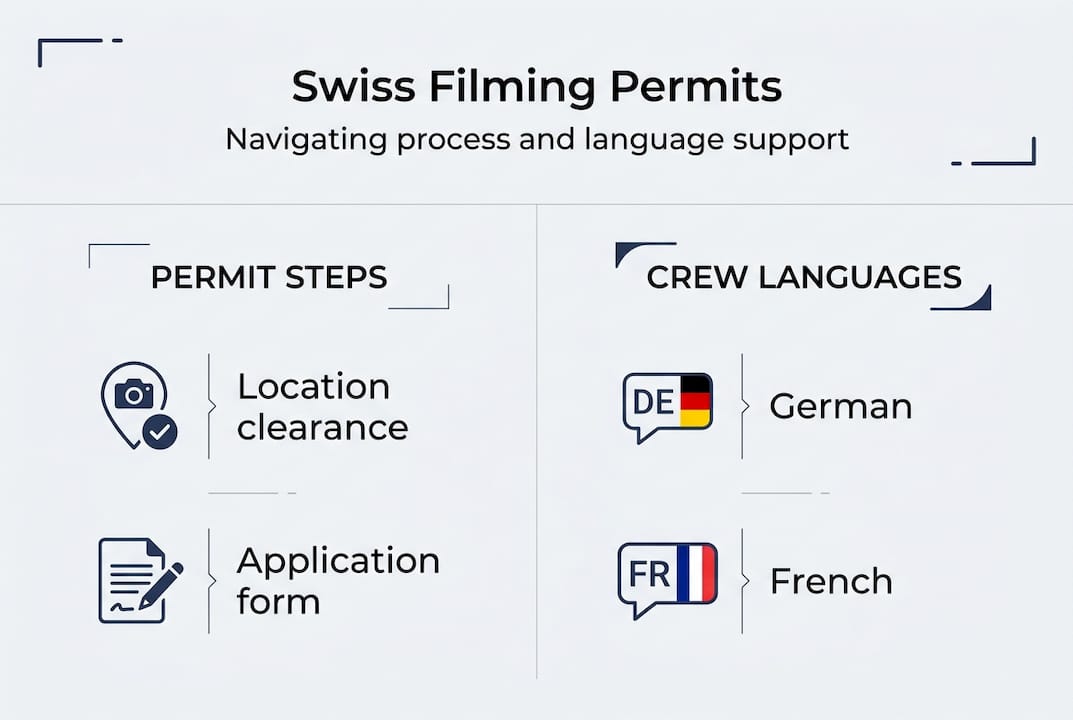
Drone filming demands separate authorization entirely. The Federal Office of Civil Aviation (FOCA) issues drone permits distinct from ground filming approvals, requiring operators to demonstrate insurance coverage, pilot certification, and flight plan details. Processing takes 2-4 weeks, and certain zones near airports or military installations remain permanently restricted. International crews must verify their drone equipment meets Swiss technical standards and carry liability insurance covering CHF1 million minimum.
Pro Tip: Submit drone permit applications separately from your main filming permit. FOCA processes run on different timelines, and combining applications can delay both approvals unnecessarily.
Public space usage triggers the most stringent requirements. Municipalities may require six weeks’ notice for shoots that involve street closures, parking restrictions, or crowd management. This timeline allows local authorities to coordinate with police, notify residents, and arrange alternative traffic routing. Rush applications face rejection or substantially higher fees, making early planning essential for street-level productions.
Mountain locations present unique logistical considerations:
Access coordination: Cable car operators require advance booking and may restrict film equipment during peak tourist seasons
Weather contingency: Alpine conditions change rapidly, necessitating flexible shooting schedules and backup dates
Safety protocols: Mountain rescue services must receive notification of crew locations and expected return times
Environmental permits: Protected areas require separate authorization from cantonal environmental departments
Equipment transport: Helicopter lifts for heavy gear need Civil Aviation approval and cost CHF3000-8000 per hour
Multilingual crew capability distinguishes Swiss production services from other European markets. Professional crew members typically speak German, French, Italian, and English fluently, eliminating communication barriers that complicate international shoots. This linguistic flexibility extends beyond basic conversation to include:
Contract negotiation and legal documentation in client’s preferred language
On-set direction and safety briefings accessible to entire crew
Talent direction for multilingual cast members
Location coordination with property owners and municipal authorities
Post-production notes and revision requests in clear, precise terms
Canton | Primary Language | Secondary Languages | Permit Processing Time |
Zurich | German | English, French | 1-2 weeks |
Geneva | French | English, German | 2-3 weeks |
Vaud | French | English, German | 2-3 weeks |
Ticino | Italian | English, German | 1-2 weeks |
Bern | German | French, English | 2-3 weeks |
The drone laws Switzerland framework requires particular attention for aerial cinematography. Beyond FOCA permits, operators must register drones over 250 grams, maintain visual line of sight during flight, and respect privacy laws that prohibit filming private property without consent. Urban areas impose additional restrictions, with Zurich and Geneva maintaining no-fly zones around government buildings and transportation hubs.
International crews benefit from understanding Switzerland’s approach to intellectual property and release forms. Swiss law requires written consent for identifiable individuals appearing in commercial content, with releases valid only when signed in the subject’s native language. This requirement makes multilingual crew members invaluable for obtaining proper documentation during street shoots or interview-based projects. Your video production Switzerland guide should include template releases in German, French, and Italian to streamline this process.
Choosing the right production partners and leveraging Swiss incentives
Selecting production partners with proven local networks separates successful Swiss shoots from problematic ones. Top-tier companies maintain relationships with cantonal film commissions, equipment rental houses, and specialized crew members that enable rapid mobilization and problem resolution. VIVEN AG exemplifies this standard, holding verified client reviews on Clutch and demonstrating consistent delivery across commercial, documentary, and branded content projects.
When evaluating potential partners, prioritize companies that demonstrate:
Direct relationships with cantonal permit offices and expedited processing capabilities
Crew databases spanning multiple cantons and language regions
Equipment inventory or preferred rental partnerships that guarantee availability
Insurance coverage meeting Swiss minimums (CHF5 million liability for most commercial work)
Portfolio evidence of international client service and cross-border logistics management
Pro Tip: Request references from previous international clients specifically. Domestic Swiss productions face different challenges than cross-border shoots, and you need partners experienced in visa coordination, customs clearance for equipment, and cultural adaptation for foreign crews.
The Zurich PICS incentive program delivers substantial cost recovery for eligible productions. This cantonal initiative refunds 20-40% of qualifying production expenses up to CHF600,000, effectively reducing net costs by thousands of francs for mid-sized projects. Eligibility requires:
Minimum spend of CHF200,000 within Zurich canton
At least 50% of shooting days occurring in Zurich locations
Employment of Swiss crew members for key positions
Cultural or economic benefit to the canton as determined by Film Zurich
Application submission before production commencement
The PICS application process takes 4-6 weeks for initial approval, with final reimbursement occurring 8-12 weeks after production wrap and expense documentation submission. International producers should engage local production services familiar with PICS requirements, as documentation standards prove rigorous and incomplete applications face rejection without appeal.
“Working with experienced Swiss fixers cut our permit processing time in half and unlocked incentive funding we didn’t know existed. The upfront investment in local expertise paid for itself three times over through efficiency gains and cost recovery.” — International commercial director, 2025 Zurich shoot
Beyond PICS, several cantons offer location fee waivers or reduced rates for productions that showcase regional attractions. Geneva provides discounted access to lakefront locations for tourism-focused content. Vaud canton waives certain permit fees for documentary projects addressing cultural or historical subjects. These smaller incentives rarely appear in public databases, making local production partners essential for identifying and accessing available programs.
The best video production services distinguish themselves through transparent pricing structures that itemize costs and identify incentive opportunities upfront. Request detailed proposals that break down:
Crew rates by position with alternatives at different experience levels
Equipment rental costs with ownership vs. rental analysis
Location fees including permit costs and potential waivers
Transportation and accommodation with group rate negotiations
Incentive eligibility assessment with estimated refund amounts
Strategic timing affects both availability and costs. Summer months (June through August) see peak demand for Swiss locations, driving crew rates up 15-20% and reducing equipment availability. Shoulder seasons (April-May, September-October) offer optimal weather with lower costs and greater flexibility for scheduling. Winter productions benefit from reduced rates but face weather unpredictability that requires substantial contingency planning.
The top film production companies maintain year-round operations with crew on retainer, ensuring availability even during peak seasons. This reliability commands premium pricing but eliminates the risk of last-minute crew shortages or equipment unavailability that can force production delays. For time-sensitive projects or those with inflexible delivery dates, partnering with established full-service providers proves more cost-effective than assembling freelance teams.
Why choose full-service video production support in Switzerland?
Navigating Switzerland’s production landscape demands local expertise that only specialized service providers deliver consistently. When permits span multiple cantons, crews speak four languages, and costs require careful optimization, having a single point of contact who manages every detail transforms complex shoots into smooth operations. Full-service video production support eliminates the coordination burden that international filmmakers face when working across time zones and language barriers.
[
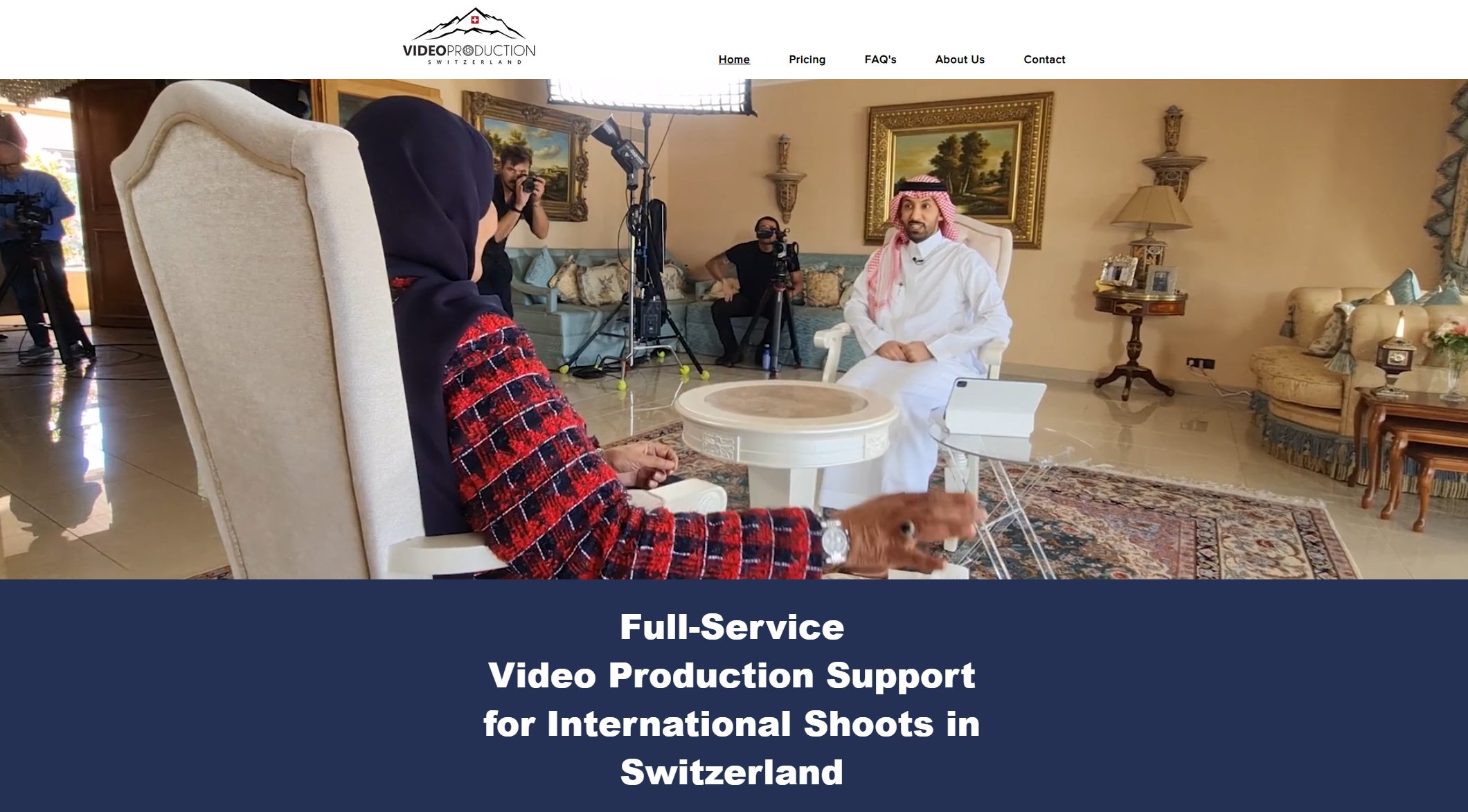
Professional production partners handle permit applications, crew recruitment, equipment sourcing, location scouting, and logistics coordination under one umbrella. This integration reduces communication gaps, prevents scheduling conflicts, and ensures every production element aligns with your creative vision and budget constraints. Access our detailed video production costs breakdown to understand how expert local support optimizes your investment and delivers measurable efficiency gains for your next Swiss production.
How long does it take to get filming permits in Switzerland?
Standard filming permits in Switzerland require 1-3 weeks for processing, depending on the canton and project complexity. Zurich typically processes straightforward commercial permits within 10 business days, while Geneva and Vaud may take up to three weeks for similar applications. Projects involving public space closures, historical sites, or environmental sensitivity require extended timelines of 4-6 weeks to accommodate additional review layers and stakeholder coordination.
Are drone permits required separately for filming in Switzerland?
Yes, drone filming requires distinct authorization from the Federal Office of Civil Aviation (FOCA), separate from ground-level filming permits. Operators must demonstrate pilot certification, liability insurance coverage of at least CHF1 million, and compliance with Swiss technical standards for unmanned aircraft. Processing takes 2-4 weeks, and certain zones near airports or military installations remain permanently restricted. Review comprehensive drone laws Switzerland requirements before planning aerial cinematography.
What languages do Swiss film crews typically speak?
Professional Swiss film crews commonly operate in German, French, Italian, and English to accommodate diverse client needs and regional requirements. This multilingual capability extends beyond basic conversation to include contract negotiation, on-set direction, talent coordination, and post-production communication. Crew members in Zurich typically lead with German and English, Geneva crews with French and English, while Ticino-based professionals prioritize Italian and English.
How can international filmmakers benefit from Swiss production incentives?
The Zurich PICS program offers the most accessible incentive for international productions, providing 20-40% cashback on eligible production costs up to CHF600,000. Qualifying requires minimum spend of CHF200,000 within Zurich canton, at least 50% of shooting days in Zurich locations, and employment of Swiss crew for key positions. Application must occur before production commencement, with reimbursement processed 8-12 weeks after expense documentation submission. Additional cantonal programs offer location fee waivers and reduced permit costs for projects showcasing regional culture or tourism value.
Recommended
