
What does a line producer do? A detailed 2026 guide

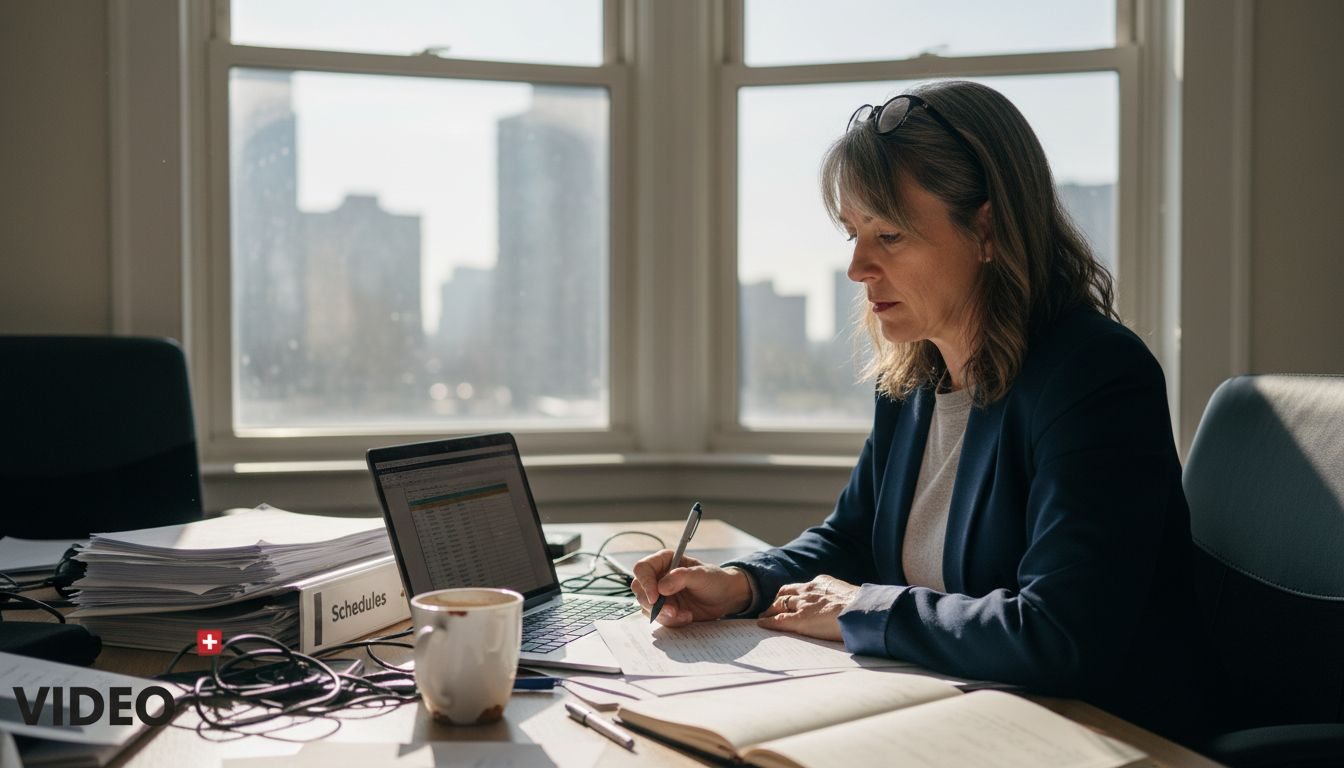
Many filmmakers mistakenly believe line producers wield creative control, but their true power lies in mastering logistics and budgets. This confusion often leads to misaligned expectations and operational friction during production. Understanding the line producer’s actual role is essential for international filmmakers and production managers who want efficient, on-budget projects. This guide clarifies responsibilities, debunks misconceptions, and shows how line producers drive production success.
Table of Contents
Key takeaways
Point | Details |
Line producers manage budgets, schedules, and logistics | They control day-to-day operations ensuring projects stay on time and within financial constraints. |
Their role differs significantly from executive producers | Line producers focus on operational execution while executive producers handle creative and financial oversight. |
Essential for international shoots | Local coordination expertise prevents 80% of common logistical delays abroad. |
Accountability is their core strength | Productions with line producers achieve 90% on-time, on-budget completion rates. |
Clear role boundaries prevent production conflicts | Understanding their authority scope avoids common collaboration pitfalls. |
Introduction to the line producer role
A line producer is responsible for managing day-to-day operations of the production, including budget control and scheduling, making them essential for keeping a project within financial and time constraints. They sit between executive producers and department heads in the production hierarchy. While executive producers secure funding and maintain creative vision, line producers translate those resources into operational reality.
This role is distinct from other producer titles in crucial ways. Line producers don’t make creative decisions about story or casting. They ensure the infrastructure exists for directors and creative teams to execute their vision. The line producer role and skills require operational expertise rather than creative judgment.
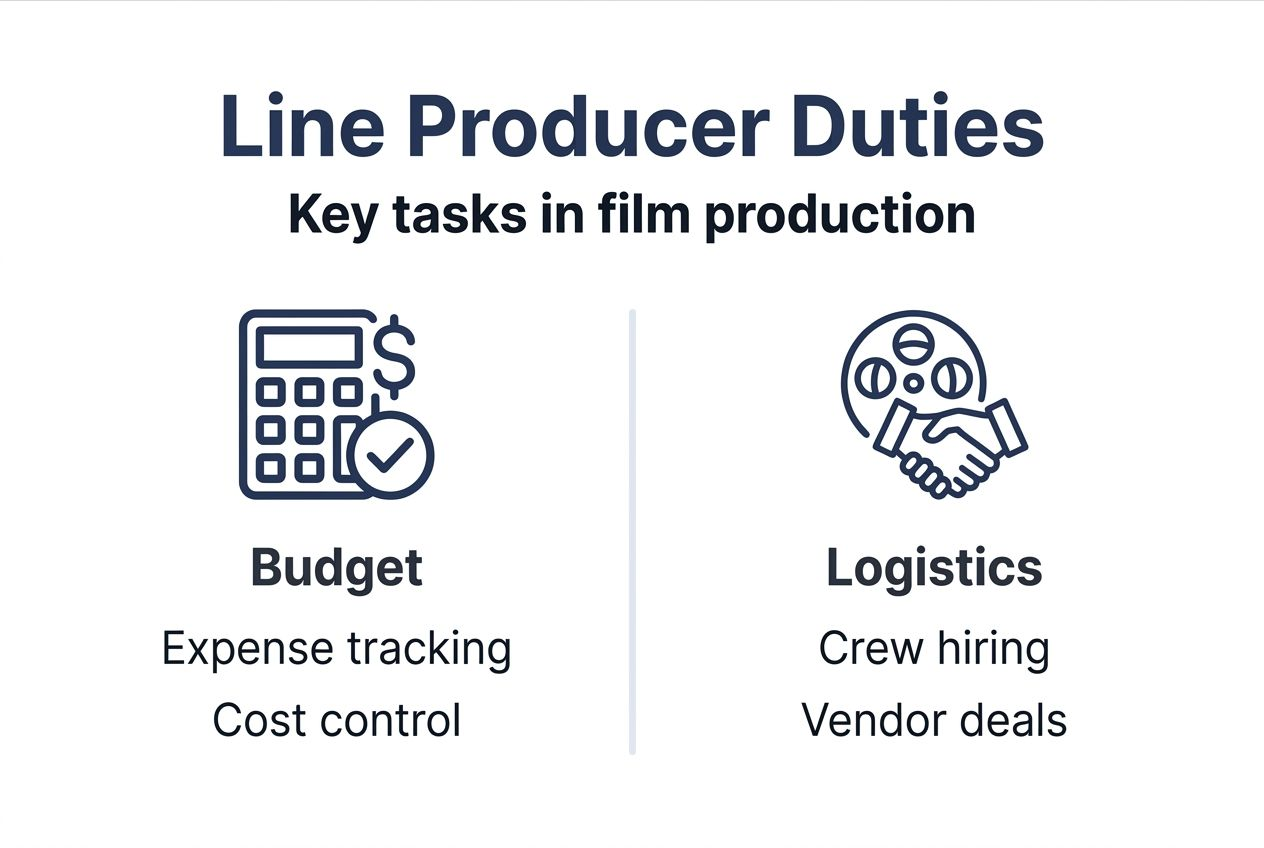
Their core responsibilities include:
Developing and monitoring production budgets throughout all phases
Creating and maintaining detailed shooting schedules
Hiring crew members and negotiating vendor contracts
Coordinating equipment, locations, and transportation logistics
Serving as the primary operational contact for all departments
Understanding line producer responsibilities helps filmmakers structure their teams effectively. Productions that skip this role often face budget overruns and scheduling chaos. The line producer acts as the operational backbone that keeps complex productions moving forward.
Core responsibilities of a line producer
Line producers oversee hiring of crew and coordination with local vendors, acting as the key logistical contact especially critical in international productions. Their duties span pre-production, production, and post-production phases. During pre-production, they break down scripts to identify resource needs and create preliminary budgets. They scout locations, negotiate contracts, and assemble the crew.
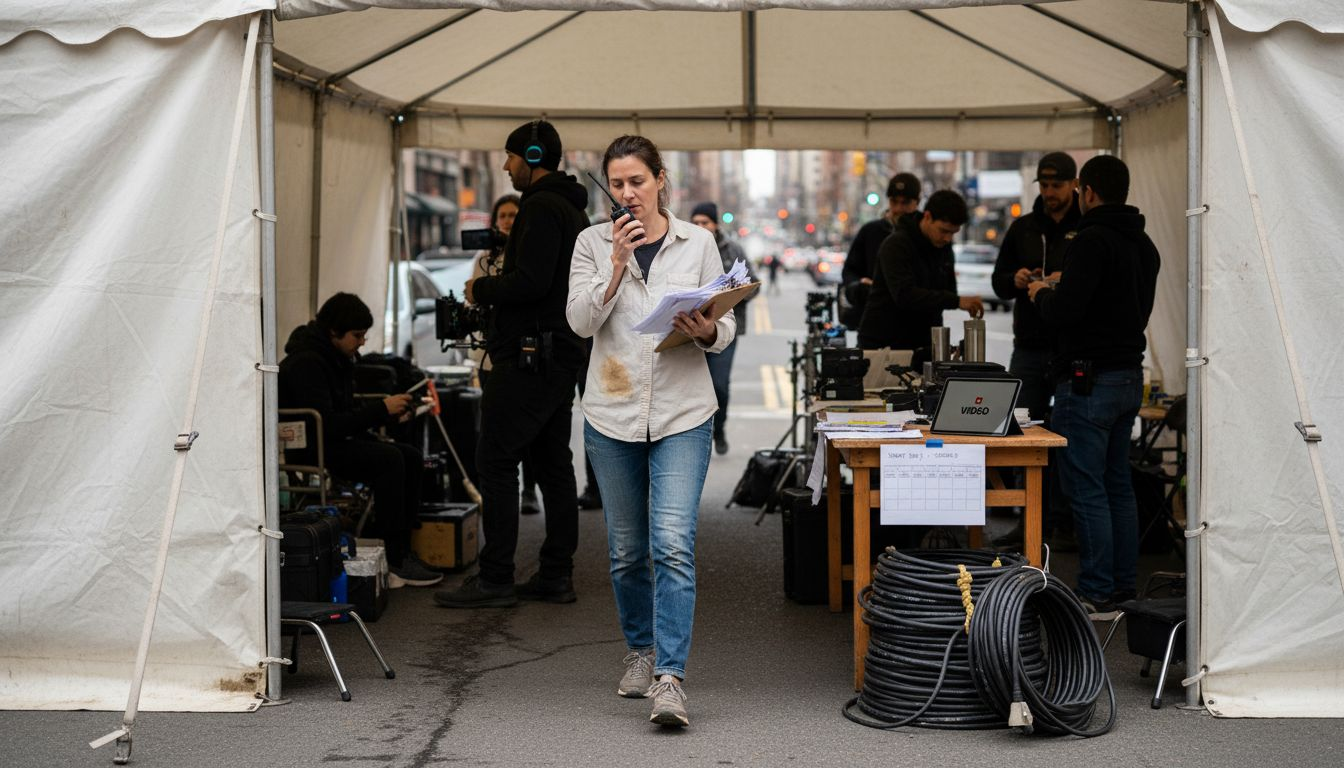
During production, line producers monitor daily expenditures against budget projections. They adjust schedules when weather or other factors create delays. They solve equipment failures, transportation issues, and staffing gaps in real time. Post-production responsibilities include final budget reconciliation and vendor payment processing.
Key operational functions include:
Developing detailed budget breakdowns by department and production phase
Managing cash flow and approving expenditures within budget limits
Recruiting department heads and coordinating crew hiring processes
Negotiating rates with equipment rental houses and location owners
Tracking schedule adherence and implementing contingency plans
Understanding line producer duties and skills reveals why this position requires both financial acumen and people management expertise. They must balance competing demands from creative and financial stakeholders.
Pro Tip: Establish daily check-ins with your line producer to address emerging issues before they escalate into costly problems. Transparent communication prevents budget surprises.
The line producer logistical duties become especially complex on location shoots where local regulations and unfamiliar vendors add layers of coordination challenges.
Financial and scheduling accountability
Productions with dedicated line producers achieve on-time, on-budget completion 90% of the time, significantly reducing costly overruns. This success stems from systematic budget tracking and proactive schedule management. Line producers create initial budgets based on script breakdowns, then refine them as pre-production progresses.
Financial oversight includes daily cost reporting that compares actual expenditures against projections. When departments approach budget limits, line producers negotiate solutions or reallocate resources. They maintain contingency reserves for unexpected costs and approve all major purchases.
Schedule management involves:
Creating detailed shooting schedules that optimize location usage and actor availability
Monitoring daily progress and adjusting subsequent days to maintain overall timeline
Coordinating weather backup plans and alternative shooting sequences
Managing overtime decisions to balance schedule pressure against budget impact
Risk assessment is continuous throughout production. Line producers identify potential delays or cost overruns early. They develop contingency plans for equipment failures, weather problems, and talent availability issues. This proactive approach minimizes disruption when problems occur.
Effective production scheduling and control requires sophisticated planning tools and constant communication with department heads.
Pro Tip: Implement weekly financial reviews with producers and accountants to catch budget drift early. Small corrections prevent major overruns.
The line producer budget control systems they implement create transparency that builds producer confidence and enables informed decision making throughout production.
Coordination and communication functions
Line producers serve as a bridge between producers and on-set crew, managing daily planning and resource allocation to keep productions running smoothly. They synthesize information from multiple departments and translate it into actionable decisions. Executive producers and directors focus on creative vision while line producers handle operational execution.
Daily coordination includes:
Leading morning production meetings to review schedule and address department needs
Resolving resource conflicts between competing departments
Escalating creative or budget decisions that require producer input
Maintaining communication channels between set, office, and vendor partners
Line producers act as information hubs. Camera departments need equipment confirmations. Transportation teams require location details and parking logistics. Catering needs accurate crew counts. The line producer ensures each department has what it needs when it needs it.
Problem escalation is a critical function. When issues exceed the line producer’s authority, they present options to executive producers with budget and schedule implications clearly outlined. This structured approach prevents decision bottlenecks.
Resource allocation decisions happen constantly. When weather forces schedule changes, line producers reassign crew and equipment to alternative scenes. When equipment fails, they source replacements without disrupting the shooting schedule.
Effective production management techniques depend on clear communication protocols and defined decision authority.
The line producer communication roles extend beyond the immediate crew to include vendors, location owners, and local authorities, especially on international productions.
Comparison with other producer roles
Confusion between producer titles creates operational problems. Line producers focus on day-to-day execution while executive producers handle financing and high-level creative direction. Producers often serve as creative partners to directors. Line producers ensure the infrastructure exists to realize that creative vision.
Key distinctions include:
Role | Primary Focus | Decision Authority | Timeline Involvement |
Executive Producer | Financing and creative oversight | Final approval on major creative and financial decisions | Development through distribution |
Producer | Creative development and production oversight | Collaborative creative decisions with director | Development through post-production |
Line Producer | Operational execution and budget management | Day-to-day operational and spending decisions | Pre-production through wrap |
Production Manager | Department coordination and logistics | Departmental resource allocation | Production phase primarily |
Executive producers secure funding and maintain relationships with studios or investors. They approve major budget items and creative direction but don’t manage daily operations. Producers work closely with directors on script development, casting, and creative problem solving during production.
Line producers translate creative vision into operational plans. They don’t decide which actor to cast, but they negotiate that actor’s deal and coordinate their schedule. They don’t choose locations based on aesthetic merit, but they secure permits and manage location logistics.
Common misconceptions include assuming line producers have creative veto power or final cut authority. They advise on budget and schedule implications of creative choices, but don’t make those choices themselves.
Comparing producer roles clarifies how each position contributes unique expertise to successful productions.
Common misconceptions about the line producer role
Many filmmakers wrongly assume line producers control creative decisions. This misunderstanding creates friction when line producers appropriately defer creative questions to directors and producers. Line producers advise on practical constraints, but creative authority rests elsewhere.
Frequent misconceptions include:
Believing line producers can override director decisions on shooting approach
Assuming they have final hiring authority beyond operational crew positions
Expecting them to negotiate talent deals without producer involvement
Thinking they control post-production creative processes
Another common error conflates line producers with executive producers. Executive producers raise money and maintain investor relationships. Line producers manage how that money gets spent operationally. The roles complement each other but operate in different spheres.
Some filmmakers overestimate line producer hiring authority. While they recruit department heads and coordinate crew hiring, major talent and key creative positions typically require producer or director approval. Line producers present options and recommendations rather than making unilateral decisions.
Industry surveys reveal that 65% of first-time filmmakers misunderstand the line producer’s scope of authority, leading to preventable production conflicts and budget disputes.
Role boundary confusion wastes time and creates frustration. When teams assume line producers handle tasks outside their purview, critical functions get neglected. Clear role definitions established during pre-production prevent these problems.
The importance of clarifying expectations early cannot be overstated. Productions that define decision authority and communication protocols upfront avoid most common conflicts between line producers and other team members.
Practical impact for international productions
Line producers play a critical role in securing permits, insurance, and location agreements especially in foreign countries, which mitigates risk and compliance issues for international filmmakers. Local market knowledge prevents the majority of delays that plague international shoots. Understanding regional regulations, vendor capabilities, and cultural norms is essential for smooth operations.
International productions face unique challenges:
Navigating unfamiliar permit processes and regulatory requirements
Coordinating with vendors who operate under different business practices
Managing language barriers between international crew and local support
Securing appropriate insurance coverage for foreign locations
Handling customs procedures for equipment and materials
An experienced line producer with local knowledge prevents approximately 80% of common international production delays. They know which permits require weeks of advance processing versus same-day approvals. They have established relationships with reliable local vendors who understand film production needs.
Steps to secure compliance and local support:
Research permit requirements 8-12 weeks before scheduled production dates
Identify local line producer or production coordinators role specialists with regional expertise
Verify insurance coverage meets local legal requirements and location agreements
Establish contracts with vetted local vendors for equipment, transportation, and services
Coordinate with local authorities regarding street closures, public location usage, and safety protocols
Arrange bilingual coordinators when language barriers exist between crew members
The production manager duties often overlap with line producers on international shoots, requiring clear delineation of responsibilities.
International line producer logistics expertise becomes the difference between successful shoots and costly failures when working abroad.
Best practices for working with line producers
Effective collaboration with line producers starts with clear role definitions and communication protocols. Establish expectations during pre-production meetings. Define decision authority boundaries, budget approval processes, and escalation procedures for issues requiring producer input.
Key success metrics for line producers include:
Budget variance percentage comparing actual costs to approved budget
Schedule adherence measuring shooting days completed as planned versus delayed
Issue resolution speed tracking time from problem identification to solution implementation
Stakeholder satisfaction from crew, vendors, and producers
Criteria for selecting experienced line producers:
Demonstrated track record on similar-scale productions in relevant genres
Strong references from previous producers and department heads
Local market knowledge for international or regional shoots
Financial management expertise including budget software proficiency
Problem-solving ability and composure under production pressure
Collaboration tips include maintaining transparent communication about budget status and schedule challenges. Line producers should provide daily or weekly reports depending on production complexity. Producers should respond promptly to decision requests to avoid delays.
Pro Tip: Schedule daily 15-minute check-ins with your line producer at consistent times. Brief, regular contact prevents small issues from becoming production crises.
Empower line producers within their defined authority. Micromanaging operational decisions undermines their effectiveness and slows production. Trust their expertise while maintaining appropriate oversight through reporting and milestone reviews.
Leverage line producer strengths by involving them early in pre-production planning. Their practical insights during script breakdown and location scouting prevent budget surprises later. Experienced line producers identify potential problems before they materialize.
Selecting line producers requires evaluating both technical competencies and interpersonal skills since they coordinate diverse stakeholders throughout production.
How Video Production Switzerland supports your projects
Understanding the line producer role highlights why expert local support matters for international productions. Video Production Switzerland provides comprehensive production management services specifically designed for international filmmakers working in Switzerland.
[

Our team handles complex logistics including permit acquisition, local crew coordination, equipment sourcing, and location management. With over 20 years of Swiss market experience, we navigate regulatory requirements and vendor relationships that often challenge foreign production teams. We act as your local line producer, ensuring smooth operations from pre-production through wrap.
Explore detailed video production costs in Switzerland to plan your budget accurately. Visit our full-service video production support in Switzerland page to learn how we eliminate the stress of international shoots through expert local coordination.
Frequently asked questions
What does a line producer do on set?
Line producers manage daily operations including schedule adherence, budget monitoring, and resource coordination. They solve logistical problems in real time and serve as the operational hub connecting all departments. Their on-set presence ensures smooth workflow and quick decision making.
How much does a line producer cost?
Line producer rates vary by project scale, location, and experience level, typically ranging from $2,500 to $7,500 per week for feature films. Commercial and corporate productions may negotiate daily or project-based fees. Experienced line producers with specialized expertise command premium rates.
Do I need a line producer for small productions?
Small productions benefit from line producer expertise even if using a production manager or coordinator instead. The role scales to project size, with smaller shoots requiring fewer hours but similar skill sets. Budget control and schedule management remain critical regardless of production scale.
What’s the difference between a line producer and production manager?
Line producers have broader authority including budget creation and approval, vendor negotiations, and strategic operational decisions. Production managers focus on departmental coordination and logistics execution under line producer oversight. Line producers typically work across all production phases while production managers concentrate on the production period.
Can line producers work remotely on international shoots?
Remote line producing works for pre-production planning but requires on-location presence during principal photography. International shoots benefit most from line producers with local market knowledge who can navigate regional regulations and vendor relationships. Hybrid approaches using local line producers coordinating with remote executive producers often prove most effective.
Recommended
