
Good time management meaning for Swiss film shoots

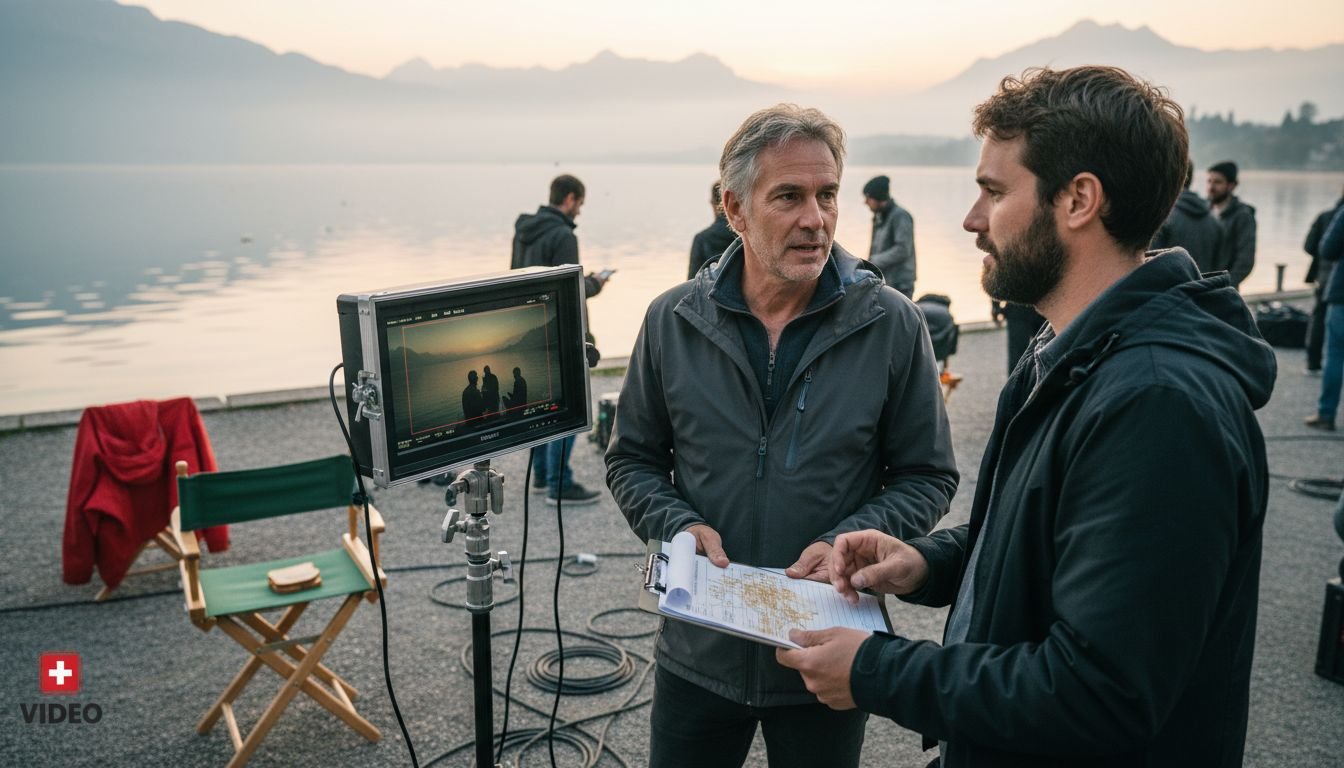
Effective time management reduces shoot delays by over 30%, transforming film production in Switzerland from logistical chaos into smooth execution. International filmmakers face unique challenges when shooting in Switzerland, from permit acquisition to unpredictable weather and equipment coordination. This guide explains good time management meaning and delivers practical strategies tailored to Swiss productions, helping you minimize delays and maximize efficiency.
Table of Contents
Common Misconceptions About Time Management In Film Production
Key Challenges In Time Management For International Shoots In Switzerland
Strategies And Tools To Optimize Shoot Scheduling And Execution
The Role Of Local Production Services In Time Management Success
Frameworks For Planning And Adapting Time Management In Film Shoots
Applying Good Time Management: Practical Tips And Case Studies
Streamline Your Film Production In Switzerland With Expert Support
Key takeaways
Point | Details |
Balance scheduling with flexibility | Good time management combines strict planning with adaptive responses to unforeseen Swiss-specific events like weather and permit delays. |
Local logistics require unique planning | Swiss permits, equipment coordination, and weather patterns demand specialized adaptive approaches beyond standard scheduling. |
Production services accelerate timelines | Partnering with local experts cuts pre-production time by 20% and eliminates common logistical bottlenecks. |
Contingency buffers prevent overruns | Time buffers for high-risk activities reduce costly delays by 15%, yet less than 10% of productions use them fully. |
Digital tools enable real-time adaptation | Adaptive scheduling software and weather tracking improve decision-making by 40%, supporting dynamic schedule adjustments. |
Understanding good time management in film production
Good time management involves far more than rigid adherence to shooting schedules. It requires balancing structured planning with flexibility to respond to inevitable delays, particularly on international shoots in Switzerland where local complexities multiply. Effective time management reduces shoot delays by over 30%, directly cutting costs and improving production quality.
Swiss film productions face distinct logistical challenges that demand coordinated scheduling. The film permit process in Switzerland involves multiple cantonal authorities, each with different requirements and timelines. Weather patterns in alpine regions shift rapidly, requiring backup plans. Equipment movement across international borders and between cantons adds coordination layers that standard scheduling templates cannot address.
Effective time management for Swiss shoots incorporates several interconnected components:
Strategic scheduling that accounts for local permit timelines and weather windows
Contingency time buffers allocated to high-risk activities like alpine filming or cross-border equipment transport
Local coordination with Swiss production services familiar with cantonal regulations
Flexibility mechanisms allowing rapid schedule adjustments without derailing entire productions
Continuous monitoring systems tracking progress against baseline schedules
Understanding film licensing in Switzerland proves essential when building realistic timelines. The licensing process often determines when you can legally shoot at specific locations, directly impacting your schedule. Similarly, budgeting for Swiss film projects requires time management integration, as schedule overruns immediately escalate costs in Switzerland’s high-wage environment.
Effective time management reduces shoot delays by over 30%, translating to tens of thousands in cost savings on international productions.
Common misconceptions about time management in film production
Many filmmakers operate under false assumptions that undermine scheduling effectiveness. Correcting these misconceptions sets the foundation for implementing strategies that actually work on Swiss shoots.
Myth 1: Good time management equals rigid schedule adherence. The truth reveals the opposite. Strict schedules without flexibility mechanisms collapse when facing Swiss alpine weather changes or unexpected permit delays. Effective approaches build in contingency planning and adaptive capacity. You need structured plans paired with response protocols for common disruptions.
Myth 2: Longer working hours produce better productivity. Effective time management focuses on prioritization and coordination rather than longer working hours, particularly on international shoots where crew fatigue directly impacts quality. Extended hours often signal poor planning rather than dedication. Strategic task sequencing and efficient coordination between departments matter more than raw hours worked.
Myth 3: Most productions use comprehensive contingency planning. Reality shows that less than 10% of film productions fully implement contingency buffers despite their proven value. Many filmmakers recognize contingency planning intellectually but fail to integrate buffer time into actual schedules. This gap between awareness and implementation costs productions thousands when predictable issues arise.
Pro Tip: Integrate contingency time during initial planning rather than adding it after schedule problems emerge. Allocate 15-20% buffer time to weather-dependent scenes and permit-reliant sequences in your Swiss shoot schedule. This proactive approach prevents the scramble to find extra days when alpine conditions shift unexpectedly.
Key challenges in time management for international shoots in Switzerland
Switzerland presents specific obstacles that require adapted time management approaches beyond standard film production practices. Understanding these challenges helps you build realistic schedules and appropriate contingencies.

Permit acquisition delays represent the primary scheduling risk for international filmmakers unfamiliar with Swiss administrative processes. Each canton operates independently with distinct requirements and processing timelines. Swiss permit acquisition challenges multiply when shooting across multiple cantons, as each requires separate applications and approvals. Without local expertise, permit delays commonly push production starts back weeks.
Equipment coordination across international borders and between Swiss cantons creates logistical complexity that impacts timelines. Specialized film gear often requires customs documentation and temporary import permits. Moving equipment between shooting locations in different cantons involves coordination with multiple authorities and transport logistics through alpine terrain.
Unpredictable weather patterns in Swiss alpine and lakeside regions necessitate flexible scheduling approaches. Mountain weather shifts rapidly, making rigid daily schedules impractical for outdoor shoots. You need backup indoor locations or alternative scenes ready when conditions deteriorate unexpectedly.
Cross-cultural team dynamics influence efficiency when international crews work alongside Swiss local talent. Different communication styles and work expectations require clear protocols to prevent misunderstandings that waste precious shooting time.
Key challenges international filmmakers face in Switzerland:
Multi-cantonal permit coordination requiring separate applications and approvals
Equipment customs clearance and cross-border transport documentation
Rapid alpine weather changes demanding flexible daily schedules
High costs making schedule overruns particularly expensive
Language differences between German, French, and Italian-speaking regions
Strict noise and working hour regulations varying by municipality
Strategies and tools to optimize shoot scheduling and execution
Proven tactics and technology solutions overcome Swiss-specific challenges while maximizing scheduling efficiency. Implementing these strategies transforms abstract time management concepts into measurable improvements.
Adaptive scheduling reduces downtime by 25-35% compared to rigid fixed schedules. This approach builds core shooting sequences around confirmed elements like permits and locations while maintaining flexibility for weather-dependent scenes. You establish primary and secondary daily objectives, allowing crews to pivot productively when conditions prevent Plan A execution.
Integrated digital tools improve scheduling decisions by 40% through real-time data access and collaboration features. Modern production planning software designed for international shoots incorporates weather forecasting, permit tracking, and crew coordination in unified platforms. These systems alert you to potential conflicts before they derail schedules.
Balanced control and flexibility cut disruptions by 50% by establishing clear decision protocols. You maintain firm control over critical path items while granting department heads autonomy for tactical adjustments within defined parameters. This balance prevents both chaos and rigidity.
Top strategies for streamlining film shoots in Switzerland:
Implement adaptive scheduling with primary and backup daily objectives
Use integrated digital platforms combining weather, permits, and crew coordination
Establish proactive coordination protocols with daily production meetings
Conduct frequent progress checks against baseline schedules with visual dashboards
Maintain clear team communication channels across language and cultural differences
Approach | Fixed Scheduling | Adaptive Scheduling |
Effectiveness in variable conditions | Low | High |
Downtime when disruptions occur | 35-45% | 10-15% |
Risk of budget overruns | High | Moderate |
Team stress levels | High | Moderate |
Recovery speed from setbacks | Slow | Fast |
Pro Tip: Review real-time scheduling data using digital dashboards during daily production meetings. This practice surfaces emerging delays early, allowing prompt adjustments before they cascade into major overruns. Set threshold alerts for activities running 15% behind schedule to trigger contingency protocols automatically.
The role of local production services in time management success
Partnering with expert local production teams delivers tangible time savings and risk reduction on Swiss shoots. Local expertise transforms abstract advantages into concrete schedule improvements and cost savings.
Local production services shorten pre-production timelines by 20% through established relationships with cantonal authorities and equipment suppliers. These teams navigate permit processes efficiently, knowing exactly which documentation each canton requires and how to expedite approvals. Their vendor networks provide rapid access to specialized equipment without lengthy customs processes.
A commercial shoot in Zurich and Zermatt provides concrete evidence of local coordination value. The production finished two days ahead of schedule, saving $50,000 in crew and equipment costs. Local production support in Switzerland handled simultaneous permit applications across two cantons, pre-positioned equipment at both locations, and maintained weather-contingent backup plans that kept crews productive during alpine storms.
Professional local crews reduce logistical risk through familiarity with Swiss regulations, terrain, and working conditions. They anticipate common obstacles and implement preventive measures that visiting crews might miss. This expertise prevents delays rather than merely responding to problems after they emerge.
Key services local production teams provide:
Expedited permit handling across multiple cantonal jurisdictions
Crew sourcing with verified professionals familiar with Swiss regulations
Equipment coordination including customs clearance and inter-cantonal transport
Local knowledge of weather patterns, backup locations, and regulatory requirements
Accommodation and transportation logistics optimized for shooting schedules
Local coordination saved this production $50,000 and delivered a two-day early wrap through proactive permit management and weather-contingent planning.
Frameworks for planning and adapting time management in film shoots
Conceptual frameworks structure realistic, flexible scheduling approaches that accommodate Swiss production realities. These mental models guide practical planning decisions and ongoing adaptations.
The Time Buffer Framework helps allocate contingency time strategically to high-risk activities, reducing overruns by 15%. This approach identifies schedule elements most vulnerable to delays, then assigns proportional buffer time based on risk assessment. Alpine weather-dependent scenes receive larger buffers than controlled studio work. Permit-dependent sequences get buffers matching average cantonal processing variations.
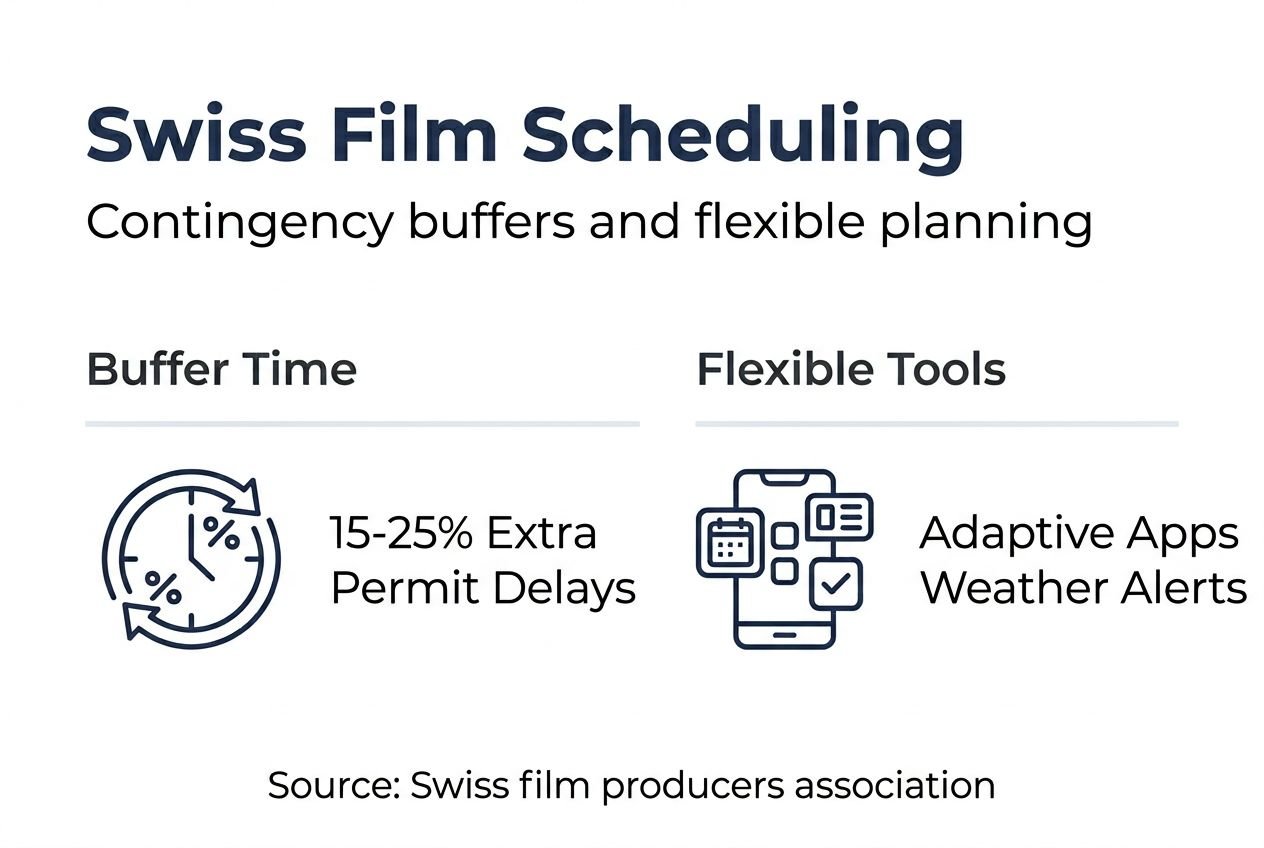
Contingency planning remains essential yet underused despite proven effectiveness. The Time Buffer Framework makes contingency planning systematic rather than ad hoc. You embed buffers directly into baseline schedules instead of treating them as emergency additions when problems arise.
Frameworks enable iterative adaptations during ongoing shoots by establishing clear adjustment protocols. When buffer time gets consumed, the framework triggers escalation procedures and alternative approaches rather than leaving crews scrambling without guidance.
Steps to apply the Time Buffer Framework on Swiss shoots:
Identify high-risk schedule elements including weather-dependent scenes, multi-cantonal permit requirements, and specialized equipment dependencies
Assign proportional buffer time early in planning, allocating 15-25% extra time to high-risk activities and 5-10% to moderate-risk elements
Monitor buffer consumption using production planning frameworks that track actual versus planned progress daily
Adapt schedules iteratively when buffers reach 50% consumption, triggering alternative approaches before complete buffer exhaustion
Document lessons learned to refine risk assessments and buffer allocations for future Swiss productions
Schedule Attribute | Fixed Schedules | Adaptive Frameworks |
Flexibility to absorb delays | Minimal | High |
Risk absorption capacity | Low | High |
Team responsiveness | Reactive | Proactive |
Planning complexity | Low | Moderate |
Success rate in variable conditions | 45-55% | 75-85% |
Applying good time management: practical tips and case studies
Real-world application demonstrates how theoretical concepts translate into measurable improvements on actual Swiss productions. Evidence-based examples and prioritized recommendations prepare you to implement effective time management immediately.
A documentary crew shooting across Bern, Lucerne, and Interlaken faced typical Swiss challenges: multi-cantonal permits, alpine weather variability, and equipment coordination. By partnering with local production services and implementing the Time Buffer Framework, they completed shooting two days early while staying 12% under budget. The $50,000 cost savings came from avoided overtime, reduced equipment rental days, and eliminated weather-related reshoots. Local coordination secured permits 30% faster than the crew’s previous European shoots, while weather-contingent backup scenes kept production moving during three days of alpine storms.
Prioritizing tasks by risk and complexity allows efficient buffer allocation. Identify which scenes absolutely require specific weather, locations, or permits versus which offer flexibility. Schedule high-risk elements early when maximum buffer time remains available. This sequencing prevents situations where remaining shoot days cannot accommodate necessary reshoots.
Digital tools customized for Swiss conditions maintain schedule control through real-time adaptation. Weather tracking apps specific to alpine regions provide hourly forecasts for mountain locations. Permit management systems track application status across multiple cantonal authorities simultaneously. These specialized tools address Swiss-specific challenges that generic scheduling software misses.
Prioritized tips for implementing good time management case study approaches:
Establish local partnerships early to accelerate permit timelines and access vendor networks
Implement proactive contingency buffers of 15-25% for weather-dependent and permit-reliant sequences
Use adaptive real-time monitoring through digital dashboards reviewed in daily production meetings
Apply chunking time management tips by breaking complex scenes into manageable segments with individual buffer allocations
Maintain regular team communication across departments to surface emerging delays before they cascade
Leverage finite scheduling software benefits for capacity-constrained resources like specialized alpine equipment
Streamline your film production in Switzerland with expert support
Implementing effective time management strategies becomes significantly easier when you partner with experienced local production services. The concepts covered in this guide transform from theory to practice through professional coordination and logistical expertise.
Full-service video production support simplifies permit acquisition across Swiss cantons, provides access to vetted local crews, and manages equipment logistics that often delay international shoots. With over 20 years of Swiss production experience, professional teams navigate cantonal regulations efficiently while maintaining the schedule flexibility that alpine filming demands.
[
Comprehensive support helps you stick to tight schedules and budgets by preventing common delays before they occur. Rather than reacting to permit rejections or equipment customs issues, local experts implement preventive measures based on deep market knowledge. Their established vendor relationships and regulatory familiarity eliminate the learning curve that costs visiting productions valuable shooting days.
Understanding video production costs in Switzerland requires factoring time management efficiency into budget projections. Schedule overruns in Switzerland’s high-wage environment escalate costs rapidly. Professional coordination that delivers on-time or early completion provides measurable ROI through avoided overtime and reduced rental periods.
The detailed filming permits guide demonstrates the complexity international filmmakers face without local assistance. Expert services handle this complexity, transforming potential schedule obstacles into smooth administrative processes that keep productions moving forward.
Frequently asked questions
What is good time management meaning in film production?
Good time management balances strict scheduling with flexibility and contingency planning to minimize delays and optimize resource use on film shoots. It includes strategic planning that accounts for local conditions like Swiss permit timelines and alpine weather, real-time monitoring of progress against baselines, and adaptive capacity to adjust schedules without derailing productions. Effective time management reduces delays by over 30% through proactive coordination rather than reactive problem-solving.
How do local Swiss services improve time management on film shoots?
Local services bring deep knowledge of cantonal regulations and established networks that shorten pre-production by 20% and prevent common delays. They coordinate permits across multiple jurisdictions simultaneously, source equipment without customs delays, and provide weather-contingent backup plans based on regional patterns. Their expertise eliminates the learning curve that costs international crews valuable time, transforming potential obstacles into smooth processes.
What tools help filmmakers manage time effectively during Swiss shoots?
Adaptive scheduling software and real-time dashboards improve decision-making by 40% through integrated weather forecasting, permit tracking, and crew coordination. Alpine-specific weather apps provide hourly mountain forecasts enabling proactive schedule adjustments. Permit management systems track application status across cantonal authorities, surfacing potential delays early. These specialized tools address Swiss conditions that generic scheduling platforms cannot accommodate effectively.
Why is contingency planning critical in time management for film shoots?
Contingency planning allocates buffer time to high-risk activities like alpine filming and multi-cantonal sequences, reducing costly overruns by 15% through flexible response capacity. Without buffers, unexpected permit delays or weather changes derail strict schedules completely, forcing expensive reshoots or incomplete productions. Systematic contingency frameworks embedded during initial planning provide the adaptation space that keeps shoots on track when predictable Swiss challenges emerge.
How much buffer time should Swiss film schedules include?
Allocate 15-25% buffer time to high-risk activities including weather-dependent alpine scenes, multi-cantonal permit sequences, and specialized equipment dependencies. Moderate-risk elements like studio work or confirmed location shoots require 5-10% buffers. These proportional allocations based on risk assessment prevent both under-buffering that leaves no recovery capacity and over-buffering that wastes resources on unnecessary padding.
What makes adaptive scheduling more effective than fixed schedules?
Adaptive scheduling reduces downtime by 25-35% and cuts disruptions by 50% through primary and backup daily objectives that maintain productivity when conditions prevent planned sequences. Fixed schedules collapse completely when Swiss weather or permit issues emerge, leaving crews idle. Adaptive approaches pivot to secondary objectives, keeping teams productive while preserving critical path elements for optimal conditions.
Recommended
