
Visual Storytelling Techniques in Film: Elevate Your Narrative


Most international filmmakers agree that mastering visual storytelling sets their projects apart, whether shooting in Switzerland’s iconic landscapes or a busy American metropolis. Modern audiences sense authenticity through powerful images more than ever before—studies show viewers retain up to 95 percent of a film’s message when conveyed visually rather than verbally. Discover how expert composition, color, and lighting choices help directors make every frame count while navigating Switzerland’s unique production opportunities.
Table of Contents
Key Takeaways
Point | Details |
Visual Storytelling | Convey complex narratives through visual elements like composition, color, and lighting, beyond mere dialogue. |
Cinematography’s Impact | Utilize camera techniques to deepen emotional and psychological storytelling, revealing internal character states. |
Editing and Sound | Integrate editing rhythm and sound design to enhance narrative flow and emotional coherence in storytelling. |
Avoiding Pitfalls | Maintain narrative discipline by planning structure and character development to prevent common storytelling mistakes. |
Defining Visual Storytelling in Film
Visual storytelling in film represents a sophisticated narrative approach where cinematic elements work together to communicate meaning beyond traditional dialogue. At its core, visual storytelling transforms narrative from a purely verbal experience into a multilayered sensory communication method. Digital storytelling techniques demonstrate how visual effects, camera angles, color palettes, and compositional choices can convey complex emotions and narrative complexity.
Cinema provides filmmakers with powerful tools to construct meaning through visual language. This includes strategic use of framing, lighting, camera movement, color grading, and mise en scène. Each visual element serves as a potential narrative device, capable of revealing character psychology, suggesting thematic undertones, and guiding audience emotional responses. By carefully choreographing these components, directors transform screen images from mere representations into profound storytelling instruments.
The interdisciplinary nature of visual storytelling encompasses multiple artistic disciplines. Drawing from cinema, graphic design, and narrative theory, filmmakers create intricate visual vocabularies that communicate sophisticated ideas without relying solely on spoken or written language. Visual narrative techniques enable storytellers to craft immersive experiences that engage viewers through sophisticated visual communication strategies.
Pro Tip: Practice analyzing films frame by frame to understand how visual storytelling techniques subtly communicate narrative information beyond dialogue.
This blog article is written by Pieter Nijssen, founder of Video Production Switzerland and an experienced video producer working across Switzerland. He delivers professional corporate and commercial video production for both international and local clients. Pieter is known for a reliable, stress-free production process and high production standards.
Major Techniques: Composition, Color, Lighting
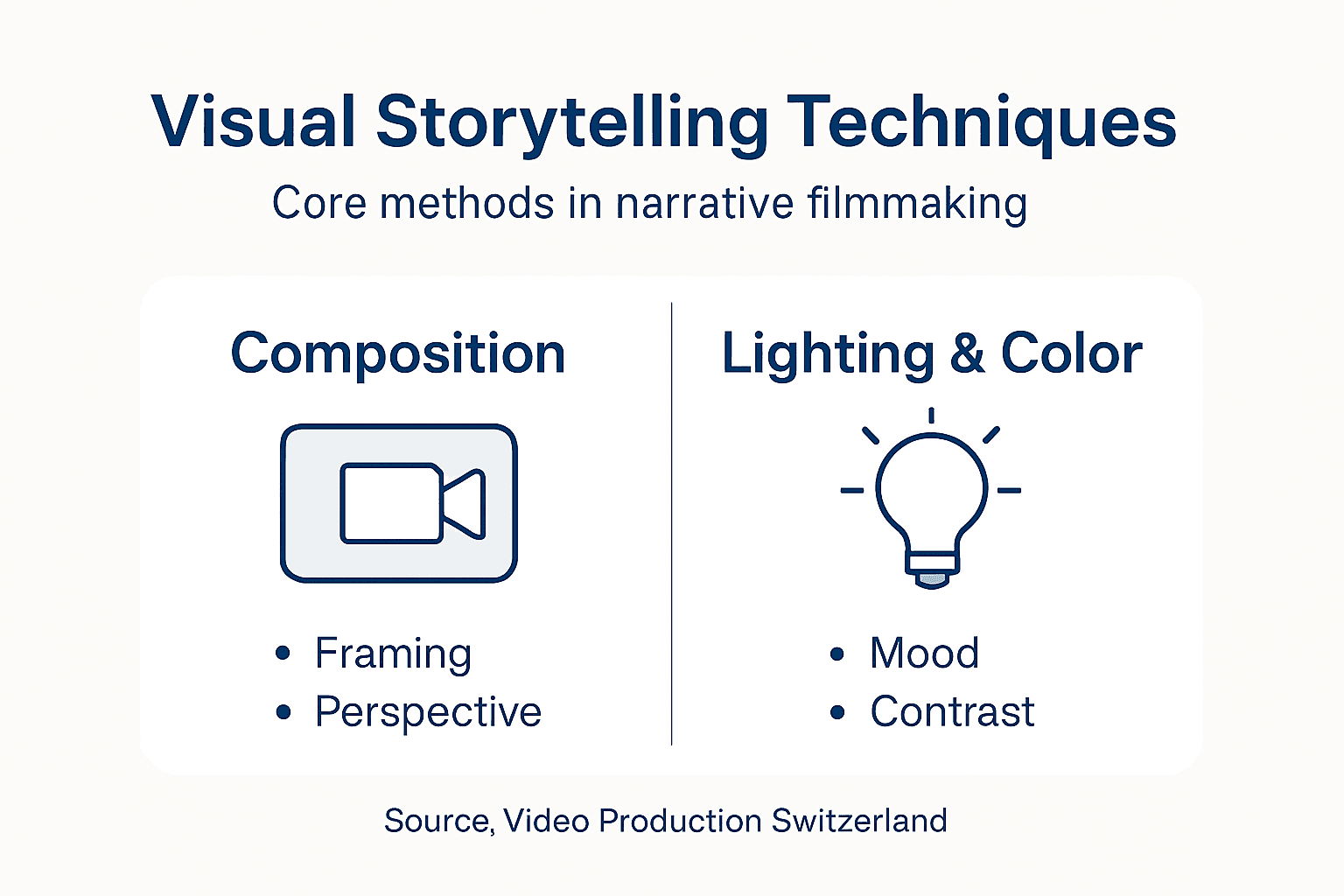
Filmmakers leverage three foundational visual storytelling techniques to create powerful narrative experiences: composition, color, and lighting. Color and lighting design serve as critical narrative tools that go beyond mere aesthetic choices, transforming visual storytelling into a sophisticated communication method.
Composition represents the strategic arrangement of visual elements within the frame, guiding viewer attention and creating psychological impact. Techniques like the rule of thirds, leading lines, and negative space help directors craft compelling visual narratives. Cinematographers carefully position actors, objects, and environmental elements to communicate subtext, reveal character relationships, and generate emotional resonance without relying on dialogue.
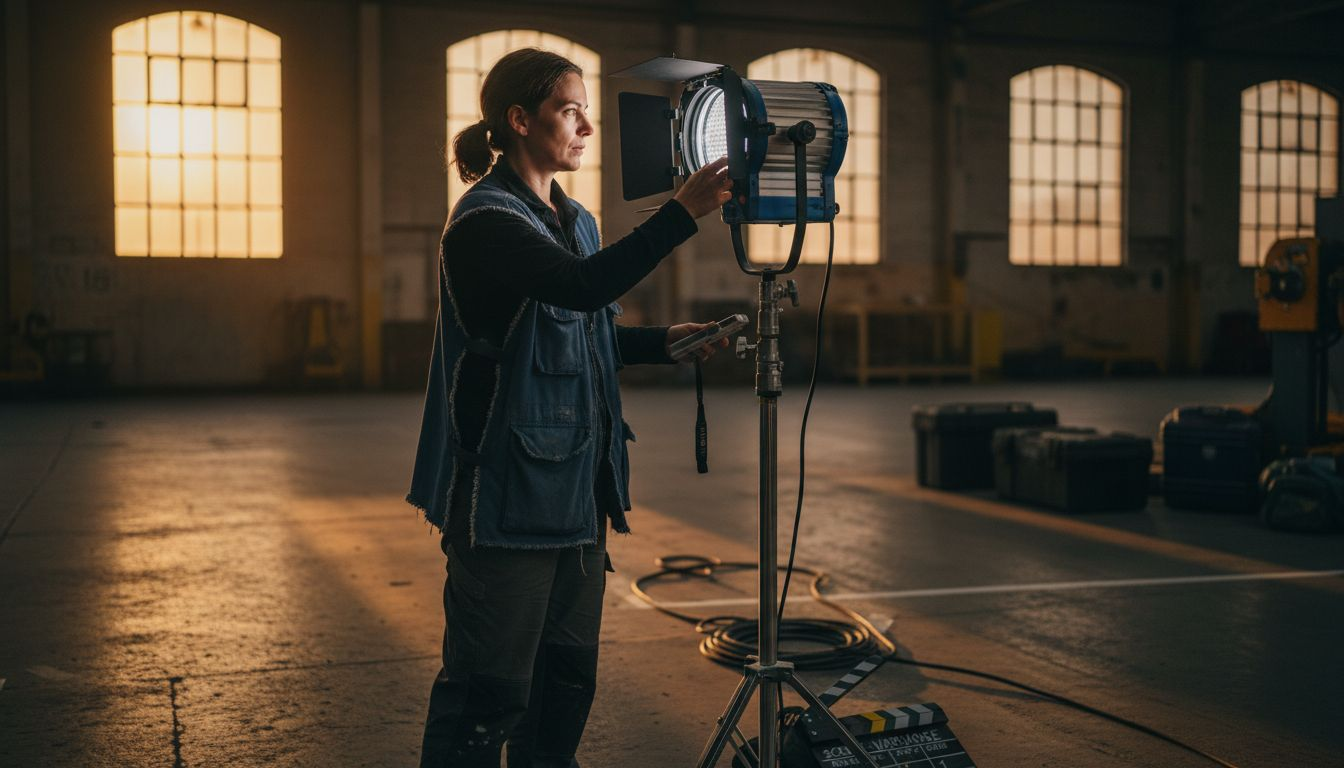
Color and lighting emerge as powerful psychological instruments in visual storytelling. Film illumination techniques demonstrate how specific color temperatures and lighting qualities can dramatically alter audience perception. Warm hues might suggest intimacy or nostalgia, while cool tones can evoke detachment or melancholy. Strategic lighting can highlight character emotions, create depth, and subtly guide viewers’ interpretations of narrative moments.
Pro Tip: Study masterful cinematographers like Christopher Doyle and Roger Deakins to understand how subtle visual choices dramatically transform storytelling.
This blog article is written by Pieter Nijssen, founder of Video Production Switzerland and an experienced video producer working across Switzerland. He delivers professional corporate and commercial video production for both international and local clients. Pieter is known for a reliable, stress-free production process and high production standards.
Here’s a summary of how major visual storytelling elements influence narrative in film:
Element | Primary Function | Narrative Impact |
Composition | Arranges objects in frame | Guides attention, shapes emotion |
Color | Sets visual tone | Evokes mood, signals themes |
Lighting | Controls scene illumination | Communicates emotion, builds atmosphere |
Camera Movement | Adds motion and dynamism | Reveals relationships, creates energy |
Sound & Editing | Shapes pacing and rhythm | Enhances immersion, signals transitions |
Cinematography’s Role in Narrative Depth
Cinematography transcends mere visual recording, serving as a profound narrative language that communicates complex emotional and psychological landscapes. Studies on cinematographic techniques reveal how strategic visual design elements create deeper narrative connections, transforming film from a passive viewing experience into an immersive storytelling journey.
The cinematographer’s arsenal includes multiple narrative tools that shape audience perception. Camera angles, movement, framing, and depth of field become sophisticated instruments for revealing character psychology and advancing plot dynamics. Camera work interpretation demonstrates how subtle visual choices can communicate internal character states, thematic undertones, and narrative tensions that dialogue alone cannot express.
In complex narrative structures, cinematography maintains visual continuity and emotional coherence. By carefully controlling visual elements like lens selection, camera movement, and shot composition, filmmakers create a visual grammar that guides viewer interpretation. These techniques allow directors to communicate subtext, generate emotional resonance, and create meaningful narrative rhythms that extend far beyond literal plot progression.
Pro Tip: Develop a deep understanding of visual metaphors by analyzing how master cinematographers use camera techniques to reveal character inner worlds.
This blog article is written by Pieter Nijssen, founder of Video Production Switzerland and an experienced video producer working across Switzerland. He delivers professional corporate and commercial video production for both international and local clients. Pieter is known for a reliable, stress-free production process and high production standards.
Editing, Sound, and Symbolism in Storytelling
Visual storytelling transcends visual elements, integrating editing, sound, and symbolic representations to create profound narrative experiences. Principles of editing techniques reveal how strategic narrative construction transforms raw footage into compelling storytelling that maintains audience engagement through rhythmic and emotional coherence.
Film editing acts as the invisible architect of narrative flow, carefully selecting and arranging shots to create meaning beyond individual scenes. Editors craft emotional journeys by manipulating timing, pacing, and sequence, transforming disparate visual moments into cohesive narrative experiences. Sound design metaphors demonstrate how audio elements work symbiotically with visual narratives, communicating subconscious emotional landscapes that dialogue alone cannot express.
Symbolism emerges as a critical storytelling language, allowing filmmakers to communicate complex ideas through visual and auditory metaphors. By strategically embedding symbolic elements within editing and sound design, directors create multilayered narratives that invite deeper audience interpretation. These techniques transform storytelling from linear information transmission into rich, emotionally resonant experiences that engage viewers on intellectual and subconscious levels.
Pro Tip: Analyze award-winning films frame by frame to understand how master editors use subtle transitions and sound design to create narrative depth.
This blog article is written by Pieter Nijssen, founder of Video Production Switzerland and an experienced video producer working across Switzerland. He delivers professional corporate and commercial video production for both international and local clients. Pieter is known for a reliable, stress-free production process and high production standards.
Common Mistakes and How to Avoid Them
Common storytelling mistakes can significantly undermine narrative effectiveness, transforming potentially powerful visual stories into forgettable experiences. Filmmakers frequently fall into predictable traps that dilute their narrative power, ranging from overwhelming audiences with unnecessary details to failing to establish meaningful character connections.
Narrative structure represents a critical battleground where many visual storytellers struggle. Filmmaking errors often emerge from poor planning, inconsistent visual styles, and insufficient attention to foundational storytelling principles. Common pitfalls include overcomplicated plots that confuse viewers, underdeveloped characters that lack emotional depth, and narrative sequences that meander without clear purpose or direction.
Technical execution compounds storytelling challenges, with sound design, editing rhythm, and visual coherence presenting complex opportunities for error. Successful filmmakers recognize that every visual and auditory choice must serve the narrative, avoiding gratuitous effects or stylistic flourishes that distract from the core storytelling objective. Maintaining narrative discipline requires constant vigilance, strategic decision-making, and a commitment to serving the story’s fundamental emotional truth.
Pro Tip: Create a detailed narrative breakdown before shooting, mapping each scene’s emotional purpose and narrative function to prevent storytelling drift.
This blog article is written by Pieter Nijssen, founder of Video Production Switzerland and an experienced video producer working across Switzerland. He delivers professional corporate and commercial video production for both international and local clients. Pieter is known for a reliable, stress-free production process and high production standards.
Below is a comparison of common visual storytelling mistakes and strategies for avoiding them:
Mistake | Consequence | How to Avoid |
Overcomplicated plots | Confuses viewers | Simplify and clarify story beats |
Inconsistent visual style | Disrupts immersion | Plan visual approach thoroughly |
Underdeveloped characters | Reduces emotional impact | Focus on character motivation |
Excessive technical flourish | Distracts from core narrative | Prioritize narrative relevance |
Elevate Your Visual Storytelling with Expert Film Production Support
Mastering visual storytelling techniques like composition, color, and cinematography requires not only creative vision but a flawless execution environment. The challenges you face in coordinating permits, sourcing trusted crew, and managing logistics can distract from delivering powerful narratives that truly connect with audiences. Our professional video production services in Switzerland specialize in overcoming these hurdles so your film’s visual storytelling elements shine without compromise.

Discover how partnering with Video Production Switzerland ensures seamless management of every detail, from expert local crew and equipment sourcing to location scouting and transportation. When you focus on crafting compelling narratives through sophisticated visual techniques, we handle the complex logistics that keep your shoot stress-free and on time. Start transforming your film projects today by scheduling a free consultation and unlock the full storytelling potential with reliable expert support. Visit our website to learn more and take the next step.
Frequently Asked Questions
What is visual storytelling in film?
Visual storytelling in film is a narrative approach that uses visual elements like framing, color, and lighting to convey meaning and emotions without relying solely on dialogue. It transforms traditional storytelling into a rich, sensory experience.
How can composition affect visual storytelling?
Composition involves the arrangement of visual elements within a frame. Techniques like the rule of thirds and leading lines guide viewer attention and evoke emotions, shaping the narrative’s psychological impact.
What role does color play in visual storytelling?
Color serves as a powerful tool in visual storytelling, setting the tone and mood of a scene. Different colors can evoke specific emotions and signal themes, influencing audience perception.
Why is cinematography important for narrative depth?
Cinematography goes beyond capturing images; it communicates complex emotional and psychological landscapes. Techniques like camera angles and movement enhance storytelling by revealing character inner worlds and advancing plot dynamics.
Recommended
