
Master Time Management Work Sheets for Film Shoots

Tight filming schedules in Switzerland can quickly turn chaotic without a clear blueprint. For international filmmakers and production coordinators, staying on target means more than creative vision alone. By using worksheets to define goals, assign tasks, and manage shifting logistics, you convert complex projects into a series of actionable steps. This approach creates structured accountability for every team member, supporting smooth communication and reliable delivery on set.
Table of Contents
Quick Summary
Key Insight | Explanation |
1. Define Clear Production Goals | Establishing precise objectives in worksheets minimizes miscommunication and aligns the team throughout the production process. |
2. Customize Time Management Templates | Adapting scheduling tools to fit crew needs improves efficiency and helps avoid production bottlenecks. |
3. Assign Clear Tasks with Deadlines | Concrete task assignments and deadlines ensure team members are synchronized and accountable for their responsibilities. |
4. Conduct Regular Progress Check-ins | Scheduled check-ins enhance visibility on project status and allow for proactive issue resolution. |
5. Continuously Review and Adjust Worksheets | Regular updates to worksheets help teams adapt to changes and maintain effective resource allocation during production. |
Step 1: Define Production Goals with Work Sheets
Creating effective time management worksheets for film shoots starts with clearly defining your production goals. Work sheets transform abstract creative visions into structured, actionable plans that guide your entire production process. By establishing precise objectives early, you can minimize potential miscommunications and keep your team aligned.
To define production goals effectively, you’ll want to develop comprehensive work sheets that capture critical project details. Film production workflows provide essential roadmaps connecting creative, technical, and managerial processes across your project’s lifecycle. Your worksheets should include several key components:
Project Overview: Describe the film’s core concept, genre, and target audience
Creative Vision: Outline specific aesthetic and narrative goals
Technical Requirements: List equipment, locations, and specialized resources needed
Budget Parameters: Define financial constraints and resource allocation
Timeline Milestones: Establish critical deadlines for pre-production, shooting, and post-production phases
Successful production goal worksheets transform complex film projects into manageable, trackable initiatives. By breaking down your project into structured components, you create a clear blueprint that helps every team member understand their responsibilities and contributions.
Here’s a quick reference for key objectives at each film production phase:
Phase | Primary Objective | Typical Outcome |
Pre-production | Planning and preparation | Detailed project plan |
Shooting | Execution of creative vision | Raw footage collected |
Post-production | Editing and review | Finalized film product |
Continuous Review | Adapt workflow | Improved team alignment |
Effective workflows align creative vision with technical execution, reducing miscommunication and potential budget overruns.
Pro tip: Create separate goal work sheets for each production phase to maintain granular focus and adaptability throughout your film project.
Step 2: Customize Time Management Templates for Crew Needs
Customizing time management templates for film production requires a strategic approach that adapts to your specific crew’s workflow and project requirements. By creating flexible, responsive scheduling tools, you can optimize your team’s efficiency and minimize potential production bottlenecks.
The key to effective template customization lies in understanding your crew’s unique dynamics. Shooting schedule templates enable production teams to centralize scenes, track crew assignments, and adjust schedules in real-time, providing critical adaptability for complex film projects. When developing your custom templates, consider incorporating these essential elements:
Crew Roles: Create dedicated columns for each department’s specific responsibilities
Time Allocation: Design flexible time blocks that accommodate scene complexity
Resource Tracking: Include sections for equipment, location, and personnel availability
Communication Channels: Integrate notes and update mechanisms for real-time collaboration
Contingency Planning: Build in buffer times and alternative scheduling options
Successful time management templates should feel like living documents that evolve with your production’s changing needs. By developing templates that are both comprehensive and adaptable, you create a powerful tool for maintaining production momentum and team alignment.
Compare standard vs. customizable time management templates for film crews:
Template Type | Flexibility | Crew Engagement | Adaptability |
Standard | Low | Often limited | Fixed, less responsive |
Customizable | High | Increased | Adapts to changing needs |
Customizable templates allow producers to tailor schedules to daily needs and accommodate last-minute changes efficiently.
Pro tip: Regularly review and update your time management templates during production to ensure they remain responsive to emerging logistical challenges.
Step 3: Assign Tasks and Deadlines Using Work Sheets
Assigning tasks and deadlines is the critical bridge between production planning and actual execution. Your work sheets transform abstract project goals into concrete, actionable assignments that keep your entire film production team synchronized and accountable.
Assignment tracker templates provide a centralized system for delegating responsibilities and monitoring progress across different production stages. When developing your task assignment strategy, focus on creating a comprehensive and clear workflow that breaks down complex film production processes into manageable components. Consider implementing these key strategies:
Clear Role Definitions: Specify exact responsibilities for each crew member
Precise Deadline Mapping: Set realistic timeframes for each task and deliverable
Interdepartmental Dependencies: Highlight how tasks interconnect across different production teams
Priority Ranking: Use color coding or numerical systems to indicate task urgency
Progress Tracking: Include columns for status updates and completion percentages
Effective task assignment goes beyond simply listing responsibilities. It requires a dynamic approach that allows for real-time adjustments and maintains transparent communication channels throughout your production cycle. Your work sheets should serve as living documents that evolve with your project’s changing needs.
Structured task assignments prevent overlap, track completion status, and ensure deadlines are met to avoid costly production delays.
Pro tip: Create a weekly review process where department heads update and reconcile task progress to maintain project momentum and catch potential bottlenecks early.
Step 4: Monitor Progress with Scheduled Check-ins
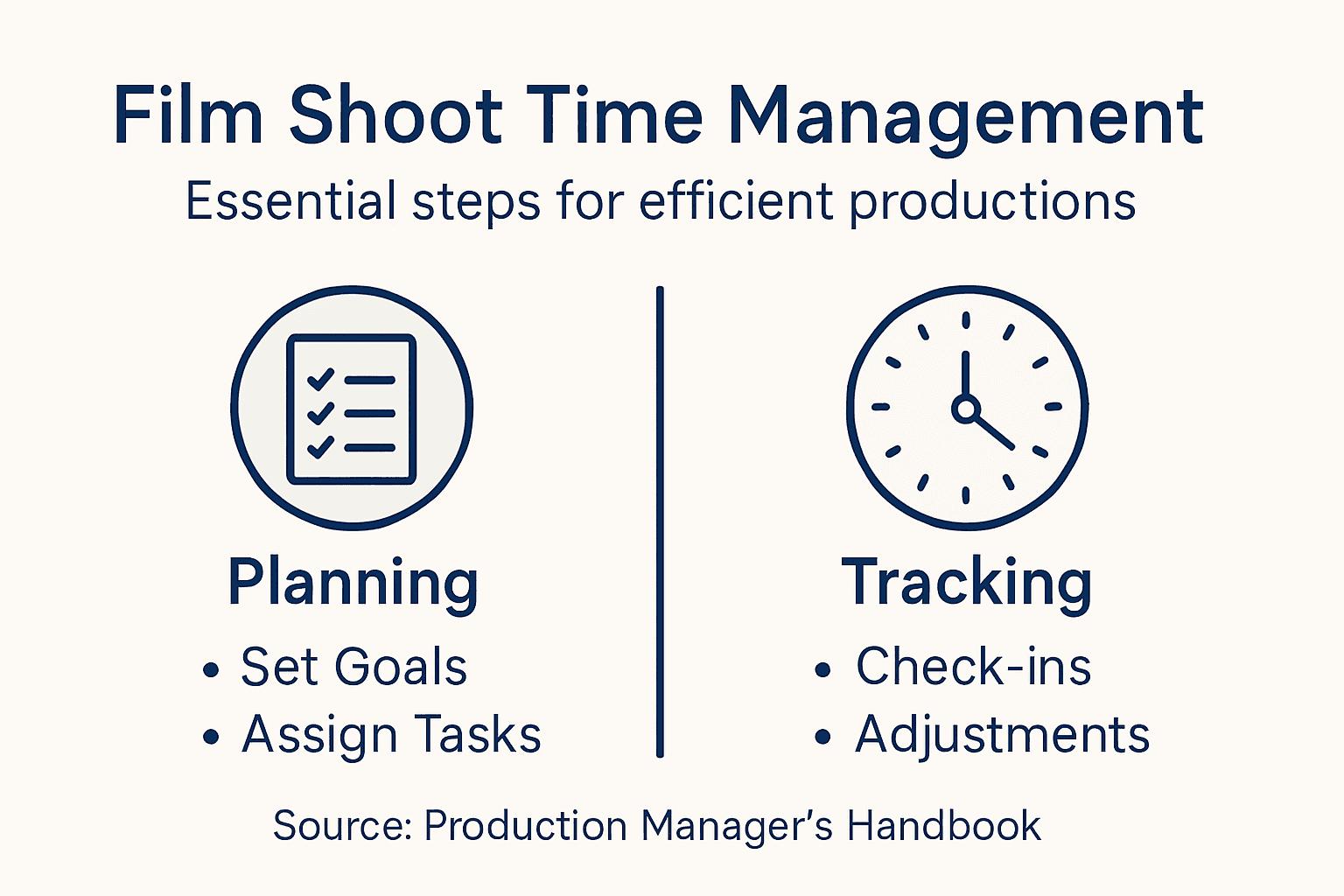
Scheduled check-ins are the strategic pulse of successful film production, providing critical visibility into your project’s ongoing status and momentum. By establishing a systematic approach to progress monitoring, you create a proactive environment that catches potential issues before they become costly roadblocks.
Film production progress tracking offers real-time insights that enable producers to anticipate challenges and maintain project alignment. When designing your check-in strategy, focus on creating a structured yet flexible framework that keeps all team members accountable and informed. Consider implementing these essential monitoring techniques:
Frequency Consistency: Schedule regular check-ins at predetermined intervals
Comprehensive Status Reports: Require detailed updates from each department
Milestone Tracking: Document progress against original project timelines
Bottleneck Identification: Create space for discussing potential production challenges
Actionable Feedback: Ensure each check-in results in clear next steps
Successful progress monitoring transforms passive observation into active problem-solving. Your check-ins should be more than routine meetings - they are strategic opportunities to realign resources, address emerging issues, and maintain your production’s creative and logistical momentum.
Regular check-ins integrated into production schedules reduce last-minute changes and improve team communication across creative and technical domains.
Pro tip: Rotate meeting leadership among department heads to ensure diverse perspectives and maintain engagement during progress monitoring sessions.
Step 5: Review and Adjust Work Sheets for Optimal Results
Reviewing and adjusting work sheets is a critical process that transforms static documentation into dynamic production management tools. Your ability to adapt and refine these documents in real-time can mean the difference between a smooth production and potential chaos.
Production document management requires continuous refinement to accommodate the dynamic nature of film shoots. When reviewing your work sheets, focus on creating a systematic approach that allows for flexibility while maintaining overall project structure. Consider implementing these key adjustment strategies:
Real-Time Tracking: Update worksheets immediately after significant changes
Performance Analysis: Compare planned versus actual timelines and resource usage
Flexibility Zones: Build buffer periods for unexpected production challenges
Collaborative Review: Involve department heads in regular documentation updates
Comprehensive Documentation: Capture detailed notes explaining each modification
Successful work sheet management is about striking a balance between maintaining structure and embracing necessary adaptations. Your documents should reflect the living, breathing reality of your film production, providing clear guidance while remaining responsive to on-the-ground developments.
Continuous review allows production teams to accommodate unforeseen changes and optimize resource allocation effectively.
Pro tip: Develop a standardized change log within your work sheets to track all modifications, ensuring transparency and accountability across your production team.
Streamline Your Film Shoot with Expert Time Management Support
Managing complex film shoots requires precise time management work sheets that keep every detail on track from pre-production to post-production. The challenges of assigning tasks, scheduling check-ins, and adjusting workflows can easily lead to costly delays and miscommunication without the right local expertise. If you need reliable support to customize your production goals, allocate crew roles, and monitor progress in real time, Video Production Switzerland offers the trusted logistical management you need.

Benefit from over 20 years of experience that ensures every permit, location, accommodation, and equipment detail is handled smoothly. Our expert local crew and comprehensive service process lets you focus on your creative vision while we take care of the complexities. Don’t risk disrupting your well-crafted time management plans—partner with a team that understands how to turn them into flawless execution. Visit Video Production Switzerland now to schedule your free consultation and secure a seamless, on-time shoot.
Frequently Asked Questions
How can I effectively define production goals using time management worksheets for film shoots?
To define production goals effectively, start by developing comprehensive worksheets that outline project specifics like the film’s core concept, genre, and target audience. Break down objectives into clear components, such as technical requirements and budget parameters, to enhance team alignment and minimize miscommunication.
What elements should I include in a customized time management template for my film crew?
A good time management template should feature sections for crew roles, flexible time allocation, resource tracking, communication channels, and contingency planning. Include dedicated columns for each department’s responsibilities to ensure everyone is aware of their tasks and the overall schedule.
How can I assign tasks and deadlines effectively using worksheets during film production?
Assign tasks by clearly defining each crew member’s role and setting realistic deadlines for their responsibilities. Use a priority ranking system to indicate task urgency and track completion status regularly to keep the production on schedule.
What is the best way to monitor progress during a film shoot?
Establish a system for scheduled check-ins to monitor progress, requiring comprehensive status reports from each department. Focus on documenting milestones and identifying bottlenecks to facilitate real-time adjustments and keep the production moving smoothly.
How can I adjust work sheets throughout the film production process?
To adjust worksheets effectively, track changes in real time and analyze how actual resource usage compares to what was planned. Encourage department heads to participate in regular updates to ensure documentation reflects the dynamic nature of the film shoot and capture necessary modifications.
Recommended
