
Video Production Process: Complete Guide for Filmmakers


More than 500 hours of video are uploaded to YouTube every minute, showing just how vital professional video production has become in our digital world. From short commercials to feature films, the journey from a single idea to a polished video involves careful planning, creative teamwork, and precise technology. Understanding this process helps filmmakers and businesses create content that truly connects with any audience.
Table of Contents
Key Takeaways
Point | Details |
Structured Production Phases | Video production consists of three main stages: pre-production, production, and post-production, each contributing to the overall quality of the final product. |
Collaboration in Crew Roles | Effective video creation relies on the coordination of specialized crew roles, from directors to technical support, ensuring a seamless production process. |
Technological Integration | Choosing the right equipment and technology is crucial for achieving a high-quality visual and audio experience in video productions. |
Legal and Safety Compliance | Navigating permits and safety protocols is essential for protecting crew members and ensuring production legitimacy, requiring thorough planning. |
Defining the Video Production Process
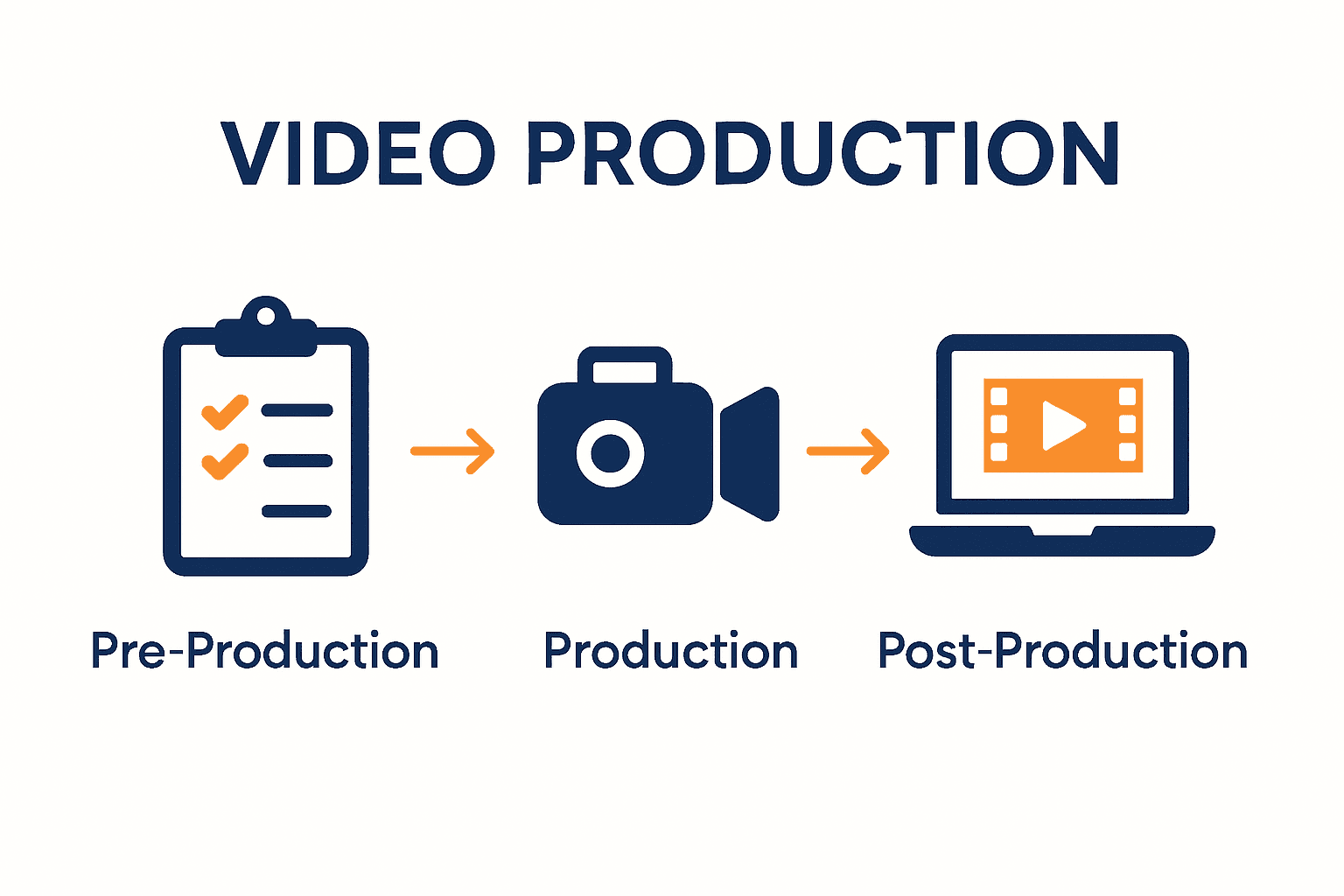
Video production is a comprehensive creative and technical process that transforms raw visual ideas into compelling video content. According to Wikipedia, video production encompasses three fundamental stages: pre-production, production, and post-production. This structured approach ensures systematic development of visual storytelling from initial concept to final deliverable.
At its core, video production involves a strategic sequence of planning, capturing, and refining visual narratives. As Adobe explains, the process requires meticulous attention across multiple phases, each contributing unique elements to the final product. Filmmakers must navigate complex technical and creative challenges, balancing artistic vision with practical execution.
The three primary stages of video production each serve critical functions:
Pre-Production: Initial planning phase where concepts are developed, scripts are written, locations are scouted, and resources are organized
Production: Active shooting stage where actual video footage is captured using cameras, lighting, and sound equipment
Post-Production: Final refinement phase involving editing, visual effects, color grading, and audio mixing
For filmmakers seeking deeper insights into these workflow intricacies, our understanding the digital video workflow tutorial provides an excellent companion resource for mastering each production stage. Successful video creation demands not just technical skill, but a holistic understanding of how these interconnected phases combine to produce impactful visual storytelling.
Stages: Pre-Production, Production, Post-Production
The video production process is a carefully orchestrated journey that transforms creative concepts into powerful visual stories. As McGill University explains, this process is systematically divided into three critical stages, each playing a crucial role in creating high-quality video content.
Pre-Production is the foundational planning phase where all strategic groundwork is laid. This stage involves:
Script development and storyboarding
Location scouting and securing permits
Casting talent and crew selection
Budget planning and resource allocation
Equipment and logistics preparation
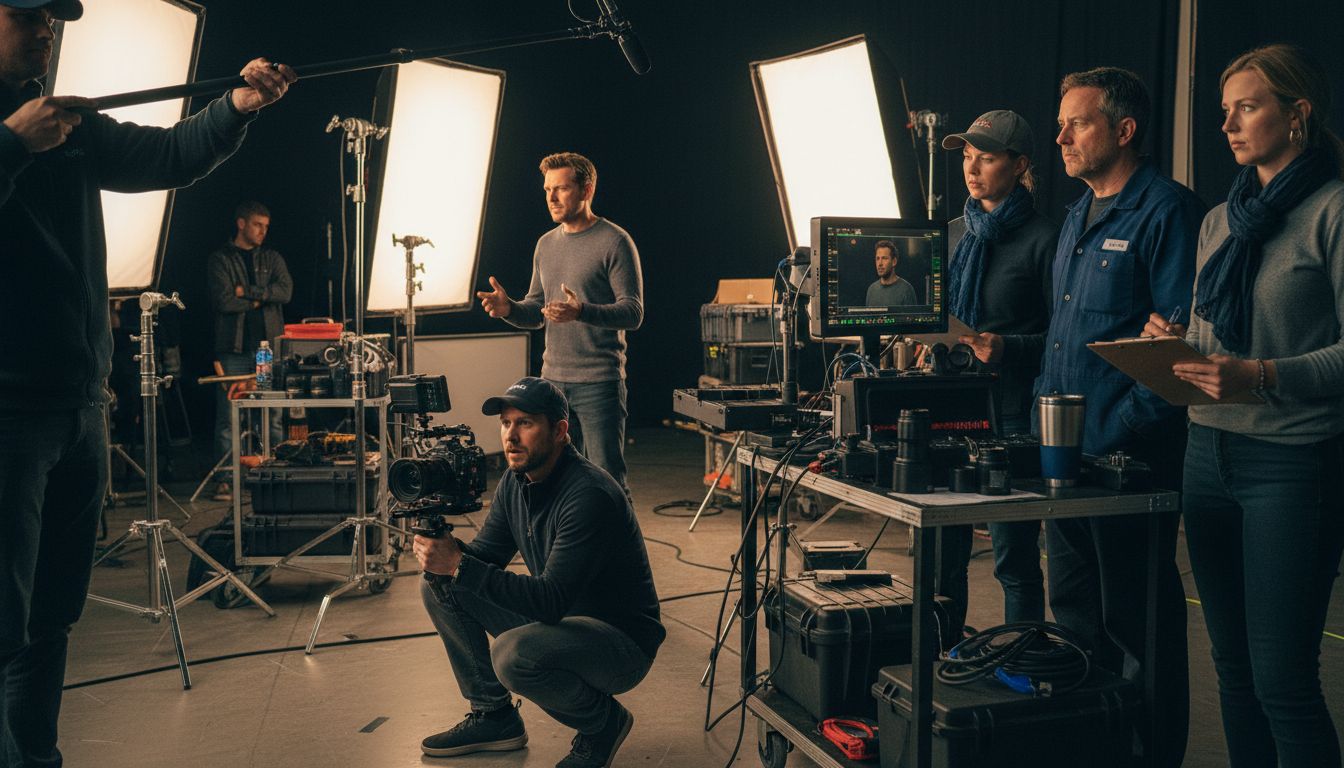
The Production stage represents the active filming period where all pre-planned elements come together. Cinematographers, sound technicians, and directors collaborate to capture raw footage according to the meticulously developed blueprint. Every camera angle, lighting setup, and performance is carefully executed to match the original creative vision.
Finally, Post-Production transforms raw footage into a polished final product. According to KU Leuven, this stage is essential for creating a high-quality deliverable. Post-production encompasses:
Video editing and sequencing
Color grading and visual effects
Sound mixing and audio enhancement
Adding music, graphics, and titles
Final review and client approval
For filmmakers seeking a comprehensive breakdown of these intricate workflow stages, our guide on video production and post-production essentials provides deeper insights into mastering each critical phase of video creation.
Key Roles and Responsibilities in Crews
Successful video production relies on a complex network of specialized professionals, each bringing unique skills to the creative process. According to Wikipedia, a film crew comprises multiple essential roles that work in intricate coordination to transform visual concepts into compelling narratives.
Core Creative Leadership Roles form the backbone of any production team:
Director: The creative visionary who interprets the script and guides artistic vision
Producer: Manages overall project logistics, budgeting, and team coordination
Cinematographer: Responsible for visual composition and technical camera work
Production Designer: Creates the visual aesthetic and manages set design
Technical Support Roles are equally critical in executing the production vision. McGill University emphasizes that while directors oversee creative aspects, successful productions depend on seamless technical execution. These roles include:
Sound Engineer: Manages audio recording and sound quality
Lighting Technician: Designs and implements visual lighting strategies
Gaffer: Leads the electrical and lighting department
Camera Operators: Execute precise camera movements and shots
Supporting roles like script supervisors, location managers, and post-production specialists complete the ecosystem, ensuring every aspect of video creation is meticulously managed. Their collaborative effort transforms raw creative ideas into polished visual stories.
Here’s a summary of the core responsibilities involved in key video production crew roles:
Role | Primary Responsibilities |
Director | Guide creative vision Direct talent |
Producer | Manage budget Oversee logistics |
Cinematographer | Lead camera work Shape visual style |
Production Designer | Set design Visual aesthetics |
Sound Engineer | Record audio Ensure sound quality |
Lighting Technician | Set up lighting Manage on-set atmosphere |
Camera Operators | Execute camera shots Operate equipment |
Gaffer | Supervise lighting team Electrical setup |
To dive deeper into understanding these intricate crew dynamics, our guide on video production and post-production essentials offers comprehensive insights into how these professionals work together to create exceptional video content.
Essential Equipment and Technology Choices
Video production technology has dramatically transformed the creative landscape, offering filmmakers unprecedented capabilities for capturing and crafting visual stories. As Wikipedia highlights, essential equipment including cameras, lighting, and sound recording devices fundamentally impacts a production’s quality and stylistic expression.
Camera Systems represent the primary visual capture technology:
Professional Cinema Cameras: High-end digital cinema cameras with interchangeable lens systems
Mirrorless and DSLR Cameras: Versatile hybrid systems supporting high-quality video recording
Action Cameras: Compact, rugged devices for dynamic and challenging shooting environments
Drone Cameras: Enabling unique aerial cinematography perspectives
Audio and Sound Recording Equipment is equally critical for professional productions:
Shotgun Microphones: Highly directional microphones for precise sound capture
Lavalier Microphones: Compact wireless systems for individual talent tracking
Boom Microphones: Professional sound recording for complex audio environments
Digital Audio Recorders: High-fidelity sound capture with multiple input options
According to Adobe, selecting appropriate equipment is crucial in achieving desired visual and audio quality. Modern video production demands not just technical gear, but a strategic approach to technology integration that enhances storytelling capabilities.
For filmmakers seeking deeper insights into navigating complex equipment choices, our guide on video production and post-production essentials offers comprehensive recommendations for building a versatile production toolkit.
Permits, Legal Requirements, and Safety Protocols
Navigating the complex landscape of legal and safety considerations is fundamental to successful video production. According to Wikipedia, obtaining necessary permits and implementing rigorous safety protocols are critical steps in ensuring compliance and protecting the production crew.
Permit Requirements vary significantly depending on location and production scope:
Location Permits: Official authorization for filming in public or private spaces
Special Use Permits: Required for drone footage, controlled environments, or sensitive areas
Local Government Approvals: Ensuring compliance with municipal regulations
Insurance Documentation: Comprehensive liability coverage for potential incidents
Safety Protocols form the backbone of professional production management. McGill University emphasizes the importance of establishing comprehensive safety frameworks during pre-production. Critical safety considerations include:
Risk Assessment Procedures: Identifying and mitigating potential production hazards
Personal Protective Equipment (PPE): Providing appropriate safety gear for crew members
Emergency Response Plans: Developing clear protocols for medical or unexpected situations
On-Set Health Monitoring: Implementing guidelines for crew well-being
Effective legal and safety management requires meticulous planning and proactive risk mitigation. Productions must balance creative vision with regulatory compliance, ensuring both artistic excellence and crew protection.
For filmmakers seeking detailed guidance on navigating complex permit requirements, our guide on obtaining filming permits offers comprehensive insights into securing necessary authorizations for smooth, compliant productions.
Budgeting, Scheduling, and Project Management
Successful video production hinges on meticulous planning and strategic resource management. According to Wikipedia, pre-production encompasses comprehensive budgeting, scheduling, and project management to coordinate all critical aspects before filming begins.
Budgeting Strategies require detailed financial planning:
Above-the-Line Costs: Expenses for key creative personnel
Below-the-Line Costs: Technical crew, equipment, and operational expenses
Contingency Funds: Reserved budget for unexpected production challenges
Cost Tracking and Reporting: Continuous financial monitoring
Project Scheduling demands precision and strategic time management. McGill University emphasizes that effective project management ensures productions stay on track and within allocated resources. Key scheduling components include:
Detailed Production Timeline: Mapping out each project phase
Resource Allocation Charts: Tracking personnel and equipment availability
Milestone Tracking: Setting and monitoring critical project checkpoints
Buffer Time: Building flexibility into production schedules
Professional project management transforms complex productions from potential chaos into streamlined, efficient operations. Success requires balancing creative vision with pragmatic logistical planning, ensuring every resource is strategically deployed.
Filmmakers seeking deeper insights into navigating the intricate world of project management in film can explore our comprehensive guide to mastering production coordination and strategic planning.
Take Control of Your Video Production Journey with Expert Local Support
Navigating the complex video production process can feel overwhelming, especially when dealing with permits, crew coordination, and equipment selection. This guide highlights challenges like pre-production planning, managing technical roles, and securing legal requirements—all essential steps that demand precision and experience. If you want to focus on your creative vision without the stress of logistical hurdles, expert assistance is key.
Partnering with Video Production Switzerland means gaining access to trusted local crews, seamless permit handling, and top-tier equipment tailored to your project needs. Benefit from over 20 years of industry knowledge ensuring your shoot stays on schedule and on budget. Ready to streamline your process and bring your story to life with less hassle Explore our comprehensive video production support and learn how our team handles every stage from pre-production to post-production with professionalism and care. Start your free consultation today and take the first step toward flawless production execution.
Frequently Asked Questions
What are the main stages of the video production process?
The video production process consists of three main stages: pre-production, production, and post-production. Pre-production involves planning and organizing resources, production is the shooting phase where footage is captured, and post-production is where editing and final touches are applied to create the finished product.
Why is pre-production important in video production?
Pre-production is crucial because it lays the groundwork for the entire project. It involves script development, location scouting, budgeting, and assembling the right team, which helps to ensure that the production runs smoothly and effectively.
What roles are essential in a video production crew?
Essential roles in a video production crew include the director, producer, cinematographer, production designer, sound engineer, and lighting technician. Each role has specific responsibilities that contribute to the overall success of the production.
What equipment is essential for video production?
Essential equipment for video production includes professional cinema cameras, audio recording devices (like shotgun and lavalier microphones), lighting setups, and monitoring tools. The right gear significantly impacts the quality and style of the final video output.
Recommended
