
Post Production Phase: Elevating Film Quality in Switzerland


Filmmakers working across Switzerland know that the journey from camera to finished film rarely follows a simple path. The post-production phase demands collaboration and expert attention, turning raw footage into a cohesive story through sophisticated editing techniques. Avoiding costly delays hinges on managing each detail, from picture editing to sound design, as creative teams shape the final cinematic experience. This guide highlights practical approaches for international production managers wanting to deliver premium quality without logistical headaches.
Table of Contents
Key Takeaways
Point | Details |
Post-Production Importance | The post-production phase is essential for transforming raw footage into a cohesive and polished cinematic experience. |
Key Roles in Post-Production | A collaborative team, including Video Editors and Sound Designers, is vital for creating an impactful final product. |
Workflow Coordination | Effective asset management and cloud-based collaboration are crucial for maintaining quality and efficiency during post-production. |
Budget Management Strategies | Proactive financial planning and detailed itemization of post-production expenses help avoid common pitfalls and manage costs effectively. |
Defining the Post Production Phase in Filmmaking
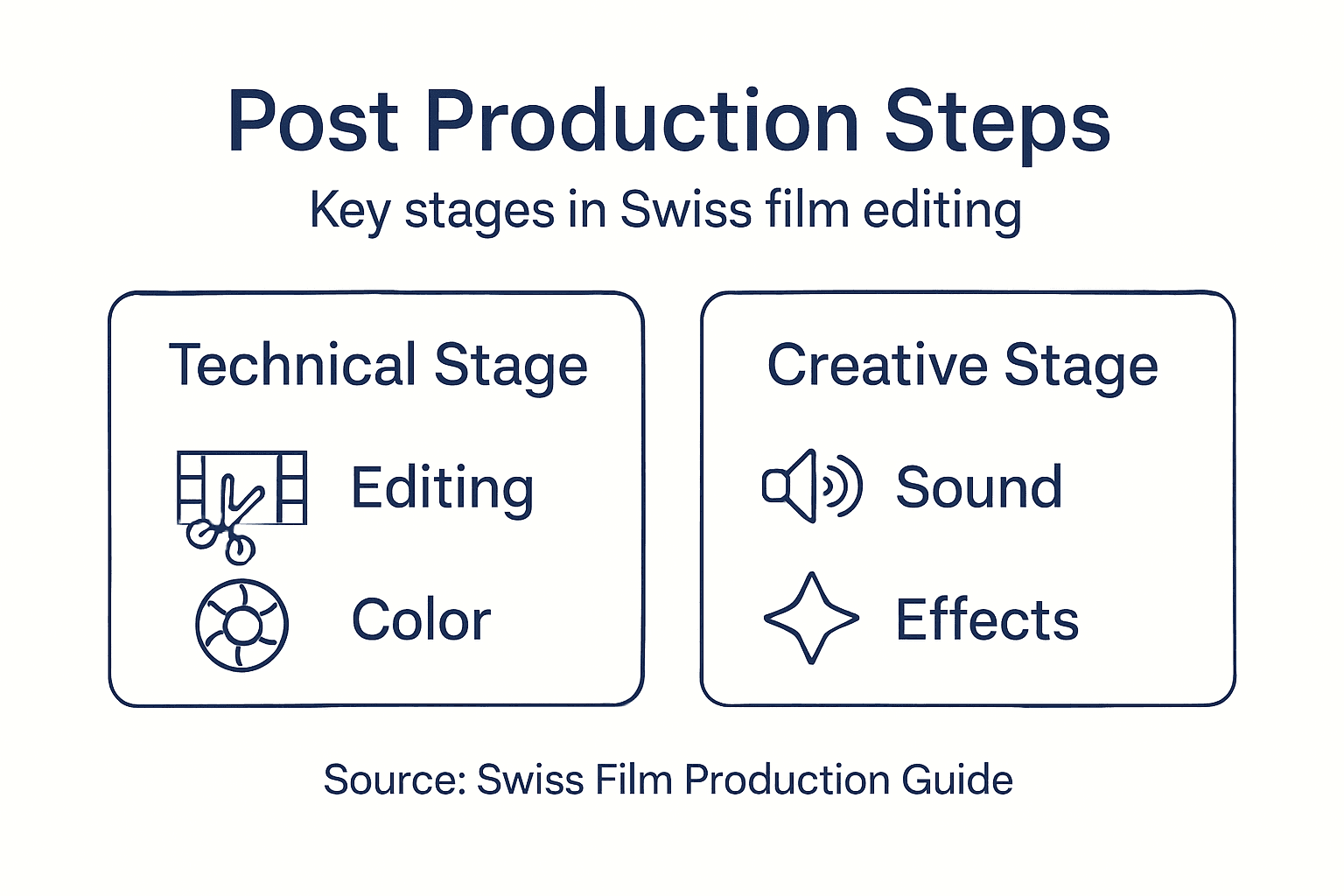
Filmmaking reaches a critical transformation point in the post-production phase, where raw footage evolves into a polished cinematic experience. Post-production processes represent the intricate stage where directors and creative teams sculpt their visual narrative through sophisticated editing techniques.
This complex phase encompasses multiple critical activities that shape a film’s final presentation:
Picture Editing: Selecting and arranging shots to create narrative flow
Sound Design: Enhancing audio elements and creating immersive soundscapes
Visual Effects Integration: Adding computer-generated or digital visual enhancements
Color Grading: Adjusting color palettes to establish mood and aesthetic consistency
Audio Mixing: Balancing dialogue, music, and sound effects
Post-production is more than technical manipulation—it’s the artistic refinement that transforms disconnected footage into a cohesive storytelling experience. Collaborative workflows involve multiple professionals working synchronously to polish every visual and auditory detail.
The duration and complexity of post-production vary dramatically depending on project scope. A short documentary might require weeks of editing, while complex visual effects-driven blockbusters could spend months perfecting each frame. Professionals utilize advanced software and collaborative platforms to streamline these intricate processes, ensuring efficient and high-quality final deliverables.
Pro tip: Invest in robust project management tools to coordinate multiple post-production team members and track complex editing workflows efficiently.
This blog article is written by Pieter Nijssen, founder of Video Production Switzerland and an experienced video producer working across Switzerland. He delivers professional corporate and commercial video production for both international and local clients. Pieter is known for a reliable, stress-free production process and high production standards.
Key Stages From Editing to Final Delivery
The journey from raw footage to final film involves a meticulously structured post-production workflow that transforms disparate visual elements into a cohesive narrative. Post-production stages require specialized skills, advanced software, and collaborative coordination to achieve cinematic excellence.
Key stages of the post-production process typically include:
Footage Transfer: Securely migrating raw video files to reliable storage systems
Offline Editing: Creating proxy files for initial rough cuts and narrative structuring
Rough Cut Development: Arranging and selecting optimal shots to construct initial story flow
Sound Design: Layering audio elements, including dialogue, ambient sounds, and musical score
Visual Effects Integration: Adding digital enhancements and computer-generated imagery
Color Grading: Adjusting visual tone, color balance, and aesthetic consistency
Final Delivery Preparation: Formatting content for various distribution platforms
Each stage demands precision and creativity. Professional editors leverage sophisticated digital tools to refine footage, ensuring every frame contributes meaningfully to the storytelling process. The complexity of these stages can vary dramatically, with some projects requiring weeks of meticulous work while others might span several months.

Professionals must maintain a delicate balance between technical expertise and artistic vision. Advanced software platforms enable seamless collaboration, allowing sound designers, visual effects artists, and editors to work synchronously, transforming raw footage into a polished cinematic experience.
Pro tip: Develop a comprehensive project management checklist to track multiple post-production stages and ensure no critical details are overlooked during the editing process.
This blog article is written by Pieter Nijssen, founder of Video Production Switzerland and an experienced video producer working across Switzerland. He delivers professional corporate and commercial video production for both international and local clients. Pieter is known for a reliable, stress-free production process and high production standards.
Essential Roles and Responsibilities Explained
Post-production is a collaborative ecosystem where multiple specialized professionals work together to transform raw footage into a compelling cinematic experience. Post-production roles are critical in shaping the final narrative and technical quality of a film.
Key professionals in the post-production process include:
Video Editors: Responsible for narrative construction and footage arrangement
Sound Designers: Crafting immersive audio environments and emotional soundscapes
Colorists: Ensuring visual consistency and establishing mood through color manipulation
Visual Effects Artists: Integrating computer-generated imagery and digital enhancements
Post-Production Supervisors: Managing overall workflow, schedules, and budgetary constraints
Audio Engineers: Optimizing sound quality and mixing multiple audio tracks
Each role requires unique technical skills and creative intuition. Video editors collaborate closely with directors to refine storytelling, making critical decisions about pacing, emotional tone, and narrative structure. Sound designers and audio engineers work meticulously to create sonic landscapes that complement and elevate visual storytelling.
Visual effects artists and colorists bring technical precision and artistic vision to the post-production process. They transform raw footage through sophisticated digital manipulation, adding depth, visual consistency, and emotional resonance. The post-production supervisor acts as the central coordinator, ensuring seamless communication and efficient workflow across different specialized teams.
Here’s a summary of how key post-production roles impact the filmmaking process:
Role | Core Responsibility | Business Impact |
Video Editor | Shapes story, arranges footage | Influences pacing and audience engagement |
Sound Designer | Creates immersive audio | Enhances emotional resonance and brand value |
Colorist | Adjusts color tone and mood | Improves film aesthetics and visual consistency |
VFX Artist | Adds digital enhancements | Boosts market appeal with vivid visuals |
Supervisor | Manages workflow and budgets | Ensures timely delivery and cost control |
Audio Engineer | Balances and optimizes sound | Elevates technical quality for distribution |
Pro tip: Develop clear communication protocols and invest in collaborative software platforms to streamline interactions between different post-production specialists.
This blog article is written by Pieter Nijssen, founder of Video Production Switzerland and an experienced video producer working across Switzerland. He delivers professional corporate and commercial video production for both international and local clients. Pieter is known for a reliable, stress-free production process and high production standards.
Workflow Coordination and Quality Assurance Practices
Post-production workflow demands meticulous coordination and systematic quality management to transform raw footage into a polished cinematic product. Post-production workflow strategies have evolved dramatically with technological advancements, emphasizing seamless collaboration and precision across multiple creative disciplines.
Key workflow coordination practices include:
Asset Management: Implementing secure, organized digital storage systems
Cloud-Based Collaboration: Utilizing real-time shared platforms for team communication
Version Control: Tracking multiple iterations of editing and effects work
Metadata Tracking: Maintaining comprehensive documentation for each project element
Scheduled Review Processes: Establishing consistent checkpoints for quality assessment
Cross-Department Communication: Ensuring transparent interactions between editorial, sound, and visual effects teams
Technical quality assurance requires rigorous attention to detail across multiple dimensions. Professionals must conduct comprehensive checks including color grading consistency, sound synchronization, and technical compliance with industry distribution standards. Modern post-production teams leverage sophisticated software platforms that enable simultaneous collaboration, reducing potential communication gaps and minimizing errors.
The complexity of workflow coordination increases with project scale, demanding flexible management strategies and robust communication protocols. Advanced cloud-based technologies have revolutionized how post-production teams interact, allowing real-time feedback, instantaneous file sharing, and seamless integration of creative contributions from multiple specialists working potentially across different geographic locations.
Pro tip: Implement a centralized project management platform that provides real-time tracking, version control, and comprehensive communication channels for all post-production team members.
This blog article is written by Pieter Nijssen, founder of Video Production Switzerland and an experienced video producer working across Switzerland. He delivers professional corporate and commercial video production for both international and local clients. Pieter is known for a reliable, stress-free production process and high production standards.
Cost Factors and Common Pitfalls to Avoid
Post-production budgeting requires strategic financial planning and deep understanding of potential cost complexities. Post-production expenses can quickly escalate without careful management and thorough preliminary assessment.
Key cost factors in post-production include:
Editorial Costs: Largest expense category, involving professional editing services
Visual Effects: Complex digital enhancements and computer-generated imagery
Sound Design: Professional audio engineering and mixing
Music Licensing: Expenses for original or licensed musical compositions
Color Grading: Professional color correction and aesthetic refinement
Final Delivery Formatting: Technical preparation for various distribution platforms
Common financial pitfalls frequently emerge from underestimating project complexity and failing to establish comprehensive budget contingencies. Filmmakers often make critical mistakes by not consulting post-production specialists early, overlooking potential revision requirements, and neglecting detailed line-item budgeting for each production stage.
Successful financial management demands proactive strategies, including detailed scope definition, continuous budget monitoring, and maintaining open communication with post-production specialists. Experienced producers recommend allocating approximately 15-25% of the total production budget for post-production expenses, with flexibility for unexpected creative or technical requirements.
A quick comparison of cost drivers and pitfalls in post-production budgeting:
Cost Driver | Description | Common Pitfall | Prevention Strategy |
Editorial Services | Skilled editing labor and software | Underestimating required time | Early scope planning |
Visual Effects | Creating digital enhancements | Overcommitting resources | Set clear creative limits |
Music Licensing | Rights for original/stock music | Missing rights or fees | Consult legal early |
Color Grading | Professional color correction | Ignoring aesthetic needs | Allocate budget for quality |
Final Formatting | Preparing for platforms | Failing technical checks | Confirm distribution specs |
Pro tip: Create a detailed, itemized post-production budget spreadsheet that includes contingency funds and allows for realistic cost adjustments throughout the project lifecycle.
This blog article is written by Pieter Nijssen, founder of Video Production Switzerland and an experienced video producer working across Switzerland. He delivers professional corporate and commercial video production for both international and local clients. Pieter is known for a reliable, stress-free production process and high production standards.
Seamless Post-Production Support for Your Swiss Film Projects
Navigating the complex post-production phase can often bring unexpected challenges like coordinating skilled editors, managing sound design, and ensuring flawless color grading. These critical steps shape the final cinematic quality but can become overwhelming without expert local support. Our team at Video Production Switzerland understands these pain points and offers comprehensive solutions designed to ease your post-production workflow while maintaining the highest standards.
Unlock stress-free post-production with our trusted Swiss crew, expert equipment sourcing, and logistical management that guarantees smooth coordination from footage transfer to final delivery. Whether you need assistance with scheduling, crew coordination, or technical compliance, our 20 years of local industry knowledge mean you can focus fully on creative refinement. Take the next step today by contacting us through our official website to arrange your free consultation and ensure every frame of your project reaches its full potential.
Frequently Asked Questions
What is the post-production phase in filmmaking?
The post-production phase is the stage in filmmaking where raw footage is transformed into a polished film. It involves editing, sound design, visual effects integration, color grading, and audio mixing to create a cohesive narrative.
How long does the post-production phase typically take?
The duration of post-production can vary significantly depending on the complexity of the project. A short documentary may take weeks, while a visual effects-heavy blockbuster could require several months for meticulous editing and refinement.
What are the key roles involved in the post-production process?
Key roles include video editors, sound designers, colorists, visual effects artists, post-production supervisors, and audio engineers. Each professional contributes their specialized skills to enhance the overall quality of the film.
What cost factors should be considered in post-production?
Major cost factors include editorial services, visual effects, sound design, music licensing, color grading, and final delivery formatting. It’s crucial to establish a comprehensive budget to prevent unnecessary expenses during this phase.
Recommended
