
Snowshoe Hiking Switzerland: Filming Logistics and Insights

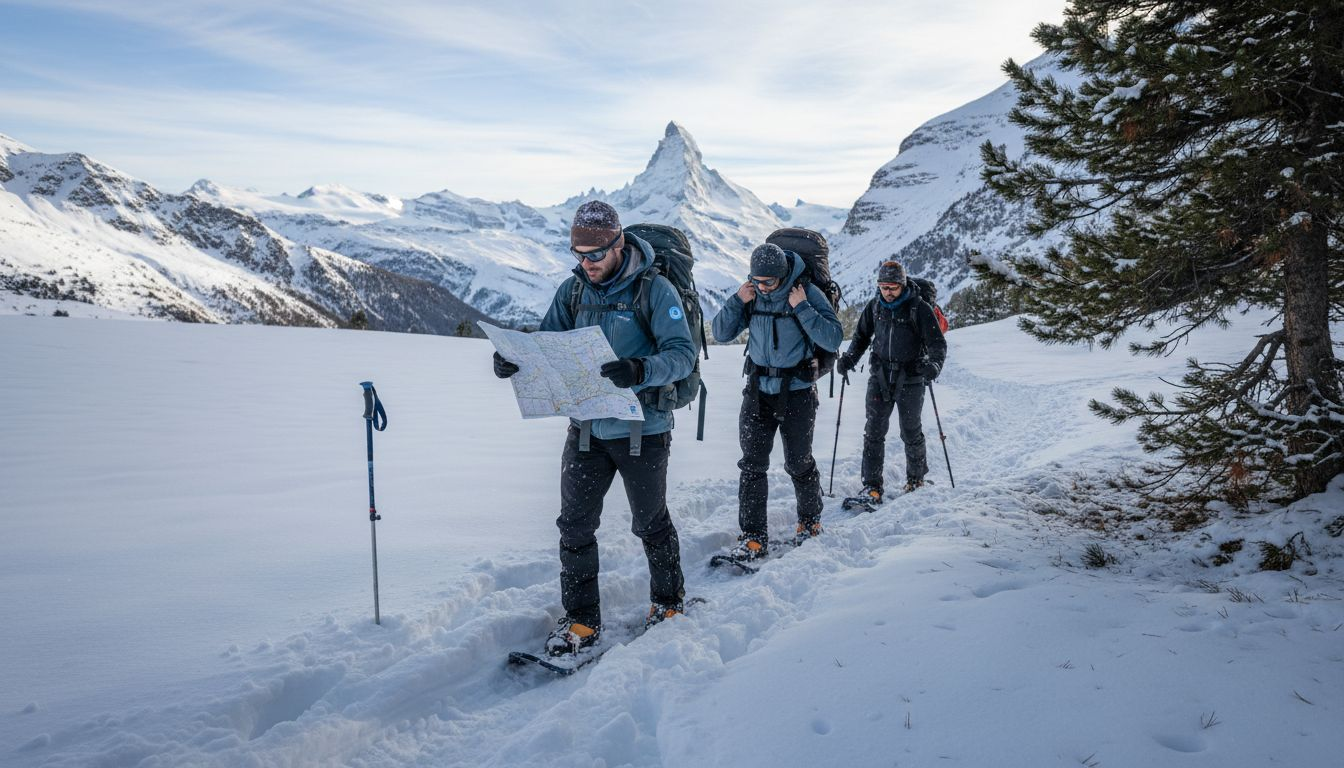
More than 75 percent of American film crews shooting in Switzerland face unexpected challenges with snowshoe hiking logistics. Planning winter shoots in the Swiss Alps demands more than creativity. The unpredictable terrain and strict local regulations put international filmmakers at risk of costly delays and missed shots. This guide reveals the most practical solutions for navigating alpine permits, crew safety, and essential equipment so your production stays on track and captures the incredible landscapes of Switzerland.
Table of Contents
Key Takeaways
Point | Details |
Snowshoe Hiking Accessibility | Snowshoe hiking in the Swiss Alps allows for easy access to winter landscapes without requiring extensive technical skills. |
Diverse Terrain Options | The Alps offer a variety of terrains for snowshoe hiking, ranging from gentle valleys to challenging mountain trails ideal for filmmakers. |
Regulatory Awareness | Filmmakers must adhere to local regulations and obtain necessary permits while respecting environmental protections. |
Safety and Logistics Preparation | Effective safety management and weather monitoring are crucial for successful snowshoe hiking film productions in unpredictable alpine conditions. |
Defining Snowshoe Hiking in Swiss Alps
Snowshoe hiking represents a unique winter exploration method in the Swiss Alps that transforms snow-covered landscapes into accessible terrain for outdoor enthusiasts and filmmakers. Unlike traditional winter sports that require extensive technical skills, snowshoeing offers an immersive mountain experience enabling participants to traverse snow-laden environments with surprising ease and minimal equipment.
The fundamental concept involves specialized footwear designed to distribute body weight across broader surface areas, preventing hikers from sinking deeply into snow. These modern snowshoes utilize advanced materials like lightweight aluminum and synthetic composites, providing superior traction and stability across diverse alpine terrain including mountain valleys, forest trails, and pristine meadows. Professional filmmakers will appreciate how these tools enable capturing remote, untouched winter landscapes that traditional hiking or skiing methods cannot access.
Snowshoe hiking in the Swiss Alps typically occurs between late December and early April, presenting a window of opportunity for visual storytellers seeking pristine winter scenery. The activity combines physical exercise with unparalleled visual exploration, allowing participants to traverse routes ranging from gentle valley tracks to more challenging hillside paths. Mountain routes offer panoramic views and opportunities to document Switzerland’s breathtaking winter environments, making it an ideal pursuit for production teams seeking authentic alpine content.
Pro Tip: Always pack extra batteries and protective gear for camera equipment, as alpine temperatures can rapidly drain electronic devices and potentially compromise sensitive filming technology.
Essential Types of Terrain and Routes
The Swiss Alps present a remarkable diversity of snowshoe hiking terrain, ranging from gentle valley landscapes to challenging mountain environments. Snowshoe routes encompass multiple terrain types including flat valley floors, dense forests, rolling hills, and steep mountain slopes, each offering unique challenges and visual perspectives for filmmakers seeking authentic alpine content.
Valley and Forest Terrain represents the most accessible snowshoe hiking landscape, characterized by relatively flat or gently undulating paths through pine and spruce forests. These routes typically feature well-marked trails, minimal elevation changes, and stunning visual backdrops ideal for capturing serene winter scenes. Professional production teams can leverage these environments to document pristine snow-covered landscapes without requiring advanced technical hiking skills or extensive mountaineering equipment.
Mountain trail systems around regions like Dents du Midi provide more complex terrain options that challenge hikers with steeper ascents, more technical navigation, and dramatic elevation changes. These routes often include moderate uphill climbs, panoramic viewpoints, and opportunities to explore remote alpine environments. Filmmakers should anticipate using specialized techniques like heel lifters for steep ascents and understanding glissade methods for controlled descents across varied snow conditions.
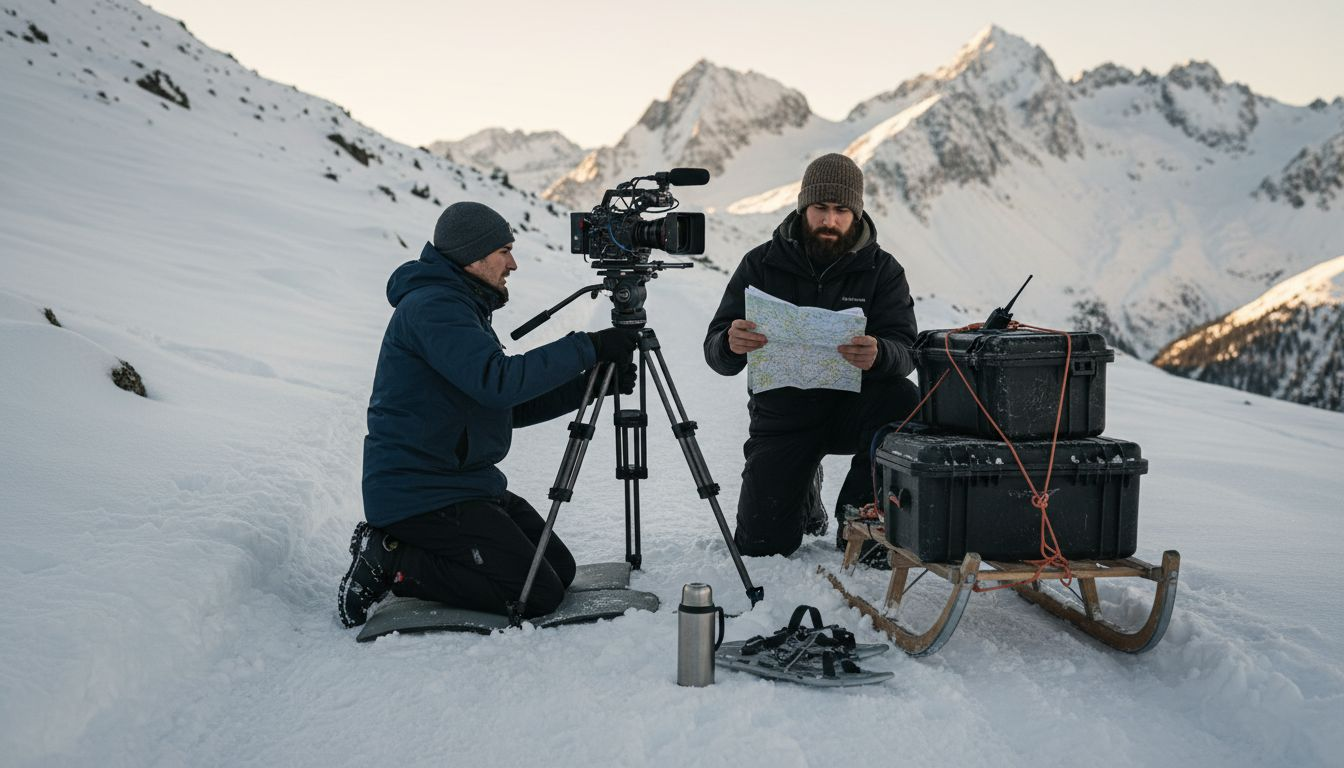
Pro Tip: Always conduct advanced terrain reconnaissance and obtain local trail maps to understand specific route characteristics and potential filming challenges before committing to a particular snowshoe hiking location.
Here’s a quick comparison of popular snowshoe hiking terrains in the Swiss Alps and their suitability for film productions:
Terrain Type | Accessibility | Filming Potential | Key Challenge |
Valley & Forest | Very high | Serene winter backdrops | Minimal elevation change |
Mountain Trails | Moderate | Panoramic views | Steep ascents, navigation |
Alpine Meadows | High | Wide landscape shots | Weather exposure, remoteness |
Permits, Regulations, and Local Rules
Winter hiking and snowshoe routes in Switzerland generally operate under flexible regulatory frameworks that prioritize environmental preservation and participant safety. Professional filmmakers must understand that while most public trails do not require specific permits, adherence to local guidelines is mandatory. These regulations encompass critical considerations such as trail usage, wildlife protection, and responsible outdoor engagement.
The Swiss Alps feature a nuanced regulatory environment where different regions may impose varying restrictions. Filmmakers should anticipate potential limitations in protected nature reserves, national parks, and environmentally sensitive zones. Key regulatory aspects include mandatory trail adherence, restrictions on off-trail exploration, and compliance with seasonal access guidelines. Understanding these local rules becomes crucial for production teams seeking to document alpine landscapes without disrupting delicate ecological systems or violating regional conservation protocols.
Local municipal authorities and park management teams provide comprehensive guidance regarding snowshoe hiking regulations, with specific emphasis on avalanche risk assessments and environmental protection. Production teams must proactively research area-specific requirements, which may include obtaining temporary filming permits, respecting private property boundaries, and following designated winter trail systems. Additional considerations include understanding seasonal wildlife protection periods, potential movement restrictions in certain alpine regions, and mandatory safety protocols for high-altitude winter environments.
Pro Tip: Contact local municipal tourism offices at least 4-6 weeks in advance to obtain comprehensive regulatory information and potential filming permissions for your specific snowshoe hiking production route.
Crew Requirements and Equipment Needs
Professional snowshoe hiking film productions in the Swiss Alps demand specialized crew configurations and precise equipment selections that ensure safety, mobility, and high-quality visual documentation. The ideal production team typically comprises experienced mountain guides, certified International Mountain Leaders, and technical crew members familiar with alpine winter environments. Each team member must possess comprehensive understanding of snowshoe hiking techniques, alpine safety protocols, and terrain navigation skills.
Equipment requirements for snowshoe hiking film productions are extensive and mission-critical. Fundamental gear includes professional-grade snowshoes matched to individual body weight and terrain complexity, waterproof and insulated hiking boots, technical layered clothing systems, and comprehensive avalanche safety equipment such as transceivers, probes, and emergency shovels. Camera equipment must be ruggedized, weather-protected, and designed for extreme cold conditions, with additional considerations for portable power solutions, protective transportation cases, and potentially aerial drone capabilities for capturing expansive alpine landscapes.
Communication and safety infrastructure represent another crucial aspect of crew preparation. Production teams must integrate robust communication devices capable of functioning in remote alpine zones, carry comprehensive first aid kits, and maintain emergency communication protocols. Professional crews should include at least one certified mountain guide with current avalanche risk assessment training, ensuring the team can make informed decisions about route selection, potential hazards, and emergency response strategies in unpredictable alpine environments.
Pro Tip: Invest in modular, lightweight camera protection systems that can be quickly accessed and operated while wearing winter mountaineering gloves to maintain shooting efficiency in challenging alpine conditions.
Use this summary table to reference critical crew roles and equipment considerations for snowshoe hiking film teams:
Crew Role | Main Responsibility | Essential Equipment |
Mountain Guide | Route safety, risk assessment | Avalanche gear, GPS |
Camera Operator | Visual documentation | Ruggedized camera, batteries |
Technical Crew | Equipment setup, logistics | First aid kit, comm devices |
Managing Safety, Weather, and Logistics
Safety management for snowshoe hiking film productions requires comprehensive planning and continuous environmental assessment to navigate the dynamic and unpredictable Swiss Alpine terrain. Professional production teams must develop robust strategies that anticipate potential weather shifts, terrain challenges, and emergency scenarios. This approach demands a proactive mindset that prioritizes crew safety while maintaining creative filming objectives.
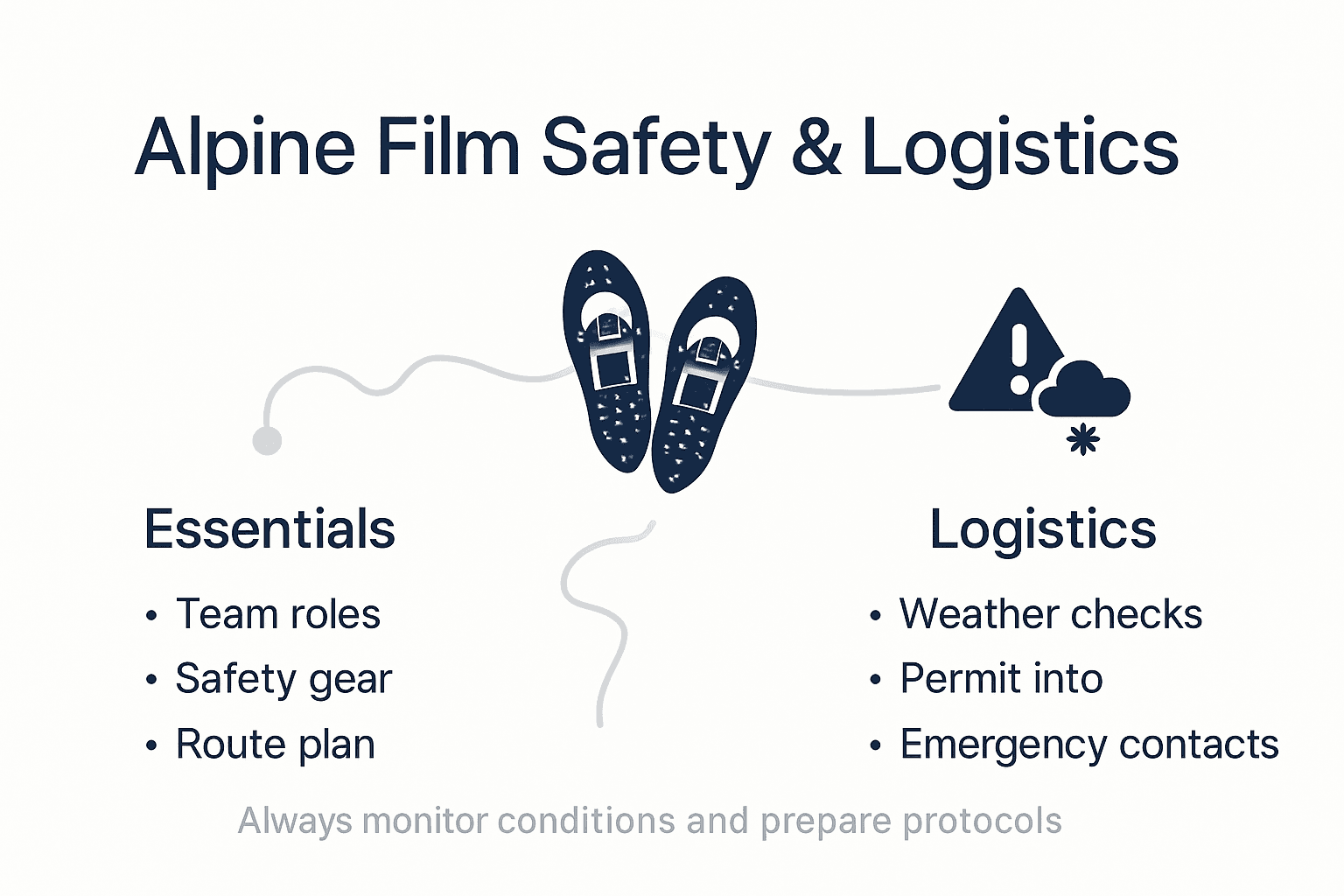
Weather monitoring becomes a critical component of alpine filming logistics. Mountain environments demand constant vigilance regarding temperature fluctuations, storm potential, and snow stability, necessitating real-time information gathering from local meteorological services and avalanche risk centers. Production teams should integrate multiple communication channels, including satellite communication devices, local mountain rescue networks, and digital weather tracking technologies to ensure immediate access to critical safety information.
Logistical preparation extends beyond weather considerations to encompass comprehensive emergency planning. This includes detailed route mapping, establishing multiple communication checkpoints, carrying specialized safety equipment, and maintaining flexible shooting schedules that can adapt to rapidly changing alpine conditions. Professional crews must develop comprehensive contingency plans that account for potential equipment failures, medical emergencies, and sudden environmental challenges unique to high-altitude winter environments.
Pro Tip: Create a comprehensive emergency response protocol that includes precise GPS coordinates, local rescue contact information, and predetermined evacuation routes before initiating any snowshoe hiking film production.
Expert Support for Seamless Snowshoe Hiking Film Productions in Switzerland
Snowshoe hiking in the Swiss Alps presents unique challenges from complex terrain navigation to strict permits and unpredictable weather. Filmmakers face critical pain points such as acquiring local permits, managing avalanche safety gear, coordinating expert mountain guides, and ensuring reliable logistics for remote alpine shooting locations. Our team understands the importance of specialized equipment handling, professional crew coordination, and thorough regulatory compliance to capture these breathtaking winter landscapes without compromise.
Benefit from over 20 years of experience and deep local knowledge at Video Production Switzerland. We handle everything from permit acquisition and trusted crew sourcing to location scouting and transportation management. Whether you require expert mountain guide coordination or ruggedized camera equipment logistics, our client-centric approach guarantees smooth, safe, and on-time productions. Explore how we can simplify your winter alpine shoot today by visiting our landing page and learning more about our comprehensive services at Video Production Switzerland.

Take the next step toward your successful snowshoe hiking film project. Contact us now for a free consultation and experience seamless production support tailored to the demanding Swiss alpine environment.
Frequently Asked Questions
What equipment is essential for snowshoe hiking in the Swiss Alps?
Essential equipment includes professional-grade snowshoes suited to your weight and terrain, waterproof and insulated hiking boots, layered clothing systems, and avalanche safety gear such as transceivers and shovels.
How do I ensure safety while snowshoe hiking and filming in alpine conditions?
Safety can be ensured by conducting thorough weather monitoring, preparing emergency response protocols, utilizing communication devices, and having a certified mountain guide to assess risks and navigate challenging terrain.
Are permits required for snowshoe hiking and filming in the Swiss Alps?
Most public trails do not require specific permits, but it’s essential to adhere to local regulations and guidelines, especially in sensitive areas such as national parks and nature reserves.
What types of terrain should I expect when snowshoe hiking in the Swiss Alps?
Expect a variety of terrains, including accessible flat valley floors, forest paths, and challenging mountain trails with steep ascents and panoramic views. Each type offers unique filming opportunities and challenges.
Recommended
