
Master how to handle tight deadlines interview question

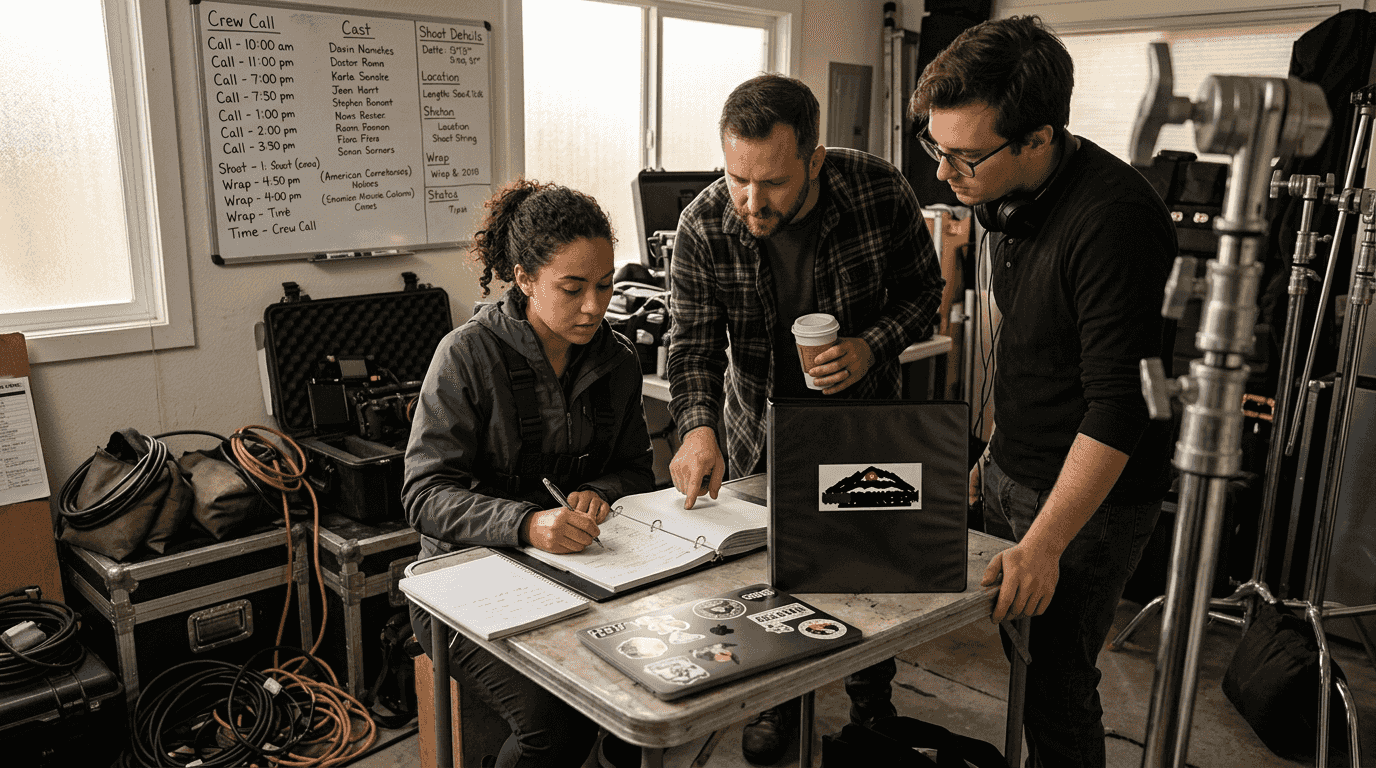
Answering the tight deadlines interview question confidently separates strong candidates from average ones in competitive film production roles. Interviewers use this question to assess your ability to balance creative vision with practical constraints, communicate under pressure, and deliver results when time is scarce. This guide equips you with proven strategies, real-world examples, and expert techniques to craft compelling answers that demonstrate your project management skills, emotional resilience, and ability to thrive in high-stakes production environments where every minute counts.
Table of Contents
Understanding The Problem: Why Tight Deadlines Matter In Film Production Interviews
Preparing Effectively: Key Strategies To Manage And Answer About Tight Deadlines
Executing Under Pressure: Practical Communication And Emotional Regulation Techniques
Verifying Success: Follow-Up, Lessons Learned, And Communicating Results In Interviews
Discover Expert Support For Managing Tight Deadlines In Video Production
Frequently Asked Questions About Handling Tight Deadlines In Interviews
Key takeaways
Point | Details |
Preparation reduces delays | Comprehensive pre-production planning with detailed schedules cuts delays by up to 30%. |
Prioritization improves delivery | Using frameworks like the Eisenhower Matrix boosts on-time completion by 20%. |
Communication minimizes surprises | Proactive updates and early roadblock identification reduce project delays by 15%. |
Emotional regulation boosts productivity | Stress management techniques increase team output by 25% under pressure. |
Digital tools streamline workflows | Project management software reduces miscommunication by up to 20%. |
Understanding the problem: why tight deadlines matter in film production interviews
Interviewers ask about handling tight deadlines because film production operates in unpredictable, time-sensitive environments where delays cascade into budget overruns and missed release windows. They want to see how you adapt when weather disrupts outdoor shoots, equipment fails during critical scenes, or talent schedules compress your post-production timeline. Your answer reveals whether you can balance artistic integrity with practical constraints while keeping teams motivated and stakeholders informed.
Film production faces unique pressures that distinguish it from other creative industries. Location availability changes, permits expire, crew contracts end, and seasonal conditions shift, all creating immovable boundaries around your production calendar. When blockbuster films typically require 18 to 24 months from pre-production to final cut, Jurassic World Rebirth completed in 15 months, demonstrating extreme deadline pressure. Director Gareth Edwards noted that the compressed timeline streamlined production by limiting second-guessing and forcing decisive action during filming.
Common challenges in tight-schedule projects include:
Coordinating multiple departments with competing resource needs
Maintaining quality standards when time for revisions shrinks
Managing crew fatigue during extended shooting days
Adapting to unexpected technical failures or creative changes
Balancing stakeholder expectations with realistic delivery timelines
Understanding these pressures helps you craft answers that resonate with interviewers who have lived through similar production nightmares. When you demonstrate awareness of how to manage tight deadlines through specific strategies rather than generic platitudes, you signal that you understand the real stakes in production environments.
“The fastest blockbuster production forces you to trust your instincts and commit to decisions without endless deliberation, which often produces stronger creative outcomes.”
Your interview answer should acknowledge these realities while showcasing your systematic approach to prevention, mitigation, and recovery when deadlines compress. Interviewers value candidates who recognize that tight deadlines are inevitable in film production and who have developed repeatable frameworks for success rather than relying on last-minute heroics.
Preparing effectively: key strategies to manage and answer about tight deadlines
Comprehensive pre-production planning forms the foundation for meeting tight deadlines consistently. Start by developing detailed production schedules that account for every phase from script breakdown through final delivery, including buffer time for anticipated challenges. Pre-production planning reduces delays by 30% when you build in contingencies for weather, equipment issues, and creative revisions. Create itemized budgets that allocate resources efficiently across departments, ensuring no critical area gets starved of support when time pressures mount.
Prioritization frameworks help you focus energy on high-impact activities that move production forward. The Eisenhower Matrix divides tasks into four quadrants based on urgency and importance, helping you distinguish between critical path items and distractions. Effective prioritization boosts on-time delivery by 20% by ensuring you address bottlenecks before they cascade. Apply this framework during pre-production by identifying which scenes require complex setups, which locations need advance permits, and which crew members have limited availability.
Digital tools and production calendars keep everyone aligned on deliverables and dependencies:
Create master production calendars with shooting schedules, post-production milestones, and delivery deadlines visible to all stakeholders
Use cloud-based call sheets that update in real time when locations or times change
Implement time management tools that track task completion rates and flag potential delays early
Establish shared asset libraries where editors access footage immediately after dailies
Set up automated notifications that alert relevant team members when dependencies shift
Develop contingency plans that anticipate common production disruptions. Weather backups should include indoor alternatives for outdoor scenes, alternative shooting dates when forecasts worsen, and equipment protection protocols. Equipment redundancy means having backup cameras, lights, and audio gear on standby, with relationships to rental houses that can deliver replacements within hours. Crew flexibility involves identifying backup personnel who can step in when key team members face emergencies.
Pro Tip: During interviews, structure your answer using the STAR method (Situation, Task, Action, Result) with specific metrics. Instead of saying you handled tight deadlines well, explain how you compressed a three-week post-production timeline to 12 days by implementing parallel editing workflows that delivered the final cut two days early.
Your preparation strategies should translate into concrete interview examples. When discussing how you manage time in film production, reference specific projects where your planning prevented delays. Mention how you used ABCDE time management to categorize tasks by priority, ensuring critical path items received attention first while delegating or deferring lower-impact activities.
Preparation Strategy | Time Saved | Implementation Complexity |
Detailed pre-production schedules | 20-30% | Medium |
Prioritization frameworks | 15-20% | Low |
Digital production calendars | 10-15% | Low |
Equipment contingency plans | 5-10% | Medium |
Weather backup protocols | 15-25% | High |
These preparation strategies demonstrate to interviewers that you approach tight deadlines systematically rather than reactively. When you explain how pre-production investments pay dividends during high-pressure execution phases, you show strategic thinking that hiring managers value in production leadership roles.
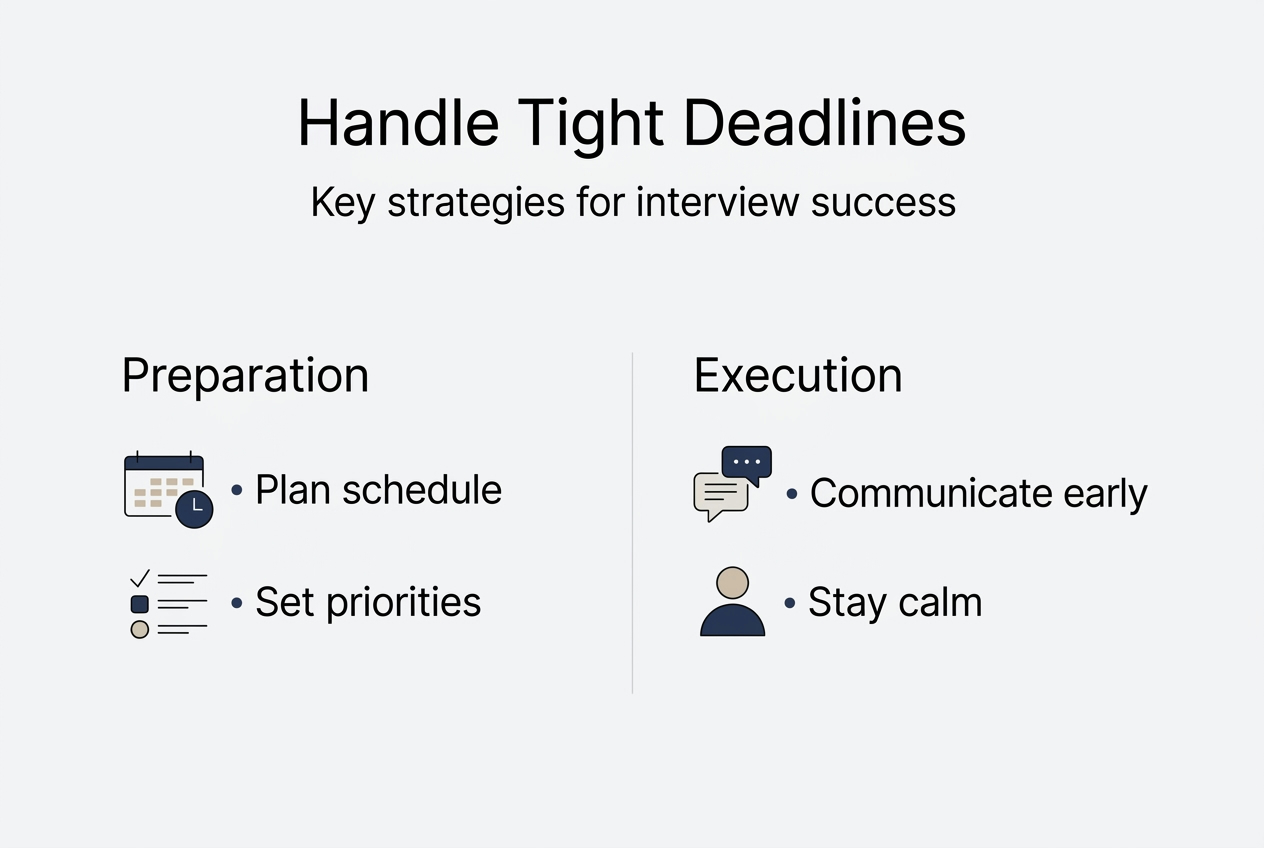
Executing under pressure: practical communication and emotional regulation techniques
Clear, proactive communication keeps production teams aligned when deadlines compress and surprises emerge. Establish daily check-ins where department heads share progress updates, surface emerging challenges, and coordinate resource allocation. Proactive communication reduces delays by 15% by catching misalignments before they cascade into schedule slippage. Send concise status reports that highlight completed milestones, upcoming critical path items, and decisions needed from stakeholders, keeping everyone informed without overwhelming them with unnecessary detail.

Address potential roadblocks early by creating an environment where team members feel safe raising concerns. When a gaffer mentions lighting equipment might not arrive on time, immediately activate backup rental relationships rather than hoping the problem resolves itself. Schedule weekly risk reviews during pre-production and daily pulse checks during principal photography, asking each department what could derail their timeline in the next 48 hours. This forward-looking approach lets you adapt schedules before delays become crises.
Emotional regulation techniques help you maintain composure and decision quality when pressure mounts. Practice mindfulness exercises like box breathing (inhale four counts, hold four, exhale four, hold four) during high-stress moments to reset your nervous system. Emotional regulation increases productivity by 25% by preventing reactive decisions made from panic rather than strategic thinking. Recognize physical stress signals like tension headaches or shallow breathing as cues to take brief breaks that restore mental clarity.
Key communication practices during execution:
Establish clear escalation paths so team members know when to flag issues versus solve them independently
Use visual production boards that show real-time progress against planned timelines
Create dedicated communication channels for urgent issues versus routine updates
Schedule brief daily standups that keep meetings focused on immediate priorities
Document decisions and rationale so team members understand context for changes
Collaborative project management software enhances coordination across distributed teams. Project management tools reduce miscommunication by 20% by centralizing task assignments, file sharing, and progress tracking in one accessible location. Choose platforms that integrate with your existing production tools, offer mobile access for on-set updates, and provide customizable workflows matching your production methodology. Train your team on these systems during pre-production so everyone uses them consistently when deadlines tighten.
Pro Tip: In interviews, describe how you handle stress and deadlines by sharing a specific moment when emotional regulation prevented a poor decision. For example, explain how taking a 10-minute walk after a major setback helped you identify a creative solution that saved the production schedule rather than making a reactive choice that would have created new problems.
Leverage film production software that streamlines collaboration. Cloud-based platforms let editors start cutting footage while shooting continues, colorists prepare LUTs based on dailies, and sound designers build libraries before picture lock. This parallel processing compresses post-production timelines significantly compared to sequential workflows where each department waits for the previous one to finish completely.
“Maintaining calm under pressure is not about suppressing stress but channeling it into focused action. The best production leaders acknowledge the pressure while modeling composed problem-solving that keeps teams steady.”
Your execution phase communication should balance transparency with optimism. Share challenges honestly so stakeholders understand constraints, but frame them with proposed solutions that demonstrate your proactive approach. When you explain to interviewers how you kept teams motivated during tight deadlines, emphasize how you celebrated small wins, acknowledged individual contributions, and maintained perspective that prevented burnout.
Verifying success: follow-up, lessons learned, and communicating results in interviews
Continuous monitoring ensures you detect timeline deviations early enough to correct them. Review production schedules daily during principal photography, comparing actual progress against planned milestones and identifying variances before they compound. Regular schedule reviews enable early delay detection, giving you time to reallocate resources, adjust sequences, or activate contingency plans. Track resource allocation metrics like crew utilization rates, equipment downtime, and location availability to spot inefficiencies that slow production.
Adjust plans dynamically as new information emerges. When weather forecasts change, immediately evaluate whether to shoot alternative scenes, move to backup locations, or reschedule affected days. Create decision trees during pre-production that outline trigger points for common scenarios, so you can execute adjustments quickly without lengthy deliberations. Empower department heads to make tactical adjustments within defined parameters, escalating only decisions that affect critical path items or require stakeholder approval.
Compare production methodologies to optimize efficiency:
Methodology | Completion Time | Flexibility | Best For |
Waterfall | Baseline | Low | Predictable projects with fixed scope |
Agile | 20% faster | High | Projects with evolving creative direction |
Hybrid | 15% faster | Medium | Productions with mixed predictable and flexible elements |
Agile methodologies reduce completion times by 20% compared to traditional waterfall approaches by enabling iterative refinement and parallel workstreams. Apply Agile principles like sprint planning, daily standups, and retrospectives to film production by breaking projects into two-week increments with clear deliverables. This approach works particularly well for commercial and corporate video production where client feedback cycles can integrate smoothly into sprint reviews.
Use metrics to demonstrate success in interview answers:
Calculate on-time delivery rates across your project portfolio
Measure average delay reduction compared to initial baseline estimates
Track budget variance percentages between planned and actual spending
Document stakeholder satisfaction scores from post-project surveys
Quantify efficiency gains from process improvements you implemented
Lessons learned sessions after project completion build institutional knowledge that improves future performance. Gather your team within two weeks of wrap to discuss what worked well, what created unexpected challenges, and what you would change next time. Document these insights in a searchable knowledge base so future projects benefit from your experience. When you discuss time management in global teams during interviews, reference how you applied lessons from previous tight-deadline projects to prevent recurring issues.
Communicate results effectively by framing them in terms interviewers care about. Instead of simply stating you completed a project on time, explain how your deadline management approach delivered the final cut three days early, enabling an additional round of client revisions that improved satisfaction scores by 40%. Quantify the business impact of your time management skills, whether that means avoiding late delivery penalties, enabling earlier marketing campaign launches, or reducing overtime costs through efficient scheduling.
Pro Tip: Create a portfolio of project case studies that showcase your deadline management skills with specific metrics. Include before-and-after timelines, process improvements you implemented, and measurable outcomes like reduced production days or increased output quality. Reference these case studies during interviews to provide concrete evidence of your capabilities.
Verification extends beyond project completion to long-term relationship building. Follow up with clients and stakeholders weeks after delivery to understand how your work performed in market and whether your deadline management enabled their downstream objectives. These conversations often reveal insights about how your production timeline decisions affected their broader business goals, giving you valuable context for future projects and compelling stories for interview answers.
Discover expert support for managing tight deadlines in video production
When tight deadlines demand flawless execution, partnering with experienced production professionals eliminates the coordination burden that derails schedules. Expert teams bring proven frameworks for risk management, resource allocation, and stakeholder communication that keep projects on track even when unexpected challenges emerge. Access industry-leading scheduling tools, location scouting networks, and crew databases that compress planning timelines while maintaining quality standards your projects require.
[
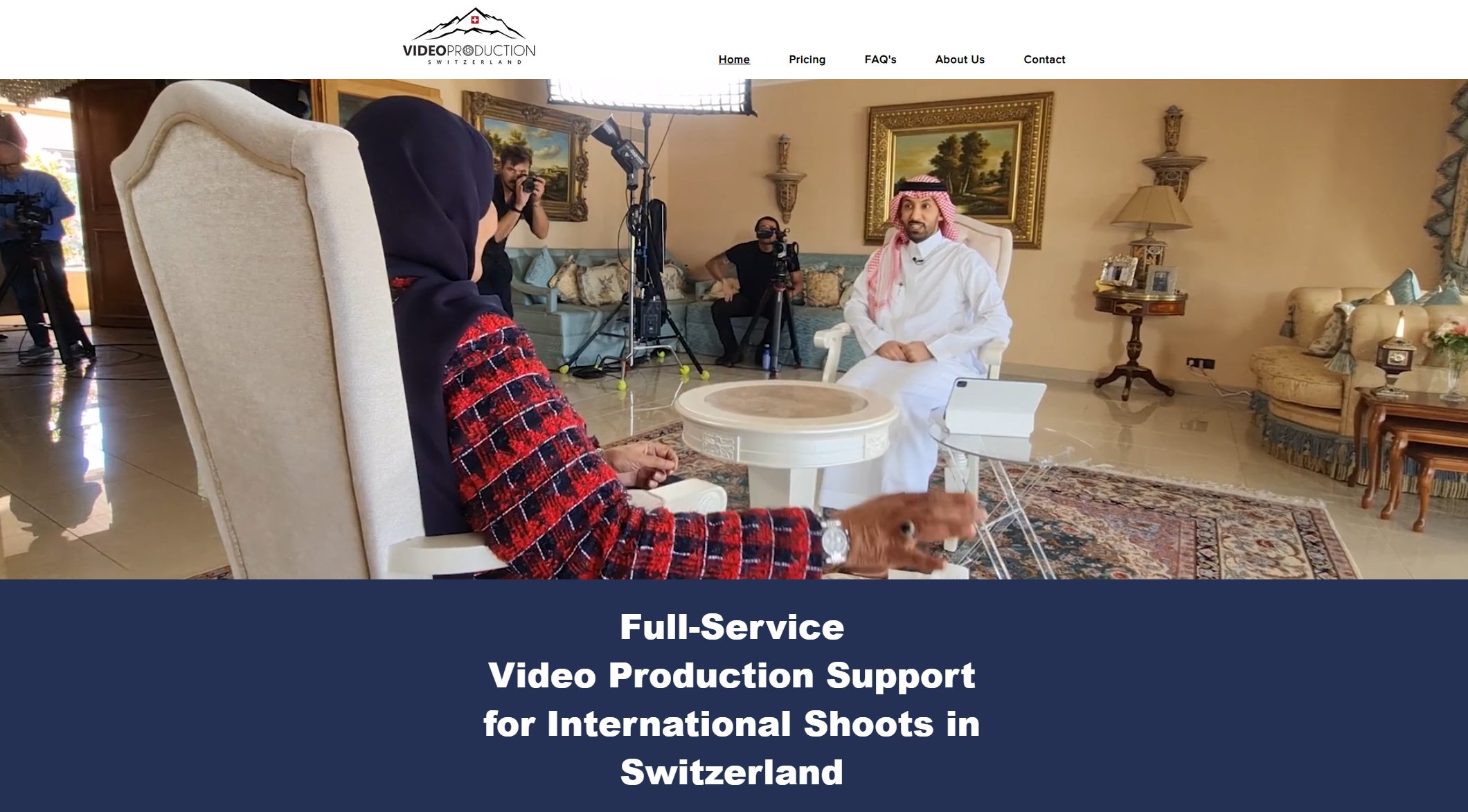
International productions in Switzerland benefit from local expertise that navigates permit requirements, equipment logistics, and crew coordination efficiently. Over 20 years of market knowledge means understanding which vendors deliver reliably under pressure, which locations offer backup options when weather shifts, and how to structure shooting schedules that maximize productivity within your timeline. Explore transparent video production costs and discover how full-service production support transforms tight deadlines from sources of stress into opportunities for excellence.
Frequently asked questions about handling tight deadlines in interviews
How can I show I work well under pressure during an interview?
Share specific examples using the STAR method with measurable outcomes like delivering a project two days early despite equipment failures. Describe your systematic approach to prioritization, communication protocols, and stress management rather than claiming you simply work faster. Quantify results with metrics like percentage reductions in delays or improvements in on-time delivery rates.
What examples should I use to illustrate managing tight deadlines?
Choose examples that demonstrate both prevention and recovery skills. Describe a project where your pre-production planning avoided delays and another where you successfully adapted when unexpected challenges compressed your timeline. Include specific numbers like days saved, budget percentages preserved, or stakeholder satisfaction improvements to make your examples concrete and credible.
How do I balance creativity and deadlines effectively?
Establish clear decision points during pre-production where creative exploration ends and execution begins. Use time-boxed brainstorming sessions that generate options quickly, then apply prioritization frameworks to select approaches that deliver maximum creative impact within available time. Communicate trade-offs transparently with stakeholders so everyone understands how timeline constraints shape creative choices.
Which project management tools impress interviewers most?
Mention tools you have actually used with specific results they enabled. Cloud-based platforms like Asana, Monday, or StudioBinder demonstrate familiarity with modern collaborative workflows. More important than name-dropping tools is explaining how you leveraged them to improve coordination, reduce miscommunication, or compress timelines, showing you understand technology as an enabler rather than a solution itself.
How important is emotional regulation in high-pressure production roles?
Extremely important, as your composure sets the tone for your entire team’s response to challenges. Interviewers value candidates who recognize stress as inevitable and have developed specific techniques like mindfulness practices, physical exercise routines, or peer support systems that maintain decision quality under pressure. Describe how handling stress and deadlines through emotional regulation prevented poor reactive choices that would have created bigger problems.
Recommended
