
How to Transport a Forklift in a Trailer Safely

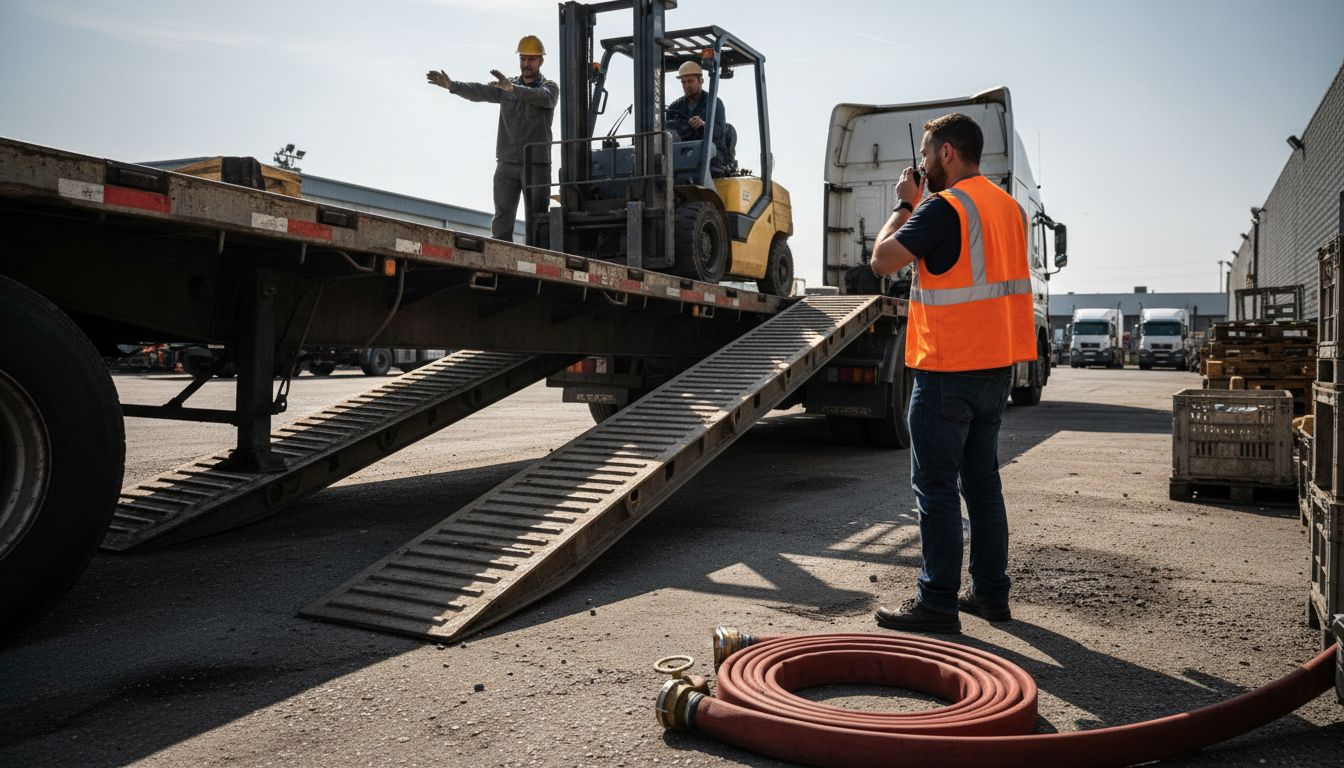
Crew schedules in Switzerland can unravel quickly when heavy equipment transport falters during a high-pressure video shoot. Filmmakers and production managers often need precise logistics for moving forklifts and similar gear across Alpine terrains and city sets. This guide offers clear solutions for assessing, preparing, and safely loading forklifts—putting equipment safety and compliance with international standards at the center of every step.
Table of Contents
Quick Overview
Important Insight | Explanation |
1. Assess Forklift and Trailer Needs | Evaluate forklift specifications and trailer capacity to ensure compatibility and safety during transport. |
2. Prepare the Forklift Properly | Conduct a thorough safety inspection, secure all parts, and disconnect the battery for safe transport. |
3. Load Carefully onto the Trailer | Position the trailer on level ground and use stable ramps to load the forklift safely onto the trailer. |
4. Secure and Stabilize Equipment | Use heavy-duty chains in an X-pattern to secure the forklift effectively and prevent shifting during transit. |
5. Conduct Final Inspection Before Departure | Check securing points and trailer readiness to avoid issues during transport and ensure safety. |
Step 1: Assess the Forklift and Trailer Requirements
Transporting a forklift requires careful assessment of equipment specifications and safety parameters to ensure smooth and secure transportation. Your primary goal in this step is to comprehensively evaluate the forklift and trailer capabilities before initiating any movement.
Start by thoroughly examining your specific forklift model. Review its precise dimensional specifications and weight details to determine exact transport requirements. Check the forklift’s total weight, height, length, and width. Verify these measurements against your trailer’s load capacity and interior dimensions. Pay special attention to ground clearance and weight distribution, which are critical factors in safe transportation.
Next, assess your trailer’s specifications by confirming its maximum weight capacity, deck strength, and securing points. Cross reference the trailer’s rating with your forklift’s weight to ensure it can safely support the load. Consult OSHA safety regulations to understand specific guidelines for equipment transport. Confirm your trailer has appropriate tie down points, adequate width, and sufficient structural integrity to handle industrial vehicle transportation.
Pro Tip: Always obtain manufacturer documentation and create a detailed transportation checklist before loading your forklift to minimize potential risks during transport.
Here is a summary of key forklift and trailer requirements to evaluate before transport:
Factor Evaluated | Forklift Consideration | Trailer Consideration |
Weight | Know exact equipment weight | Confirm rated load capacity |
Dimensions | Measure height, width, length | Check interior trailer space |
Ground Clearance | Ensure enough for ramps | Verify ramp compatibility |
Load Distribution | Assess center of gravity | Confirm adequate balance |
Tie Down Points | Identify secure locations | Ensure adequate anchor points |
Step 2: Prepare the Forklift for Safe Transport
Successfully moving a forklift requires meticulous preparation to ensure safe transportation and prevent potential equipment damage. Your objective in this step is to carefully ready the forklift for secure loading and transit.
Begin by conducting a comprehensive equipment safety inspection before transport. Check all critical components including tires, hydraulic systems, and structural integrity. Lower the forklift’s forks completely and secure any attachments or movable parts. Ensure all fluids are at appropriate levels and there are no visible leaks that could compromise transportation safety.
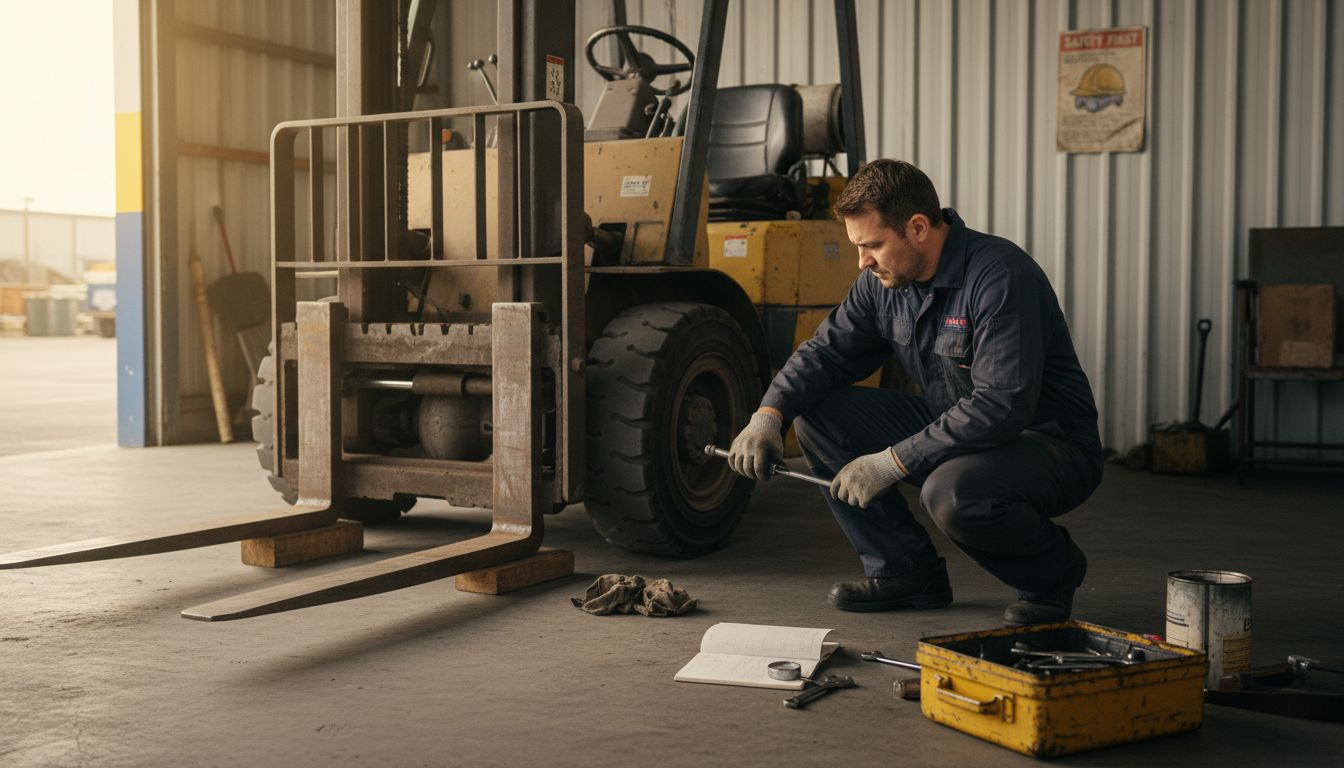
Next, power down the forklift and engage its parking brake. Disconnect the battery to prevent electrical issues during transport and protect sensitive electronic systems. Verify that OSHA safety regulations are followed by checking load balance and securing all movable components. Clean the forklift thoroughly to remove dirt or debris that could interfere with transportation and inspect for any potential mechanical issues that might emerge during transit.
Pro Tip: Photograph the forklift from multiple angles before transport to document its pre-transportation condition and protect yourself from potential damage claims.
The following table outlines potential risks during forklift transport and how preparation can minimize them:
Risk Factor | How Preparation Helps | Best Practice to Reduce Risk |
Equipment Damage | Early inspection and repairs | Thorough safety inspection |
Shifting Load | Correctly securing and tying down | Use of cross-chained restraints |
Electrical Failure | Disconnect battery, check systems | Power down and isolate electronics |
Regulatory Violation | Confirm compliance with OSHA | Review current regulations |
Claims/Liability | Documentation & photos of condition | Photograph before/after transport |
Step 3: Load the Forklift onto the Trailer Securely
Loading a forklift onto a trailer demands precision, patience, and careful execution to prevent potential accidents or equipment damage. Your goal is to transfer the forklift safely and efficiently from ground level onto the trailer platform.
Prepare for loading by first confirming trailer stability and weight capacity. Position the trailer on level ground with wheel chocks secured and parking brake engaged. Select loading ramps that match your forklift’s weight specifications and ensure they are rated for the equipment’s total mass. Align the ramps precisely with the trailer bed and verify they are firmly positioned without any wobbling or shifting potential.
Begin the loading process by approaching the ramps at a slow steady speed with the forklift’s forks positioned low and slightly tilted forward. Maintain a straight line of approach and keep the load fully lowered during transit up the ramps. Oregon OSHA guidelines recommend using extremely cautious and controlled movements to prevent lateral movement or potential tipping. Once the forklift is fully on the trailer bed, center the equipment and set the parking brake to prepare for secure tie down procedures.
Pro Tip: Always have a spotter assist you during loading to provide additional guidance and help identify potential blind spots or obstacles.
Step 4: Secure and Balance the Forklift Properly
Securing a forklift for transportation requires meticulous attention to weight distribution and restraint techniques to prevent potential accidents during transit. Your primary objective is to stabilize the forklift and minimize any potential movement that could compromise safety.
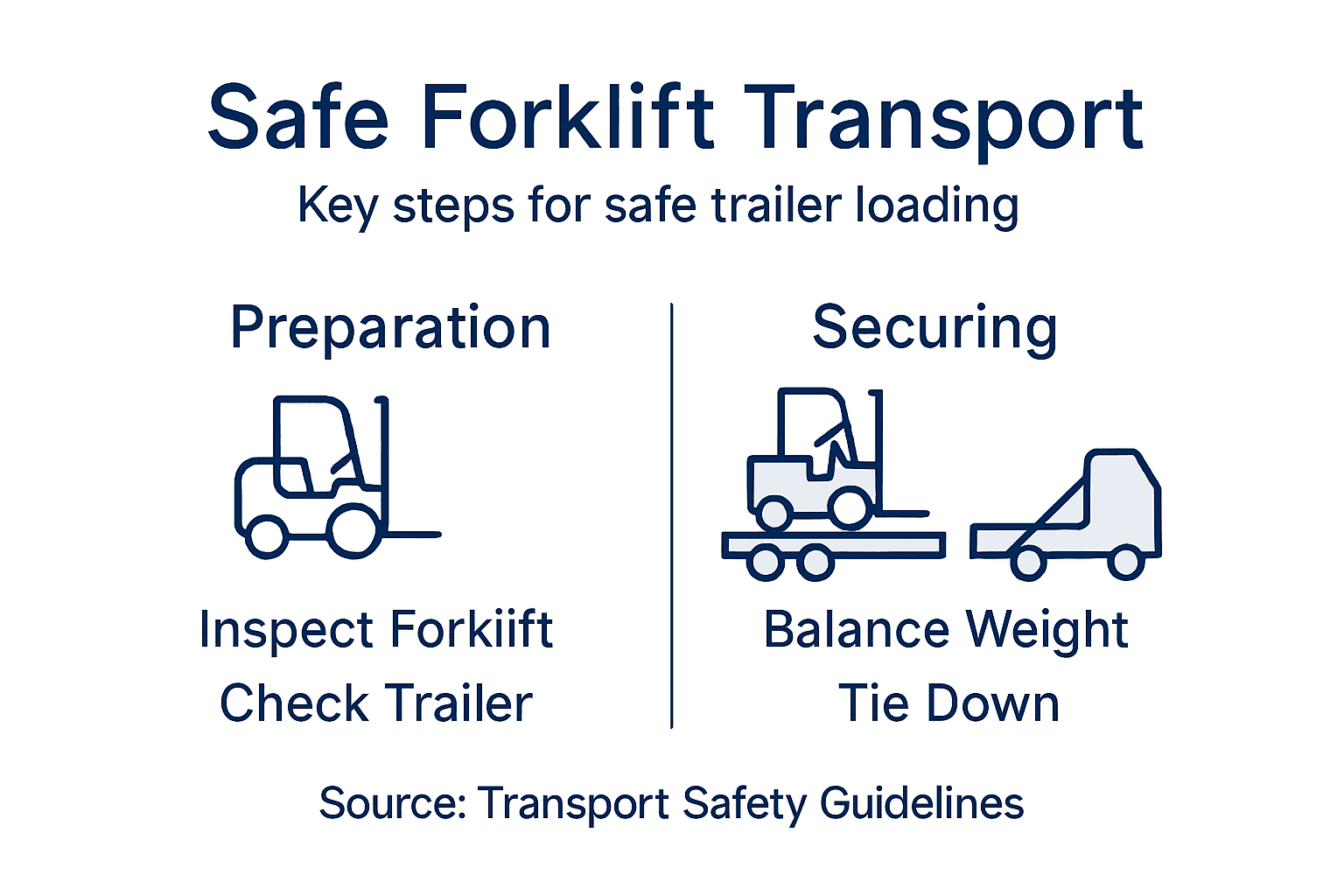
Begin by positioning the forklift with strategic weight distribution. Tilt the mast slightly backward and lower the forks completely to create a low center of gravity. Select heavy duty chains or specialized transportation straps that match the forklift’s weight class. Attach these restraints to designated anchor points on both the forklift and trailer, ensuring they are pulled taut with minimal slack. Cross your chains or straps to create an X pattern for maximum stability, which helps distribute tension and prevents lateral movement.
Pay close attention to trailer weight balance by positioning the forklift near the trailer’s center axis. Safety guidelines recommend evenly distributing weight to prevent axle strain or potential trailer instability. Double check that all securing points are tight and the forklift cannot shift in any direction. Verify that the parking brake remains engaged and no loose components could potentially become projectiles during transportation.
Pro Tip: Use color coded tie down markers to quickly verify each restraint is properly tensioned and secured.
Step 5: Inspect and Verify the Loaded Trailer
Final verification of your loaded trailer is a critical safety step that can prevent potential transportation issues and equipment damage. Your objective is to conduct a comprehensive review of the forklift and trailer setup before beginning your journey.
Begin with a thorough pre transportation safety inspection. Walk completely around the trailer and examine each securing point carefully. Verify that all chains or straps remain taut and are connected to appropriate anchor points. Check the forklift’s positioning to ensure it remains centered and stable. Confirm the mast is tilted back and forks are completely lowered to maintain the lowest possible center of gravity.
Proceed with a systematic evaluation of the trailer itself. Confirm trailer operational readiness by inspecting tire pressure, brake functionality, and suspension condition. Ensure trailer lights are working and license plate is clearly visible. Test the trailer hitch connection and verify all safety chains are properly attached. Document your inspection findings and make note of any potential concerns that might require additional attention before traveling.
Pro Tip: Take smartphone photos of your final inspection to create a visual record of the trailer and forklift setup before departure.
Ensure Safe Forklift Transport and Flawless Production Logistics
Transporting a forklift safely requires precise planning around weight distribution, securing methods, and regulatory compliance to avoid costly accidents or delays. Just as the article emphasizes key steps like assessing equipment dimensions, securing loads correctly, and verifying trailer readiness, managing any complex logistics demands expert coordination and on-the-ground knowledge. When your project depends on flawless execution—whether moving heavy machinery or orchestrating a large-scale film shoot—having a trusted local partner can make all the difference.

At Video Production Switzerland, we specialize in managing every logistical detail with over 20 years of experience. From securing permits to arranging reliable transportation and coordinating local crews, our expert team understands how critical it is to minimize risks and keep your production on schedule. Discover how our comprehensive video production support can take the stress out of your next shoot in Switzerland. Contact us now to benefit from our seamless planning and reliable execution.
Frequently Asked Questions
How do I assess the forklift and trailer requirements for safe transport?
To assess forklift and trailer requirements, begin by reviewing the forklift’s weight and dimensions. Confirm these specifications against your trailer’s load capacity and check the securing points to ensure safe transportation.
What preparations should I make to the forklift before loading it onto the trailer?
Before loading the forklift, conduct a thorough safety inspection of its critical components and ensure all movable parts are secured. Also, disconnect the battery and lower the forks completely to enhance safety during transport.
How do I securely load the forklift onto a trailer?
To securely load the forklift, position it at a slow speed on level ground using ramps that match the forklift’s weight specifications. Maintain a straight approach with the forks lowered to minimize the risk of tipping or shifting during loading.
What are the best practices for securing the forklift on the trailer?
The best practice for securing the forklift is to use heavy-duty chains or straps attached to designated anchor points. Ensure that these restraints are pulled taut with minimal slack and that the forklift is centered for balanced weight distribution.
What should I check during the final inspection of the loaded trailer?
During the final inspection, verify that all securing points are tight, and check the forklift’s positioning to ensure stability. Also, examine the trailer’s tires, brakes, and lights to confirm everything is operational before travel.
Recommended
