
Client-Centric Video Production: Strategies That Deliver


TL;DR:
Client-centric video production designs every project stage around the client’s specific goals, feedback, and audience.
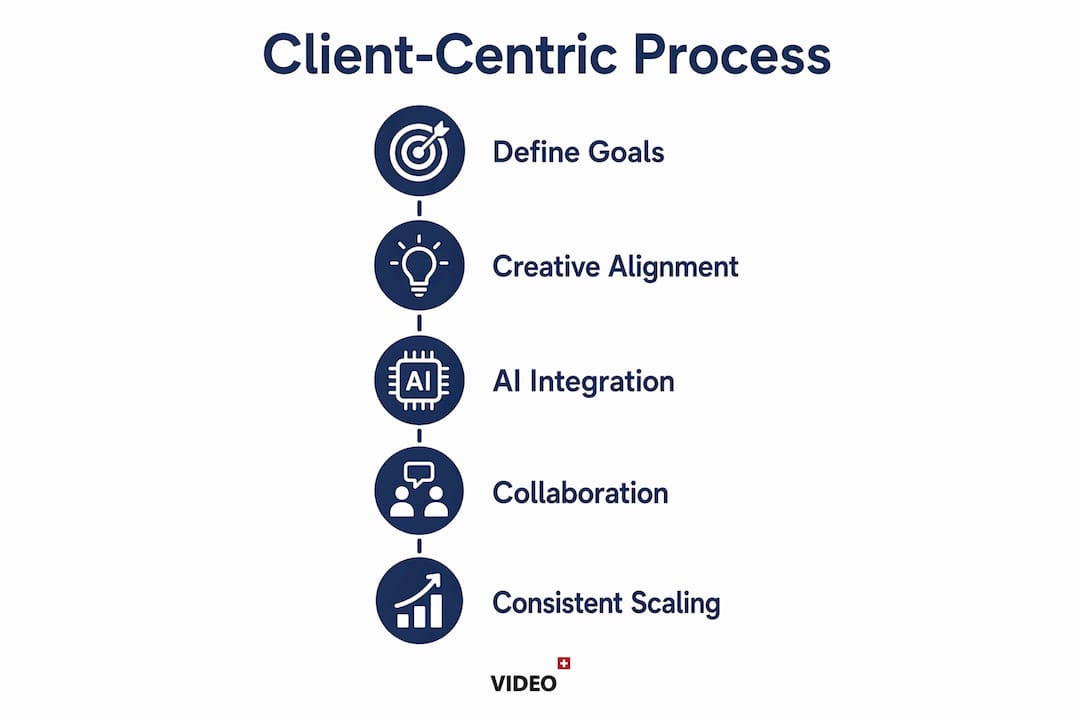
This approach leverages AI tools, structured communication, and systemized processes to deliver measurable results at scale.
Client-centric video production is defined as the practice of designing every stage of a video project around the specific goals, feedback, and audience expectations of each client. This approach directly increases viewer engagement and client satisfaction by replacing generic production templates with tailored video solutions built on real client input. Platforms like Idomoo, Awesomic, and tools such as Slack and Zoom now give filmmakers and brand managers the infrastructure to execute personalized video content at scale. Whether you are managing a B2B video production campaign or delivering custom video marketing for a global brand, the client-first video approach is no longer optional. It is the standard that separates forgettable content from video that actually performs.
What are the key principles of client-centric video production?
Client-centric video production rests on four principles: understanding client goals before a single frame is shot, building personalization into the creative process, maintaining continuous feedback loops, and treating every revision as a signal rather than an inconvenience. These principles are not soft skills. They are operational disciplines that determine whether a project delivers measurable results or just looks good on a reel.
The most effective filmmakers and brand managers start every project by mapping the client’s business objective to a specific audience outcome. A corporate brand video for a Swiss financial firm, for example, is not just a showcase of office culture. It is a trust-building asset designed to move a specific buyer segment from awareness to consideration. That distinction changes everything from script tone to shot selection.
Personalization and customization are not the same thing. Customization means adjusting deliverables to client specifications. Personalization means embedding the client’s audience psychology into the creative strategy itself. The difference shows up in engagement rates, watch time, and conversion.
Prioritize client goals at every stage: Define the business outcome first, then build the creative around it.
Build feedback loops early: Share rough cuts and storyboards before production locks, not after.
Treat revisions as data: Each revision request reveals a misalignment between client expectations and creative execution. Fix the process, not just the cut.
Document client preferences: Maintain a living brief that captures tone, audience, and approval criteria throughout the project.
Pro Tip: Before your kickoff meeting, send the client a one-page creative alignment document with three questions: What does success look like? Who is the primary viewer? What is the one emotion you want that viewer to feel? The answers will save you two rounds of revisions.
How do modern technologies enhance client-centric video production?
AI-powered video production platforms reduce time and costs by over 90% while enabling hyper-personalization at scale. That figure is not a projection. Platforms like Idomoo and Awesomic have already demonstrated this in production environments, cutting traditional workflow timelines from weeks to days without sacrificing brand consistency.
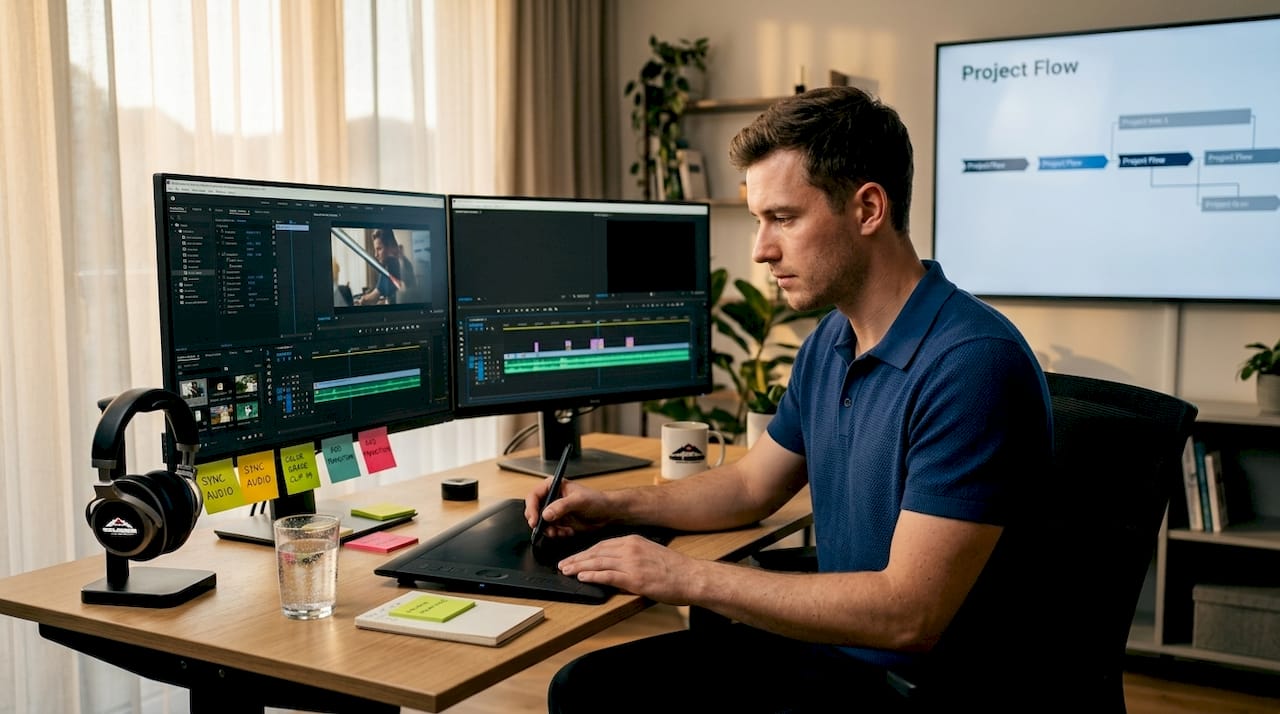
The core technical advantage of AI video tools is the separation of content into independent editable layers. Idomoo’s platform, for instance, creates editable layers for text, footage, graphics, and audio independently, so a brand manager can swap a client’s logo, adjust a script line, or change background music without rebuilding the entire video. This architecture makes scalable personalized video content practical for the first time.
Automation also changes how production teams handle client collaboration. Tools like Siena AI Vision 2.0 demonstrate that AI visual processing can classify and respond to video content in real time, a capability that is now being applied to client review workflows, automated quality checks, and feedback processing. The implication for brand managers is significant: review cycles that once took 48 hours can be compressed to same-day turnaround.
Technology | Primary benefit | Best use case |
Idomoo AI platform | Hyper-personalization at scale | B2B video campaigns with multiple audience segments |
Awesomic subscription | Rapid talent matching, unlimited revisions | Ongoing custom video marketing for brands |
Siena AI Vision 2.0 | Automated video classification and response | Client review automation and quality control |
Slack and Zoom | Real-time communication and feedback | Daily client collaboration and approval workflows |
Pro Tip: Integrate your AI video platform with your project management tool, whether that is Asana, Monday.com, or Notion, so that every client revision request automatically creates a tracked task. This eliminates the single biggest source of miscommunication in client-focused media production: the verbal approval that nobody wrote down.
You can also explore how automated video editing is reshaping production efficiency for international crews working under tight deadlines.
What are effective client collaboration and communication strategies?
Clear, timely, business-aware communication is the foundation of every successful client relationship in video production. According to JD Supra research, small communication moments accumulate into the overall client experience, and the difference between a retained client and a lost one often comes down to a single email that was too vague or arrived too late. For filmmakers, this is not a soft skill. It is a production variable.
The following sequence describes a communication framework that works across project types and budget levels:
Run a structured creative kickoff. Use the first meeting to align on business goals, not just creative preferences. Ask the client to describe what a failed video looks like, not just a successful one. This surfaces hidden constraints before they become expensive problems.
Set a revision protocol in writing. Subscription-based services like Awesomic offer unlimited revisions starting at approximately $2,995 per month, which signals to clients that feedback is expected and welcomed. Even if you are not using a subscription model, defining revision rounds in your contract removes ambiguity.
Use Slack for daily touchpoints. A brief daily update in a dedicated Slack channel, even a single sentence confirming progress, keeps clients informed without requiring a formal meeting. This reduces anxiety and builds trust faster than weekly status calls.
Send progress previews before completion. Share rough cuts, animatics, or location stills at the 30% and 70% marks of production. Clients who see work in progress are far less likely to request major changes at final delivery.
Close every project with a structured debrief. Document what worked, what the client would change, and what the next project should prioritize. This debrief becomes the foundation of your next creative brief and demonstrates that you treat the relationship as ongoing, not transactional.
A well-crafted creative brief for video production is the single most effective tool for aligning expectations before production begins.
How to implement consistent processes to scale client-centricity and build trust
Client-centricity built as a firmwide discipline with consistent onboarding, reporting, and knowledge management drives trust and loyalty far more reliably than individual talent alone. This is the insight that separates production companies that scale from those that plateau. When client relationships depend on one person’s memory or rapport, the business is one resignation away from losing its best accounts.
Systemic client-centricity means spreading responsibility across all team members with embedded reporting and communication protocols. In practice, this looks like shared client knowledge bases, standardized onboarding documents, and team-wide access to client preferences and project history. No single crew member should be the only person who knows what a client expects.
For video production firms and brand managers, the operational implications are concrete:
Standardize onboarding: Every new client receives the same intake process, including a goals document, a timeline agreement, and a communication preferences form.
Maintain a shared client knowledge base: Use tools like Notion or Confluence to document client preferences, past feedback, and approved brand assets so any team member can pick up a project without a briefing call.
Build consistent reporting cadences: Weekly progress reports, even brief ones, create a paper trail that protects both parties and demonstrates professionalism.
Distribute client engagement across the team: Introduce clients to at least two team members during onboarding so the relationship is never dependent on a single point of contact.
Review and update processes quarterly: Client expectations shift. A process that worked in 2024 may not reflect what clients expect in 2026.
The most successful video marketing in professional services is proactive and systemized, making expertise visible to buyers before the pitch stage. This means your production process itself becomes a trust signal, not just your finished work.
What practical steps can filmmakers and brand managers take today?
Applying a client-first video approach does not require a full operational overhaul. The highest-impact changes are specific, low-friction, and immediately visible to clients.
Adopt a subscription-based production model where possible. Services like Awesomic save 70% in costs and deliver 40% faster turnaround compared to traditional agencies, giving brand managers the flexibility to iterate quickly without budget anxiety.
Integrate AI tools for personalization. Platforms like Idomoo allow you to produce multiple versions of the same video for different audience segments without rebuilding from scratch. This is particularly valuable for B2B video production campaigns targeting multiple buyer personas.
Write detailed creative briefs before every project. A brief that includes business objective, audience profile, tone reference, and success metrics eliminates the most common source of client dissatisfaction: misaligned expectations.
Shift from reactive to proactive content production. Buyers in professional services form trust by seeing partners explain their approach in video before meetings, which accelerates pipeline progression and win rates. Produce explainer and process videos that clients can share internally before a pitch.
Use Zoom for milestone reviews, not just kickoffs. A face-to-face video call at the 50% mark of production catches problems early and signals that you are invested in the outcome, not just the delivery.
Pro Tip: Build a “client preference card” for every account, a one-page document capturing communication style, decision-making speed, revision tendencies, and brand sensitivities. Update it after every project. Over time, this card becomes your most valuable production asset.
Key takeaways
Client-centric video production succeeds when it combines AI-powered personalization tools, structured communication protocols, and firmwide process discipline to deliver consistent, measurable results for every client.
Point | Details |
Define client goals first | Map every creative decision to a specific business outcome before production begins. |
Use AI for scalable personalization | Platforms like Idomoo cut production time by over 90% while enabling multi-segment video campaigns. |
Build communication into the process | Daily Slack updates and milestone previews reduce revision requests and build client trust faster. |
Systematize client knowledge | Shared knowledge bases and standardized onboarding prevent single-point-of-failure relationships. |
Adopt flexible production models | Subscription services deliver faster turnaround and lower costs for ongoing client-focused video work. |
Why I think most production teams get client-centricity backwards
Most filmmakers and brand managers treat client-centricity as a communication style. They think it means being responsive, friendly, and open to feedback. Those things matter, but they are symptoms of a deeper operational choice, not the choice itself.
What I have seen over years of working on international productions is that the teams who consistently deliver for clients are not the most talented. They are the most organized. They have documented processes, shared knowledge, and communication cadences that run whether the lead producer is on set in Zurich or on a plane to Tokyo. The client never feels the difference because the system holds.
The shift from reactive to proactive production is where the real leverage lives. When you produce a short process video explaining your approach before a client pitch, you are not just being helpful. You are accelerating trust in a way that no proposal document can match. Buyers who see you explain your methodology on camera before the first meeting arrive at that meeting already half-convinced.
AI tools like Idomoo’s Lucas are not replacing the creative judgment that makes video work. They are removing the friction that prevents good creative judgment from scaling. That is a meaningful distinction. The filmmakers who will thrive in the next five years are those who treat technology as a process multiplier, not a shortcut.
— Pieter
How Videoproductionswitzerland delivers client-focused production in Switzerland
[
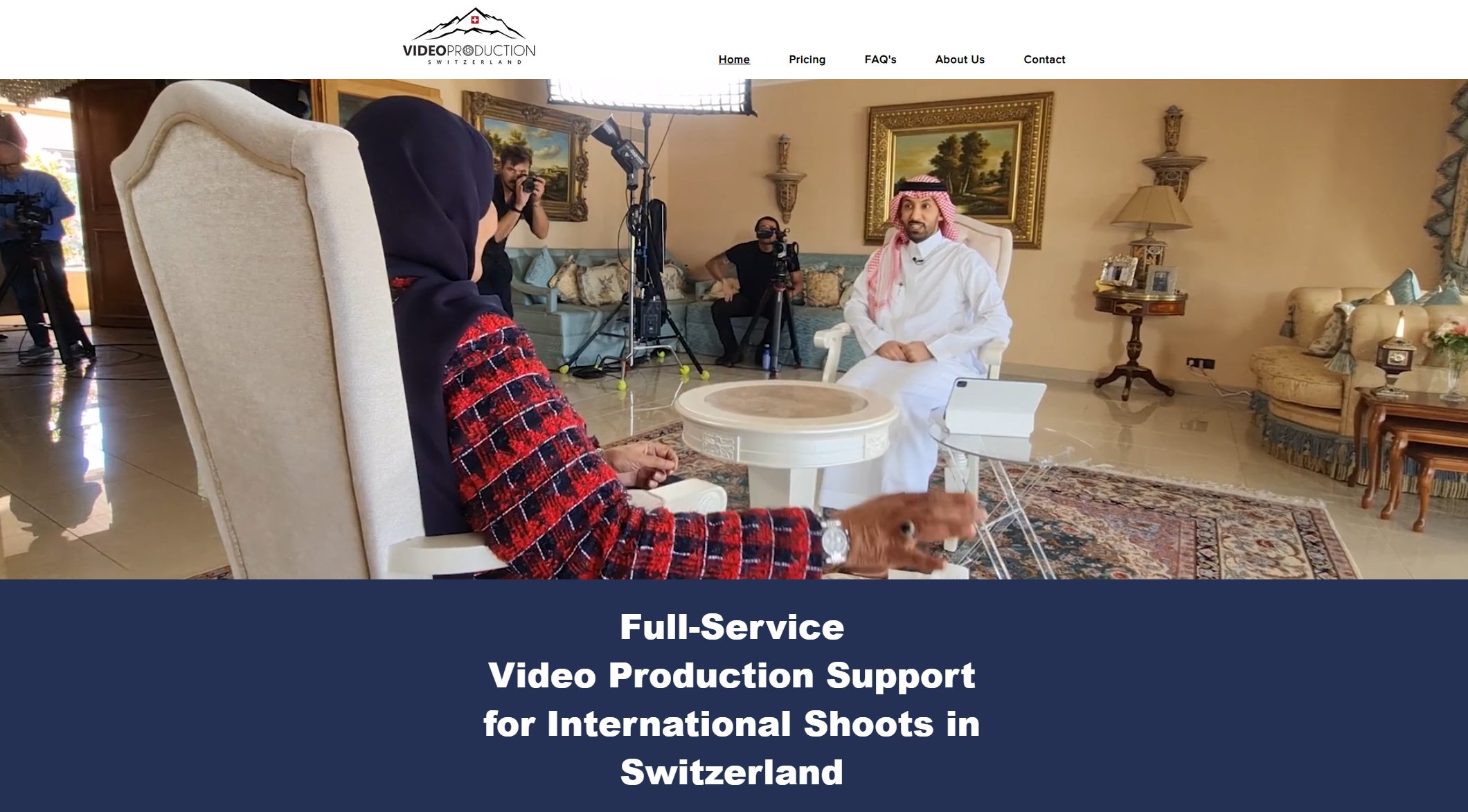
Videoproductionswitzerland has spent over 20 years building the systems and local expertise that client-centric video production demands. For international filmmakers and brand managers shooting in Switzerland, that means permits handled before you land, trusted crew sourced and briefed, and logistics managed so your team stays focused on the creative work. Every production starts with a free consultation and a thorough needs assessment, so the plan reflects your goals, not a generic package. Explore video production costs in Switzerland to understand what a fully supported, client-focused shoot looks like at every budget level, or visit Videoproductionswitzerland to start a conversation about your next project.
FAQ
What is client-centric video production?
Client-centric video production is the practice of designing every stage of a video project around the specific goals, audience, and feedback of each client. It prioritizes measurable client outcomes over generic creative templates.
How do AI tools support personalized video content?
AI platforms like Idomoo create independent editable layers for text, footage, graphics, and audio, allowing production teams to produce multiple personalized versions of a video quickly and at scale without rebuilding from scratch.
What communication tools work best for client collaboration?
Slack works well for daily progress updates, Zoom for milestone reviews, and structured creative briefs for aligning expectations before production begins. Combining all three reduces revision cycles and builds client trust faster.
How do subscription-based video services improve client outcomes?
Subscription models like Awesomic deliver 40% faster turnaround and save up to 70% in costs compared to traditional agencies, with unlimited revisions and daily communication that keeps clients engaged throughout production.
Why does systematizing client-centricity matter for video production firms?
When client relationships depend on one person’s knowledge or rapport, the business is vulnerable. Shared knowledge bases, standardized onboarding, and distributed client engagement protect accounts and create consistent experiences regardless of which team member is leading the project.
Recommended
