
Filming Wildlife in Switzerland: 2026 Filmmaker's Guide

TL;DR:
Filming wildlife in Switzerland requires obtaining cantonal and municipal permits, with complex projects needing 30 or more days to secure approval.
Ethical and legal standards prohibit disturbing wildlife or leaving trails, emphasizing non-invasive observation and official authorizations.
Advanced technical preparation, including shooting in flat profiles and protecting gear from alpine weather, is essential for successful shoots.
Filming wildlife in Switzerland means working in one of Europe’s most biodiverse countries while navigating a permit system, strict environmental laws, and terrain that rewards patience and preparation. Switzerland holds no federal filming license. Every project depends on cantonal and municipal permits that vary by location, shoot complexity, and the species or habitats involved. The country’s Alps, wetlands, and forested plateaus shelter ibex, golden eagles, bearded vultures, and Alpine marmots. Capturing them on film is genuinely extraordinary. Getting it right legally and ethically is what separates a successful production from an expensive mistake.
What legal permits and restrictions apply when filming wildlife in Switzerland?
Switzerland operates without a single national filming permit. Permits are cantonal or municipal, meaning the rules in Graubünden differ from those in Valais or Vaud. Simple shoots in low-impact locations typically receive permits within 3 to 7 business days. Complex productions involving protected nature reserves, large crews, or specialized equipment require 30 or more days of lead time. Planning your permit timeline before booking flights is not optional. It is the first production task.
For wildlife filmmakers specifically, the permit process intersects with Swiss environmental law. Filming inside a protected reserve or national park requires authorization from the managing authority, not just the local municipality. The Swiss National Park in Engadin, for example, has its own access rules that restrict where crews can position equipment and how long they can remain in sensitive zones. Understanding which authority governs your target location before you arrive saves significant time and avoids fines.
Drone regulations for wildlife shoots
Drone filming adds another layer of compliance. The Federal Office of Civil Aviation (FOCA) governs all unmanned aerial vehicle operations in Switzerland. Drone shoots require both aviation authorizations from FOCA and separate municipal permits when public or protected spaces are involved. Insurance is mandatory. Geo-restricted zones near airports, military areas, and wildlife protection zones further limit where drones can legally fly. Violating these restrictions carries real financial and legal consequences.
Privacy rights and consent in wildlife footage
When people appear recognizably in commercial wildlife footage, Swiss law requires their consent. Crowd shots are generally exempt, but any footage where an individual is identifiable and used commercially requires documented permission. This matters most when filming in popular hiking areas where tourists or guides may walk through your frame.
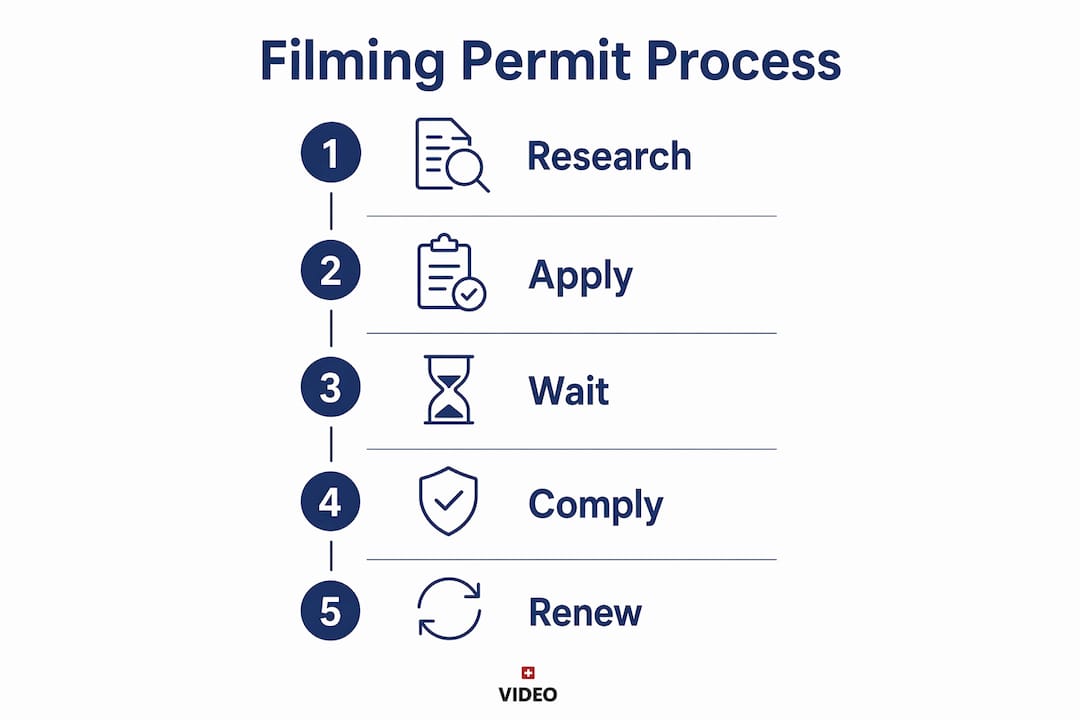
Pro Tip: Contact the relevant cantonal authority and the nature reserve management simultaneously when planning a wildlife shoot. Getting both processes running in parallel cuts your lead time significantly and prevents last-minute surprises on location.
For a detailed breakdown of Swiss drone rules, the drone laws in Switzerland guide covers FOCA compliance, geo-zones, and insurance requirements in full.
Where are the best locations for wildlife filming in Switzerland?
Switzerland’s top wildlife filming regions are the Engadin valley in Graubünden, the Valais Alps, the Jura Mountains, and the lakeshores of the Swiss Plateau. Each offers a distinct habitat type and a different roster of species. Choosing the right region depends on what you want to film and when you plan to shoot.
Key regions and flagship species
Engadin valley (Graubünden): Home to the Swiss National Park, this is the best location in the country for ibex, red deer, and golden eagles. The park’s strict no-disturbance rules actually work in your favor. Animals here are less habituated to human pressure and behave more naturally on camera.
Valais Alps: The bearded vulture reintroduction program has made Valais one of Europe’s best locations for filming this species in flight. The high-altitude terrain also supports Alpine marmots, chamois, and ptarmigan.
Jura Mountains: Lower elevation and denser forest make the Jura ideal for filming European lynx, roe deer, and diverse woodland birds. Access is generally easier than the high Alps, and permit processes tend to be less complex.
Swiss Plateau lakeshores: Wetland habitats along lakes Neuchâtel, Murten, and Constance support beavers, great crested grebes, and migratory waterfowl. These locations offer strong light conditions and accessible shooting positions.
Seasonal timing for Swiss wildlife filming
Season | Best species and activity | Key consideration |
Spring (March to May) | Marmots emerging, bird courtship displays | Snow still present at altitude; access limited |
Summer (June to August) | Ibex, chamois, eagles at high elevation | Best light and access; highest visitor numbers |
Autumn (September to November) | Red deer rut, migratory birds | Golden light; dramatic landscapes |
Winter (December to February) | Snow scenes, ptarmigan, winter raptors | Strict disturbance restrictions in many zones |
Autumn is widely regarded as the most cinematic season for Swiss wildlife filming. The red deer rut in Engadin produces dramatic behavior, the light is warm and directional, and visitor numbers drop sharply after summer. For filming in alpine terrain, autumn also brings more stable weather windows than summer afternoon thunderstorms allow.
What ethical practices should filmmakers follow to avoid disturbing wildlife?
Ethical wildlife filming in Switzerland is not just a moral position. It is a legal requirement. Disturbing wildlife, especially in winter, can result in fines under Swiss environmental law. Leaving marked trails is prohibited in most protected areas, and cantonal signage must be respected regardless of how good the shot opportunity looks.
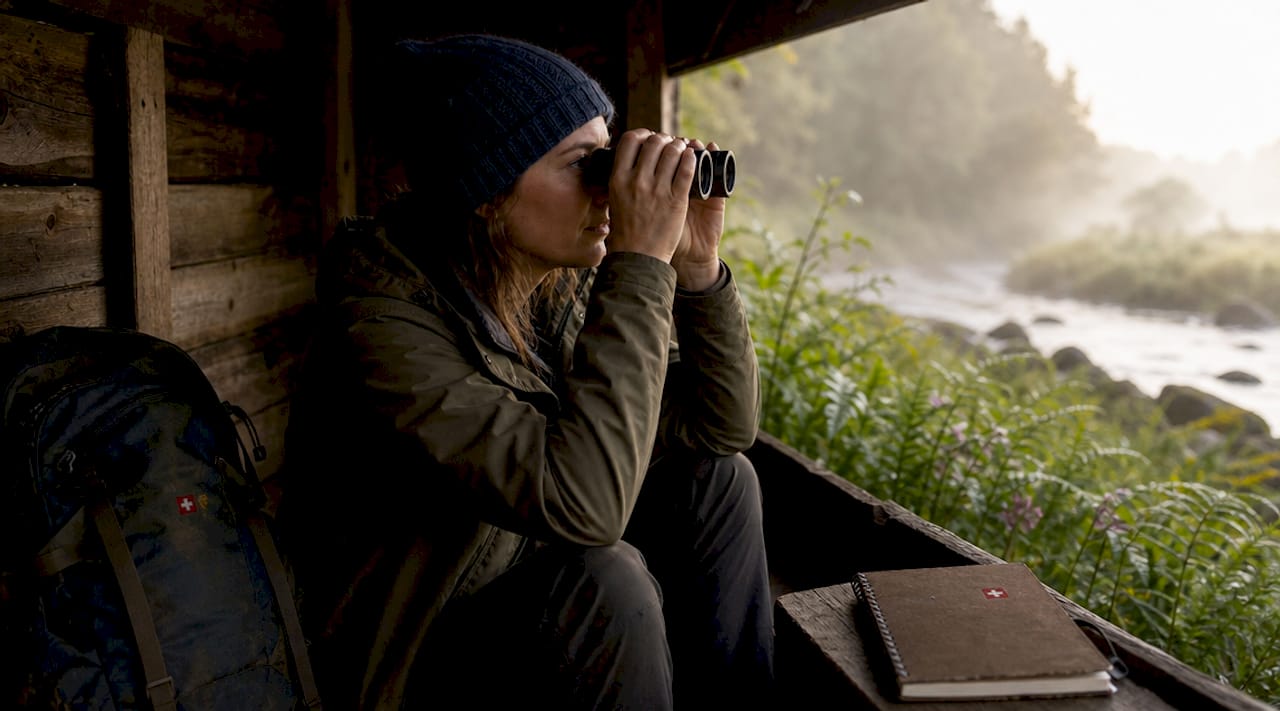
The core principles practiced by experienced Swiss wildlife photographers center on non-invasive observation. Membership in the Swiss Association of Nature Photographers (ASPN) reflects a commitment to ethical standards that the broader Swiss filming community increasingly expects. Working within these standards also protects your production legally.
Practical ethical guidelines for your shoot:
Stay on marked trails at all times in protected reserves and national parks.
Observe seasonal access restrictions, particularly winter closures designed to protect species under thermal stress.
Keep a minimum distance from nesting birds and denning mammals. For golden eagles, Swiss guidelines recommend a minimum of 300 meters during the breeding season.
Never use playback calls or artificial lures to attract wildlife for filming purposes.
Limit time spent near any individual animal to reduce cumulative stress.
Camera traps and fixed hides
Fixed hides and camera traps face regional restrictions in Switzerland, particularly inside protected fauna zones. Some cantons ban their installation outright in sensitive areas. Installing equipment on private land requires the landowner’s written consent. In protected reserves, you need explicit authorization from the managing authority before placing any fixed equipment. Thermal imaging cameras fall under the same framework. The rule is simple: if the equipment stays in the field unattended, you need documented permission before it goes in.
Pro Tip: Partner with a local wildlife guide or naturalist who knows the specific behavioral patterns of your target species. They will position you correctly without the trial-and-error that stresses animals and wastes shooting days.
What technical tips help filmmakers capture quality footage in Swiss conditions?
Swiss alpine environments present specific technical challenges that standard wildlife filming advice does not fully address. The dynamic range in mountain terrain is extreme. Bright snow, deep shadow, and direct sun can all appear in a single frame. Shooting in flat profiles preserves highlight and shadow detail that would otherwise clip, giving you far more flexibility in post-production color grading.
Shoot in a flat or log profile. Cameras like the Sony FX3, Canon EOS R5 C, and Blackmagic Pocket Cinema Camera 6K all offer flat profiles that handle alpine dynamic range better than standard picture profiles.
Time your shoot around golden hour. Alpine golden hour is shorter and more intense than at lower elevations. The light changes fast. Be positioned and ready 30 minutes before sunrise or sunset, not arriving at those times.
Manage drone safety around mountain weather. Crosswinds at altitude can destroy a drone in seconds. Check forecasts using MeteoSwiss, not generic weather apps. Fly only in stable morning windows before valley winds develop.
Protect gear from cold and condensation. At elevations above 2,000 meters, temperatures drop fast even in summer. Batteries lose capacity significantly in cold. Carry spares in an insulated pouch close to your body, and allow cameras to acclimatize slowly when moving from cold to warm environments.
Include human scale in wide shots. A single figure on a ridge next to a golden eagle or a chamois herd communicates the scale of Swiss alpine terrain in a way that a telephoto-only approach cannot. This technique is standard in Swiss wildlife documentary work and adds emotional weight to landscape sequences.
For full technical and logistical guidance on mountain shoots, the Swiss Alps filming guide covers crew logistics, gear transport, and altitude-specific production planning in detail.
Key takeaways
Filming wildlife in Switzerland requires advance permit planning, strict ethical compliance, and technical preparation for alpine conditions to produce footage that is both legally sound and cinematically strong.
Point | Details |
No federal filming permit exists | Secure cantonal and municipal permits early; complex shoots need 30+ days lead time. |
Best locations vary by species | Engadin suits ibex and eagles; Valais for bearded vultures; Jura for lynx and forest species. |
Ethical filming is legally enforced | Disturbing wildlife or leaving marked trails carries fines under Swiss environmental law. |
Camera traps need explicit permission | Fixed equipment in protected zones requires written authorization from managing authorities. |
Alpine technical demands are specific | Shoot in flat profiles, protect batteries from cold, and fly drones only in stable morning windows. |
What I’ve learned from years of filming Swiss wildlife
The single biggest mistake I see international crews make is underestimating how much Switzerland’s permit system varies by canton. A filmmaker who handled permits smoothly in Ticino will arrive in Graubünden and find an entirely different process, different timelines, and different authorities to contact. The country is small but administratively complex, and wildlife zones add another layer on top of standard filming permits.
What I’ve also noticed over the past several years is a genuine shift in how Swiss authorities and local communities view wildlife filming. Ethical awareness has increased. Rangers in the Swiss National Park are more likely to check your authorization and your behavior than they were a decade ago. That is a good development. It protects the animals and it protects filmmakers who do the work correctly.
The crews who consistently get the best footage are not the ones with the most expensive gear. They are the ones who invest time before the shoot: researching species behavior, building relationships with local naturalists like outdoor photographer Martin Bissig, and arriving with permits already in hand. Patience on location is the other factor. A golden eagle will not perform on your schedule. But if you are positioned correctly, legally, and quietly, it will eventually give you something extraordinary.
My honest advice: treat the permit process and the ethical guidelines as creative constraints, not obstacles. They force you to plan more carefully, which almost always produces better work.
— Pieter
How Videoproductionswitzerland supports your wildlife filming project
Wildlife shoots in Switzerland involve more moving parts than most international crews anticipate: cantonal permits, FOCA drone authorizations, protected zone access, and local crew coordination all need to run in parallel. Videoproductionswitzerland handles all of it, so you can focus on the creative work.
[
With over 20 years of experience managing productions across Swiss cantons, Videoproductionswitzerland takes the guesswork out of permit acquisition, location scouting, and crew logistics. Whether you are documenting ibex in Engadin or filming bearded vultures in Valais, the team knows which authorities to contact, how long each process takes, and how to keep your shoot on schedule. Review production costs and service options to plan your budget, or contact Videoproductionswitzerland directly for a free consultation on your project.
FAQ
Do I need a permit to film wildlife in Switzerland?
Yes. Switzerland has no federal filming permit; all authorizations come from cantonal or municipal authorities, with additional permissions required for protected nature reserves and national parks.
How long does it take to get a filming permit in Switzerland?
Simple shoots typically receive permits within 3 to 7 business days. Complex productions involving protected wildlife zones or large crews require 30 or more days of lead time.
Can I fly a drone to film wildlife in Switzerland?
Drone operations require FOCA aviation authorization plus local municipal permits when public or protected spaces are involved. Insurance is mandatory, and geo-restricted zones near wildlife protection areas limit where drones can legally fly.
What are the best times of year for wildlife filming in Switzerland?
Autumn (September to November) offers the red deer rut, warm directional light, and fewer visitors. Summer provides the best high-altitude access for ibex and eagles, while spring works well for emerging marmots and bird courtship behavior.
Is it legal to use camera traps in Swiss nature reserves?
Camera traps in protected zones require explicit authorization from the reserve management authority. Some cantons restrict or ban fixed equipment entirely in sensitive fauna zones, so check regional rules before placing any unattended gear.
Recommended
