
Canyoning Switzerland Interlaken: Filming Safely and Legally

Updated: Jan 8
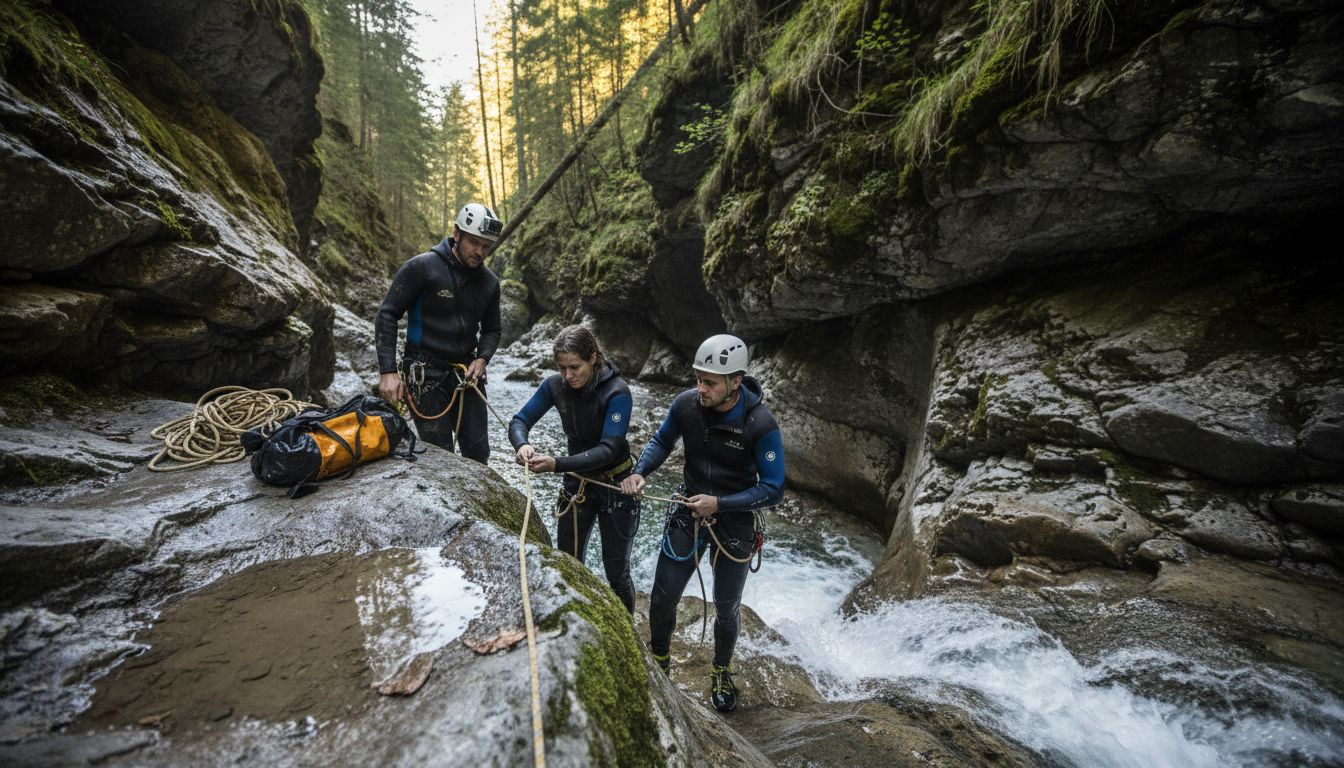
Over 80 percent of successful adventure documentaries filmed in Switzerland involve precise local logistics and expert safety planning. For American and international filmmakers tackling demanding canyoning shoots in Interlaken, detailed knowledge of alpine terrain and strict legal requirements makes all the difference. This guide delivers trusted strategies and insider tips that empower production teams to capture striking footage safely while leveraging Swiss expertise from route selection to crew coordination.
Table of Contents
Key Takeaways
Point | Details |
Canyoning as Adventure Sport | Canyoning in Interlaken offers a thrilling exploration of alpine terrains through various technical movements and specialized techniques. |
Route Difficulty Classification | Canyoning routes have a grading system to assess technical skills and safety, catering to both beginners and advanced adventurers. |
Legal Permissions for Filming | Filmmakers must navigate local regulations and obtain necessary permits for filming in canyoning areas, especially for larger productions. |
Safety Protocols | Strict safety measures must be established, including risk assessments and environmental monitoring, to ensure safe filming in challenging canyon environments. |
Defining Canyoning in Interlaken, Switzerland
Canyoning represents an exhilarating adventure sport where filmmakers and athletes navigate mountain waterways through a complex series of technical movements. In Interlaken, this activity transforms alpine landscapes into dynamic natural playgrounds, offering participants unique opportunities to explore Switzerland’s rugged terrain through mountain stream adventures.
The sport involves strategically moving through gorges, rivers, and alpine environments using specialized techniques like climbing, sliding, jumping, and abseiling. Participants wear protective gear including wetsuits, helmets, and life jackets, enabling safe navigation through challenging water-based terrain. Interlaken’s geography provides exceptional locations with varying difficulty levels, making it perfect for both beginner adventurers and experienced canyoneers seeking technical challenges.
Professional canyoning experiences in this region typically operate from May through October, offering structured routes that range from beginner-friendly local gorges to more advanced technical descents like Grimsel and Chli Schliere. These guided tours with professional instruction ensure participant safety while delivering an immersive alpine water experience that combines physical skill with breathtaking natural scenery.
Pro tip: When planning a canyoning shoot, always schedule multiple backup locations and verify local water conditions to ensure optimal filming opportunities and participant safety.
Types of Canyoning Routes and Difficulty Levels
Canyoning routes in Switzerland are meticulously classified using a sophisticated grading system that ensures participant safety and sets clear expectations for adventure seekers. International canyon grading standards evaluate routes across multiple critical dimensions, including vertical difficulty, aquatic conditions, and overall route commitment.
The grading system typically incorporates three primary components: vertical difficulty (V), aquatic difficulty (A), and commitment level (Roman numerals I to VI). Vertical difficulty ranges from V1 (minimal technical rope skills) to V7 (extremely complex multi-pitch rappelling), while aquatic difficulty progresses from A1 (calm water) to A7 (challenging, powerful water currents). Each grade reflects the technical skills, physical demands, and potential risks associated with a specific canyon route.
Interlaken’s canyoning landscape offers diverse routes that cater to different skill levels. Beginner routes typically feature minimal vertical challenges, straightforward water passages, and shorter commitment durations. Advanced routes demand exceptional technical proficiency, involving complex ropework, challenging water navigation, and potentially remote canyon environments that require advanced rescue and self-management skills. Filmmakers documenting these routes must carefully assess route difficulty, participant capabilities, and potential safety considerations.
Here’s a summary of typical canyoning route types and their key features in Interlaken:
Route Type | Technical Challenge | Aquatic Conditions | Commitment Level |
Beginner | Basic ropework, short drops | Calm waters, easy passages | I–II (short, accessible) |
Intermediate | Moderate rappelling, jumps | Mixed currents, small slides | III–IV (longer, moderate) |
Advanced | Complex multi-pitch climbs | Strong currents, waterfalls | V–VI (remote, demanding) |
Pro tip: Always conduct a comprehensive route reconnaissance and consult local professional guides to accurately assess the technical complexity and safety parameters of your selected canyoning location.
Legal Requirements and Permit Procedures for Filming
Filming in Switzerland’s dramatic canyoning landscapes requires careful navigation of legal protocols and local filming regulations in public spaces. Filmmakers must understand that while short-duration shoots often have minimal bureaucratic barriers, complex productions demand comprehensive permit preparation and advance notification.

The Swiss regulatory framework distinguishes between different filming scenarios based on project scale, equipment usage, and potential public disruption. Short film projects typically require minimal permissions, but productions involving road closures, significant equipment deployment, or drone cinematography necessitate detailed documentation. Specific requirements include obtaining authorizations from local municipal authorities, securing location access permissions, and potentially acquiring federal approvals for specialized filming techniques.
Special attention must be given to drone cinematography, which requires explicit authorization from Swiss aviation authorities. Filmmakers must submit comprehensive flight plans, demonstrate pilot certification, and provide detailed risk assessments before obtaining permission to capture aerial footage. Additionally, environmental protection regulations in canyon regions mandate strict adherence to conservation guidelines, requiring production teams to minimize ecological impact and obtain necessary environmental clearances.
Pro tip: Contact local film commissions at least six weeks in advance and compile a comprehensive documentation package including detailed shoot itinerary, equipment specifications, and crew credentials to expedite the permitting process.
Safety Protocols and Risk Management On Location
Filmmaking in canyoning environments demands rigorous attention to safety, guided by comprehensive Swiss safety management protocols. Professional production teams must develop multilayered risk mitigation strategies that account for the dynamic and unpredictable nature of alpine canyon terrain.
Core safety protocols require meticulous pre-shoot assessments that include detailed terrain analysis, water condition evaluations, and comprehensive emergency response planning. This involves identifying potential hazards such as unstable rock formations, rapid water level changes, and challenging access points. Production teams must verify each team member’s technical skills, ensure appropriate safety equipment is available, and establish clear communication protocols for emergency scenarios.
Environmental monitoring plays a critical role in risk management for canyon filming. This includes tracking weather forecasts, understanding local hydrology, and maintaining constant communication with regional safety authorities. Filmmakers must develop flexible contingency plans that allow for immediate shoot modifications or complete cancellation if environmental conditions exceed safe operational parameters. Professional productions require written safety documentation, verified insurance coverage, and explicit emergency evacuation strategies that account for the remote and challenging canyon environments.
Pro tip: Conduct a comprehensive location scout with local expert guides at least one week before your shoot, documenting potential risks and creating a detailed safety matrix that can be shared with your entire production team.
Local Crew, Gear, and Video Logistics Coordination
Successful canyoning film productions in Switzerland rely on professional local guide expertise, which provides critical logistical support and specialized knowledge unique to alpine terrain. These certified professionals offer comprehensive services that extend far beyond basic guiding, serving as essential resources for seamless video production coordination.
Local crew selection demands rigorous vetting, prioritizing guides with specialized technical certifications in canyoning, alpine rescue, and video production support. Ideal team members possess not only advanced technical skills in navigating challenging canyon environments but also understand the intricate requirements of professional filmmaking. Equipment considerations are equally critical, requiring specialized gear that can withstand extreme alpine conditions while supporting high-quality video capture. This includes waterproof camera housings, stabilization equipment, communication devices designed for challenging terrain, and redundant safety systems.
Logistical coordination in canyoning film productions requires meticulous planning across multiple dimensions. Transportation logistics must account for challenging access points, potentially requiring specialized vehicles or helicopter support. Communication systems need robust backup protocols, considering the remote and technologically challenging canyon environments. Production teams must develop comprehensive contingency plans that address potential equipment failures, medical emergencies, and unexpected environmental changes, ensuring continuous operational readiness throughout the shoot.
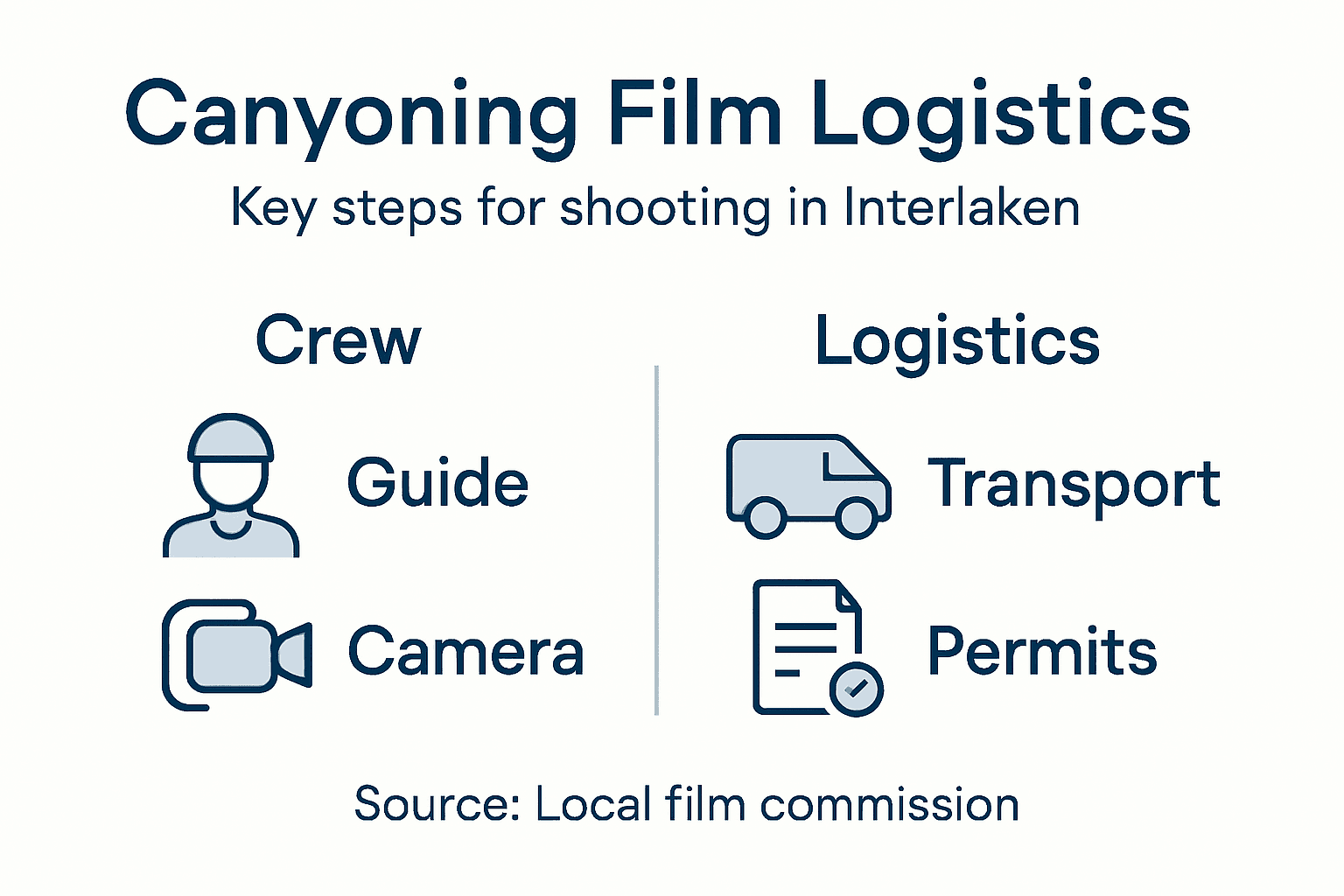
Below is a comparison of local crew roles and their impact on canyoning film production:
Crew Role | Key Responsibilities | Impact on Filming |
Certified Canyon Guide | Safety management, route planning | Ensures team safety, reduces risk |
Video Production Specialist | Camera setup, gear troubleshooting | Captures high-quality footage |
Alpine Rescue Expert | Emergency planning, evacuation support | Handles unexpected incidents |
Pro tip: Build comprehensive local crew relationships by investing time in pre-production meetings, understanding their specific terrain expertise, and creating collaborative safety and filming strategies that leverage their in-depth regional knowledge.
Streamline Your Canyoning Film Production in Switzerland with Expert Support
Filming canyoning adventures in Interlaken demands careful navigation of complex legal permits, demanding safety protocols, and expert local logistics. This article highlights crucial pain points such as securing filming permissions, managing specialized gear in alpine terrain, coordinating experienced canyon guides, and mitigating risks in fast-moving water conditions. If you want to focus fully on creative filmmaking rather than paperwork and unpredictable challenges, relying on a trusted local partner is essential
At Video Production Switzerland, we specialize in providing seamless video production solutions tailored to alpine canyoning projects. Our 20+ years of expertise ensures you get the right permits, professional crew, and gear logistics handled efficiently so you can capture stunning shots without compromise. Don’t let complex canyon filming requirements slow you down. Start with a free consultation today and see how our trusted local knowledge can make your shoot in Switzerland safe, legal, and stress-free. Explore more about our services and experience the difference at Video Production Switzerland.
Frequently Asked Questions
What is canyoning?
Canyoning is an adventure sport that involves navigating through mountain waterways using techniques such as climbing, sliding, jumping, and abseiling, typically in gorges and rivers.
What equipment do I need for safe canyoning filming?
For safe canyoning filming, essential equipment includes waterproof camera housings, stabilization gear, communication devices designed for difficult terrain, and appropriate personal safety gear such as wetsuits, helmets, and life jackets.
How do I ensure compliance with local filming regulations while canyoning?
To ensure compliance with local filming regulations, you should obtain necessary permits, notify local authorities about your shoot, and follow environmental protection guidelines to minimize ecological impact.
What safety protocols should I follow when filming in canyoning environments?
Key safety protocols include conducting thorough pre-shoot assessments, verifying the technical skills of your team, ensuring availability of safety equipment, establishing clear communication for emergencies, and maintaining real-time environmental monitoring.
Recommended
