
What Production Managers Do in Video Shoots


Every American production faces unique hurdles when filming in Switzerland, where even minor oversights can spiral into costly delays. For international filmmakers, understanding the crucial role of production managers means the difference between chaos and a smooth shoot. With over 85 percent of successful film projects crediting efficient logistics, this guide offers clear insight into how expert management transforms creative vision into seamless project execution.
Table of Contents
Key Takeaways
Point | Details |
Role of Production Manager | Production managers organize and oversee all aspects of video production, ensuring efficient management of budgets, schedules, and crew coordination. |
Communication Bridge | They facilitate communication between creative and administrative teams, translating artistic visions into actionable production plans. |
Specialized Roles | Different production manager roles, like line producers and unit production managers, allow for tailored management based on project size and complexity. |
Legal and Safety Compliance | Production managers must navigate and implement strict legal and safety obligations, particularly in specific environments like Switzerland, to ensure compliance and worker safety. |
Core Role of a Production Manager
A production manager is the organizational backbone of video shoots, orchestrating complex logistical challenges with precision and strategic planning. Their responsibilities span the entire production lifecycle, from initial scheduling to final wrap-up, ensuring that creative visions translate smoothly into executable film projects. Production managers organize the physical and financial frameworks that transform script concepts into tangible cinematographic experiences.
The core responsibilities of a production manager include meticulous budget management, crew coordination, and operational problem-solving. They work closely with directors, line producers, and department heads to create comprehensive shoot schedules, manage payroll, book necessary equipment, and resolve logistical challenges in real-time. Their primary function involves maintaining production efficiency by controlling daily financial and operational tasks, which requires exceptional organizational skills and proactive strategic thinking.
Specifically, production managers handle critical tasks such as preparing detailed production schedules, conducting script breakdowns, selecting and managing crew members, controlling production expenditures, and ensuring strict compliance with industry regulations. They serve as communication bridges between creative teams and administrative departments, translating artistic vision into practical, executable plans. Their role demands a unique combination of technical knowledge, financial acumen, and interpersonal skills to navigate the complex landscape of video production.
Pro tip: Always maintain a comprehensive digital filing system with backup copies of all production documents to streamline communication and protect against potential data loss during complex video shoots.
Types of Production Manager Roles
Video production encompasses multiple specialized production manager roles that adapt to different project scales and complexities. Production managers can be categorized based on their specific organizational and logistical responsibilities, with each role contributing uniquely to the overall production workflow. These specialized positions ensure comprehensive management across various stages of video creation.
The primary production manager roles include line producer, unit production manager, and production coordinator. A line producer typically handles the financial aspects of production, managing budgets and creating cost reports. Unit production managers focus on day-to-day operational logistics, coordinating crew activities, managing schedules, and ensuring smooth set operations. In smaller productions, these roles might be combined or handled by a single professional, while larger projects often require multiple specialized managers.
Each production manager role requires a distinct skill set and area of expertise. Line producers excel in financial planning and budget management, unit production managers are organizational experts who coordinate complex shoot logistics, and production coordinators serve as communication bridges between different departments. Their collective efforts ensure that creative visions are transformed into executable film projects, balancing artistic goals with practical constraints.
Here’s how the main production manager roles differ in function and focus:
Role | Main Responsibility | Skill Emphasis | Typical Production Size |
Line Producer | Budget & finance control | Financial management | Large and complex |
Unit Production Manager | Daily set operations | Logistics coordination | Mid-size to large |
Production Coordinator | Communication across teams | Detail organization | Small to mid-size |
Combined Role | Multiple tasks managed | Versatility, adaptability | Small or indie projects |
Pro tip: Develop a comprehensive understanding of all production manager roles to enhance your versatility and increase your marketability in the video production industry.
Key Logistical Responsibilities Explained
Production managers are the critical operational architects of video shoots, responsible for a complex array of logistical challenges that ensure smooth project execution. Their responsibilities encompass comprehensive management of budgets, scheduling, crew coordination, and operational problem-solving, transforming creative concepts into tangible film productions. These professionals serve as the backbone of production, maintaining intricate systems that connect creative vision with practical implementation.
The specific logistical responsibilities include multiple interconnected tasks. Production managers must meticulously manage crew recruitment, schedule shooting days, secure necessary locations and permits, coordinate equipment rentals, and handle critical support services like transportation and catering. They are responsible for approving timesheets, monitoring production costs, conducting daily production reports, and ensuring strict compliance with safety and legal requirements. Their work involves constant communication across departments, troubleshooting unexpected challenges, and maintaining a delicate balance between creative expectations and operational constraints.
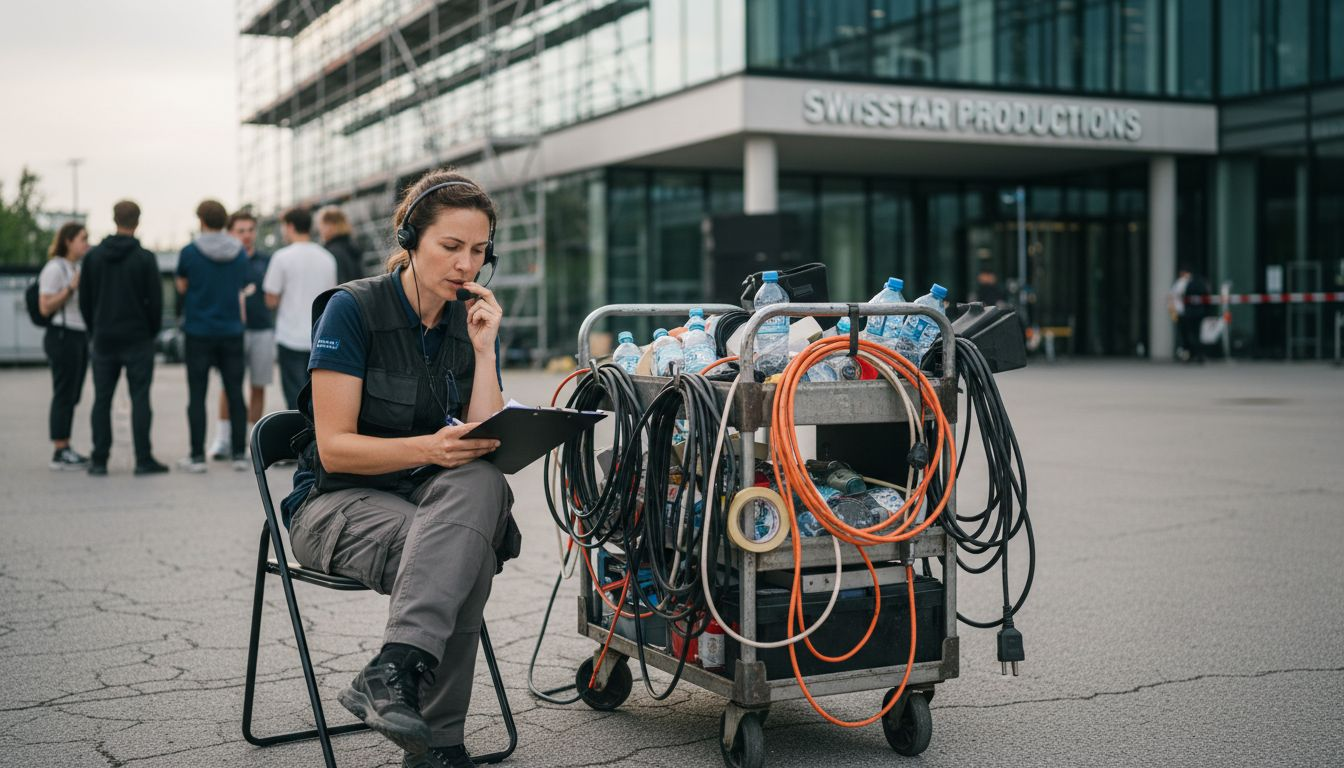
Beyond administrative tasks, production managers are strategic problem solvers who must anticipate potential issues before they arise. This requires exceptional organizational skills, financial acumen, and the ability to make rapid, informed decisions under pressure. They spend time both in office settings and on set, switching between detailed planning and real-time problem resolution. Their role demands a unique blend of technical knowledge, interpersonal communication, and proactive management to keep complex video production projects running efficiently and within established parameters.
Pro tip: Develop a comprehensive digital workflow management system that tracks all production logistics in real-time to minimize communication gaps and streamline operational efficiency.
Legal and Safety Obligations in Switzerland
In the Swiss video production landscape, legal and safety obligations represent a critical framework that production managers must navigate with extreme precision. Workplace safety in Switzerland is governed by strict legal requirements under the Federal Labour Act and Accident Insurance Act, which mandate comprehensive protection for workers across all industries. Production managers bear significant responsibility for implementing and maintaining these rigorous safety standards, ensuring that every aspect of a video shoot complies with national regulatory expectations.
The legal obligations for production managers in Switzerland encompass multiple critical dimensions. These include conducting thorough risk assessments before and during production, providing mandatory safety training for all crew members, maintaining detailed documentation of safety protocols, and implementing comprehensive accident prevention strategies. Production managers must also ensure proper insurance coverage, manage emergency response procedures, and continuously update safety measures to address potential workplace hazards. This requires a proactive approach that goes beyond basic compliance, focusing on creating a culture of safety and prevention.
Beyond physical safety, legal obligations extend to areas such as work hour regulations, fair compensation, proper equipment maintenance, and adherence to environmental protection standards. Production managers must be well-versed in Swiss labor laws, understand industry-specific regulations, and maintain meticulous records that demonstrate full compliance. The consequences of non-compliance can be severe, ranging from substantial financial penalties to potential legal actions and production shutdowns. This makes the role of a production manager not just an operational necessity, but a critical legal safeguard for the entire video production ecosystem.
This table summarizes essential legal and safety areas for video production in Switzerland:
Obligation Area | Practical Task Example | Key Goal |
Risk Assessment | On-site hazard evaluation | Accident prevention |
Safety Training | Crew safety briefings | Legal compliance |
Documentation | Up-to-date safety logs | Regulatory proof |
Insurance Requirements | Accident insurance enrollment | Worker protection |
Environmental Standards | Proper waste disposal | Eco-friendly production |
Pro tip: Develop a comprehensive digital compliance checklist that tracks all legal and safety requirements in real-time, ensuring no regulatory detail is overlooked during your Swiss video production.
Budgeting, Scheduling, and Crew Coordination
Production managers are the strategic architects of video shoot logistics, responsible for transforming creative visions into meticulously planned operational realities. Efficient crew coordination requires creating detailed schedules that accommodate complex variables like cast availability, location constraints, and equipment requirements, while maintaining strict financial discipline. Their role demands a delicate balance between creative flexibility and operational precision.
Successful budget management involves breaking down scripts into granular shooting schedules, allocating precise time per scene, and continuously tracking financial expenditures. Production managers must communicate extensively across departments, coordinating crew call times, managing unexpected changes, and ensuring that every minute of production time translates into maximum creative and financial efficiency. This requires sophisticated planning tools, real-time communication strategies, and the ability to make rapid, informed decisions that keep the production moving forward.
The complexity of crew coordination extends beyond simple scheduling. Production managers must understand each team member’s skills, availability, and potential interdependencies. They create intricate networks of communication, ensuring that every crew member understands their role, timing, and contribution to the larger project. This involves not just technical scheduling, but also managing interpersonal dynamics, resolving potential conflicts, and maintaining a positive, collaborative work environment that keeps the production running smoothly and creatively.
Pro tip: Invest in a robust digital project management platform that allows real-time budget tracking, schedule adjustments, and crew communication to minimize logistical friction during video productions.
Critical Skills and Common Pitfalls
Production managers operate in a high-stakes environment where success hinges on a complex blend of technical expertise and interpersonal skills. Their professional effectiveness depends on mastering critical competencies like organizational abilities, communication strategies, budget management, leadership, and adaptive problem-solving. The ability to anticipate challenges and navigate unexpected complications separates exceptional production managers from average performers.
The technical dimensions of this role require deep understanding of production workflows, equipment requirements, and logistical constraints. Successful production managers must develop advanced skills in strategic planning, financial forecasting, and real-time decision making. This involves not just tracking budgets and schedules, but understanding the intricate interconnections between creative vision, operational constraints, and financial limitations. Technical knowledge must be complemented by strong interpersonal skills that enable effective team communication, conflict resolution, and maintaining high morale under challenging production conditions.
Common pitfalls in production management often stem from predictable yet avoidable mistakes. These include inadequate pre-production planning, poor communication across departments, failure to establish clear contingency protocols, underestimating resource requirements, and rigid adherence to initial plans without flexibility. Production managers must cultivate a proactive mindset that anticipates potential issues, develops robust backup strategies, and maintains psychological resilience in high-pressure environments. Their role demands constant vigilance, strategic thinking, and the ability to balance creative aspirations with practical limitations.
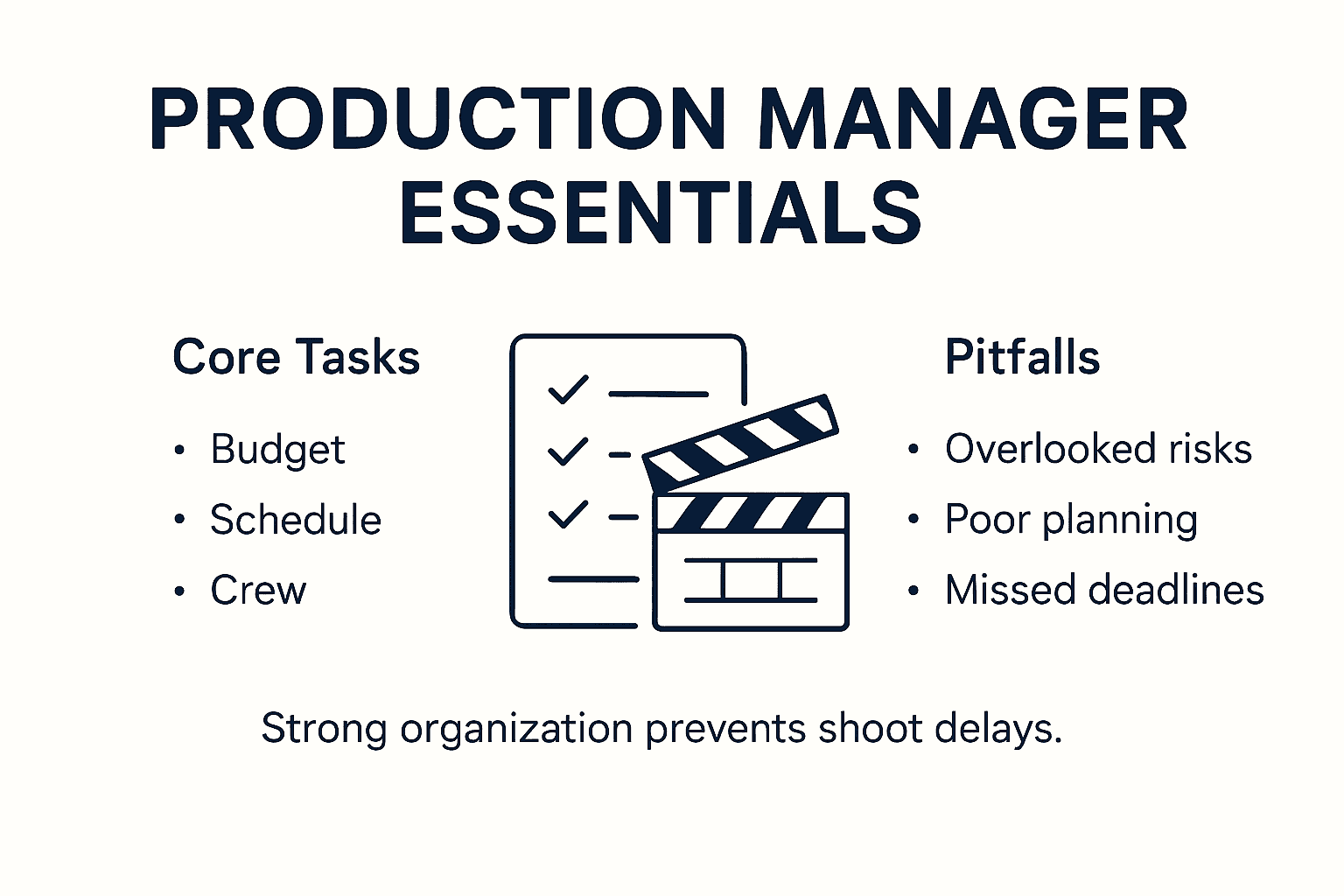
Pro tip: Develop a comprehensive pre-production risk assessment framework that identifies potential challenges and creates adaptive strategies before the first day of shooting.
Seamless Production Management for Your Video Shoots in Switzerland
The challenges faced by production managers outlined in “What Production Managers Do in Video Shoots” highlight how crucial expert logistical coordination and strict compliance with legal and safety standards are for smooth filming. If you are seeking relief from juggling budgets, crew coordination, permits, and risk assessments all at once, our professional team at Video Production Switzerland offers the trusted local expertise you need. We specialize in managing every detail from trusted crew sourcing to securing permits, ensuring your international or local shoot runs on time and stress free.

Partner with us to gain over 20 years of deep market knowledge and proven logistical management that transforms complex production challenges into efficient solutions. Visit our landing page at Video Production Switzerland to start your free consultation and discover how our comprehensive services can support your production from scheduling through execution. Don’t wait to secure reliable support that safeguards your shoot’s success.
Frequently Asked Questions
What are the main responsibilities of a production manager in video shoots?
Production managers are responsible for meticulous budget management, crew coordination, operational problem-solving, and maintaining production efficiency throughout the entire video shoot lifecycle.
How do production managers handle scheduling and crew coordination?
Production managers create detailed shoot schedules that take into account cast availability, location constraints, and equipment requirements, while ensuring effective communication among all crew members.
What skills are essential for a successful production manager?
Key skills for production managers include exceptional organizational abilities, strong communication strategies, budget management, leadership, and adaptive problem-solving in high-pressure environments.
What legal obligations must production managers follow during video shoots?
Production managers must comply with legal obligations such as conducting risk assessments, providing safety training, maintaining documentation, ensuring proper insurance coverage, and adhering to environmental standards.
Recommended
