
What Does a Post Production Coordinator Do?


Managing film projects in Switzerland means juggling countless moving parts once the cameras stop rolling. For international filmmakers and production company managers, understanding the role of a post production coordinator is crucial to avoid costly delays and miscommunications. These professionals orchestrate everything from editorial schedules to asset transfers, bridging creative and technical teams for flawless workflow. Discover how this expertise keeps your Swiss productions running smoothly, from raw footage to the final cut.
Table of Contents
Key Takeaways
Point | Details |
Role Overview | Post Production Coordinators manage the workflow that transforms raw footage into final content, bridging communication between teams. |
Core Responsibilities | Their main tasks include managing schedules, tracking assets, and ensuring effective communication among diverse production teams. |
Essential Skills | Successful coordinators possess advanced project management skills, effective communication abilities, and technical proficiency with post-production software. |
Challenge Mitigation | They must proactively address challenges such as tight deadlines and communication gaps through robust planning and technological solutions. |
Defining the Post Production Coordinator Role
A post production coordinator is a critical professional who manages the complex workflow of transforming raw footage into polished final content. Post-production coordination involves organizing and managing the intricate processes that happen after filming concludes, ensuring smooth transitions between editing, visual effects, sound design, and final delivery.
These professionals serve as central communication hubs, bridging multiple teams and stakeholders throughout the post-production journey. Their responsibilities span several key areas:
Managing editorial schedules and deadlines
Tracking and distributing production assets
Coordinating communication between editors, directors, and clients
Updating and maintaining comprehensive tracking documents
Facilitating asset transfers between different production teams
Post production coordinators must possess exceptional organizational skills and communicate effectively across diverse professional environments. Production coordination requires meticulous attention to logistics and the ability to coordinate complex workflows simultaneously.
Their daily tasks involve a delicate balance of administrative management and creative collaboration. They might spend one hour updating progress spreadsheets, the next resolving technical asset transfer issues, and later mediating communication between editors and directors about specific project requirements.
Professional Skills Required:
Advanced project management capabilities
Strong communication skills
Technical proficiency with post-production software
Ability to manage multiple concurrent projects
Excellent time management
Pro tip: Develop a comprehensive digital asset management system to streamline your workflow and reduce potential communication bottlenecks.
This role demands adaptability, precision, and a holistic understanding of the entire post-production ecosystem. Successful post production coordinators are the unsung heroes who ensure that complex multimedia projects transition seamlessly from raw footage to polished final products.
This blog article is written by Pieter Nijssen, founder of Video Production Switzerland and an experienced video producer working across Switzerland. He delivers professional corporate and commercial video production for both international and local clients. Pieter is known for a reliable, stress-free production process and high production standards.
Core Tasks in Film and Video Projects
In the complex world of multimedia production, a post production coordinator manages an intricate array of critical responsibilities. Post-production involves managing multiple project elements including editing, sound design, visual effects, and color correction to ensure a seamless final product.
The core tasks of a post production coordinator can be categorized into several key operational areas:
Asset Management
Tracking all raw footage and digital assets
Organizing media files and project materials
Maintaining secure digital and physical file storage systems
Communication Coordination
Facilitating communication between editors, directors, and clients
Scheduling review meetings and client feedback sessions
Distributing and tracking production notes and revision requirements
Workflow Management
Creating and maintaining detailed production schedules
Monitoring project progress and identifying potential bottlenecks
Ensuring timely completion of each production stage
Their daily responsibilities require exceptional multitasking abilities. Coordinators manage complex scheduling and communication requirements to keep multimedia projects moving efficiently through various production stages.

A typical day might involve coordinating with sound designers in the morning, tracking visual effects progress by midday, and managing client review sessions in the afternoon. This role demands both technical understanding and strong interpersonal communication skills.
Critical Skills for Success:
Advanced project management expertise
Technical proficiency with post-production software
Exceptional organizational capabilities
Strong verbal and written communication
Ability to remain calm under tight deadlines
Pro tip: Develop a robust digital asset management system that allows real-time tracking and seamless collaboration across different production teams.
Successful post production coordinators are the critical connective tissue that transforms raw footage into polished, professional multimedia content. Their meticulous attention to detail and comprehensive workflow management ensure that complex projects transition smoothly from initial recording to final delivery.
Here’s a quick reference comparing key responsibilities and their business impact for post production coordinators:
Responsibility Area | Business Impact | Typical Outcome |
Asset Management | Prevents data loss | Secure project files storage |
Communication Coordination | Improves team efficiency | Timely feedback loops |
Workflow Management | Reduces missed deadlines | On-schedule project delivery |
Collaboration With Vendors | Enhances quality assurance | Smooth vendor handovers |
Problem-Solving | Minimizes project disruptions | Rapid resolution of issues |
This blog article is written by Pieter Nijssen, founder of Video Production Switzerland and an experienced video producer working across Switzerland. He delivers professional corporate and commercial video production for both international and local clients. Pieter is known for a reliable, stress-free production process and high production standards.
Essential Skills and Qualifications Needed
Successful post production coordinators require a unique blend of technical expertise, organizational prowess, and interpersonal communication skills. Coordinators need strong project management knowledge with specific technical and software competencies that enable efficient multimedia production workflows.
The technical skills required for this role encompass a comprehensive set of capabilities:
Technical Proficiencies:
Advanced Microsoft Office suite skills
Proficiency with asset tracking software
Experience with production management platforms
Understanding of digital file management systems
Familiarity with editing and post-production software
Soft Skills and Professional Attributes:
Exceptional organizational capabilities
Strong communication and interpersonal skills
Ability to multitask under tight deadlines
Problem-solving and critical thinking skills
Adaptability in fast-changing production environments
Interview preparation for production roles reveals that employers prioritize candidates who demonstrate technical competence and adaptive communication skills. Post production coordinators must seamlessly navigate complex technological landscapes while maintaining clear, efficient communication across multiple teams.
Educational backgrounds typically include degrees in film production, media studies, communications, or related fields. While formal education provides a strong foundation, practical experience in post-production environments often carries equal or greater weight in hiring decisions.
Educational and Experience Requirements:
Bachelor’s degree in film, media, or related field
2-3 years of post-production experience
Portfolio demonstrating project management skills
Understanding of industry-standard software platforms
Proven track record of successful project completion
Pro tip: Continuously update your technical skills and build a diverse portfolio showcasing your ability to manage complex multimedia production workflows.
The most successful post production coordinators combine technical knowledge with exceptional interpersonal skills, creating a dynamic professional profile that can navigate the complex, fast-paced world of multimedia production.
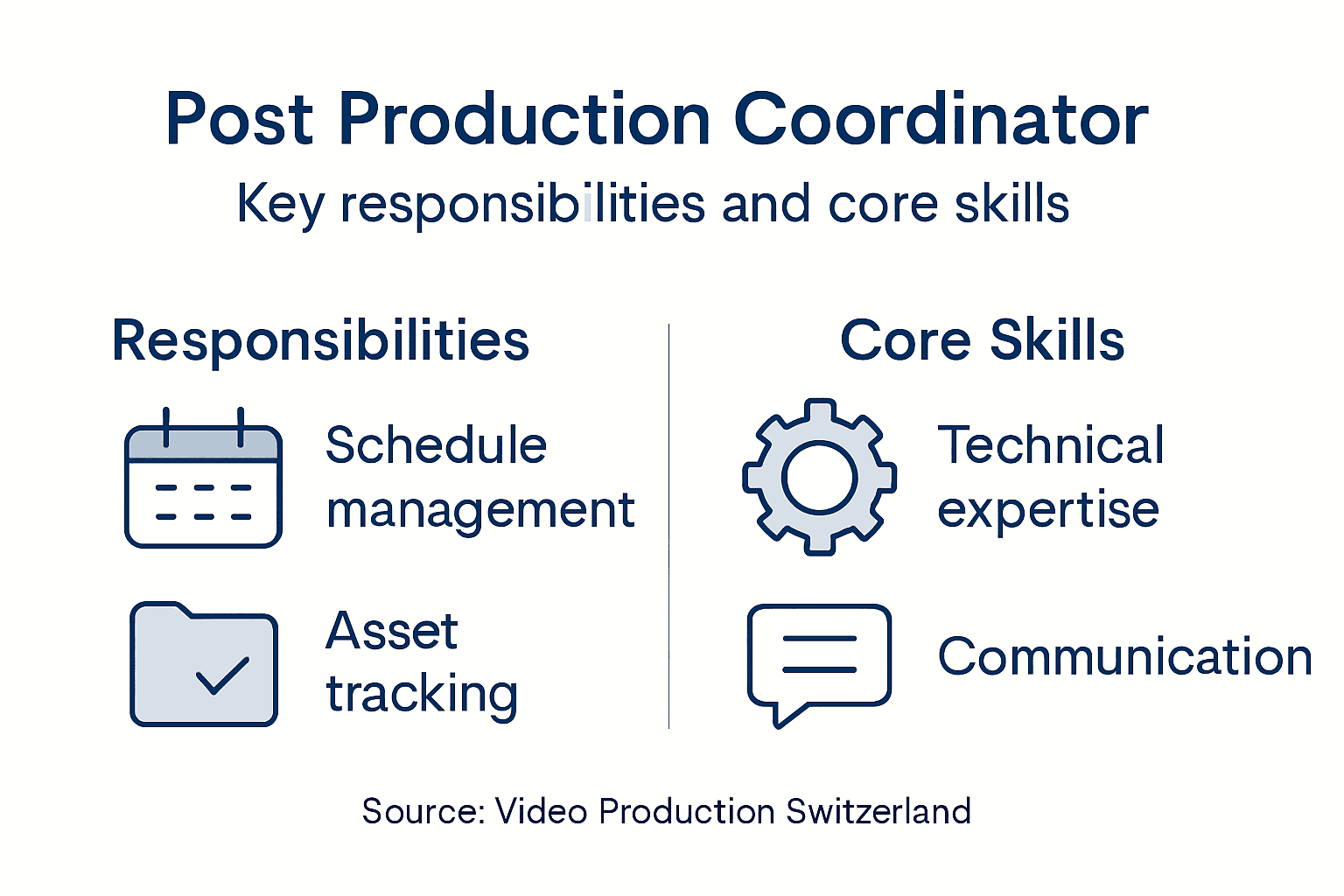
The table below highlights key differences between soft skills and technical skills needed for this role:
Skill Type | Common Examples | Value to Role |
Technical Skills | Editing software, asset tracking | Efficient workflow management |
Soft Skills | Verbal communication, adaptability | Effective team collaboration |
Professional Attributes | Time management, critical thinking | Consistent project success |
This blog article is written by Pieter Nijssen, founder of Video Production Switzerland and an experienced video producer working across Switzerland. He delivers professional corporate and commercial video production for both international and local clients. Pieter is known for a reliable, stress-free production process and high production standards.
Collaboration With Teams and Vendors
Post production coordinators function as critical communication bridges, connecting multiple production stakeholders to ensure seamless project execution. Their role demands exceptional interpersonal skills and the ability to navigate complex collaborative environments with precision and diplomacy.
Key Collaboration Channels:
Internal Production Teams
Editors
Visual effects specialists
Sound designers
Graphic artists
External Vendors
Animation studios
Specialized post-production facilities
Equipment rental companies
Independent contractors
Post production coordinators work closely with multiple departments to align project requirements, manage asset transfers, and maintain consistent communication workflows. They serve as central communication hubs, translating technical requirements and creative vision across different professional domains.
Their collaborative responsibilities extend beyond simple information exchange. Coordinators must:
Negotiate project timelines
Resolve potential conflicts
Ensure quality standards are maintained
Facilitate smooth transitions between production stages
Manage expectations of diverse stakeholders
Successful collaboration requires a sophisticated approach to communication. Post production coordinators must adapt their communication style to different teams, understanding the unique language and priorities of editors, directors, clients, and technical specialists.
Effective Communication Strategies:
Use clear, concise language
Provide regular status updates
Document all communication
Develop robust tracking systems
Maintain professional and diplomatic interactions
Pro tip: Create standardized communication templates and tracking protocols to streamline interactions and reduce potential miscommunication across teams.
Mastering interdepartmental collaboration is the hallmark of an exceptional post production coordinator. Their ability to connect, communicate, and coordinate determines the ultimate success of complex multimedia projects.
This blog article is written by Pieter Nijssen, founder of Video Production Switzerland and an experienced video producer working across Switzerland. He delivers professional corporate and commercial video production for both international and local clients. Pieter is known for a reliable, stress-free production process and high production standards.
Common Challenges and How to Overcome Them
Post production coordinators navigate a complex landscape of challenges that demand exceptional problem-solving skills and adaptability. Effective management requires proactive strategies for addressing potential workflow disruptions and communication breakdowns.
Primary Challenges in Post Production:
Tight and conflicting project deadlines
Unexpected technical complications
Communication gaps between teams
Asset management and version control
Budget and resource constraints
Last-minute creative revisions
Professionals in this role must develop robust strategies for anticipating and mitigating potential issues. Interview preparation reveals key problem-solving techniques that help coordinators maintain project momentum and quality standards.
Recommended Problem-Solving Strategies:
Create comprehensive contingency plans
Implement rigorous tracking and documentation systems
Establish clear communication protocols
Develop flexible scheduling approaches
Use collaborative project management technologies
Maintain transparent and frequent stakeholder updates
Technological solutions play a critical role in overcoming coordination challenges. Digital asset management platforms, real-time collaboration tools, and advanced project tracking software can significantly reduce communication friction and streamline complex multimedia workflows.
Technology-Driven Solutions:
Cloud-based asset sharing platforms
Centralized project management dashboards
Automated notification and tracking systems
Version control software
Integrated communication platforms
Pro tip: Invest in comprehensive project management training and continuously update your technological skills to stay ahead of emerging coordination challenges.
Successful post production coordinators transform potential obstacles into opportunities for innovation and efficient project delivery. Their ability to anticipate, adapt, and resolve complex challenges defines their professional excellence.
This blog article is written by Pieter Nijssen, founder of Video Production Switzerland and an experienced video producer working across Switzerland. He delivers professional corporate and commercial video production for both international and local clients. Pieter is known for a reliable, stress-free production process and high production standards.
Streamline Your Post Production Coordination with Expert Local Support
The role of a post production coordinator demands flawless management of schedules, assets, and team communication to deliver polished final videos on time. At Video Production Switzerland, we understand the critical pressure of handling complex workflows, tight deadlines, and multiple stakeholders seamlessly. Our seasoned team offers dependable logistical solutions that directly address your challenges such as asset transfers, communication bottlenecks, and workflow delays.
Discover how partnering with a trusted local production service can eliminate stress from your post production process. With over 20 years of experience, we specialize in securing reliable crews, managing equipment, and coordinating permits across Switzerland to keep your project on track. Start with a free consultation at Video Production Switzerland to see how our expert support turns complex coordination into smooth execution. Let us help you deliver flawless videos with confidence and ease.
Explore our comprehensive offering to support every stage including logistical management and get the dedicated assistance your post production team deserves.
Frequently Asked Questions
What are the main responsibilities of a post production coordinator?
A post production coordinator manages editorial schedules, tracks and distributes production assets, coordinates communication between teams, updates tracking documents, and facilitates asset transfers throughout the post-production process.
What skills are essential for a successful post production coordinator?
Key skills include advanced project management capabilities, strong communication skills, technical proficiency with post-production software, multitasking abilities, and excellent time management.
How does a post production coordinator ensure smooth workflow in projects?
They maintain detailed production schedules, monitor project progress, facilitate communication among various teams, and implement effective tracking and documentation systems to identify and resolve bottlenecks promptly.
What challenges do post production coordinators frequently face?
Common challenges include tight project deadlines, unexpected technical issues, communication gaps, version control of assets, and managing last-minute creative changes.
Recommended
