
7 Essentials for a Switzerland Video Production Checklist

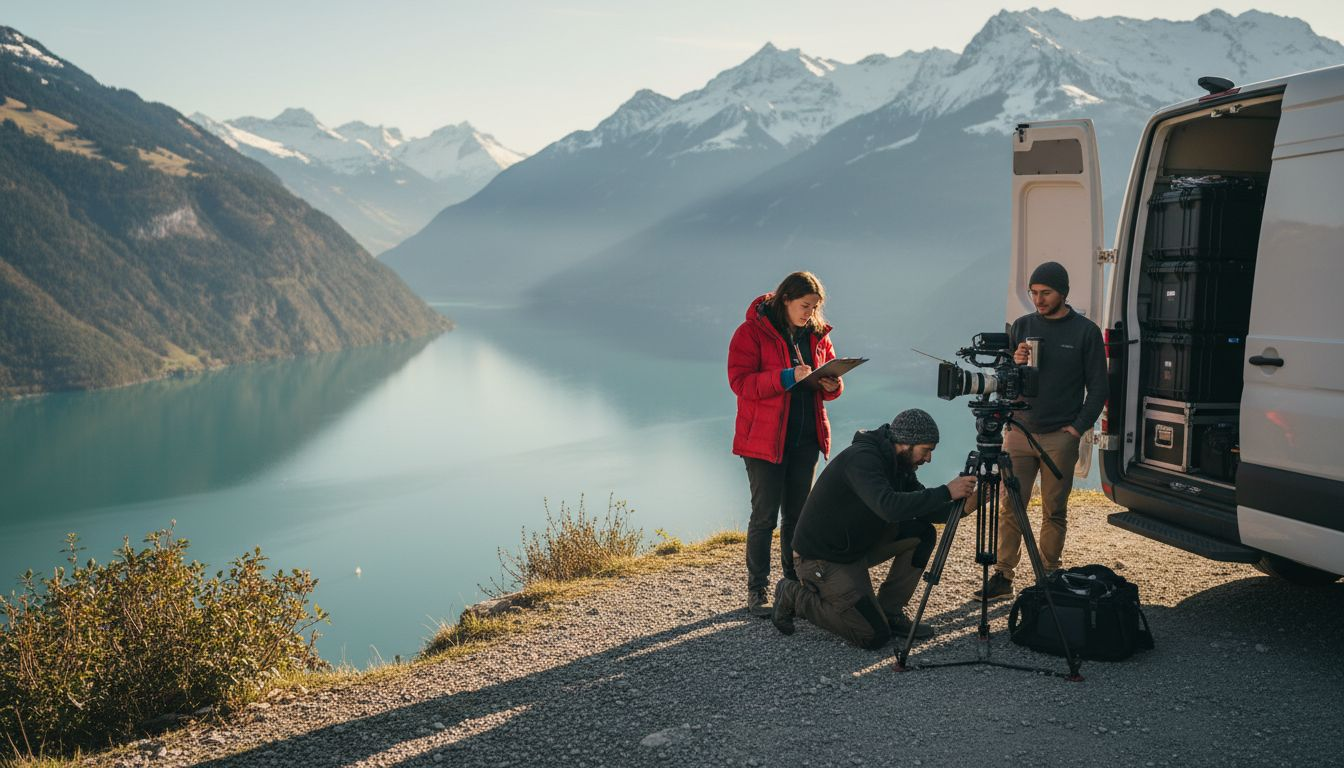
Planning a video production in Switzerland presents unique challenges that can quickly derail even the most experienced filmmaker. From navigating shifting regulations to assembling the right crew, every step requires careful consideration and local knowledge. Missing just one detail can result in delays, permit issues, or unexpected costs that impact your project.
This list reveals practical strategies for overcoming the hurdles you face on set. You will learn how to handle permits, connect with trusted Swiss professionals, secure equipment, and prepare for the unpredictable. Each insight is designed to help you achieve a smooth, successful shoot in Switzerland.
Get ready to discover actionable solutions that will guide your production from planning to completion. These expert tips will save you time, money, and stress on your next Swiss video project.
Table of Contents
Quick Summary
Takeaway | Explanation |
1. Confirm Local Permit Requirements | Understand specific filming permit needs for each Swiss location to avoid delays or disruptions. |
2. Assemble a Local Production Crew | Choose team members with local expertise to navigate Swiss filming challenges effectively. |
3. Plan Equipment Logistics Thoroughly | Ensure proper transportation and backup plans for all equipment to avoid technical issues during shooting. |
4. Scout Locations Strategically | Evaluate locations based on aesthetics, accessibility, and regulations to enhance production quality. |
5. Prepare for Unexpected Challenges | Develop contingency plans for potential issues to maintain workflow and creativity during filming. |
1. Understand Swiss Filming Permit Requirements
Navigating the complex landscape of filming permits in Switzerland requires strategic preparation and local knowledge. While many filmmakers assume permits are universally required, the reality is more nuanced.
In Switzerland, filming regulations vary significantly depending on location, scale of production, and potential public disruption. Understanding local permit requirements is critical to ensuring a smooth shooting experience.
Key considerations for film permits include:
Public space usage
Duration of shoot
Equipment complexity
Potential public disruption
Cantonal jurisdiction differences
Some productions might require no formal permit, while others demand comprehensive documentation across multiple administrative regions.
For most minor shoots with portable equipment, formal permissions are typically unnecessary. However, specific scenarios mandate official approval. Filming permits become essential when your production involves road closures, significant noise generation, or attracts substantial public attention.
Special attention must be paid to drone cinematography. Federal regulations require explicit authorization from the Federal Office of Civil Aviation for any aerial filming. Advance notifications are mandatory, particularly for extended shoots or when reserving specific spaces.
Pro tip: Always contact local cantonal offices at least 4-6 weeks before your planned shooting date to confirm specific permit requirements and potential administrative procedures.
2. Choose Trusted Local Video Production Crews
Building a successful video production in Switzerland requires assembling a crew with deep local expertise and professional credentials. The right team can transform challenging shooting conditions into smooth, creative experiences.
Professional networks play a critical role in identifying top talent. Swiss film professional networks provide structured pathways for connecting with qualified crew members who understand the unique challenges of Swiss productions.
Key criteria for selecting video production crews include:
Proven local experience
Technical proficiency
Language versatility
Understanding of Swiss filming regulations
Professional certifications
Not all crew members are created equal. Local knowledge can make or break your production.
The Schweizer Syndikat Film und Video (SSFV) represents over 800 professional film and video experts nationwide. Their member directory offers a reliable resource for identifying vetted and experienced production professionals.
When evaluating potential crew members, look beyond technical skills. Consider their adaptability to Swiss production environments, which often involve multilingual settings and complex logistical challenges.
Additional screening strategies include checking professional references, reviewing previous project portfolios, and verifying industry certifications. Understanding a crew member’s track record in handling Swiss-specific production nuances is crucial.
Pro tip: Request portfolio samples that demonstrate experience with similar production scales and environments in Switzerland to ensure optimal crew compatibility.
3. Secure Reliable Equipment for Your Shoot
Successful video production in Switzerland hinges on having top-tier equipment that can withstand diverse shooting environments. Your technical gear is the foundation of professional visual storytelling.
Professional equipment preparation requires strategic planning and comprehensive evaluation. Transport heavy equipment safely demands meticulous attention to logistical details and potential challenges.
Critical equipment considerations include:
Camera and lens compatibility
Weather resistance capabilities
Backup gear availability
Transportation and insurance logistics
Swiss electrical and power standard compliance
Quality equipment is not just about technology. It is about ensuring your creative vision remains uncompromised.
Professional video productions require redundancy in critical equipment. This means having backup systems for cameras, microphones, lighting, and power sources to prevent potential shooting interruptions.
Consider renting specialized equipment from Swiss vendors who understand local production requirements. Local rental houses often provide additional benefits like technical support and immediate replacement options.
Additional screening strategies involve checking equipment maintenance records, understanding Swiss transportation regulations for professional gear, and verifying insurance coverage for high-value production equipment.
Pro tip: Always schedule a comprehensive equipment test day before your primary shooting date to identify and resolve potential technical issues in advance.
4. Scout Ideal Locations Across Switzerland
Switzerland offers an extraordinary landscape of cinematic possibilities ranging from alpine peaks to urban landscapes. Location scouting is more than finding beautiful backdrops it is about discovering storytelling environments that complement your creative vision.
Strategic location selection requires comprehensive evaluation of multiple factors:
Visual aesthetic characteristics
Logistical accessibility
Permit requirements
Weather considerations
Infrastructure support
Transportation challenges
Every location tells a story. Your job is to listen and translate its potential into visual narrative.
Regional diversity demands specialized knowledge. Swiss cantons have distinct regulations and filming protocols that can significantly impact your production workflow. How to handle emergencies becomes crucial when working in remote or challenging terrains.
Consider Switzerland’s microclimates and dramatic landscape variations. A single country offers mountain ranges alpine meadows pristine lakes urban centers and historic architectural settings all within short traveling distances.
Professional location scouts recommend creating a comprehensive location portfolio that includes detailed site maps technical infrastructure assessments and potential weather contingency plans. Understanding local environmental and regulatory nuances can prevent last minute production disruptions.
Pro tip: Always conduct multiple location reconnaissance visits during different times of day and seasonal conditions to understand the complete visual and practical landscape potential.
5. Arrange Accommodations for Production Team
Successful video productions demand strategic planning for team housing that balances comfort convenience and budget efficiency. Accommodation logistics can make or break your production experience.
Critical considerations for team accommodations include:
Proximity to shooting locations
High-speed internet availability
Meeting and collaboration spaces
Transportation accessibility
Cost effectiveness
Team size flexibility
Intelligent accommodation planning transforms logistical challenges into seamless production experiences.
Regional film commissions offer invaluable support in navigating housing solutions. Ticino Film Commission services demonstrate how specialized local resources can streamline production team arrangements.
Swiss regions offer diverse accommodation options ranging from urban hotels to alpine lodges. Understanding each location’s unique characteristics helps match housing with production team requirements.
Professional production managers recommend creating detailed team housing spreadsheets that track individual preferences dietary requirements work schedules and potential budget constraints. Negotiating group rates and understanding local hospitality nuances can significantly reduce overall production expenses.
Consider exploring corporate housing options extended stay facilities and boutique hotels that cater specifically to professional production teams. These alternatives often provide more flexible and cost-effective solutions compared to traditional hotel bookings.
Pro tip: Reserve team accommodations at least 6-8 weeks in advance and secure flexible booking options that allow modifications as production details evolve.
6. Manage Transportation and On-Site Logistics
Navigating Switzerland’s complex terrain requires meticulous transportation planning for video production teams. Logistical precision determines production success across this mountainous and geographically diverse country.
Key transportation considerations include:
Multiple language route communications
Vehicle rental and insurance requirements
Equipment transportation protocols
Mountain and urban driving challenges
Public transportation integration
Backup transportation strategies
Effective logistics transform potential challenges into seamless production experiences.
Swiss transportation demands specialized knowledge. Transport heavy equipment safely becomes critical when moving through varied Swiss landscapes with sensitive production gear.
Professional production managers recommend creating comprehensive transportation matrices that account for Switzerland’s unique geographic challenges. This includes understanding regional driving regulations mountain pass restrictions and potential weather-related transportation interruptions.
Each production region presents distinct logistical requirements. Alpine locations demand different transportation strategies compared to urban centers like Zurich or Geneva. Specialized vehicles with winter capabilities GPS systems with multilingual support and local driver expertise become essential components of successful production planning.
Consider partnering with local transportation specialists who understand the nuanced requirements of film production logistics. These professionals can provide invaluable insights into navigating Switzerland’s complex transportation infrastructure.
Pro tip: Develop a comprehensive transportation contingency plan that includes alternate routes backup vehicles and emergency communication protocols for your entire production team.
7. Prepare for Unexpected Challenges and Solutions
Successful video productions demand strategic flexibility and proactive problem-solving skills. Anticipating potential obstacles is the hallmark of professional filmmaking in challenging environments like Switzerland.
Critical preparation strategies include:
Comprehensive risk assessment
Emergency communication protocols
Backup equipment planning
Financial contingency reserves
Multilingual problem-solving teams
Rapid decision-making frameworks
Adaptability transforms potential production obstacles into creative opportunities.
Filmmaking requires constant readiness. Navigating unexpected challenges demands a multifaceted approach to potential disruptions.
Swiss productions face unique challenges including rapidly changing alpine weather conditions complex multilingual communication environments and stringent local regulatory requirements. Professional teams develop robust contingency plans that account for these specific regional complexities.
Effective challenge management involves creating comprehensive backup scenarios for critical production elements. This includes alternative shooting locations equipment redundancy communication strategies and financial buffers to manage unexpected expenses.
Building strong local professional networks provides additional support during challenging production moments. Local fixers production coordinators and regional film commissions can offer invaluable real-time problem-solving assistance.
Pro tip: Create a digital emergency response folder with backup contact information insurance details equipment specifications and local emergency protocols accessible to your entire production team.
Below is a comprehensive table summarizing the key considerations, strategies, and recommendations for successful video production and filming logistics in Switzerland as discussed in the article.
Aspect | Details | Recommendations |
Filming Permits | Requirements vary by location, scale, and activity. | Contact local cantonal offices 4-6 weeks in advance for guidance. |
Local Crews Expertise | Understanding Swiss regulations and environment is critical. | Utilize resources like the SSFV directory for professional contacts. |
Equipment Considerations | Equipment readiness and compliance with Swiss standards are essential. | Test gear prior to shooting and consider local rental services. |
Location Selection | Factors like aesthetic, accessibility, and weather influence choices. | Conduct reconnaissance under varied conditions for optimal selection. |
Team Accommodations | Convenient and efficient housing options enhance production success. | Book accommodations well in advance with flexible terms if possible. |
Transportation Logistics | Navigating Switzerland’s terrain and regulations demands detailed planning. | Use local professionals for assistance and develop contingency plans. |
Managing Challenges | Anticipating obstacles ensures smoother adaption to unexpected issues. | Create emergency plans and build a strong support network locally. |
This table synthesizes key strategic insights for ensuring a seamless video production experience in Switzerland.
Streamline Your Switzerland Video Production with Expert Local Support
Navigating Switzerland’s complex filming permits, sourcing reliable crew, securing specialized equipment, and coordinating logistics can overwhelm even the most experienced filmmakers. This checklist highlights key challenges such as understanding cantonal permit variations, managing transportation across mountainous terrain, and preparing for unexpected production hurdles. If you want to eliminate these stress points and focus on your creative vision, partnering with a seasoned local expert is essential.
VIDEO PRODUCTION SWITZERLAND offers over 20 years of experience providing seamless support for international productions. From handling permit negotiations and connecting you to trusted Swiss crews to managing heavy equipment transportation and scouting ideal locations, their client-centric approach ensures every logistical detail is covered. Discover how their professional team transforms complex checklists into smooth, on-time shoot execution.
Don’t let permit delays or logistical challenges jeopardize your production timeline. Visit videoproductionswitzerland.com to schedule your free consultation and start planning with experts who know the Swiss environment inside and out. Take control of your Switzerland video production checklist today and secure unmatched reliability for your next project.
Frequently Asked Questions
What are the key requirements for obtaining a filming permit in Switzerland?
Obtaining a filming permit in Switzerland depends on several factors, including your filming location, the scale of production, and potential public disruption. Contact local cantonal offices at least 4-6 weeks before shooting to confirm specific permit requirements and plan accordingly.
How can I find a qualified video production crew in Switzerland?
To find a qualified video production crew in Switzerland, consider using local film professional networks that help connect filmmakers with experienced crew members. Review their past projects and check for references that demonstrate their ability to handle Swiss filming environments.
What type of equipment do I need for video production in Switzerland?
You need high-quality equipment that can withstand a variety of weather conditions and terrains in Switzerland. Make sure to assess the compatibility of your equipment and consider having backup systems ready to avoid disruptions during your shoot.
How should I arrange accommodations for my production team?
Arrange accommodations that are close to your shooting locations and offer reliable internet access. Secure bookings at least 6-8 weeks in advance and negotiate for group rates to ensure a smooth and cost-effective lodging experience.
What logistics should I consider for transporting equipment during filming?
When transporting equipment in Switzerland, plan for challenges such as mountain driving and difficult weather. Create a detailed transportation plan that includes backup vehicles and alternative routes to ensure your production runs smoothly.
How can I prepare for unexpected challenges during production?
To prepare for unexpected challenges, conduct a comprehensive risk assessment and develop contingency plans for various scenarios. Establish emergency communication protocols and ensure all team members are familiar with these plans to respond quickly when issues arise.
Recommended
