
Visual Storytelling: Impactful Techniques for Filmmakers

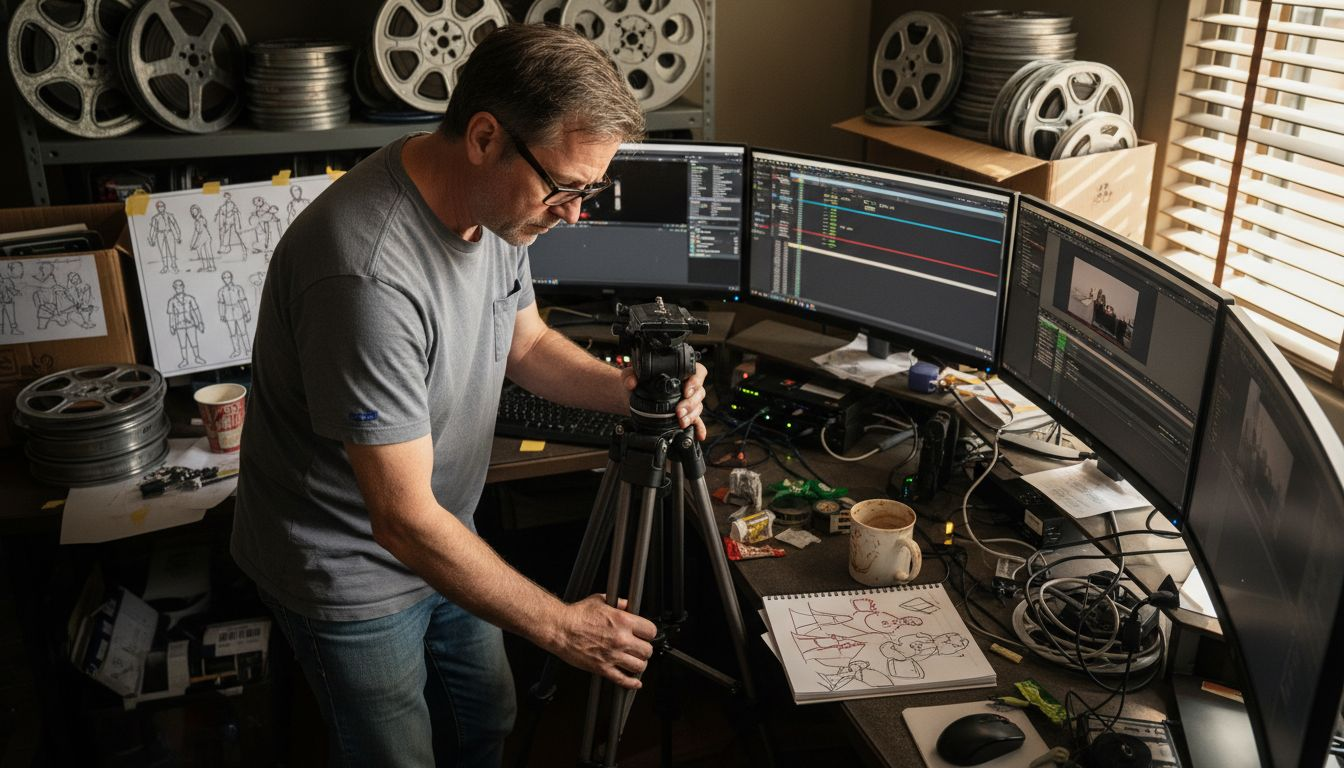
Most american productions underestimate the true impact of visual storytelling in Switzerland’s cinematic landscape. International filmmakers recognize that compelling visuals do far more than add beauty; they communicate emotions and ideas that words alone cannot reach. Understanding how composition, pacing, and emotion work together helps creative directors transform high-quality video projects into unforgettable audience experiences. This article reveals how mastering these core principles can elevate any production and overcome common visual communication challenges.
Table of Contents
Key Takeaways
Point | Details |
Visual Storytelling as a Universal Language | Visual storytelling connects human experiences across cultures by communicating complex emotions and ideas through visuals rather than words. |
Diverse Narrative Forms | Various styles, such as storyboards and data visualizations, serve distinct purposes, enhancing audience engagement in different contexts. |
Core Elements Influence Viewer Experience | Imagery, pacing, and emotion are critical in crafting narratives that resonate on a deeper emotional level with audiences. |
Technological Advances and Ethical Considerations | Modern tools and digital innovation offer new storytelling possibilities, but they also require filmmakers to balance technology with authentic narrative depth. |
Defining Visual Storytelling and Its Purpose
Visual storytelling represents a profound communication strategy that transforms narrative experiences through strategic visual composition. At its core, visual storytelling transcends traditional linguistic boundaries by crafting narratives that communicate complex emotions and ideas through intentional visual elements. Powerful cross-disciplinary narratives engage viewers beyond mere words, utilizing composition, color, motion, and design to create immersive experiences.
The purpose of visual storytelling extends far beyond aesthetic appeal. It serves as a universal language that connects human experiences across cultural and linguistic divides. Filmmakers leverage visual narrative techniques to communicate nuanced themes, evoke emotional responses, and create meaningful connections with audiences. Whether through documentary, narrative film, or commercial content, visual storytelling enables creators to translate complex concepts into accessible, compelling visual journeys.
At its most sophisticated level, visual storytelling functions as a sophisticated communication method that combines psychological understanding with artistic expression. Visual narrative construction involves carefully orchestrating visual elements to guide viewer perception, trigger emotional responses, and communicate sophisticated narratives without relying exclusively on verbal explanations. This approach requires deep understanding of visual language, audience psychology, and narrative structure.
Pro tip: Master the art of visual metaphor by studying how subtle visual elements can communicate complex emotional states without explicit dialogue.
Exploring Major Styles and Narrative Forms
Visual storytelling encompasses a rich tapestry of narrative styles that reflect the complexity of human communication. Diverse visual narrative forms emerge across disciplines, ranging from storyboards and comics to intricate illustrated scenarios, each serving unique communicative purposes. These styles are not rigid templates but adaptive frameworks that respond to specific content requirements and audience expectations.
The landscape of visual storytelling includes multiple distinct approaches. In cinematic arts, narrative structures can be linear, non-linear, or experimental, challenging traditional storytelling conventions. Advertising leverages visual narratives to create emotional connections, using carefully crafted visual sequences that communicate brand messages within seconds. Educational content employs visual storytelling to transform complex information into accessible, engaging learning experiences, while data visualization translates abstract numerical information into comprehensible visual stories.

Technological and cultural evolution continuously reshapes visual narrative forms. Modern storytellers integrate semiotics, psychological principles, and design theory to create more sophisticated visual communication strategies. Composition, color theory, motion design, and spatial relationships become critical tools for guiding viewer perception and emotional engagement, transforming visual storytelling from a mere communication method into a nuanced art form that transcends traditional linguistic boundaries.
Pro tip: Experiment with multiple visual narrative styles by creating storyboards that challenge conventional storytelling sequences to discover unique narrative perspectives.
Here’s a quick comparison of major visual storytelling styles and their unique strengths:
Visual Style | Distinctive Feature | Typical Use Cases | Impact on Audience |
Storyboards | Sequence planning | Film pre-production, animation | Guides narrative flow |
Comics | Panel-based storytelling | Entertainment, education | Encourages visual engagement |
Illustrated Scenarios | Detailed scene creation | Advertising, concept design | Enhances contextual clarity |
Data Visualization | Graphic representation | Business, journalism, science | Simplifies complex data |
Core Elements: Imagery, Pacing, and Emotion
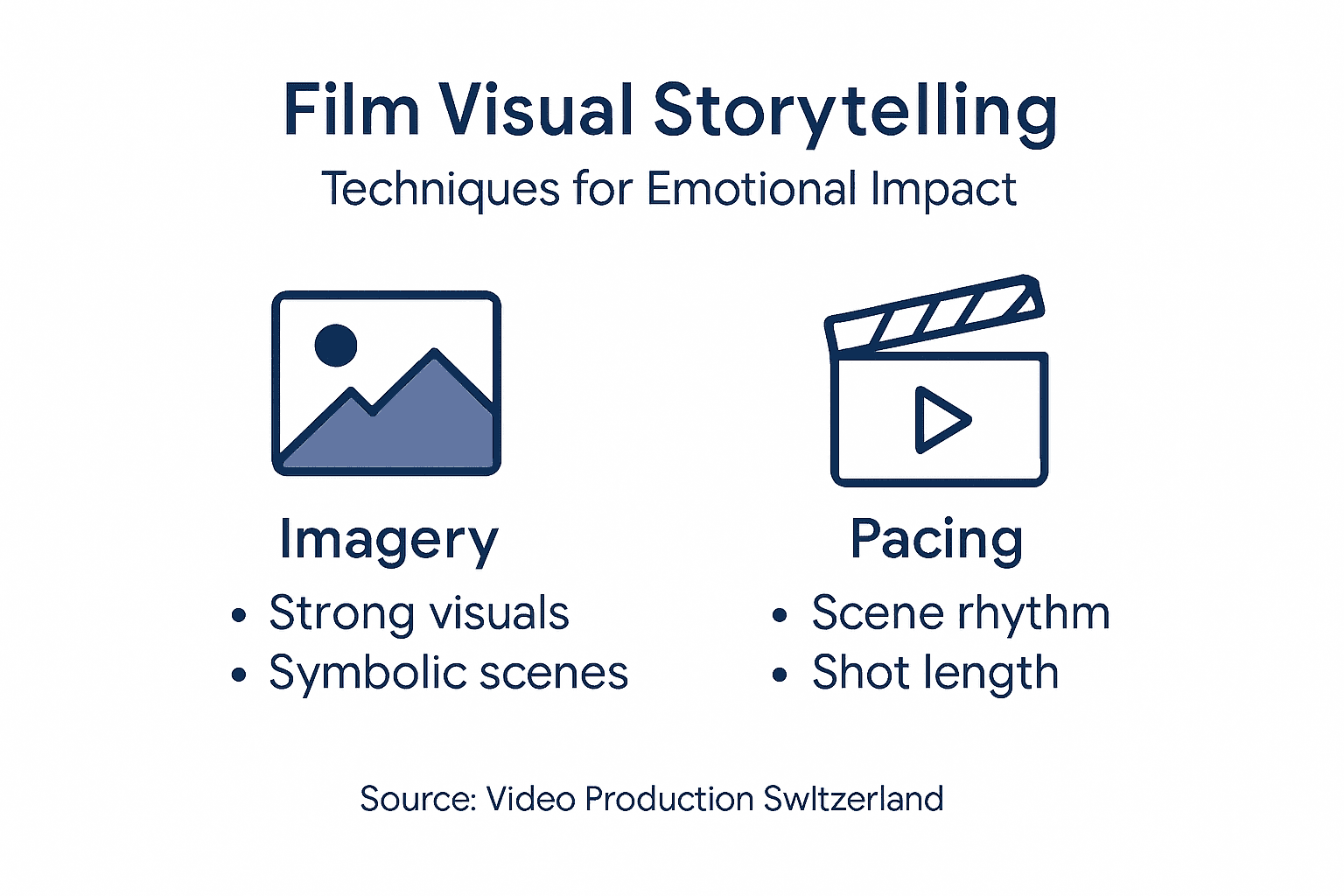
Imagery serves as the foundational language of visual storytelling, transforming abstract concepts into tangible visual experiences. Strategic visual composition involves deliberate choices in lighting, color, framing, and symbolic representation that communicate deeper narrative meanings. Filmmakers craft visual metaphors through carefully selected imagery, using color palettes, visual motifs, and compositional techniques to convey emotional subtext and thematic complexity without relying solely on dialogue.
The rhythmic pulse of a narrative emerges through pacing, which controls the audience’s emotional journey and engagement. Narrative speed techniques manipulate shot length, camera movement, editing rhythm, and sound design to create dynamic emotional landscapes. Skilled storytellers understand that pacing is not about constant action but about creating meaningful fluctuations between tension and release, guiding viewers through an immersive emotional experience that feels both intentional and organic.
Emotion emerges as the critical connective tissue in visual storytelling, transforming technical elements into profound human experiences. By integrating visual motifs, symbolic elements, and carefully choreographed narrative rhythms, filmmakers can evoke complex emotional responses. The interplay between imagery and pacing becomes a sophisticated language that communicates universal human experiences, transcending verbal communication and connecting directly with viewers’ inner emotional landscapes.
Pro tip: Create a visual mood board that maps emotional states to specific color palettes, camera angles, and compositional techniques to develop a consistent emotional language for your narrative.
Here’s a summary of core elements in visual storytelling and how each shapes viewer experience:
Element | Primary Function | Effect on Storytelling |
Imagery | Visual metaphor, symbolism | Adds emotional subtext |
Pacing | Controls narrative rhythm | Builds tension and release |
Emotion | Evokes audience response | Connects with viewer |
Technical Tools and Storytelling Methods
Technological advances in cinema have fundamentally transformed the landscape of visual storytelling, providing filmmakers with unprecedented creative tools and narrative possibilities. Sound design, color grading, digital cinematography, and sophisticated special effects now enable storytellers to craft immersive experiences that were previously impossible. These technological innovations extend far beyond mere technical improvements, representing a profound expansion of cinematic language and narrative potential.
Digital technologies and artificial intelligence are revolutionizing creative workflows, enabling more nuanced and complex storytelling methods. Human-AI collaborative approaches are democratizing filmmaking by streamlining scriptwriting, visual effects production, and overall creative processes. Modern filmmakers can now leverage advanced editing software, motion capture technologies, and algorithmic tools to realize creative visions with greater precision and efficiency than ever before.
The intersection of technology and storytelling raises critical ethical considerations about representation, creative authenticity, and the boundaries of artistic expression. While digital tools offer extraordinary creative freedom, they also demand a sophisticated understanding of narrative craft. Successful filmmakers must balance technological capabilities with fundamental storytelling principles, using tools as instruments of creative vision rather than substitutes for genuine emotional storytelling.
Pro tip: Develop a systematic workflow that integrates technological tools as creative extensions of your narrative vision, not replacements for authentic storytelling.
Common Challenges and Mistakes to Avoid
Visual storytelling challenges often emerge from fundamental misunderstandings about narrative communication through imagery. Filmmakers frequently struggle with conveying complex ideas visually without relying on excessive dialogue, which requires a nuanced understanding of cinematic language. The primary pitfall lies in believing that visual complexity automatically translates to narrative depth, when in reality, clarity and purposeful composition are the true markers of compelling storytelling.
Film grammar mistakes can dramatically undermine narrative effectiveness. These errors include poorly executed camera transitions, confusing spatial relationships, and ineffective scene cuts that disrupt audience engagement. Filmmakers must develop a sophisticated understanding of how visual elements interact to create coherent narrative experiences. Spatial continuity, temporal logic, and emotional resonance depend on meticulous attention to cinematic technique, requiring filmmakers to think beyond individual shots and consider the holistic narrative journey.
One of the most significant challenges in visual storytelling is balancing subtlety with clarity. Overcomplicating visual narratives or becoming too abstract can alienate viewers, while overly simplistic approaches risk reducing the emotional complexity of the story. Successful visual storytellers learn to create layered, meaningful imagery that communicates multiple levels of meaning without becoming incomprehensible. This requires a deep understanding of visual metaphor, symbolic representation, and the nuanced ways visual elements can communicate emotional and thematic content.
Pro tip: Create a visual narrative storyboard that focuses on emotional progression and narrative clarity before adding complex visual details.
Elevate Your Visual Storytelling with Expert Film Production Support in Switzerland
Mastering the art of visual storytelling requires more than creative vision. As highlighted in the article, challenges like balancing emotional clarity, pacing, and technical precision can hinder your narrative impact. Pain points such as coordinating trusted local crews, managing permits, securing ideal locations, and ensuring smooth logistics often distract from the creative process.
At Video Production Switzerland, we specialize in removing these barriers so you can focus on crafting compelling visual metaphors and seamless narrative flows. With over 20 years of market expertise, our professional team handles every logistical detail from equipment sourcing to transportation and accommodation. We transform complex production challenges into a streamlined experience that respects your artistic intent and storytelling goals.
Ready to bring your visual storytelling to life with expert local support? Visit Video Production Switzerland for a free consultation and discover how we ensure on-time, stress-free shoots. Explore our full service offerings and let us help you translate your narrative vision into reality with reliability and precision.
Frequently Asked Questions
What is visual storytelling?
Visual storytelling is a communication strategy that conveys narratives through visual elements, integrating composition, color, motion, and design to evoke emotions and connect with audiences beyond traditional verbal communication.
Why is pacing important in visual storytelling?
Pacing controls the emotional journey of the audience by manipulating the speed of shots, editing rhythm, and sound design. It helps build tension and release, making the viewing experience more immersive and engaging.
What common mistakes should filmmakers avoid in visual storytelling?
Filmmakers should avoid visual complexity without clarity, such as confusing camera transitions and ineffective scene cuts. Ensuring emotional progression and narrative clarity while maintaining subtleness is vital for impactful storytelling.
How can technology enhance visual storytelling?
Technological advancements, like sound design, color grading, and digital cinematography, allow filmmakers to create immersive experiences and facilitate more complex storytelling methods, ensuring a deeper connection with audiences.
Recommended
