
Video Post Editing: Complete Guide for Filmmakers


Over ninety percent of American filmmakers agree that the magic of a movie truly comes alive in post editing. This stage turns scattered footage into stories that stir emotion and capture attention. As more creators race to produce standout videos, understanding how professional post editing shapes every frame can make or break your impact. Discover the key techniques and modern tools that help American filmmakers transform raw moments into compelling visual narratives.
Table of Contents
Key Takeaways
Point | Details |
Video Post Editing is Transformative | It is the critical phase where raw footage is sculpted into a polished narrative through a mix of technical and creative processes. |
Structured Workflow is Essential | Following a systematic process, such as assembly edits and fine cuts, ensures coherent and compelling storytelling. |
Advanced Tools Enhance Creativity | Modern software offers capabilities that allow filmmakers to manipulate visuals and audio, pushing creative boundaries in storytelling. |
Anticipating Challenges is Critical | Proactive strategies, such as implementing a proxy workflow and maintaining clear communication, help address common post-production obstacles effectively. |
Defining Video Post Editing in Filmmaking
Video post editing represents the transformative stage where raw footage becomes a polished, compelling narrative. Understanding video post production involves recognizing it as the critical phase where filmmakers sculpt their initial visual material into a refined storytelling experience. This process goes far beyond simple clip arrangement, encompassing a comprehensive set of technical and creative interventions.
At its core, post editing involves several sophisticated technical processes. Filmmakers meticulously review and select the most impactful footage, strategically cutting and arranging scenes to create narrative flow. Video post production workflow typically includes key stages such as:
Rough Cut Development: Initial assembly of selected scenes
Precise Editing: Trimming and refining sequence transitions
Color Correction: Balancing visual tone and atmosphere
Sound Design: Integrating audio elements and enhancing sonic quality
Visual Effects Integration: Adding digital enhancements
Professional filmmakers understand that post editing is where storytelling truly comes alive. Raw footage serves as the foundational clay, while post production techniques transform that material into a sculpted, emotionally resonant final product. The process demands not just technical skill, but a deep understanding of narrative structure, visual composition, and audience engagement.
Modern post editing integrates complex digital tools that provide unprecedented creative flexibility. Editors can manipulate time, adjust visual aesthetics, and create seamless transitions that were impossible in earlier filmmaking eras. By mastering these techniques, filmmakers can elevate simple recordings into powerful cinematic experiences that captivate and move audiences.
Essential Stages and Workflow Processes
Video post-production represents a complex, multi-stage process that transforms raw footage into a polished final product. Comprehensive video production workflow involves strategic steps that require both technical precision and creative vision. Filmmakers must navigate through intricate stages, carefully refining their visual narrative with methodical attention to detail.
The editing process typically follows a structured progression with distinct phases. Digital video workflow techniques reveal a systematic approach that includes:
Assembly Edit: Initial organization of raw footage
Rough Cut: Basic sequence arrangement
Fine Cut: Precise sequence refinement
Picture Lock: Final visual composition
Final Delivery: Completed video output
Professional editors meticulously organize media assets, applying sophisticated editing techniques to create compelling visual stories. Each stage demands specific skills: selecting the most impactful shots, maintaining narrative coherence, balancing visual aesthetics, and ensuring smooth transitions. The goal is transforming disconnected clips into a unified, emotionally resonant experience that captivates audiences.

Modern post-production integrates advanced digital tools that provide unprecedented creative flexibility. Editors can manipulate time, adjust color grading, synchronize audio, and add complex visual effects. This technological evolution allows filmmakers to push creative boundaries, turning raw recordings into cinematic experiences that tell powerful, nuanced stories with remarkable precision and emotional depth.
Types of Video Post Editing Techniques
Post editing techniques represent the artistic and technical arsenal that transforms raw footage into compelling visual narratives. Stages of video editing reveal a sophisticated range of methods filmmakers use to craft seamless storytelling experiences. These techniques go beyond simple cutting, involving complex visual and narrative manipulation.
Film transitions are critical components of post-production editing, with multiple sophisticated approaches including:
Dissolves: Gradual blending between scenes
L Cuts: Audio continues from previous scene while visual changes
Match Cuts: Connecting scenes through visual or thematic similarities
Fade Techniques: Gradual appearance or disappearance of visual elements
Wipe Transitions: One scene replaces another through directional movement
Professional editors utilize these video editing terminology strategically, understanding that each transition carries emotional and narrative significance. The choice of technique can dramatically alter audience perception, creating rhythm, emphasizing themes, or subtly guiding viewer emotional responses. Precise transition selection becomes an art form, requiring deep understanding of visual storytelling principles.
Modern digital editing tools have expanded creative possibilities exponentially. Editors now manipulate time, blend visual aesthetics, and create complex narrative structures that were impossible in earlier filmmaking eras. These advanced techniques allow filmmakers to craft intricate visual experiences, transforming simple recordings into immersive, emotionally resonant stories that captivate and challenge audience expectations.
Key Tools and Software Solutions
Post-production software represents the technological backbone of modern filmmaking, transforming raw footage into polished cinematic experiences. Video workflow software provides filmmakers with sophisticated tools that enable precise creative manipulation across multiple editing domains.
Color grading tools play a critical role in professional post-production, with specialized software offering advanced visual refinement capabilities:
Color Correction Tools: Ensuring visual consistency
Audio Synchronization Software: Precise sound alignment
Visual Effects Platforms: Creating complex digital enhancements
Editing Suites: Comprehensive project management
Rendering Applications: Final output optimization
Professional editors utilize specialized software like DaVinci Resolve, Adobe Premiere Pro, and Magic Bullet Suite to achieve nuanced visual storytelling. These powerful platforms enable intricate color grading techniques, allowing filmmakers to establish precise visual aesthetics, manipulate emotional tone, and create seamless visual narratives that captivate audiences.
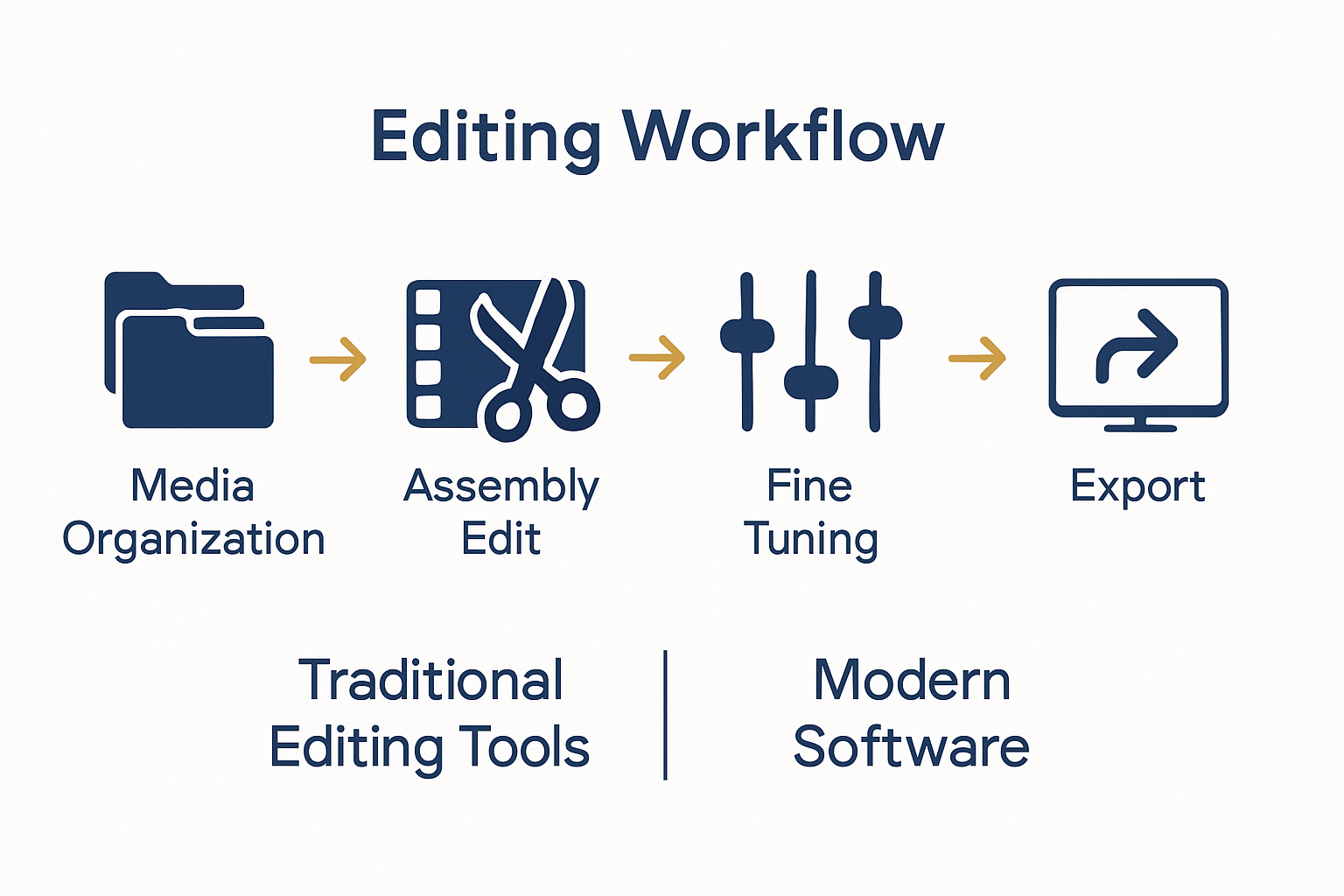
Modern editing technologies have revolutionized post-production workflows, providing unprecedented creative flexibility. Sophisticated software now allows editors to manipulate time, blend complex visual elements, and create intricate narrative structures that were impossible in previous filmmaking generations. These advanced tools transform simple recordings into immersive, emotionally resonant cinematic experiences that challenge and expand traditional storytelling boundaries.
Common Challenges and How to Avoid Them
Video post-production presents a complex landscape of technical and creative challenges that can derail even the most carefully planned projects. Understanding video workflow processes helps filmmakers anticipate and mitigate potential obstacles before they become critical production issues.
Professional editors face several recurring challenges in post-production, including:
Performance Bottlenecks: Slow rendering and editing processes
File Management: Maintaining organized media assets
Version Control: Tracking multiple project iterations
Storage Limitations: Managing large video file sizes
Collaboration Complexity: Coordinating team workflows
Addressing technical constraints requires strategic approaches. Proxy workflow techniques can dramatically improve editing efficiency, such as using lower-resolution file duplicates that enable smoother editing while preserving original file quality. Additionally, implementing multiple review stages ensures that critical details are not overlooked, with different team members examining each post-production phase to minimize potential errors.
Successful post-production demands a proactive mindset. Experienced filmmakers develop robust workflow strategies that anticipate potential technical challenges, implement comprehensive backup systems, and maintain flexible collaboration protocols. By establishing clear communication channels, using sophisticated project management tools, and maintaining disciplined technical practices, creative teams can transform potential obstacles into opportunities for enhanced storytelling and visual refinement.
Elevate Your Video Post Editing with Expert Local Support
Video post editing challenges like managing complex workflows, precise color grading, and seamless integration of sound and visual effects require more than just skill. They demand a reliable partnership to handle logistics, crew sourcing, and technical support that ensures every stage from rough cut to final delivery proceeds smoothly. If you aim to turn your raw footage into captivating cinema without being slowed down by permits, equipment issues, or coordination bottlenecks, having experienced local professionals can make all the difference.
Discover how video post production workflow becomes stress-free with our trusted Swiss team that specializes in managing all production aspects. From securing expert crews and high-end gear to location scouting and transport logistics, our over 20 years of experience is your strongest asset for flawless execution. Visit Video Production Switzerland now to schedule your free consultation and take control of your post editing journey today.
Frequently Asked Questions
What is video post editing in filmmaking?
Video post editing is the phase in filmmaking where raw footage is transformed into a polished narrative through a series of technical and creative processes, including editing, color correction, sound design, and visual effects integration.
What are the main stages of video post-production?
The main stages of video post-production typically include assembly edit, rough cut, fine cut, picture lock, and final delivery, each serving a specific purpose in refining the visual narrative.
What are some common techniques used in video post editing?
Common techniques include dissolves, L cuts, match cuts, fade techniques, and wipe transitions, which help create smooth visual storytelling and enhance emotional engagement with the audience.
What tools are essential for video post-production?
Essential tools for video post-production include color grading tools, audio synchronization software, visual effects platforms, editing suites, and rendering applications, with popular software options such as DaVinci Resolve and Adobe Premiere Pro.
Recommended
