
Three or More Trips a Year? Trawick Travel Insurance Often Saves Money


Trawick International works best for frequent travelers, budget-conscious vacationers, and study-abroad students, largely because its annual plans often include trip cancellation along with multi-trip medical protection, typically offered at competitive price points. Single-trip and travel medical plans round out the lineup for shorter or more specific needs. If your travel pattern matches one of those profiles, the next move is simple: request a quote directly from Trawick’s plan pages and compare the numbers against your actual trip cost.
TL;DR:
Trawick’s annual plans often include both trip cancellation and multiple trips medical coverage, making them ideal for frequent travelers who take more than two trips a year.
The company’s travel medical plans focus solely on emergency medical and evacuation coverage, suitable for prepaid trips or combining with other cancellation protection.
Claim processing can be slow and documentation-heavy, especially for overseas medical claims, requiring travelers to prepare paperwork in advance.
Trip duration caps on annual plans typically limit trips to around 45 days, so longer single trips may not be fully covered under those policies.
Comparing plans through marketplaces like Squaremouth helps ensure you match the right plan family and coverage options to your specific travel pattern before purchase.
Table of Contents
What Is Trawick Travel Insurance and What Does It Offer?
Trawick International built its reputation on student and scholar insurance before expanding into the broader consumer travel insurance market. That history still shows up in the product lineup today. The company sells policies both directly and through major comparison marketplaces, which is where most shoppers first encounter its name alongside other providers.
The plan catalog breaks into four main families:
Annual/multi-trip plans (the Safe Travels Annual line), built for people who travel more than once or twice a year
Single-trip plans, designed around one specific departure and return date
Travel medical plans (the Pathway series), which focus on emergency medical and evacuation coverage rather than trip cancellation
Student and scholar plans, tailored to semester-length or year-long academic travel
Before buying anything, it’s worth checking the trust signals that actually matter. Trawick’s underwriting relationships carry AM Best ratings, the company holds a listing with the Better Business Bureau, and it ranks among the more visible providers on marketplaces like Squaremouth. None of that guarantees a smooth claim, but it does confirm you’re dealing with an established underwriter rather than a fly-by-night operation. U.S. News has also flagged Trawick as a budget-friendly option, particularly for travelers who value vacation rental protection alongside standard trip coverage.
Which Trawick Plan Fits Your Type of Trip?
Coverage details vary meaningfully across the four plan families, and picking the wrong one is the single most common mistake travelers make when comparing Trawick insurance plans.
Annual plans are the standout product line here. Unlike many competitors’ multi-trip policies, which strip out trip cancellation entirely, Trawick’s annual plans frequently include trip cancellation and interruption benefits together with repeated medical coverage. That’s a genuinely unusual feature in the annual travel insurance category, according to Squaremouth’s plan analysis. The tradeoff is a per-trip day limit that commonly caps the duration of each individual trip within the policy year. If you’re planning one six-week trip, an annual plan may not fit; if you’re taking four separate ten-day trips, it usually will.
Travel medical-only plans, the Pathway series, skip trip cancellation altogether and focus purely on emergency medical treatment and evacuation. These make sense for travelers who’ve already prepaid non-refundable costs they’re not worried about losing, or for people combining Trawick’s medical coverage with cancellation protection purchased elsewhere. Medical limits on these plans typically scale from the low hundreds of thousands of dollars up into the million-dollar range, with evacuation benefits often sitting in a similar band, though exact figures depend on the specific plan tier you select.
Student and scholar plans exist because of Trawick’s original niche, and it still shows in the product design. Coverage windows stretch to match semester or academic-year timelines, which most standard travel insurance simply isn’t built to handle. If you’re sending a student abroad for a full academic year, this is the plan family designed around that exact use case, and it reflects Trawick’s long-standing focus on long-duration, complex travel scenarios rather than a quick vacation add-on.
Cruise-specific add-ons show up as optional riders on several plans, useful for anyone worried about missed port coverage, cabin confinement, or itinerary changes unique to sea travel.
Across nearly every plan family, the standard benefit list looks similar:
Emergency medical treatment
Emergency medical evacuation and repatriation
Trip cancellation and interruption (on select plans, especially annual)
Baggage loss, delay, or damage
24/7 travel assistance services
The differences live in the limits, the exclusions, and whether cancellation is even included. Read the benefit schedule for your specific plan rather than assuming coverage matches what a friend bought last year.
How Much Does Trawick Travel Insurance Cost?
Four factors drive the price on any Trawick quote: trip cost, traveler age, trip length, and how much optional coverage (evacuation limits, CFAR, pre-existing condition waivers) you stack on top of the base plan.
Trip cost matters most for comprehensive plans, since trip cancellation and interruption benefits are priced as a percentage of what you’d lose if the trip fell through. Age is the second-biggest lever, particularly for medical and evacuation coverage, where premiums climb noticeably past age 60 and again past 70. Trip length affects single-trip plans directly. A two-week international trip costs meaningfully less to insure than a two-month one, even holding everything else constant.
Pro Tip: Run the numbers both ways before you commit. If you travel three or more times a year, price an annual plan against stacking three single-trip policies. The annual option often wins on cost even before you factor in the added convenience of not shopping for insurance before every departure.
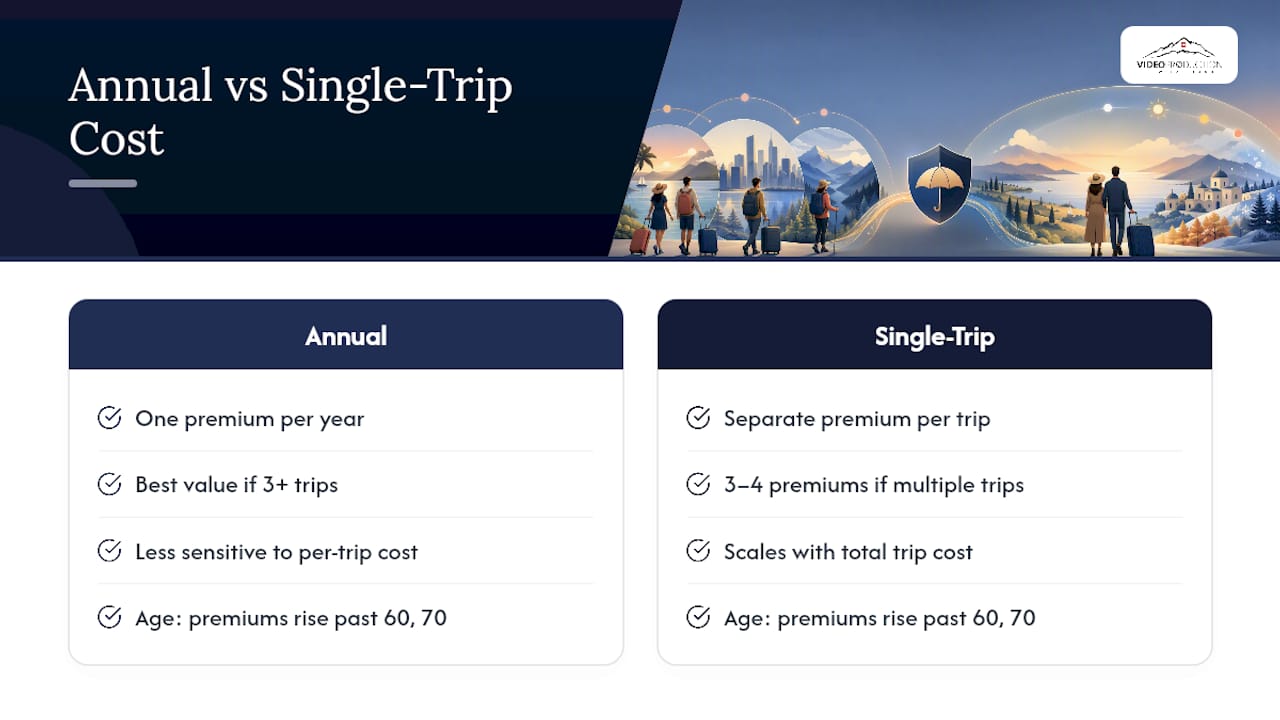
Rough shape of the market, based on comparisons compiled by U.S. News: travel medical-only plans tend to sit at the low end of the cost spectrum since they skip trip cancellation. Comprehensive single-trip plans cost more, scaling with your total trip cost. Annual plans often land as the best value per dollar of coverage for anyone taking three or more trips a year, since you’re paying one premium instead of three or four separate ones.
The rule of thumb: if your travel calendar has more than two trips booked (or realistically expected) within twelve months, price out an annual plan before defaulting to single-trip coverage. The savings compound fast once you’re buying insurance more than twice a year.
Where Trawick Excels and Where It Falls Short
Trawick’s biggest strength is baking trip cancellation into annual plans, a feature plenty of competitors treat as a premium add-on or skip on multi-trip products entirely. Vacation rental coverage is another differentiator U.S. News called out specifically, useful if you book through Airbnb-style platforms rather than traditional hotels. The student and scholar plans remain a genuine specialty, not an afterthought bolted onto a general product line. And every plan comes with 24/7 assistance services for emergencies abroad.
The limitations are worth knowing before you buy, not after you file a claim:
Medical ceiling sizes vary by plan tier. Entry-level plans may cap emergency medical benefits lower than comprehensive competitors, so check the specific dollar figure rather than assuming “travel medical” means unlimited coverage.
Claims can be documentation-heavy. Reviewers on Trustpilot frequently mention needing to submit extensive paperwork, and delays tend to trace back to missing or incomplete documentation rather than outright denials.
Purchase windows are strict and easy to miss. CFAR (cancel for any reason) upgrades and pre-existing condition waivers usually require purchase within a short window after your initial trip deposit(https://www.squaremouth.com/travel-insurance-benefits/cancel-for-any-reason). Miss that window and those options disappear for the trip, no exceptions.
Annual plans cap days per trip. That 45-day-ish ceiling per individual trip means long single trips can blow past the limit even under an active annual policy.
None of this makes Trawick a bad choice. It makes Trawick a plan family where the fine print genuinely changes the value proposition, which is exactly why reading the benefit schedule before buying matters more here than with some flatter, simpler competitors.
What Do Customer Reviews Say About Trawick?
Review aggregates paint a mixed but coherent picture: strong marks for value and coverage breadth, recurring friction around claims processing speed. On Trustpilot, ratings skew positive overall, but a consistent minority of reviews describe slow claim turnaround or requests for additional documentation mid-process. Squaremouth’s aggregated data shows a similar split, with customers often praising the annual plan’s built-in cancellation coverage while flagging the claims experience as the weakest link in an otherwise solid product.
Common threads across positive reviews:
Premium pricing that beats comparable annual plans from other carriers
Trip cancellation bundled into multi-trip coverage, which reviewers repeatedly call out as unusual and valuable
Responsive customer service during the pre-purchase and quoting phase
Common threads across negative reviews:
Requests for extensive documentation before a claim gets approved
Processing timelines that run longer than expected, particularly for medical claims involving foreign providers
Occasional confusion over what counts as a covered pre-existing condition
The friction usually centers on documentation and turnaround rather than blanket coverage denial, based on the pattern across customer review data. That distinction matters practically: it means preparing your paperwork upfront, not just hoping for the best, is the single biggest thing you control.
If you need to file a claim, the process generally works like this: report the claim through Trawick’s claims portal or by phone as soon as possible after the incident, gather itemized receipts, medical records or provider invoices, proof of the trip cost paid, and any police or airline reports relevant to the loss. Submit everything together rather than in pieces, since incomplete submissions are the most commonly cited cause of delay in reviewer complaints. Processing timelines vary by claim type, but medical claims involving overseas providers tend to run longer than domestic trip-interruption claims simply because of the extra verification involved.
How Do You Get a Quote and Buy a Trawick Plan?
Getting a quote takes a few minutes if you have your trip details ready. Here’s the sequence:
Gather your trip specifics first: exact travel dates, total non-refundable trip cost, ages of every traveler, destination countries, and any planned activities (scuba diving, skiing, and similar activities often trigger separate riders or exclusions).
Get quotes from multiple sources: Trawick’s own site and marketplaces like Squaremouth both let you compare plan tiers side by side, which is worth doing since marketplace listings sometimes surface plan variants not obviously featured on the provider’s homepage.
Decide on optional upgrades immediately, not later. CFAR and pre-existing condition waivers have tight purchase windows tied to your initial deposit date, so this decision can’t wait until after you’ve already paid for flights and hotels.
Confirm activity coverage before you commit. If your trip involves anything beyond typical sightseeing, contact Trawick’s support line directly and get written confirmation that your specific activity is covered, rather than assuming a general “adventure sports” clause applies.
Purchase and save your documentation. Keep the policy number, benefit schedule, and emergency assistance contact information somewhere accessible while traveling, not buried in an email you can’t reach without Wi-Fi.
The process is straightforward, but step three trips up more travelers than any other part of the buying flow.
What Should You Check Before You Buy a Policy?
A few minutes of verification before checkout saves a lot of frustration later. Confirm whether medical coverage is primary or secondary, since that distinction affects both payout speed and how the claim coordinates with your home health insurance. Check the exact trip cancellation and interruption dollar amounts against your actual non-refundable costs, not a rounded estimate. Verify whether CFAR is available for your plan and confirm the purchase deadline relative to your deposit date. If you’re buying an annual policy, note the per-trip day cap and make sure it covers your longest planned trip that year. Finally, save the claims contact information and required documentation list somewhere before you travel, not after something goes wrong.
What to verify | Why it matters |
Primary vs. secondary medical coverage | Affects claim payout speed and coordination with home insurance |
Trip cancellation dollar limit | Must match your actual non-refundable trip cost |
CFAR purchase deadline | Typically 7 to 14 days after initial deposit; missed windows can’t be reopened |
Per-trip day cap on annual plans | Commonly around 45 days; longer single trips may exceed it |
Activity and professional-use exclusions | Confirm in writing before travel if your trip involves work or adventure activities |
Why Production Teams Need More Than a Policy
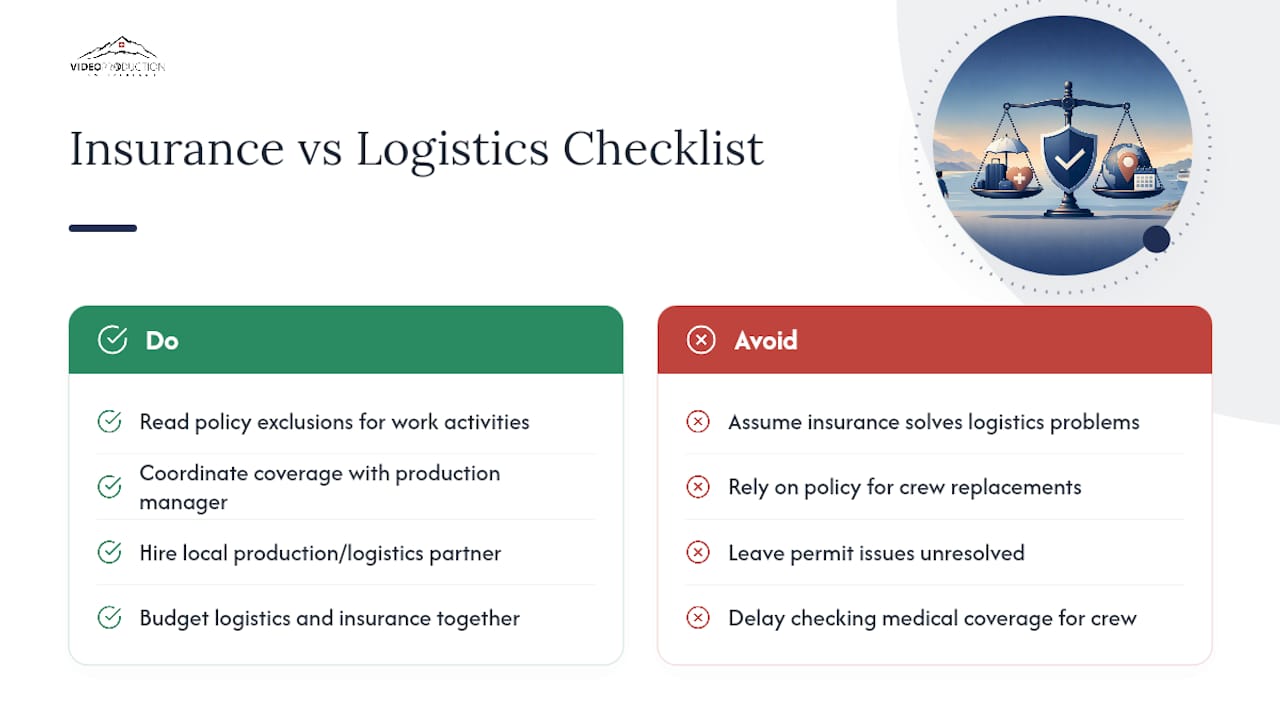
Travel insurance protects your money. It does not protect your shoot day.
That distinction gets missed constantly by production teams booking international trips. A Trawick policy will reimburse you if a trip gets canceled or a crew member needs emergency medical care. It will not source you a replacement grip on 24 hours’ notice, secure a filming permit that got flagged for missing paperwork, or scout a backup location when your original site falls through. Those are logistics problems, and insurance was never built to solve them.
For professional shoots, review your policy for exclusions around professional or work-related activities. Many travel medical plans specifically carve these out, which means a crew injury during filming might not be covered the same way a tourist’s injury would be. Coordinate those details with whoever manages your production before departure, not after.
Insurance is one piece of risk management for an international shoot. The other piece is having someone on the ground who already knows the permit process, the reliable equipment vendors, and the local crew who show up on time. Videoproductionswitzerland handles exactly that logistical layer for international filmmakers and brands shooting in Switzerland, covering permits, crew sourcing, and location scouting so your insurance policy is backing up a shoot that’s already well managed, not compensating for one that wasn’t. If you’re budgeting for an upcoming shoot, the video production cost breakdown is a useful starting point for planning both your logistics and your coverage needs together.
The Real Question Isn’t Which Plan, It’s Which Trip
Most travel insurance comparisons obsess over price per day or headline medical limits, and that’s the wrong starting point. The research here points somewhere more useful: match the plan family to your actual travel pattern first, then compare prices within that family. A frequent traveler shopping single-trip plans four times a year is solving the wrong problem, and an occasional vacationer buying an annual plan is paying for coverage they’ll never use.
Where conventional advice falls short is treating “get travel insurance” as a single decision. It’s actually two decisions: which plan family fits your travel frequency, and which specific benefits matter for this trip. Trawick’s annual plans reward people who get the first decision right. The purchase-window rules around CFAR punish people who get the second one wrong, often without realizing it until it’s too late to fix.
Prioritize the fit question before the price question. A cheaper plan that doesn’t match your actual trip pattern isn’t a deal, it’s a gap waiting to be discovered mid-trip.
— Pieter
Sources
For anyone who wants to confirm details before buying, Trawick’s plan pages list current benefit summaries and purchase-window rules directly from the provider. Squaremouth’s Trawick listing aggregates customer ratings and plan comparisons across the marketplace. U.S. News’s review offers an independent cost and plan breakdown, and Trustpilot provides raw, unfiltered customer feedback worth skimming before you commit to a specific tier.
FAQ
Is Trawick Travel Insurance Good for Frequent Travelers?
Yes. Its annual plans commonly bundle trip cancellation with repeated medical coverage across multiple trips, a combination many competing multi-trip policies don’t offer at a similar price.
Does Trawick Cover Pre-Existing Medical Conditions?
Coverage is available on select plans, but the waiver must typically be purchased within 7 to 14 days of your initial trip deposit. Miss that window and the waiver isn’t available for that trip.
How Long Do Trawick Claims Take to Process?
Timelines vary by claim type, and reviewers note that documentation completeness is the biggest factor in processing speed. Medical claims involving overseas providers tend to take longer than straightforward trip-interruption claims.
Can I Buy an Annual Plan for One Long Trip?
Not ideally. Annual plans typically cap coverage around 45 days per individual trip, so a single trip longer than that may exceed the per-trip limit even under an active annual policy.
Where Can I Compare Trawick Against Other Providers?
Marketplaces like Squaremouth let you compare Trawick’s plans side by side with other carriers using the same trip details, which is faster than requesting quotes individually from each provider’s own site.
Recommended
