
Tool for Time Management to Optimize Video Production


Planning a video shoot in Switzerland can be a logistical puzzle for international filmmakers and production managers. Recent surveys reveal that nearly 45 percent of American crews face delays stemming from uncoordinated team schedules and unmet time constraints abroad. For productions filming outside their home country, reliable time management tools make the difference between costly setbacks and seamless project delivery. This article highlights practical steps to help you organize, schedule, and optimize your workflow for success in Switzerland’s unique production landscape.
Table of Contents
Quick Summary
Key Takeaway | Explanation |
1. Identify Production Needs | Clearly outline project objectives, target audience, and time constraints for effective planning. |
2. Select Time Management Tool | Choose software that integrates well with video production workflows and enhances team collaboration. |
3. Integrate Crew with Timeline | Create a crew roster and logistics plan for real-time updates and coordination among team members. |
4. Assign Tasks with Milestones | Break down the project into tasks with defined deadlines and responsibilities to ensure accountability. |
5. Monitor Progress Regularly | Implement tracking systems and conduct check-ins to make adjustments and address challenges promptly. |
Step 1: Identify Production Needs and Time Constraints
Successful video production hinges on meticulously mapping out your project’s specific requirements and potential time limitations. This initial planning stage sets the foundation for a smooth shooting experience, helping you anticipate challenges and create strategic timelines.
To effectively identify your production needs, start by conducting a comprehensive project assessment. Break down your video’s core objectives, target audience, and creative vision. Analyze constraints in filmmaking processes that might impact your workflow. These typically include budget restrictions, location availability, crew schedules, equipment requirements, and potential logistical challenges. Research from the University of Southern Denmark suggests that understanding these constraints can actually foster creativity and enhance production efficiency.
Create a detailed production worksheet that outlines each project phase and its corresponding time allocation. List specific tasks like scripting, location scouting, casting, equipment preparation, shooting days, and post production editing. Assign realistic time estimates for each segment, building in buffer periods for unexpected complications. Cross reference these timelines with your key team members to ensure alignment and identify potential scheduling conflicts early.
Here’s a summary of essential project constraints and their creative impact:
Constraint Type | Typical Effects on Production | Opportunities for Creativity |
Budget | Limits equipment and locations | Encourages resourceful solutions |
Location Availability | May restrict shooting schedule | Inspires unique scene adaptations |
Crew Schedules | Forces time optimization | Drives efficient task assignments |
Equipment Access | Narrows shoot options | Prompts creative filming techniques |
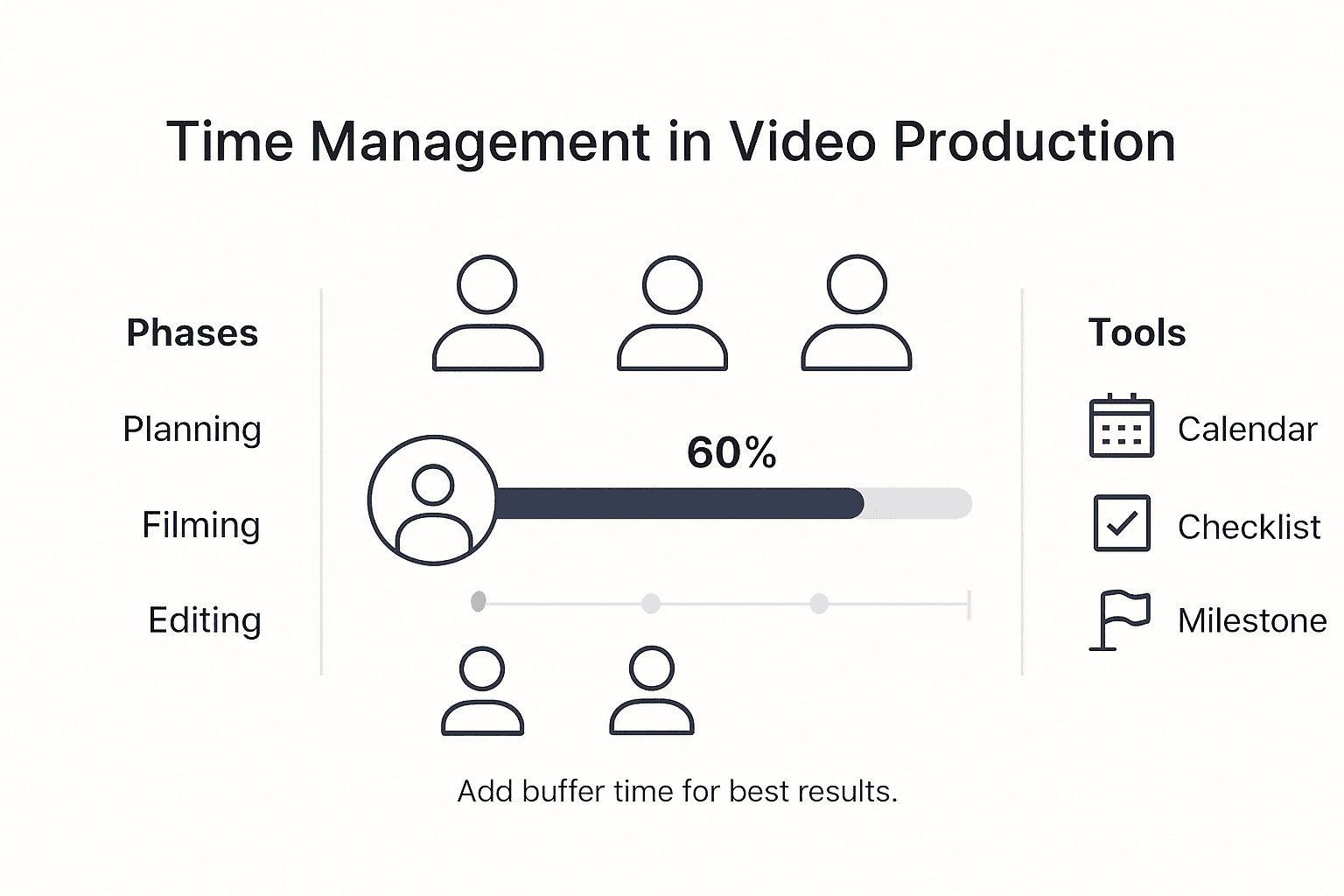
Pro Tip: Always add a 15-20% time buffer to your initial production schedule to account for unforeseen challenges and maintain project flexibility.
Step 2: Select and Set Up Your Tool for Time Management
Selecting the right time management tool is critical for streamlining your video production workflow and ensuring smooth project execution. The goal is to find a solution that aligns perfectly with your specific production needs and team dynamics.
When evaluating time management tools, consider solutions specifically designed for video production workflows. Project management software like StudioBinder offers comprehensive features tailored to film and video production teams. These specialized platforms provide robust scheduling capabilities, task tracking, and collaboration tools that generic productivity apps cannot match. Look for platforms that support key features such as task tagging, shooting schedule stripboards, and seamless integration with other production tools.
Carefully assess each tool’s specific capabilities against your production requirements. Some tools like ClickUp offer advanced time tracking and resource allocation features that can help teams stay organized and within budget. Create a checklist of must-have features including collaborative task assignment, timeline visualization, real time progress monitoring, and the ability to customize workflows. Test potential tools with free trials, involve key team members in the evaluation process, and prioritize platforms that offer intuitive interfaces and scalable solutions.

Pro Tip: Select a time management tool that offers mobile compatibility and cloud synchronization to ensure your production team can access and update project details from anywhere.
Below is a comparison of popular video production time management tools:
Tool Name | Key Features | Strengths for Production Teams |
StudioBinder | Scheduling, stripboards | Purpose-built for film workflows |
ClickUp | Time/resource tracking | Customizable, strong task assignment |
Trello | Visual task boards | Simple, intuitive for collaborators |
Asana | Calendar, milestones | Progress tracking and integrations |
Step 3: Integrate Crew and Logistics into Your Timeline
Successfully integrating crew and logistics is the critical bridge between planning and execution in your video production workflow. This step transforms your theoretical timeline into a living, breathing production roadmap that keeps everyone aligned and moving forward efficiently.
Effective crew scheduling in pre-production requires meticulous coordination to ensure all team members understand their specific roles, responsibilities, and precise call times. Begin by creating a comprehensive crew roster that includes contact information, specific roles, availability windows, and skill sets. Sync this information directly into your timeline management tool, allowing for real time updates and instant communication. Pay special attention to potential scheduling conflicts, overlapping responsibilities, and critical path dependencies that could impact your overall production schedule.
When addressing logistics, recognize that film production requires intricate planning of equipment transport, crew movement, and location coordination. Map out detailed transportation routes, equipment delivery schedules, and location setup times within your timeline. Consider factors like travel distances between shooting locations, equipment loading and unloading windows, and potential weather or traffic delays that might impact your production schedule. Create contingency buffers for each logistical element to maintain flexibility and minimize potential disruptions.
Pro Tip: Implement a centralized communication channel where crew members can instantly access and update their schedule information to maintain real time coordination and transparency.
Step 4: Assign Tasks and Set Trackable Milestones
Successfully managing a video production project requires strategic task allocation and milestone tracking that keeps your entire team focused and accountable. This critical step transforms your production plan from a theoretical document into an actionable roadmap with clear responsibilities and progress indicators.
Project management methodology emphasizes creating timelines with clearly defined milestones that serve as critical checkpoints throughout your production workflow. Begin by breaking down your entire project into distinct phases and specific tasks, assigning each responsibility to a team member with precise deadlines. Ensure each task includes detailed expectations, required resources, and potential dependencies that might impact completion. Consider using a visual task management system that allows real time tracking and provides transparency for all team members.
Assigning tasks within video production management tools involves breaking down deliverables into manageable units with clear responsibility and deadlines. Prioritize tasks based on their critical path significance and potential impact on overall production timelines. Implement a color coding or tagging system to quickly identify task status progress blocking points or potential bottlenecks. Regularly review and adjust milestone targets to maintain project momentum and address any emerging challenges proactively.
Pro Tip: Create a weekly team check in where milestone progress is openly discussed and potential roadblocks are collaboratively addressed to maintain project agility.
Step 5: Monitor Progress and Adjust Schedules
Effective video production management requires consistent monitoring and strategic schedule adjustments to maintain project momentum and deliver exceptional results. This step transforms your initial planning into a dynamic, responsive workflow that can adapt to real world challenges.
Streamlined project management includes defining project requirements and monitoring progress in real time to handle unexpected changes proactively. Implement a robust tracking system that provides comprehensive visibility into each project phase. Utilize digital dashboards that offer instant snapshots of task completion rates, resource allocation, and potential bottlenecks. Schedule regular check in meetings where team members can provide updates, discuss challenges, and collaboratively problem solve any emerging issues that might impact your production timeline.
Film production progress monitoring involves real time tracking of milestones and resource utilization to make informed decisions. Develop a flexible approach that allows for quick resource reallocation and schedule modifications. Create contingency plans for each critical project phase, anticipating potential delays or complications. Use data driven insights to make objective decisions about schedule adjustments, ensuring that changes are strategic and minimize overall production disruptions.
Pro Tip: Develop a weekly one hour buffer in your production schedule to absorb unexpected challenges without derailing the entire project timeline.
Step 6: Verify On-Time Completion and Logistical Accuracy
The final phase of your video production project demands meticulous verification to ensure every detail meets your original specifications and timeline expectations. This critical review process transforms your carefully planned project into a professional deliverable that meets the highest standards of quality and precision.
Achieving on-time completion while maintaining accuracy requires setting clear pre-production rules and comprehensive checklists to reduce errors and potential rework. Develop a systematic verification protocol that reviews each project component against your original specifications. Cross reference your final deliverables with initial project requirements, checking for technical accuracy, creative alignment, and logistical completeness. Engage multiple team members in this review process to ensure objective assessment and catch potential oversights that a single reviewer might miss.
Quality assurance in video production is a structured review process ensuring technical, creative, and logistical standards are met before final release. Conduct a comprehensive audit that examines equipment performance, footage quality, editing precision, and overall production coherence. Verify that all contractual and creative commitments have been fulfilled, and that the final product meets or exceeds the original project vision. Create a detailed sign off document that validates each critical aspect of production completion.
Pro Tip: Implement a three tier review process involving technical, creative, and production managers to ensure comprehensive verification of your final video project.
Maximize Your Video Production Efficiency with Expert Time Management Support
Producing a high-quality video demands precision in scheduling, clear task allocation, and seamless logistical coordination. The article highlights common challenges such as coordinating crew schedules, managing equipment availability, and adapting timelines to unexpected delays. If you are looking to overcome these obstacles and implement a reliable time management system tailored to video production, professional local support can make all the difference.
At Video Production Switzerland, we specialize in offering comprehensive solutions that align perfectly with your project needs. From securing expert local crews and managing permits to handling logistics and equipment coordination, we simplify the complex details that often derail schedules. Our 20 years of experience ensure your production timeline stays on track with strategic buffers and real-time updates integrated into your workflow.
Discover how our dedicated team can help you plan, execute, and monitor every step of your shoot with confidence. Don’t let time management hurdles hold back your creative vision. Take advantage of our initial free consultation and tailored needs assessment at Video Production Switzerland to start streamlining your production today. Secure your production success by partnering with trusted local experts committed to on-time delivery and flawless execution.
Frequently Asked Questions
What are the essential features to look for in a time management tool for video production?
A time management tool for video production should have features like task tracking, scheduling capabilities, and collaboration tools specific to film workflows. Start by creating a checklist of must-have features to evaluate potential tools effectively.
How can I integrate crew schedules into my time management tool?
To integrate crew schedules, create a comprehensive crew roster that includes roles, availability, and contact information, and sync this data into your time management tool. This will help keep everyone aligned and allow for real-time updates.
What steps can I take to monitor progress within my time management tool?
You can monitor progress by implementing a robust tracking system that provides visibility into task completion rates and resource allocation. Schedule regular check-in meetings to discuss updates and challenges with your team.
How can I ensure on-time completion using my project management tool?
To ensure on-time completion, develop a systematic verification protocol that checks your final deliverables against original specifications. Set clear milestones within your project management tool to maintain focus and accountability throughout production.
What should I include in my production timelines within the time management tool?
Include specific tasks such as scripting, location scouting, and post-production editing in your timelines. Assign realistic deadlines to each task, factoring in potential delays to create a flexible production schedule.
How do I choose the right time management tool for my video production needs?
Evaluate time management tools based on their specific capabilities for video production workflows, like task assignment and timeline visualization. Test a few options through free trials to find the one that fits your team’s dynamics and production needs best.
Recommended
