
7 Ways to Boost Film Shoot Efficiency with TickTick Time Blocking


Every american film producer knows that unpredictable logistics can jeopardize a tightly scheduled shoot in Switzerland. With nearly 45 percent of location delays traced to poor time management, it is crucial to build a reliable and structured production workflow. This guide reveals how implementing time blocking empowers international teams to keep complex shoots on schedule, optimize crew performance, and avoid costly surprises in Swiss environments.
Table of Contents
Quick Summary
Key Insight | Explanation |
1. Use Time Blocking | Allocate specific time blocks for tasks to enhance focus and reduce distractions through structured work rhythms. |
2. Create Project Templates | Standardize your film production plans to streamline workflows and minimize repetitive tasks, increasing overall efficiency. |
3. Prioritize Permit Planning | Allocate dedicated time for permit handling and approvals to prevent last-minute complications during film production. |
4. Schedule Equipment Logistics | Plan precise pickup and return schedules to avoid delays, ensuring smooth transitions in your production timeline. |
5. Optimize Shooting Schedule | Regularly review and adjust your shooting schedule for efficiency, addressing bottlenecks and maximizing creative momentum. |
1. Understand the Basics of TickTick Time Blocking
Time blocking is a powerful productivity strategy that transforms how you manage your daily tasks and professional workflow. By breaking your day into intentional, dedicated segments, you create a structured approach to work that minimizes distractions and maximizes focus.
At its core, time blocking is about allocating specific time windows for particular tasks or groups of related activities. Research shows this method provides significant cognitive control by reducing mental fatigue and creating predictable work rhythms. Unlike traditional to-do lists that simply catalog tasks, time blocking assigns precise timeframes to each activity.
The key advantage of this technique is its ability to reduce context switching. When you dedicate uninterrupted blocks to specific work, your brain can dive deeper into complex tasks without constant interruptions. According to TickTick’s productivity guidance, this approach helps you estimate time more accurately and maintain consistent productivity.
To implement time blocking effectively, start by categorizing your tasks into logical groups. Assign realistic time windows for each category consider your energy levels and natural work patterns. For film production planning, you might create blocks for location scouting, equipment inventory, crew communication, and creative planning.
Key Implementation Steps:
Identify your most important tasks
Estimate realistic time requirements
Schedule blocks with buffer time between complex tasks
Use color coding to visually organize different task categories
Review and adjust your time blocks weekly
Pro tip: Begin with smaller time blocks of 25-45 minutes and gradually expand as you become more comfortable with the technique.
2. Set Up Your Project Templates for Film Shoots
Creating standardized project templates transforms your film production workflow from chaotic to controlled. Templates serve as strategic blueprints that ensure consistency and minimize redundant planning across different shoots.
Professional film production templates enable crews to rapidly replicate successful workflows while maintaining flexibility for unique project requirements. By establishing structured templates, you reduce administrative overhead and create predictable processes that help your entire team stay aligned.
TickTick offers robust template features that allow users to standardize recurring workflows across pre-production, shooting, and post-production stages. These digital templates can include detailed checklists, task dependencies, and time block allocations specific to different types of film projects.
Key Template Components:
Location scouting checklist
Equipment inventory tracking
Crew communication protocols
Shoot day scheduling framework
Budget and resource allocation guidelines
Post-production review milestones
Best Practices for Template Development:
Start with your most successful past project structures
Include enough detail to provide guidance
Leave room for project specific customization
Review and update templates quarterly
Get input from key team members
Pro tip: Create a master template library with variations for different shoot types like documentary, commercial, narrative film to streamline your future production planning.
3. Block Time for Permit Handling and Approvals
Permit handling is often the most overlooked yet critical component of successful film production planning. Strategic time blocking for permits can mean the difference between a smooth shoot and a complete production shutdown.
Professional film permit research requires meticulous planning and dedicated time allocation. Each location demands unique legal documentation and approval processes that cannot be rushed or treated as an afterthought.
Unit production managers understand that permit management involves complex communication flows with multiple government agencies and stakeholders. By dedicating specific time blocks to permit coordination, you create a systematic approach that reduces last minute complications.
Critical Permit Handling Time Blocks:
Initial location scouting and permit research
Drafting official permit applications
Communicating with local government offices
Following up on application status
Securing backup location permits
Managing insurance and liability documentation
Recommended Permit Tracking Process:
Start permit applications 4 to 6 weeks before shoot date
Create dedicated weekly time slots for permit follow up
Maintain digital and physical copies of all documentation
Build buffer time for unexpected bureaucratic delays
Develop relationships with local permit offices
Pro tip: Allocate at least 10 hours per week specifically for permit coordination during pre production to ensure comprehensive legal clearance for your film shoot.
4. Schedule Equipment Pickup and Return Efficiently
Equipment logistics can make or break your film production timeline. Precise scheduling of equipment pickups and returns represents a critical operational strategy that minimizes downtime and reduces unnecessary rental expenses.
Film production scheduling requires meticulous planning of technical assets to ensure seamless workflow continuity. Inefficient equipment management can create cascading delays that dramatically impact your entire production schedule.
Technical equipment logistics demand strategic time blocking that accounts for multiple critical factors. Professional productions integrate comprehensive equipment tracking systems that provide real time visibility into asset locations and availability.
Strategic Equipment Management Blocks:
Initial equipment inventory assessment
Rental vendor coordination
Technical equipment testing
Transportation and logistics planning
Return inspection and reconciliation
Post shoot equipment maintenance documentation
Efficient Pickup and Return Process:
Create detailed equipment manifest 72 hours before pickup
Schedule dedicated time slots for equipment inspection
Build buffer time between pickup and first shoot day
Assign specific team member for equipment tracking
Develop standardized equipment check in check out protocols
Pro tip: Develop a digital equipment tracking spreadsheet with precise pickup and return timestamps to eliminate communication gaps and minimize potential rental overages.
5. Plan Location Scouting and Crew Coordination
Successful film production hinges on strategic location scouting and seamless crew coordination. These interrelated processes require precision planning and proactive communication to ensure smooth operational execution.
Location scouting management demands comprehensive research beyond simple visual aesthetics. It involves detailed feasibility assessments, negotiation skills, and comprehensive logistical planning that considers equipment requirements, safety protocols, and legal permissions.
Modern production teams are increasingly leveraging collaborative technologies to streamline location assessment and crew communication. Virtual and augmented reality tools now enable remote scouting and team coordination, reducing travel expenses and increasing production efficiency.
Critical Coordination Elements:
Location accessibility assessment
Crew transportation logistics
Equipment transportation requirements
Permit and permission verification
Safety and risk management protocols
Communication channel establishment
Effective Location Scouting Workflow:
Develop comprehensive location requirement checklist
Create digital shared documents for team tracking
Establish clear communication protocols
Schedule preliminary location visits
Document technical and logistical constraints
Build contingency plans for alternative locations
Pro tip: Create a shared digital location scouting dashboard that allows real time updates and tracks all critical information across your entire production team.
6. Allocate Time for Transportation and Setup
Transportation and equipment setup represent critical yet often underestimated segments of film production that can dramatically impact overall shoot efficiency. Precise time allocation for these logistical elements prevents costly delays and ensures smooth operational transitions.
Film equipment transportation requires strategic planning that goes far beyond simple point-to-point movement. Professional productions understand that every minute spent in transit or setup represents potential financial and creative implications.
Successful transportation management involves creating comprehensive time blocks that account for multiple critical variables. These include equipment loading, vehicle transit, location arrival, gear unloading, technical setup, and system testing all before actual filming begins.
Transportation and Setup Time Block Components:
Equipment inventory verification
Vehicle loading procedures
Transit time calculations
Location access and parking logistics
Equipment unloading sequence
Technical setup and calibration
Backup equipment preparation
Safety and technical system checks
Efficient Setup Workflow:
Create detailed equipment transit checklists
Assign specific team members to transportation roles
Build buffer time between arrival and shoot start
Develop standardized setup protocols
Conduct pre transportation equipment inspection
Establish clear communication channels
Pro tip: Develop a digital transportation timeline with exact timestamps for each logistical step and share it across your entire production team to ensure synchronized execution.
7. Review, Adjust, and Optimize Your Shooting Schedule
Constant schedule refinement separates good film productions from exceptional ones. Effective schedule optimization transforms potential disruptions into opportunities for increased efficiency and creative problem solving.
Shooting schedule management requires a systematic approach that balances structured planning with adaptive flexibility. Professional productions recognize that schedules are living documents requiring continuous assessment and strategic adjustments.
Digital scheduling tools now enable real time collaboration and data driven insights that dramatically improve production workflows. By implementing strategic review mechanisms, film teams can dramatically reduce unexpected delays and maximize creative momentum.
Critical Schedule Review Elements:
Daily performance tracking
Scene completion rate analysis
Resource utilization metrics
Time block efficiency assessment
Crew productivity evaluation
Unexpected challenge documentation
Comparative schedule performance
Optimization Workflow:
Conduct daily 15 minute production meetings
Document schedule variations
Identify recurring bottlenecks
Create contingency time blocks
Develop adaptive rescheduling protocols
Maintain transparent communication channels
Pro tip: Implement a weekly retrospective where your entire production team reviews schedule performance and collectively brainstorms improvement strategies.
Below is a comprehensive table summarizing the main strategies and recommendations for optimizing film production workflow as discussed throughout the article.
Key Topic | Primary Strategies and Steps | Expected Benefits |
Understanding Time Blocking | Allocate specific time windows for tasks, reduce context switching, and use tools like color coding for organization. | Enhanced focus, reduced distractions, and a balanced workload. |
Setting Up Project Templates | Develop standardized templates for common tasks like location scouting and equipment tracking. Update quarterly. | Streamlined workflow and consistency across projects. |
Managing Permit Handling and Approvals | Dedicate time blocks for legal documentation processes, such as applications and communications with authorities. | Avoid last-minute issues and ensure compliance with regulations. |
Scheduling Equipment Pickup and Return | Plan logistics meticulously, employing manifests and inspection time slots to track rentals and returns. | Reduced downtime, cost management, and operational efficiency. |
Coordinating Locations and Crews | Conduct thorough location research, handle accessibility requirements, and use collaborative technologies. | Improved team alignment and operational planning across different locations. |
Organizing Transportation and Setup | Allocate detailed time blocks for loading, transit, and setup. Employ standardized processes for smooth execution. | Avoid production delays and streamline transitions between locations. |
Optimizing the Shooting Schedule | Continuously refine the shooting schedule and hold daily production meetings to track progress and adjust plans. | Increased efficiency and adaptation to evolving project requirements. |
Elevate Your Film Shoot Efficiency with Expert Local Support
Mastering time blocking with TickTick is a transformative step toward boosting your film shoot productivity. However, even the best schedules can face challenges like permit delays, equipment logistics, and crew coordination. These common pain points often disrupt carefully planned time blocks and threaten your production timeline. That is where professional, local expertise becomes invaluable.
At Video Production Switzerland, we specialize in turning your well-structured time blocks into reality by managing the complex permits, trusted crew sourcing, and precise equipment scheduling that the article highlights. With over 20 years of market knowledge, our team ensures your shoots remain on track and stress-free so that your TickTick time blocking strategy leads to powerful results rather than frustration.
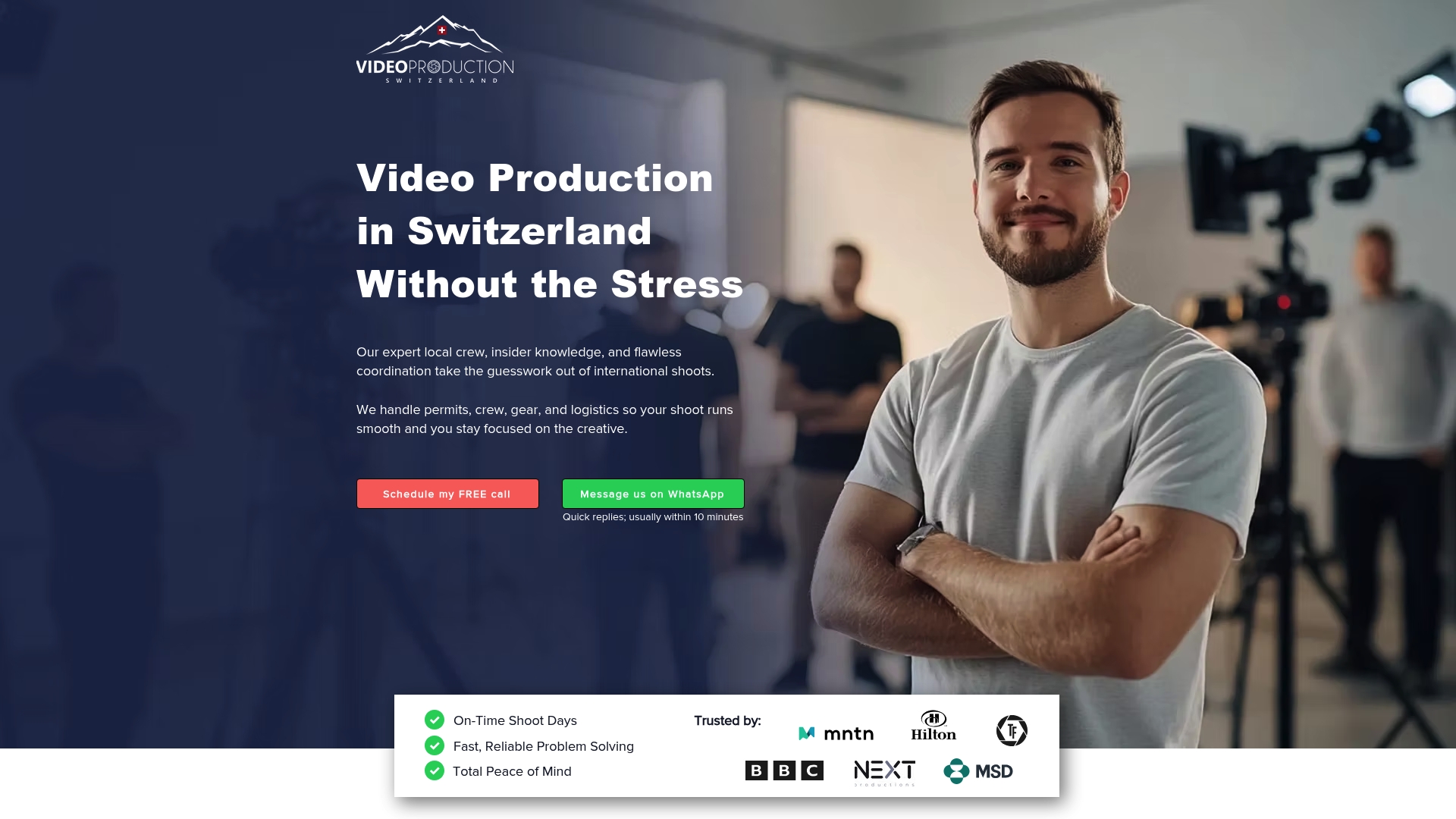
Don’t let logistical hurdles break your productivity rhythm. Discover how our comprehensive film production services can seamlessly integrate with your meticulous planning. Visit Video Production Switzerland to start your free consultation and transform your shoot efficiency today. Your next film production deserves the reliability and expert local partnership that only proven professionals can provide.
Frequently Asked Questions
How can I start implementing TickTick time blocking for my film shoots?
Begin by categorizing your tasks into groups related to your production workflow, such as scouting, equipment management, and crew coordination. Schedule dedicated time blocks for each task, and start with smaller durations of 25–45 minutes to build your habit.
What are the key components to include in my film production project templates?
Incorporate essential elements such as location scouting checklists, equipment inventory tracking, and a shoot day schedule. Create these templates based on past successful projects to ensure consistency and a streamlined process across different shoots.
How much time should I allocate for permit handling before my shoot?
Dedicate at least 10 hours per week specifically for permit coordination during the pre-production stage. Starting this process 4 to 6 weeks before your shoot date will help ensure all necessary permits are secured without last-minute complications.
What is the best way to manage equipment pickup and return to avoid delays?
Create a detailed equipment manifest at least 72 hours before pickup and assign specific team members to handle the logistics. Schedule buffer time between the pickup and your first shoot day to allow for any unforeseen issues that may arise.
How can I optimize my shooting schedule continuously?
Implement daily production meetings that last about 15 minutes to assess progress and identify any schedule bottlenecks. Regularly review your shooting schedule and document variations to fine-tune your workflow for future projects.
What tools can help streamline location scouting and crew coordination?
Use digital shared documents and a comprehensive location requirement checklist to keep your crew informed and organized. Establish clear communication protocols to ensure everyone is on the same page and facilitate efficient workflow during scouting.
Recommended
