
Biodegradable Video: Driving Sustainable Production


Every american production company faces mounting pressure to reduce plastic waste, and the statistics are clear—traditional video gear can persist in landfills for centuries. For international filmmakers working in Switzerland, embracing biodegradable video practices is not just a trend but a critical step toward true sustainability. This guide unpacks the essential concepts behind biodegradable video, empowering you to navigate new material standards, guarantee environmental compliance, and streamline project logistics with confidence.
Table of Contents
Key Takeaways
Point | Details |
Emerging Approach | Biodegradable video focuses on creating content with minimal environmental impact through natural decomposition of materials. |
Material Selection | Choosing bio-based and biodegradable materials is crucial for achieving sustainability in video production. |
Regulatory Standards | Understanding international standards is essential to ensure compliance and prevent greenwashing in material claims. |
Project Considerations | Filmmakers must evaluate performance, costs, and environmental impacts when adopting biodegradable production technologies. |
Biodegradable Video Defined: Core Concepts
Biodegradable video represents an emerging approach in media production focused on creating audiovisual content using materials and processes designed to minimize environmental impact through natural decomposition. At its core, biodegradability refers to the capacity of materials to break down completely into harmless natural elements through microbial action, effectively transforming video production equipment and processes into environmentally sustainable systems.
The fundamental science behind biodegradable video involves selecting polymers and production materials that can be systematically decomposed by microorganisms without leaving harmful residues. These materials are engineered to mimic natural biological cycles, enabling complete integration back into ecological systems. Unlike traditional plastics that persist for hundreds of years, biodegradable alternatives can decompose within months or years, significantly reducing long-term environmental contamination.
From a technical perspective, biodegradable video production encompasses multiple strategic considerations. This includes selecting bio-based polymers for camera components, utilizing renewable energy during shooting, minimizing electronic waste, and designing workflow processes that prioritize recyclability and minimal carbon footprint. Comprehensive lifecycle analysis of biobased polymers reveals that material selection plays a critical role in determining overall environmental sustainability.
Pro tip: When sourcing biodegradable video equipment, prioritize manufacturers who provide transparent environmental certifications and comprehensive decomposition timelines for their products.
Distinguishing Types and Key Standards
Biodegradable video production requires nuanced understanding of multiple material classifications and international regulatory frameworks. The landscape of biodegradable materials is complex, with critical distinctions between bio-based, biodegradable, and compostable materials that significantly impact environmental performance and sustainability certification.

International standards play a crucial role in defining and authenticating biodegradability. Comprehensive global standards like EN 13432, ASTM D6400, and ISO equivalents establish rigorous testing protocols that evaluate how materials decompose under specific environmental conditions. These standards help prevent greenwashing by requiring transparent documentation of material breakdown processes, decomposition timeframes, and potential environmental residues.
The technical boundaries between different material categories are intricate. Bio-based materials originate from renewable biological sources, while biodegradable materials can break down through microbial processes, and compostable materials must decompose completely within specific timeframes without leaving toxic residues. Evolving regulatory recognition worldwide continues to refine these technical definitions and testing methodologies, creating increasingly sophisticated frameworks for environmental accountability in material production.
Here is a comparison of major biodegradable material classifications relevant to video production:
Material Type | Source and Origin | Breakdown Requirements | Typical Use in Video Gear |
Bio-based | Renewable plants or biomass | May be biodegradable or non-biodegradable | Camera housings, cables |
Biodegradable | Plant or bacterial synthesis | Microbial decomposition in defined time | Packaging, disposable accessories |
Compostable | Associated with food/agro waste | Fully decomposes under composting | Plates, wraps for gear, casing |
Pro tip: Request detailed environmental certification documentation from manufacturers, focusing on specific decomposition timelines and independent third-party verification of biodegradability standards.
How Biodegradable Videos Are Produced
The production of biodegradable videos involves a sophisticated process of selecting, synthesizing, and integrating specialized materials designed to minimize environmental impact. This approach requires careful selection of raw materials, advanced manufacturing techniques, and a comprehensive understanding of how different polymers interact with environmental decomposition processes.
Chemical synthesis and film production methods play a crucial role in creating sustainable video production materials. The process begins with identifying bio-based feedstocks that can be transformed into biodegradable polymers, including agricultural waste products, plant-based extracts, and renewable biological sources. Manufacturers employ techniques such as fermentation, film extrusion, casting, and strategic blending to create materials that can effectively replace traditional petroleum-based components in video production equipment.
The production workflow for biodegradable videos encompasses multiple strategic considerations. Eco-friendly video production techniques integrate advanced material science with sustainable manufacturing processes. This includes selecting bio-polymers for camera components, developing renewable energy strategies for shooting, minimizing electronic waste through modular design, and creating comprehensive end-of-life recycling strategies for production equipment. The goal is to create a holistic approach that reduces carbon footprint while maintaining high-quality video production standards.
Pro tip: Collaborate with materials scientists and sustainability experts during the early design phases to optimize biodegradable video production strategies and identify innovative material solutions.
Regulations and Certifications in Switzerland
Switzerland maintains rigorous regulatory frameworks for biodegradable materials, establishing some of the most comprehensive and stringent standards in Europe. The Swiss Portal of Technical Regulations provides detailed guidelines for product compliance, ensuring that all biodegradable video production materials meet exacting national and international standards.
Certification processes in Switzerland involve multiple layers of assessment, with organizations like Bio Suisse playing a critical role in establishing credibility for sustainable materials. Organic certification standards provide comprehensive frameworks for evaluating biodegradable products, including detailed inspection protocols that examine material composition, decomposition capabilities, and environmental impact. These processes go beyond simple compliance, requiring manufacturers to demonstrate measurable sustainability across entire production lifecycles.
The Swiss regulatory landscape for biodegradable materials emphasizes both environmental protection and technological innovation. Key certification requirements include comprehensive documentation of material origins, transparent decomposition timelines, minimal environmental residue, and verifiable sustainability metrics. Manufacturers must navigate complex regulatory environments that integrate national Swiss standards with broader European Union guidelines, creating a multilayered compliance framework that demands exceptional precision and environmental accountability.
Pro tip: Always secure comprehensive certification documentation from Swiss regulatory bodies before initiating biodegradable video production to ensure full compliance and avoid potential legal complications.
Benefits, Limitations, and Project Considerations
Biodegradable video production offers significant environmental advantages while presenting complex technical and economic challenges. Comprehensive research reveals the multifaceted landscape of biodegradable material implementation, highlighting both transformative potential and nuanced limitations that filmmakers must carefully navigate.
The environmental benefits are substantial, with biodegradable materials dramatically reducing long-term waste and carbon footprint. However, technical trade-offs include increased production costs, potential performance limitations, and sensitivity to environmental conditions. Emerging technological perspectives underscore the complex interplay between sustainability drivers, market readiness, and infrastructural challenges that filmmakers must strategically address when considering biodegradable video production approaches.
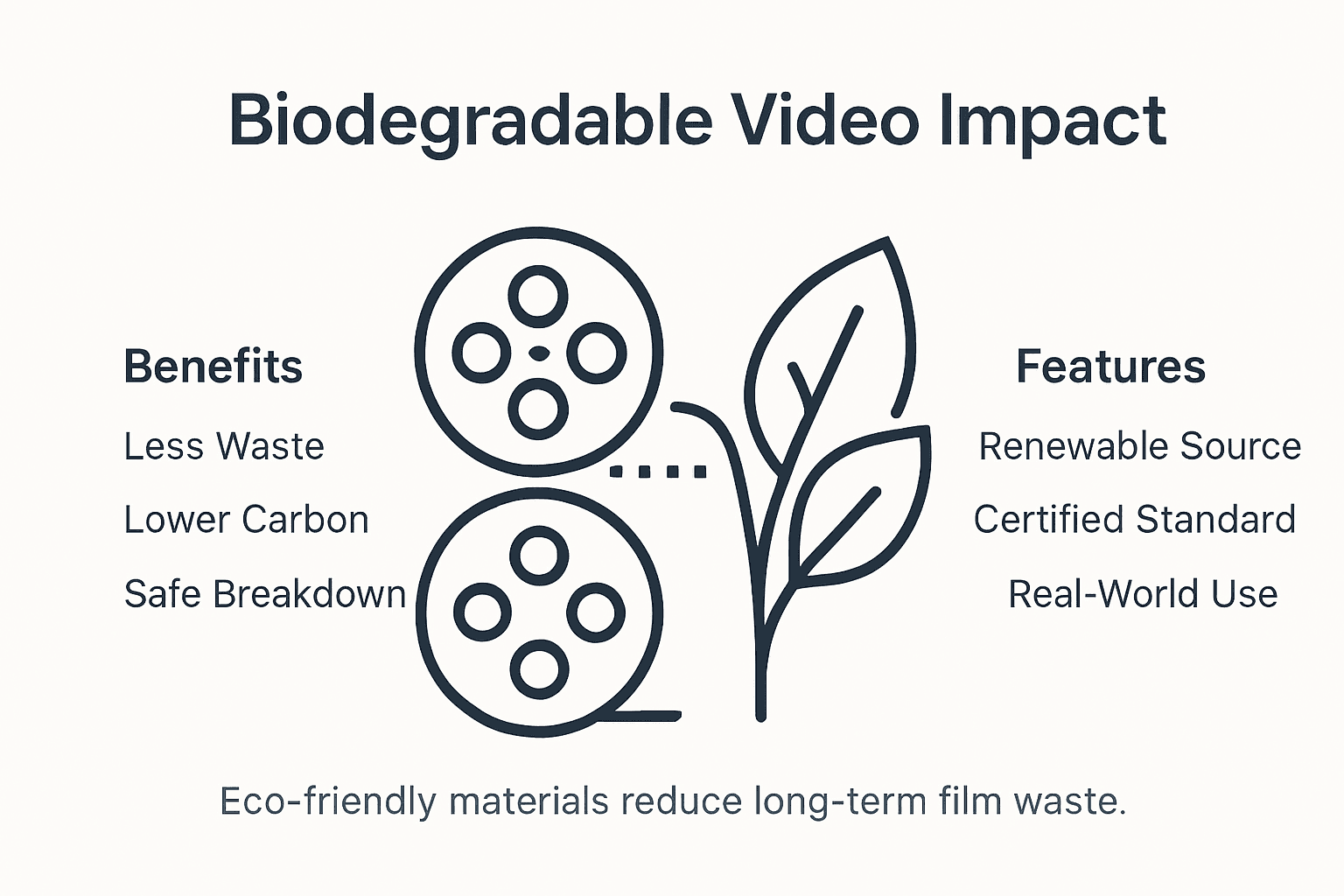
Key project considerations encompass multiple dimensions beyond material selection. Filmmakers must evaluate mechanical properties, decomposition timelines, moisture resistance, and compatibility with existing production workflows. Critical assessment factors include total lifecycle costs, performance reliability, regulatory compliance, and alignment with sustainability goals. The decision to implement biodegradable video technologies requires comprehensive analysis of technical capabilities, economic feasibility, and long-term environmental impact.
The table below summarizes key project considerations when choosing biodegradable video solutions:
Consideration | Importance for Projects | Example Assessment Questions |
Performance Reliability | Critical for shooting stability | Does equipment meet operational demands? |
Lifecycle Cost | Impacts project budgeting | Are increased material costs offset by sustainability benefits? |
Regulatory Compliance | Ensures legal operation | Do materials have required certifications? |
Environmental Impact | Aligns with green objectives | Will all materials fully decompose as claimed? |
Pro tip: Conduct thorough pilot testing and engage materials science experts to comprehensively assess the performance and sustainability trade-offs specific to your video production requirements.
Drive Your Sustainable Video Production Forward with Expert Support
The challenge of creating truly biodegradable video productions lies not only in sourcing eco-friendly materials but also in seamlessly managing the complex logistics and compliance demands involved. From securing certified biodegradable equipment to navigating Switzerland’s strict regulatory standards and ensuring reliable, high-performance shoots, these pain points can overwhelm any filmmaker or brand committed to sustainability. At Video Production Switzerland, we understand these exact hurdles. Our local expertise streamlines every critical step from permits and trusted equipment sourcing to location scouting and full production coordination, enabling you to focus on sustainability goals like adhering to certified biodegradability standards without compromise.
Choose the partner with over 20 years of market knowledge and a client-centric approach to help you overcome challenges such as environmental compliance, material lifecycle management, and logistical complexity. Don’t risk costly delays or regulatory missteps when adopting biodegradable video solutions. Contact us today at Video Production Switzerland for a free consultation and let us tailor your sustainable video projects with the reliability and precision they deserve.
Frequently Asked Questions
What is biodegradable video?
Biodegradable video refers to an emerging approach in media production that utilizes materials and processes designed to minimize environmental impact by decomposing naturally through microbial action.
What materials are commonly used in biodegradable video production?
Common materials include bio-based polymers derived from renewable sources, biodegradable plastics that can break down through natural processes, and compostable materials that decompose without leaving harmful residues.
What are the key environmental benefits of biodegradable video production?
The key environmental benefits include significant reductions in long-term waste and carbon footprint, as biodegradable materials decompose within months or years, unlike traditional plastics that persist for hundreds of years.
What should filmmakers consider when implementing biodegradable video technologies?
Filmmakers should consider factors like performance reliability, lifecycle costs, regulatory compliance, and the environmental impact of the materials to ensure they align with sustainability goals while meeting production needs.
Recommended
