
Stages of Film Editing – Impact on Global Productions
- Rafa Villaplana
- Dec 26, 2025
- 7 min read

More than 80 percent of international filmmakers report delays when film editing stages lack robust logistical support, especially during cross-border projects involving American, European, and Asian teams. Every phase, from footage logging to final cut, hinges on organized workflows and strong collaboration. Swiss-based support transforms raw material into polished stories by streamlining complex editing processes and integrating global teams for higher efficiency and creative impact.
Table of Contents
Key Takeaways
Point | Details |
Editing is a Multi-Stage Process | Film editing entails distinct phases, from organizing footage to finalizing the narrative, that collectively create a polished film. |
Creative Collaboration is Essential | Editors work closely with directors and other creatives, ensuring the final product aligns with the original vision through effective communication and shared workflows. |
Maintain Consistent File Management | Utilizing organized file naming conventions and backup protocols is critical for safeguarding against data loss and facilitating seamless project progression. |
Evaluate and Trim Content Objectively | Effective editing requires careful assessment of each sequence’s relevance to the story, which often means cutting extraneous material to enhance narrative impact. |
Defining Film Editing Stages and Processes
Film editing represents a complex, multi-stage creative process that transforms raw visual material into cohesive cinematic narratives. Modern film editing workflows involve systematic approaches that blend technical precision with artistic interpretation. Editors play a critical role in shaping storytelling, selecting sequences, managing pacing, and creating emotional resonance through strategic visual composition.
The editing process typically unfolds through several interconnected stages. Initially, footage logging occurs where editors catalog and organize all recorded material. This is followed by the assembly stage, where rough sequences are constructed to establish initial narrative structure. Subsequent refinement stages involve detailed cutting, where scenes are trimmed, restructured, and synchronized to create narrative flow. Professional editors carefully evaluate each shot’s contribution to the overall storytelling, making nuanced decisions about rhythm, emotional impact, and visual coherence.
Advanced film editing integrates both technical skill and creative vision. Editors must understand complex digital editing software, color grading techniques, sound synchronization, and visual effects integration. They collaborate closely with directors, cinematographers, and sound designers to ensure the final product realizes the original creative vision. Global production frameworks increasingly recognize editing as a pivotal collaborative process that transcends mere technical manipulation, representing a sophisticated form of visual storytelling and cultural communication.
Pro tip: Always maintain organized digital archives of your raw footage, using consistent naming conventions and backup systems to prevent potential data loss during complex editing projects.
Key Phases: Assembly, Rough, Fine, Final Cut
Film editing involves a strategic progression through distinct phases that transform raw footage into a polished narrative. Professional editing workflows systematically guide editors through increasingly refined stages of visual storytelling, each with specific creative and technical objectives. These phases represent a collaborative journey of creative decision-making and narrative sculpting.
The first critical stage is the assembly cut, where editors construct an initial narrative skeleton by arranging all available footage chronologically. During this phase, the primary goal is establishing basic story structure and sequence. The subsequent rough cut introduces more nuanced editing, where scenes are tightened, unnecessary moments are removed, and preliminary pacing begins to emerge. Editors start making critical narrative choices about scene duration, emotional rhythm, and overall story flow.
As the project advances, the fine cut represents a more sophisticated refinement stage. Here, editors make precise adjustments to dialogue timing, visual transitions, and scene relationships. Detailed editing techniques are employed to enhance storytelling subtleties, ensuring each moment contributes meaningfully to the narrative. The final final cut represents the ultimate version, incorporating director and producer feedback, implementing final technical adjustments, and preparing the film for distribution. This stage demands meticulous attention to every visual and audio element, ensuring the highest possible production quality.
Pro tip: Maintain comprehensive digital backups of each editing phase, allowing you to revert to previous versions and track your creative progression throughout the film editing process.
Offline vs. Online Editing: Core Differences
Offline editing and online editing represent two complementary yet distinctly different approaches in professional film post-production. Editing workflows fundamentally distinguish themselves through technical processes, creative strategies, and collaborative methodologies that serve unique purposes in transforming raw footage into polished visual narratives.
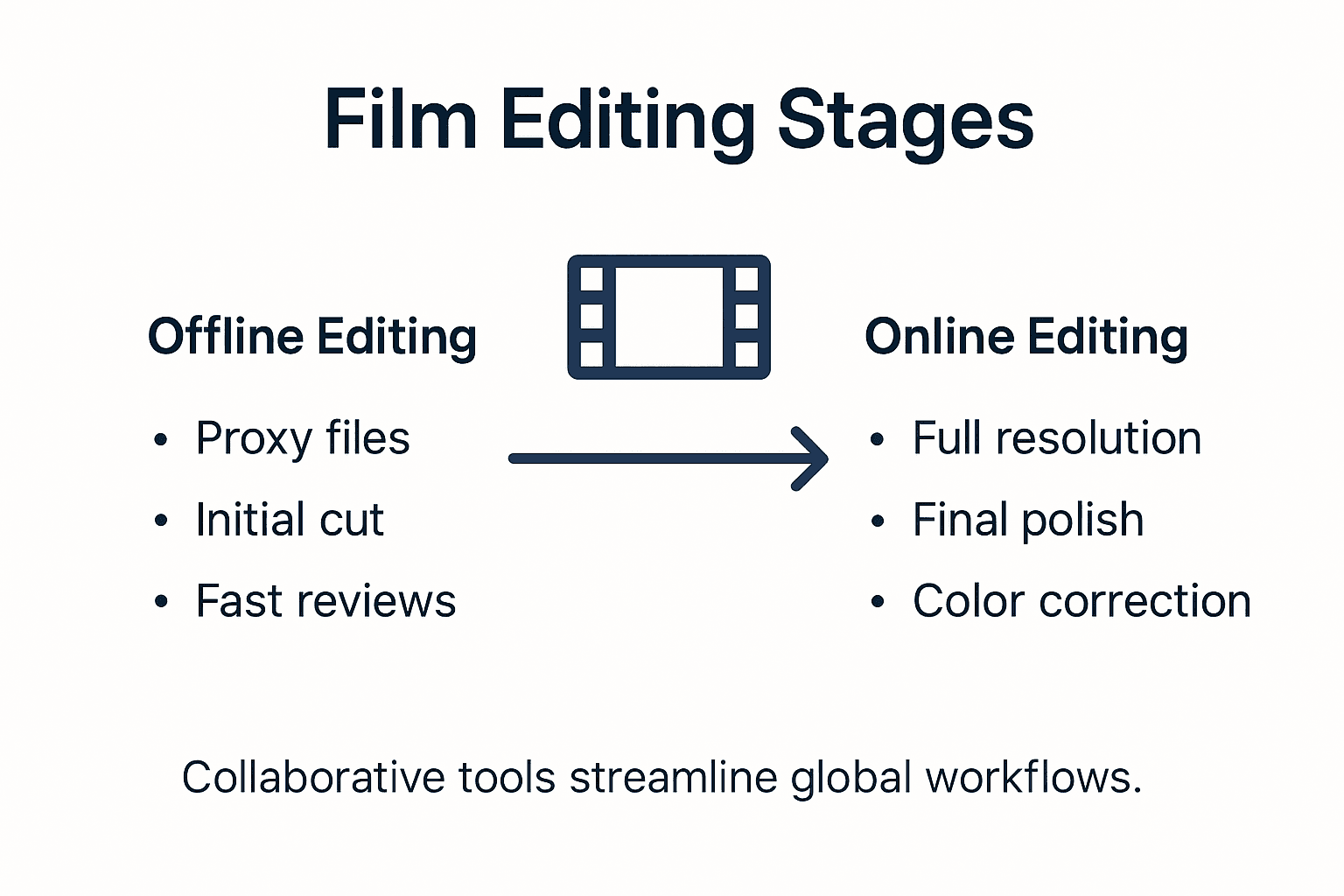
In offline editing, filmmakers work with lower-resolution proxy files, allowing rapid creative decision-making without consuming extensive computational resources. Editors can quickly assemble sequences, experiment with narrative structures, and make critical storytelling choices using lightweight media files. This stage focuses on crafting the fundamental narrative arc, selecting optimal shots, and establishing the initial emotional rhythm of the project. The primary advantage of offline editing lies in its flexibility and efficiency, enabling editors to make comprehensive creative choices without being constrained by high-resolution file management.
Professional editing paradigms transition to online editing as the final refinement stage, where high-resolution files are integrated, color grading is applied, and advanced visual effects are implemented. Online editing demands sophisticated hardware, specialized software, and collaborative technical expertise. This phase involves precise color correction, audio mixing, graphics integration, and preparing the final master version for distribution across various media platforms. Editors work with full-quality footage, ensuring every technical detail meets professional broadcasting and cinematic standards.
Here’s a summary of the key differences between offline and online film editing stages:
Aspect | Offline Editing | Online Editing |
Media Quality | Uses low-resolution proxy files | Uses full-resolution footage |
Primary Focus | Creative decision-making, structure | Final polish, technical enhancements |
Resource Requirements | Minimal hardware needed | Requires powerful hardware, software |
Typical Activities | Rough cuts, sequence experimentation | Color grading, effects, mastering |
Pro tip: Develop a consistent file naming and archiving protocol that seamlessly transitions between offline and online editing stages, reducing potential media management errors.
Workflow Integration for International Projects
International film productions demand sophisticated collaboration strategies that transcend traditional geographic and technological boundaries. Digital collaboration platforms have revolutionized how global creative teams synchronize their post-production workflows, enabling seamless communication and asset sharing across continents.
Successful international workflow integration requires establishing robust technological infrastructure and clear communication protocols. Filmmakers must implement comprehensive digital asset management systems that allow real-time file sharing, version tracking, and collaborative editing capabilities. This involves selecting cloud-based platforms with secure access controls, high-bandwidth file transfer capabilities, and compatibility across different editing software ecosystems. Teams must also develop standardized naming conventions, file organization strategies, and review processes that accommodate different time zones and cultural working styles.
Global post-production workflows increasingly rely on advanced project management tools that facilitate transparent communication and synchronized creative processes. These tools enable team members to track changes, provide feedback, and maintain consistent quality standards regardless of their physical location. Critical considerations include selecting universal file formats, establishing clear review milestones, implementing secure data transfer protocols, and creating comprehensive documentation that bridges potential cultural and technical communication gaps.
Pro tip: Invest in collaborative project management software that offers granular access controls, real-time communication features, and comprehensive version tracking to streamline international film editing workflows.
Common Pitfalls and How to Avoid Them
Film editing is a nuanced craft where subtle mistakes can significantly undermine the final production quality. Video editing errors represent critical challenges that demand proactive identification and strategic prevention, encompassing technical, creative, and organizational domains.
One fundamental pitfall involves poor media management and organizational practices. Editors frequently struggle with inconsistent file naming, inadequate backup protocols, and chaotic project folder structures. These challenges can lead to lost footage, version control complications, and potential project derailments. Developing systematic file organization strategies, implementing robust backup procedures, and creating clear naming conventions are essential preventative measures. Successful editors establish comprehensive digital asset management workflows that minimize human error and maximize efficiency across complex international productions.
Editorial narrative challenges frequently emerge from over-inclusion of unnecessary material and losing sight of the core emotional narrative. Editors must cultivate disciplined objectivity, consistently evaluating each sequence’s contribution to the storytelling objectives. This requires a delicate balance between creative vision and ruthless editorial judgment, understanding that powerful storytelling often involves strategic elimination of compelling but ultimately extraneous content. Critical self-assessment, peer review, and maintaining emotional distance from individual shots can help editors make more impactful narrative decisions.
This table highlights common film editing pitfalls and strategies to effectively avoid them:
Pitfall | Impact on Project | Preventative Strategy |
Disorganized file management | Lost footage, version confusion | Use clear naming and folder structure |
Ignoring backup protocols | Data loss, production delays | Schedule regular, multiple backups |
Excess material in timeline | Weak narrative, pacing issues | Objectively review and trim content |
Lack of review and feedback | Overlooked errors | Implement peer and self-assessments |
Pro tip: Create a dedicated review checklist that systematically evaluates each editing decision against your project’s core narrative and technical quality standards, ensuring consistent, high-quality outcomes.
Master the Stages of Film Editing with Expert Support in Switzerland
Navigating the complex stages of film editing—from the assembly cut to the final polish—poses unique challenges that can impact your global production’s success. Key pain points like maintaining organized media management, coordinating offline and online workflows, and ensuring seamless collaboration across time zones require local expertise and reliable resources. When your project demands precision, emotional storytelling, and efficient processing of footage as outlined in the “Stages of Film Editing – Impact on Global Productions” article, partnering with a proven local expert can make all the difference.
At Video Production Switzerland, we specialize in delivering comprehensive logistical solutions designed to support international filmmakers through every step. From managing permits and sourcing trusted crew to coordinating equipment and securing accommodations, we handle the complexities so you can focus on refining your creative vision. Experience over 20 years of local market knowledge guiding your production to seamless execution without the risk of delays or technical setbacks. Discover how our expertise complements your editorial process and ensures your editing stages unfold smoothly. Start your journey today with a free consultation to assess your needs and make your film editing workflow stress-free. Learn more at Video Production Switzerland and take control of your global production’s success.
Frequently Asked Questions
What are the main stages of film editing?
The main stages of film editing include the assembly cut, rough cut, fine cut, and final cut. Each phase progressively refines the narrative structure and visual storytelling.
How does offline editing differ from online editing?
Offline editing uses lower-resolution proxy files for initial creative decisions, while online editing involves high-resolution files for final adjustments and technical enhancements. Each stage plays a unique role in the post-production process.
What are common pitfalls in film editing and how can they be avoided?
Common pitfalls include disorganized file management, excessive material in the timeline, and a lack of feedback. To avoid these, implement clear naming conventions, maintain strong backup protocols, and consistently evaluate content against narrative goals.
How can international film productions ensure effective collaboration during editing?
International film productions can use digital collaboration platforms, establish clear communication protocols, and utilize comprehensive asset management systems to facilitate seamless creativity and file sharing across different teams.
Recommended
