
Pre Production, Production, and Post Production: Ensuring Seamless Shoots

Most American and international filmmakers are surprised to learn that over 80 percent of Swiss video productions hit unexpected delays due to incomplete permits and overlooked logistics. Every stage, from pre-production through post-production, demands strategic coordination and thorough compliance with Switzerland’s strict regulations. This guide breaks down the key phases and requirements, helping you secure permits, manage budgets, and avoid common pitfalls for smoother and higher-quality project delivery.
Table of Contents
Key Takeaways
Point | Details |
Pre-Production Planning is Crucial | Detailed planning, including scripting, scheduling, and budgeting, sets the foundation for successful video production. |
Effective Coordination During Production | Seamless collaboration among cast and crew during filming ensures high-quality footage and audio capture. |
Post-Production is Essential for Narrative Coherence | Transforming raw footage into a polished final product through editing and effects is critical for storytelling impact. |
Understanding Local Regulations in Switzerland is Key | Navigating permits and compliance is vital for avoiding costly delays and legal issues during international shoots. |
Defining Pre Production, Production, and Post Production
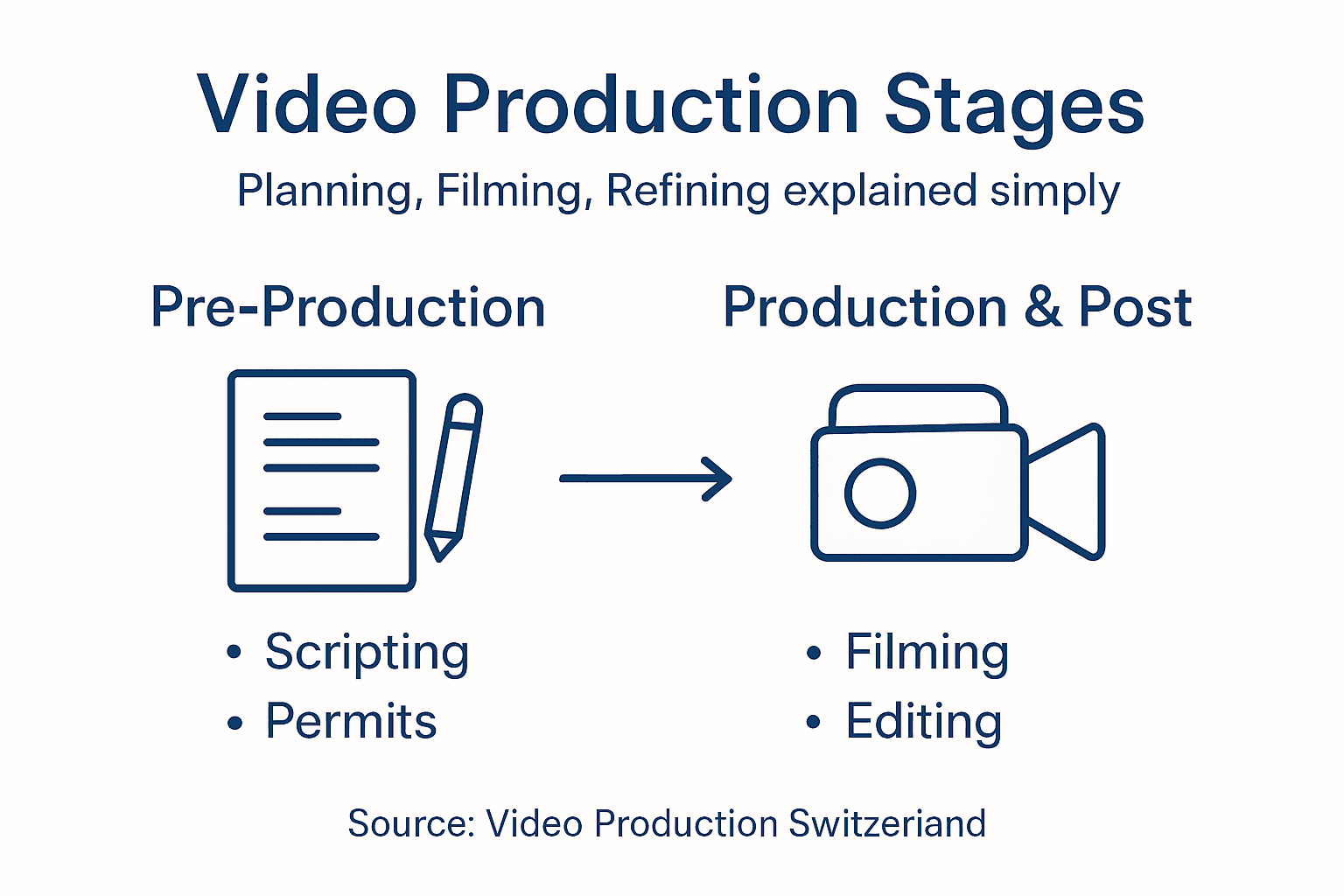
Video production represents a complex, multi-stage process that transforms creative concepts into compelling visual narratives. Film production stages involve three critical phases: pre-production, production, and post-production. Each stage plays a fundamental role in ensuring the final product meets creative and technical standards.
Pre-production serves as the strategic planning phase where all preliminary work occurs. During this stage, filmmakers develop scripts, create storyboards, scout locations, secure necessary permits, cast talent, design budgets, and establish comprehensive production schedules. This meticulous groundwork determines the project’s foundational structure and potential success. Without robust pre-production planning, video projects risk encountering significant logistical challenges and unexpected complications.
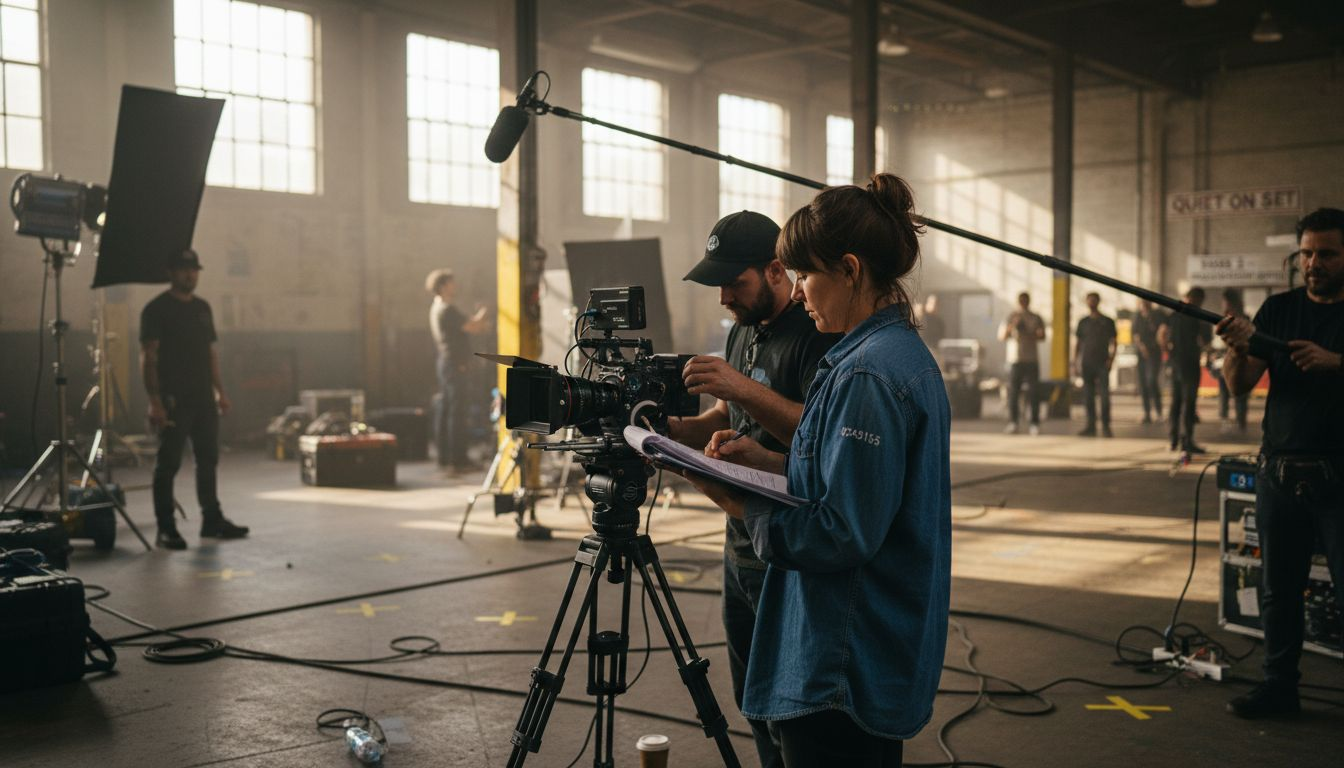
The production phase represents the actual filming period where cast and crew execute the carefully planned strategy. Camera operators capture footage, actors perform, lighting technicians manage visual environments, and sound engineers record audio. This stage transforms written scripts and storyboards into tangible visual content. Successful production requires seamless coordination, technical expertise, and adaptive problem-solving skills to manage real-time challenges.
Post-production emerges as the final creative refinement stage where raw footage is transformed into a polished narrative. Editors assemble selected scenes, sound designers enhance audio quality, visual effects artists integrate digital elements, and color graders establish consistent visual aesthetics. This phase represents where disparate elements converge into a cohesive storytelling experience, elevating initial footage into a professional, compelling final product.
Here’s a summary of the core activities and typical outcomes for each stage of video production:
Stage | Core Activities | Typical Outcomes |
Pre-production | Scripting, casting, scheduling, permits | Detailed plan, prepped team |
Production | Filming, directing, audio, lighting | Raw footage, audio recordings |
Post-production | Editing, effects, sound, color grading | Final polished video product |
Pro Tip: Always allocate approximately 30-40% of your total project budget and timeline to post-production to ensure high-quality final output and comprehensive creative refinement.
Key Phases and Distinct Roles Explained
Each stage of video production involves a unique set of professionals who contribute specialized skills to transform creative concepts into compelling visual narratives. Professional audiovisual production stages require intricate coordination and expertise across multiple disciplines.
In pre-production, key roles include producers, assistant directors, location managers, and casting directors. Producers manage overall project strategy, developing budgets and securing financial resources. Assistant directors create detailed shooting schedules and coordinate logistical requirements. Location managers scout and secure appropriate filming sites, while casting directors identify and select talent that best represents the project’s creative vision. This collaborative planning phase establishes the foundational framework for successful video production.
During production, the core team expands to include directors, cinematographers, camera operators, sound engineers, lighting technicians, and performers. The director provides creative leadership, guiding artistic vision and performance nuances. Cinematographers translate creative concepts into visual compositions, determining camera angles, movements, and aesthetic approaches. Camera operators execute technical capture, sound engineers manage audio recording quality, and lighting technicians craft visual environments that support storytelling objectives.
Post-production assembles a specialized team of editors, sound designers, visual effects artists, and colorists. Editors assemble narrative sequences, selecting and arranging footage to create cohesive storytelling. Sound designers enhance audio landscapes, integrating dialogue, ambient sounds, and musical elements. Visual effects artists introduce digital enhancements, while color graders establish consistent visual aesthetics that amplify emotional resonance and narrative impact.

Pro Tip: Build collaborative relationships with professionals across different production stages to ensure smooth communication and integrated creative execution.
Essential Logistics and Permit Requirements in Switzerland
Navigating the complex landscape of video production in Switzerland requires comprehensive understanding of local regulations, administrative procedures, and logistical challenges. Switzerland video production regulations demand meticulous planning and strategic approach to ensure legal compliance and operational smoothness.
Foreign production teams must secure multiple permits depending on their filming locations and project scope. Municipal authorities, cantonal governments, and federal agencies may require different documentation for shooting in public spaces, protected landscapes, urban environments, and sensitive areas. Key permissions typically include location permits, drone operation licenses, noise authorization, traffic management clearances, and potential environmental impact assessments. Each canton and municipality maintains unique regulatory frameworks, necessitating tailored application strategies and thorough local knowledge.
Specific logistical considerations for international video production teams involve comprehensive insurance requirements, work permits for foreign crew members, equipment import regulations, and adherence to strict Swiss labor laws. Production managers must prepare detailed documentation including proof of comprehensive liability insurance, individual crew member work credentials, specialized equipment carnets, and detailed shooting schedules. Professional local production support becomes crucial in navigating these complex administrative landscapes, helping international teams anticipate and mitigate potential regulatory challenges.
Additionally, Swiss production environments demand exceptional attention to environmental regulations, privacy laws, and cultural sensitivities. Filming in residential areas, historical sites, or natural reserves requires explicit permissions and often involves negotiating with local stakeholders. Drone operations have particularly stringent regulations, with specific flight restrictions, registration requirements, and operational guidelines that vary significantly across different Swiss regions.
For international teams shooting in Switzerland, consider these key regulatory and logistical requirements:
Requirement | Why It’s Important | Potential Consequence of Failure |
Location permitting | Legal access to sites | Fines, halted production |
Equipment import approval | Smooth customs process | Delays, equipment seizure |
Work permits for crew | Compliance with Swiss labor laws | Crew denied entry, penalties |
Environmental compliance | Protects sensitive environments | Project shutdown, legal action |
Insurance documentation | Covers liabilities and incidents | Financial loss, denied claims |
Pro Tip: Engage a local Swiss production coordinator at least 8-12 weeks before your planned shoot to streamline permit acquisition and ensure comprehensive regulatory compliance.
Common Risks and Cost Factors to Consider
Video production in Switzerland presents complex financial and operational challenges that require strategic risk management. Film production risk management demands comprehensive planning and proactive mitigation strategies to control potential budget and timeline disruptions.
Financial risks represent the most significant potential threat to international video production projects. Unexpected expenses can emerge from multiple sources, including currency exchange fluctuations, specialized equipment rental, location permit fees, transportation costs for international crews, and compliance with Swiss regulatory requirements. Budget overruns frequently occur due to underestimated logistical complexities, such as specialized alpine shooting locations, precise technical equipment needs, and stringent local production standards that differ substantially from other European markets.
Logistical risks encompass a wide range of potential disruptions that can dramatically impact project timelines and budgets. Weather conditions in Swiss mountain regions can unexpectedly halt production, specialized equipment might require complex import procedures, and crew transportation across varied terrain presents unique challenges. International teams must factor in additional contingency funds to address potential delays, including backup shooting schedules, alternative location options, and comprehensive insurance coverage that accounts for the unique Swiss production environment.
Creative risks also play a significant role in project management, involving potential script modifications, talent availability, and unexpected artistic challenges. Swiss production environments demand high-quality technical execution and creative precision, which can increase costs associated with talent recruitment, specialized technical crews, and potential reshoots. Professional production coordinators recommend allocating approximately 15-20% of the total budget for contingency planning to effectively manage these potential creative and logistical uncertainties.
Pro Tip: Develop a detailed risk matrix that allocates specific financial buffers for each potential production challenge, ensuring comprehensive financial preparedness.
Mistakes to Avoid for Seamless Execution
Successful video production in Switzerland demands strategic preparation and proactive error prevention. Professional production execution strategies highlight critical mistakes that can derail international shooting projects.
One fundamental error international production teams frequently make involves inadequate location and equipment preparation. Swiss production environments require meticulous technical planning, considering challenging alpine terrains, unpredictable weather conditions, and complex transportation logistics. Failing to conduct comprehensive location scouting, secure proper equipment insurance, and develop detailed backup shooting strategies can result in costly production delays. Teams must invest significant time understanding specific regional requirements, potential environmental limitations, and specialized technical needs unique to Swiss filming contexts.
Communication breakdowns represent another critical mistake that can severely compromise production efficiency. International crews must establish clear communication protocols that transcend language barriers, cultural differences, and technical complexities. Miscommunication regarding shooting schedules, equipment specifications, permit requirements, and creative expectations can lead to significant budget overruns and potential project failures. Successful productions prioritize multilingual coordination, comprehensive briefing sessions, and robust translation support to ensure every team member understands project objectives and individual responsibilities.
Underestimating Swiss regulatory compliance represents a potentially catastrophic oversight for international production teams. Numerous teams mistakenly approach Swiss production environments with frameworks developed in other European markets, neglecting the country’s unique administrative requirements. Specific mistakes include insufficient permit documentation, inadequate insurance coverage, incomplete work authorization for foreign crew members, and lack of comprehensive environmental impact assessments. Professional production managers must develop exhaustive compliance checklists, engage local production coordinators, and allocate significant resources toward understanding and meeting Swiss regulatory standards.
Pro Tip: Create a comprehensive production risk matrix that explicitly documents potential communication, logistical, and regulatory challenges specific to Swiss filming environments.
Ensure Seamless Video Production Across Every Stage in Switzerland
Navigating the complexities of pre-production, production, and post-production in Switzerland can feel overwhelming. From securing permits and managing logistics to coordinating local crews and dealing with Swiss regulatory demands, the process often challenges even experienced international teams. If you want to avoid costly delays or compliance issues and focus on creative excellence, expert local support is essential. Our team understands the critical importance of thorough planning, smooth execution, and high-quality finishing—so you never face surprises during your shoot.
Take control of your project with professional assistance from Video Production Switzerland. We handle everything from permit acquisition and location scouting to sourcing trusted equipment and coordinating expert crews across all production phases. With over 20 years of experience facilitating stress-free international shoots, we deliver reliability and peace of mind so you can achieve your creative vision on schedule. Start today with a free consultation and see how our solutions empower seamless film production in Switzerland.
Frequently Asked Questions
What are the main stages of video production?
The main stages of video production are pre-production, production, and post-production. Each stage plays a critical role in ensuring the final product meets creative and technical standards.
What activities are involved in the pre-production phase?
The pre-production phase includes scripting, casting, scheduling, and obtaining necessary permits. This stage involves extensive planning to establish a solid foundation for the project.
How do filmmakers ensure smooth communication during the production phase?
Filmmakers ensure smooth communication during production by establishing clear protocols that address language barriers, cultural differences, and technical complexities. Utilizing multilingual support and holding comprehensive briefing sessions can enhance coordination among the team.
What are common mistakes to avoid during video production?
Common mistakes to avoid include inadequate location and equipment preparation, miscommunication among crew members, and underestimating regulatory compliance. Proper planning and attention to detail can mitigate these risks.
Recommended
