
Pre Production and Post Production: Seamless Video Shoots


Overlooking critical steps during video production can lead to costly mistakes for even experienced teams. For international filmmakers and production managers coming to Switzerland, clarifying the pre-production and post-production phases is the first move toward a smooth, high-quality shoot. This guide explains each stage in detail, helping you build a solid foundation and refine your final product for seamless execution across Switzerland.
Table of Contents
Key Takeaways
Point | Details |
Pre-production is essential for success | Detailed planning eliminates complications during shooting and post-production stages. |
Post-production shapes the final product | Expert editing and audio design are crucial in transforming raw footage into a polished narrative. |
Legal and logistical planning is critical | Addressing legal requirements and logistics upfront can prevent significant issues during production. |
Risk management is vital | Proactively identifying financial, technical, and human resource risks can help maintain project integrity. |
Defining Pre Production and Post Production
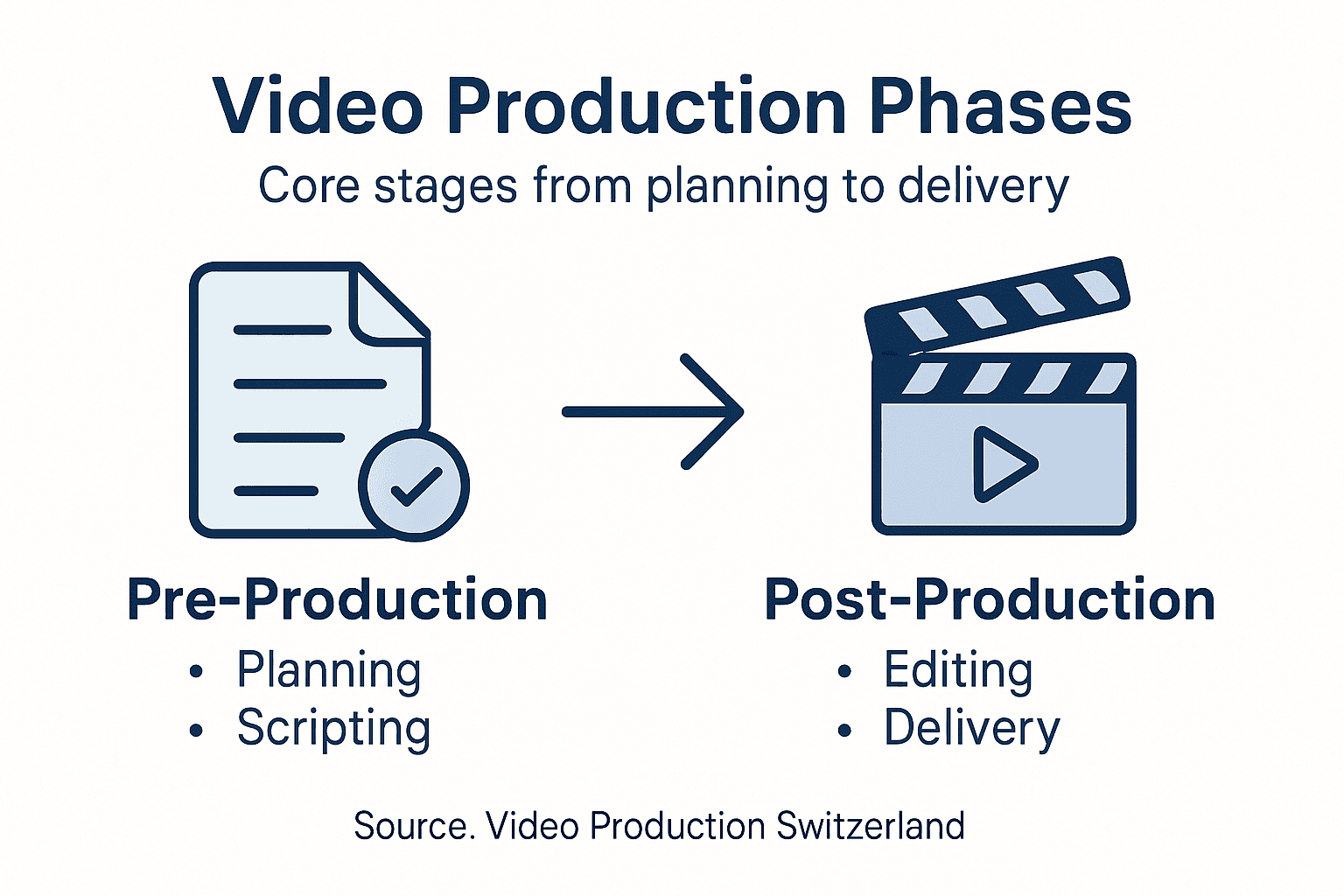
Video production is a complex, multi-stage process that requires strategic planning and precise execution. Understanding the pre-production and post-production phases is crucial for creating high-quality visual content that meets professional standards.
Pre-production represents the foundational planning stage where creative teams develop the conceptual roadmap for their video project. Video production planning involves several critical components:
Developing the initial concept and creative strategy
Creating detailed project budgets
Writing comprehensive scripts
Designing precise production timelines
Identifying and securing shooting locations
Casting talent and scheduling interviews
Preparing necessary equipment and technical resources
Post-production transforms raw footage into a polished, cohesive narrative. This phase involves sophisticated editing techniques that synthesize visual and audio elements into a compelling final product. Professional editing processes typically include:
Reviewing and selecting the best video clips
Arranging footage into a coherent storytelling sequence
Color grading and visual enhancement
Sound design and audio mixing
Adding special effects and graphics
Final video rendering and export
The success of any video project depends on meticulous preparation during pre-production and expert craftsmanship in post-production. By understanding these interconnected phases, filmmakers can streamline their workflow and produce exceptional visual content.
Here’s a comparison of pre-production and post-production roles in shaping the final video outcome:
Phase | Primary Focus | Key Stakeholders | Impact on Final Video |
Pre-production | Planning and resource allocation | Producers, directors | Defines structure and vision |
Post-production | Editing and creative enhancement | Editors, sound designers | Shapes pacing and visual style |
Pro tip: Invest significant time in pre-production planning to minimize complications during shooting and post-production stages.
This blog article is written by Pieter Nijssen, founder of Video Production Switzerland and an experienced video producer working across Switzerland. He delivers professional corporate and commercial video production for both international and local clients. Pieter is known for a reliable, stress-free production process and high production standards.
Key Stages in Pre Production Workflow
Successful video production hinges on meticulously executed pre-production stages that lay the groundwork for a smooth shooting experience. Comprehensive pre-production planning transforms raw creative concepts into actionable production strategies.
The pre-production workflow typically encompasses several critical stages:
Story Development
Identifying the core narrative structure
Defining beginning, middle, and end
Establishing visual storytelling elements
Logistical Preparation
Securing subject and location access
Preparing legal documentation
Drafting comprehensive release forms
Resource Management
Creating detailed project budgets
Scheduling production timelines
Assembling a skilled production crew
Script Development represents a foundational pre-production component. Detailed script breakdown involves carefully deconstructing narrative elements, mapping out scene requirements, and establishing precise production guidelines. This process helps filmmakers anticipate potential challenges and allocate resources effectively.

The pre-production phase also demands establishing a clear chain of command. By defining roles and responsibilities early, production teams can minimize miscommunications and streamline decision-making processes. Effective pre-production planning reduces on-set complications and ensures a more efficient, focused filming experience.
Pro tip: Create a comprehensive pre-production checklist that covers every aspect of your project to prevent last-minute surprises and logistical challenges.
This blog article is written by Pieter Nijssen, founder of Video Production Switzerland and an experienced video producer working across Switzerland. He delivers professional corporate and commercial video production for both international and local clients. Pieter is known for a reliable, stress-free production process and high production standards.
Critical Actions in Post Production Process
Post-production transforms raw footage into a polished, professional narrative through a series of sophisticated technical and creative processes. Nonlinear video editing techniques enable filmmakers to craft compelling visual stories with precision and artistic vision.
The post-production workflow involves several critical actions:
Footage Organization
Importing and categorizing raw video files
Creating efficient digital asset management systems
Reviewing and selecting best takes
Technical Enhancement
Color correction and grading
Audio cleaning and mixing
Visual effects and graphics integration
Narrative Refinement
Editing sequence construction
Pacing and rhythm adjustment
Ensuring narrative coherence
Audio Postproduction represents a crucial stage in creating professional video content. Sound design techniques involve sophisticated processes like Foley recording, dialogue replacement (ADR), and complex sound mixing that breathe life into visual narratives.
The final rendering stage is where all elements converge. Filmmakers must carefully select output formats compatible with intended distribution platforms, ensuring optimal quality and accessibility. This meticulous approach guarantees that the video meets professional standards and effectively communicates its intended message.
Pro tip: Always maintain multiple backup copies of your raw footage and project files throughout the post-production process to prevent potential data loss.
This blog article is written by Pieter Nijssen, founder of Video Production Switzerland and an experienced video producer working across Switzerland. He delivers professional corporate and commercial video production for both international and local clients. Pieter is known for a reliable, stress-free production process and high production standards.
Legal, Logistical, and Crew Requirements
Successful video production demands comprehensive preparation across legal, logistical, and personnel management dimensions. Critical pre-production planning ensures a smooth, compliant, and efficient shooting experience.
Legal considerations are fundamental to any production:
Model and Location Releases
Securing written permissions from subjects
Obtaining location usage agreements
Protecting intellectual property rights
Compliance Documentation
Verifying insurance coverage
Drafting contractual agreements
Ensuring regulatory adherence
Rights Management
Clearing music and visual content
Managing talent licensing
Protecting creative assets
Crew Management represents a critical operational component of successful video production. Effective role assignment involves strategically defining responsibilities, establishing clear communication protocols, and creating a hierarchical structure that enables seamless collaboration.
Logistical planning requires meticulous attention to environmental and technical details. Production teams must anticipate potential challenges by conducting thorough site visits, assessing acoustic conditions, verifying equipment compatibility, and developing comprehensive contingency strategies. This proactive approach minimizes unexpected disruptions and maintains production momentum.
Pro tip: Create a detailed production handbook that outlines every team member’s responsibilities, communication channels, and emergency protocols to ensure smooth coordination.
This blog article is written by Pieter Nijssen, founder of Video Production Switzerland and an experienced video producer working across Switzerland. He delivers professional corporate and commercial video production for both international and local clients. Pieter is known for a reliable, stress-free production process and high production standards.
Risks, Cost Factors, and Common Pitfalls
Video production involves complex financial and operational challenges that can derail even the most carefully planned projects. Production risk management requires strategic anticipation and proactive mitigation strategies to maintain project integrity.
Key risk categories in video production include:
Financial Risks
Unexpected equipment replacement costs
Overtime and extended shooting schedules
Unforeseen location expenses
Technical Risks
Equipment failure
Data loss and backup challenges
Incompatible file formats
Human Resource Risks
Talent scheduling conflicts
Communication breakdowns
Skill gaps in production team
Budget Overruns represent one of the most significant challenges in video production. Comprehensive pre-production planning helps mitigate financial risks by establishing clear budget boundaries, identifying potential cost escalation points, and developing robust contingency funds.
Successful risk management demands a holistic approach that integrates financial forecasting, technical preparedness, and human resource coordination. Production teams must develop flexible strategies that can adapt to unexpected challenges while maintaining project quality and fiscal responsibility. This requires ongoing communication, regular budget reviews, and a proactive problem-solving mindset.
Below is a summary of typical risks and how experienced teams address them in video production:
Risk Category | Common Issue | Mitigation Strategy |
Financial | Budget overrun | Track spending, contingency funds |
Technical | Data loss | Frequent backups, data checks |
Human Resource | Crew scheduling conflicts | Advance planning, clear roles |
Pro tip: Allocate at least 15-20% of your total budget as a contingency buffer to manage unexpected expenses and maintain financial flexibility.
This blog article is written by Pieter Nijssen, founder of Video Production Switzerland and an experienced video producer working across Switzerland. He delivers professional corporate and commercial video production for both international and local clients. Pieter is known for a reliable, stress-free production process and high production standards.
Ensure Your Video Production Journey Is Seamless From Start To Finish
Navigating the complexities of pre-production planning and post-production refinement can often overwhelm even seasoned filmmakers. Key challenges like coordinating reliable local crews, managing logistics, securing permits, and preventing costly delays are crucial points raised in the article. If you want to avoid budget overruns, technical setbacks, and last-minute surprises, partnering with a trusted local expert who understands the Swiss market is essential.
Take full control over your video production workflow by collaborating with the specialists at Video Production Switzerland. With over 20 years of experience, they provide comprehensive support including crew sourcing, equipment management, location scouting, and logistical coordination. This hands-on approach ensures you benefit from meticulous pre-production preparation and smooth post-production execution. Act now to secure your project’s success with guaranteed reliability and expert guidance. Start your stress-free production journey today through a free consultation and make your vision a reality.
Frequently Asked Questions
What are the main stages involved in the pre-production process for video shoots?
The pre-production process typically includes story development, logistical preparation, resource management, and script development, all aimed at laying the groundwork for a successful shoot.
How does post-production enhance the quality of video content?
Post-production enhances video quality through actions like footage organization, technical enhancements (color grading and audio mixing), and narrative refinement which involves editing and pacing adjustments, ensuring a polished final product.
What are common risks associated with video production, and how can they be mitigated?
Common risks include financial risks (like budget overruns), technical risks (such as equipment failure), and human resource risks (like scheduling conflicts). Mitigation strategies involve contingency planning, regular budget reviews, and effective communication.
Why is it important to have a clear chain of command during pre-production?
Establishing a clear chain of command during pre-production minimizes miscommunications, streamlines decision-making, and ultimately leads to a more efficient filming experience.
Recommended
