
Understanding Music Video Pre Production: A Comprehensive Guide


Music videos might look spontaneous and effortless on screen. Directors and artists often spend more time planning than filming, and pre production can reduce on-set problems by over 60 percent, according to Cornell University. While most viewers focus on the vibrant visuals and catchy songs, it turns out that the behind-the-scenes planning powers the success of every iconic music video you have ever watched.
Table of Contents
Quick Summary
Takeaway | Explanation |
Pre production is vital to success | It establishes a roadmap that dictates the music video’s creative and technical execution. |
Invest time in creative planning | Thoroughly conceptualizing the narrative and artistic style enhances clarity and cohesion in the final product. |
Effective budgeting is essential | Proper financial planning ensures the production stays on track without overspending or compromising quality. |
Storyboarding bridges imagination and execution | This process visually maps out the narrative, ensuring practical feasibility and alignment with artistic vision. |
Collaborative roles enhance production efficiency | Diverse professionals contribute expertise, streamlining workflows and enhancing the quality of the music video. |
What is Music Video Pre Production and Why is it Important?
Music video pre production represents the critical planning phase that occurs before actual video recording begins. This foundational stage determines the overall success and quality of the final music video by establishing a comprehensive roadmap for creative and technical execution.
Defining Pre Production in Music Video Creation
Pre production is a systematic approach to organizing all elements required for creating a compelling music video. According to Cornell University’s video production guide, this phase involves defining the video’s purpose, understanding the target audience, and meticulously planning every production detail.
The process typically encompasses several key components:
Creative Conceptualization: Developing the initial artistic vision and narrative framework
Logistical Planning: Coordinating locations, equipment, and necessary resources
Budget Management: Establishing financial parameters and allocating funds strategically
Strategic Importance of Comprehensive Pre Production
Effective pre production serves multiple critical functions in music video creation. By investing substantial time and effort into planning, artists and production teams can:
Minimize unexpected production challenges
Reduce overall production costs
Ensure a smoother, more efficient filming experience
Create a clearer artistic vision before significant financial investment
Professional musicians and directors recognize pre production as an investment that dramatically improves the final creative output. By meticulously mapping out every aspect of the video beforehand, teams can anticipate potential obstacles, streamline creative workflows, and maintain a cohesive vision from concept to completion.
Ultimately, music video pre production transforms abstract creative ideas into actionable, implementable plans. It bridges the gap between imagination and execution, providing a structured approach that empowers artists to bring their most ambitious visual storytelling concepts to life with precision and intentionality.
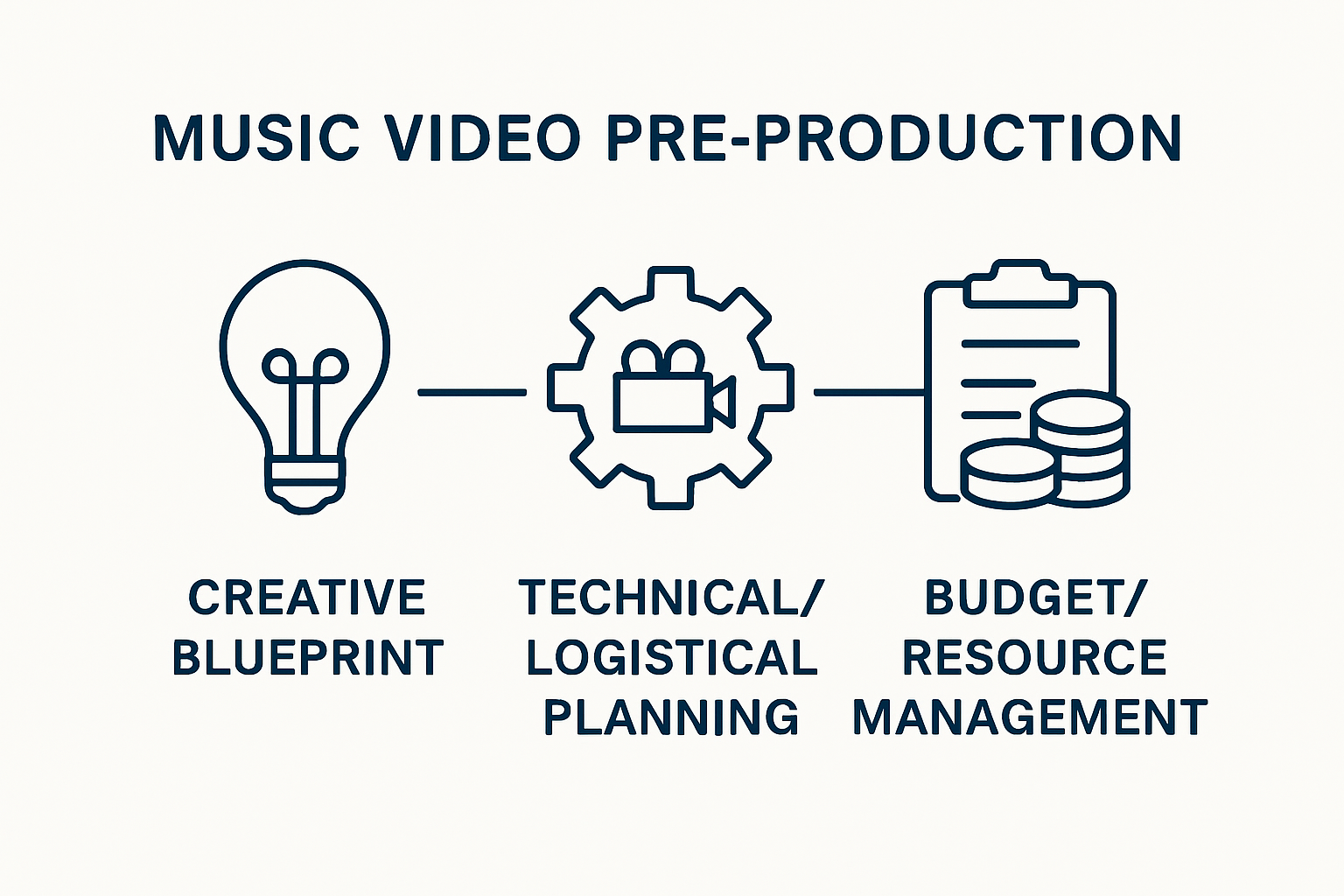
Core Components of Music Video Pre Production Explained
Music video pre production encompasses a complex series of strategic planning activities that transform initial creative concepts into executable visual narratives. Understanding the core components provides filmmakers and artists with a structured approach to developing compelling music videos.
Creative Blueprint Development
The creative blueprint serves as the foundational roadmap for the entire music video production process. According to research from Clean Energy Education, this phase involves comprehensive research, analysis, and synthesis of creative ideas.
Key elements of creative blueprint development include:
Conceptual Narrative Design: Crafting the visual story that complements the musical composition
Artistic Style Identification: Determining visual aesthetics, color palettes, and symbolic representations
Performance Choreography: Planning musician and performer movements and interactions
Technical and Logistical Planning
Technical pre production transforms creative concepts into practical implementation strategies. This stage requires meticulous attention to practical and technical details that will support the artistic vision.
Critical technical considerations involve:
Equipment selection and procurement
Location scouting and permissions
Crew recruitment and role assignments
Detailed shooting schedule development
Budget and Resource Management
Successful music video production demands strategic financial planning and resource allocation. Producers must balance creative ambitions with practical economic constraints, ensuring that the video can be executed efficiently without compromising artistic integrity.
Resource management involves:
Precise budget forecasting
Cost optimization strategies
Contingency planning for unexpected expenses
Negotiating rates with crew and rental services
Effective pre production transforms abstract creative visions into structured, actionable plans. By carefully addressing these core components, music video creators can develop a comprehensive framework that maximizes creative potential while maintaining practical feasibility.
Roles and Responsibilities in the Pre Production Process
The music video pre production process involves a collaborative network of professionals, each contributing specialized skills to transform creative concepts into visual narratives. Understanding these roles is crucial for ensuring smooth and effective project execution.
Creative Leadership Roles
Creative leadership drives the overall vision and strategic direction of the music video. According to Berklee College of Music, the director plays a pivotal role in supervising the production team and maintaining the artistic integrity of the project.
Key creative leadership responsibilities include:
Artistic Direction: Establishing the visual and emotional tone of the video
Concept Development: Translating musical themes into visual storytelling
Creative Decision Making: Guiding aesthetic and narrative choices
Technical and Operational Roles
Technical professionals ensure the practical implementation of creative concepts. These roles focus on transforming artistic vision into executable production strategies.
Critical technical roles encompass:
Production coordinator managing documentation and workflows
Location scout identifying and securing appropriate shooting environments
Technical director overseeing equipment and technical requirements
Storyboard artist visualizing scene compositions
Collaborative Support Roles
Support roles are essential in maintaining project momentum and addressing logistical challenges. These professionals provide critical infrastructure that enables creative and technical teams to focus on their core responsibilities.
Support function responsibilities include:
Budget management and financial tracking
Talent coordination and scheduling
Permit acquisition and legal compliance
Equipment and resource procurement
Successful music video pre production depends on seamless collaboration between these diverse roles. Each professional contributes specialized expertise, creating a comprehensive ecosystem that transforms creative concepts into compelling visual experiences.
To clarify the distinct responsibilities involved in the pre production process, here is a table summarizing the core roles and their primary focus areas.
Role Category | Example Roles | Primary Focus |
Creative Leadership | Director, Artistic Director | Establishing vision, concept development, making creative decisions |
Technical & Operational | Production Coordinator, | Managing logistics, equipment, location scouting, scheduling, technical needs |
Location Scout, Tech Dir. | ||
Collaborative Support | Budget Manager, Talent | Addressing logistics, finances, legal compliance, resource and talent support |
Coordinator |
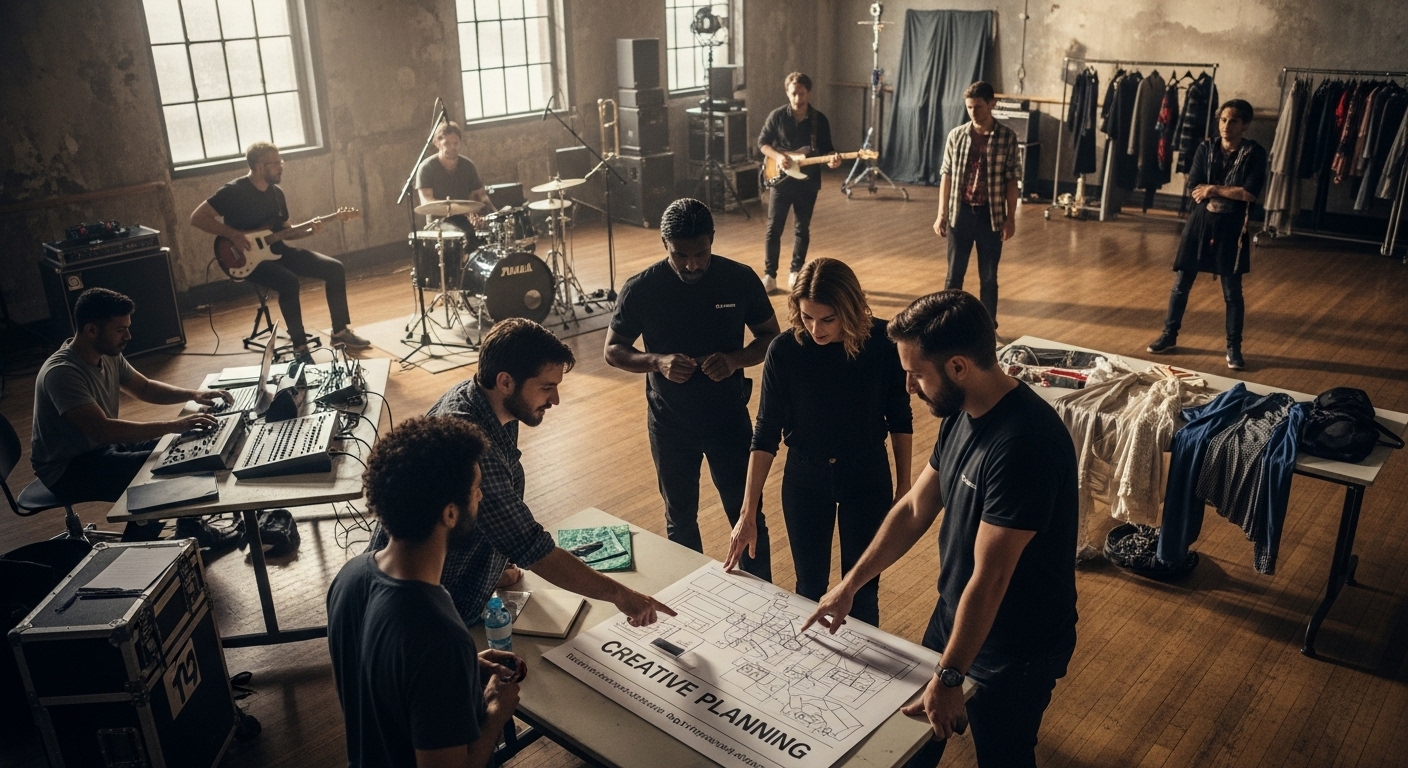
Creative Planning: Storyboarding and Concept Development
Storyboarding represents a critical visual planning technique that transforms abstract musical and narrative concepts into tangible, strategic blueprints for music video production. This methodical approach bridges creative imagination with practical execution, providing a comprehensive framework for translating artistic vision into actionable visual storytelling.
Conceptual Visualization Techniques
Concept development in music video pre production involves translating musical themes, emotional landscapes, and narrative elements into visual representations. According to Georgetown University’s media production research, storyboarding serves as a crucial organizational tool for mapping creative ideas.
Key conceptual visualization strategies include:
Narrative Mapping: Identifying core story arcs and emotional progression
Symbolic Representation: Developing visual metaphors that complement musical themes
Emotional Tone Alignment: Ensuring visual aesthetics match musical composition
Storyboard Construction Methods
Storyboarding transforms conceptual ideas into structured visual planning, providing a detailed sequence of shots that outlines the entire music video narrative. This process involves creating sequential illustrations or digital renderings that represent each significant moment in the video.
Storyboard development typically encompasses:
Rough sketch compositions of primary scenes
Annotated camera angle and movement descriptions
Timing and pacing indicators for choreography and performance
Visual continuity and transition planning
Technical and Creative Alignment
Successful storyboarding requires harmonizing creative vision with technical feasibility. This intricate process involves collaboration between directors, cinematographers, and performers to ensure that conceptual ideas can be practically executed within budget and logistical constraints.
Key alignment considerations include:
Matching creative concepts with production capabilities
Identifying potential technical challenges
Estimating resource requirements
Establishing clear communication channels between creative teams
Through meticulous storyboarding and concept development, music video creators transform ephemeral artistic visions into structured, executable visual narratives that captivate audiences and amplify musical expressions.
Budgeting and Scheduling in Music Video Pre Production
Budgeting and scheduling form the financial and logistical backbone of music video production, transforming creative vision into economically viable and time-efficient projects. These critical processes require meticulous planning, strategic resource allocation, and comprehensive understanding of production complexities.
Financial Planning and Resource Allocation
Financial planning in music video pre production involves creating a detailed economic framework that balances artistic ambitions with fiscal constraints. Producers must carefully evaluate and allocate resources across multiple production dimensions to maximize creative potential while maintaining financial sustainability.
Key financial planning considerations include:
Budget Segmentation: Allocating funds across critical production categories
Cost Forecasting: Anticipating potential expenses and financial challenges
Resource Optimization: Identifying opportunities for cost-effective solutions
Comprehensive Production Scheduling
Production scheduling transforms creative concepts into structured timelines, ensuring efficient use of resources, talent, and technical capabilities. This process requires intricate coordination of multiple production elements to create a cohesive and achievable project roadmap.
Essential scheduling components involve:
Detailed timeline development
Talent and crew availability mapping
Location accessibility and reservation
Equipment procurement and technical preparation windows
Risk Management and Contingency Planning
Effective budgeting and scheduling must incorporate robust risk management strategies that anticipate potential disruptions and create flexible response mechanisms. This approach allows production teams to maintain project momentum even when unexpected challenges emerge.
Risk mitigation strategies include:
Establishing financial buffer zones
Creating alternative production scenarios
Developing rapid response protocols
Implementing flexible resource reallocation mechanisms
Mastering budgeting and scheduling requires a delicate balance between creative vision, financial pragmatism, and operational flexibility. By developing comprehensive, adaptable production frameworks, music video creators can transform artistic concepts into compelling visual narratives while maintaining economic and logistical integrity.
To give a clear overview of the essential processes in budgeting and scheduling, the following table outlines their key considerations and strategic objectives in music video pre production.
Process | Key Considerations | Strategic Objectives |
Financial Planning | Budget segmentation, cost forecasting, | Maintain financial stability, optimize resources |
resource optimization | ||
Production Scheduling | Timeline creation, talent and crew availability, | Ensure efficient resource use, align shooting windows |
location and equipment coordination | with creative needs | |
Risk Management & Contingency | Financial buffers, alternative scenarios, | Minimize disruptions, adapt to unforeseen changes |
Planning | rapid response protocols |
Turn Flawless Music Video Pre Production Into Reality in Switzerland
You have just seen how challenging it can be to manage every detail of music video pre production. From creative blueprinting to budgeting and location logistics, every step is vital but filled with risk. If you are worried about hidden costs, unreliable local crew, or securing complex shooting permits during your shoot in Switzerland, you are not alone. Many filmmakers and artists struggle to turn their vision into a finished piece because logistical barriers get in the way.
Stop letting obstacles slow you down. Video Production Switzerland offers a trustworthy, full-service solution that covers all your music video needs in Switzerland. Book your free consultation today and get matched with expert local support for your next project. Discover how you can move from pre production planning to a smooth filming day by connecting with our experienced team here. The sooner you plan, the faster and more confidently you can bring your creative concept to life.
Frequently Asked Questions
What is music video pre production?
Music video pre production is the planning phase that occurs before video recording. It involves developing the creative concept, logistical planning, and budgeting to ensure a successful and high-quality final product.
Why is pre production important for music videos?
Pre production is crucial as it helps minimize unexpected production challenges, reduce costs, ensure smooth filming, and maintain a clear artistic vision, ultimately leading to a more professional final output.
What are the core components of music video pre production?
The core components include creative blueprint development, technical and logistical planning, and budget and resource management, all of which collectively transform creative ideas into executable plans.
What roles are involved in the music video pre production process?
Key roles include creative leadership (like the director), technical and operational roles (including the production coordinator and location scout), and collaborative support roles that handle budget management, talent coordination, and legal compliance.
Recommended
