
20+ Years Helping Filmmakers Shoot Interlaken Outdoor Activities

Shooting outdoor and adventure scenes in Interlaken means hiring experienced local production support before you touch a permit application. Swiss mountain locations involve overlapping approvals from municipalities, private lift operators, and aviation authorities for drones, and getting the sequence wrong can stall a shoot for weeks. A local fixer who already knows the paperwork, the resort contacts, and the terrain saves you from the three biggest risks: permit delays, drone restrictions, and stakeholder gaps that municipal approval alone won’t cover.
TL;DR:
Permit applications for public land and private property require separate filings, with municipal permits seldom covering private resorts or lift stations.
Drone approvals demand early submission of pilot certification, insurance, and airspace requests, especially when flying over restricted alpine or lake zones.
Coordinating with multiple stakeholders—including lift operators, resorts, mountain guides, and water authorities—must happen well in advance to avoid delays and schedule overruns.
Outdoor activity schedules, such as canyoning, paragliding, or skiing, often require multi-day planning due to unpredictable weather and activity-specific setup times.
Engaging a local production partner simplifies permit, logistics, and stakeholder negotiations, reducing risk of costly shoot delays caused by overlooked approvals or access issues.
Table of Contents
What Goes Into Your Interlaken Production Scope?
Budgeting an outdoor shoot around Interlaken means accounting for more moving parts than a studio or urban location ever requires. Mountain terrain, water access, and shared public infrastructure each carry their own permission chain, and missing one link can shut down a shoot day entirely.
Your production scope should account for:
Permits from both the municipality and any private landowner or resort operator whose property you’re using
Drone approvals, filed separately from location permits and subject to airspace restrictions
Local crew, including mountain guides, certified drone pilots, and safety technicians familiar with alpine terrain
Equipment rental for camera packages, power, and specialized rigging suited to elevation and weather
Production insurance covering cast, crew, and third-party liability on mountain or water sites
Transport and accommodation for crews working across multiple elevations or lakeside locations
Most of these items need lead time measured in weeks, not days, and your producer carries responsibility for on-site safety and emergency coordination regardless of how many local vendors are involved. Building this scope early, ideally during your first production support planning conversation, prevents the kind of last-minute scrambling that turns a two-day shoot into a five-day fire drill.
How Do Permits and Drone Rules Work for Outdoor Filming?
Switzerland splits outdoor filming authorization into two separate tracks, and conflating them is one of the most common mistakes international productions make. Municipal permits cover public land use, street closures, and general filming activity in a given commune. Private-owner consent is a completely separate matter, required any time your shoot touches land, buildings, or infrastructure owned by a resort, lift company, or private landholder. A city permit does not extend to a cable car station or a hotel’s private trailhead.
Drone operations follow their own regulatory path. Switzerland has applied EU-aligned drone rules since 2023, which means registration, certified pilot credentials, and, in many alpine and lake zones, a separate restricted-airspace approval on top of your standard flight registration.
Filing timeline at a glance: Submit municipal permit applications several weeks before your shoot date, following the lead time Film Zurich recommends for public-space filming. Start drone authorization even earlier if your flight path crosses restricted alpine or lake airspace.
Practical steps that keep this on schedule:
Confirm which land parcels along your shoot path are municipal versus private before filing anything
Submit your drone pilot’s certification and insurance documentation alongside the airspace request
Build in review time for restricted zones near mountain railways or protected lake areas
Our guide to drone laws in Switzerland breaks down certification requirements pilot by pilot if your crew is flying in from outside the country.
Who Handles Crew, Gear, and Transport Logistics?
Operational logistics in Interlaken involve more specialized roles than a typical location shoot, and confirming each one early avoids gaps that surface only once you’re on the mountain.
Line producer who owns the overall schedule and budget across every location
Local fixer who manages permit relationships and vendor coordination on the ground
Mountain guides certified for the specific terrain and elevation you’re shooting on
Certified drone pilots with documentation matching Swiss registration requirements
Grips and safety technicians experienced with alpine rigging and cold-weather equipment handling
Equipment logistics deserve their own line item. Camera packages, backup power sources, and communications gear all need availability confirmed against your shoot dates, and remote locations often require boats or winch systems if you’re working near water or steep terrain. Ask your equipment supplier directly about backup units and escalation plans; a single failed battery pack at 2,000 meters costs far more time to fix than at sea level.
Transport and accommodation logistics follow the terrain. Mountain railways have their own scheduling windows, some alpine roads require 4x4 access, and any boat use on the lakes needs its own permit layer separate from your filming authorization. Specialized local production services already maintain location files and second-unit resources built for exactly this kind of terrain complexity.
Pro Tip: Book your mountain railway access and any boat transport at the same time you file your municipal permit. Railway scheduling windows fill up during peak season, and waiting until permits clear can cost you your preferred shoot date.
How Do You Coordinate With Mountain Operators and Resorts?
A municipal permit tells you almost nothing about whether a lift company will let you film on their gondola or whether a resort will grant station access. These are separate relationships, and treating them as an afterthought is the single most common way productions lose a shoot day they thought was locked in.
The stakeholders to contact directly, beyond your municipal permit office, include:
Lift and cable car operators, for any shot involving stations, cabins, or lift infrastructure
Resort and hotel management, for private trailheads, viewpoints, or property access
Mountain safety teams, particularly for anything involving glacier terrain or avalanche-zone proximity
A workable process looks like this: make contact with each stakeholder during your location recce, well before permits are filed. Follow up with a written access agreement specifying dates, crew size, and equipment. Schedule a safety briefing with the operator’s own team before principal photography, and name a single on-site liaison who can make real-time decisions if plans shift.
Watch for site-specific complications during scouting: a lift that closes for scheduled maintenance during your shoot window, a station that requires advance notice for camera access, or a glacier route that needs its own safety clearance separate from general mountain guide certification. Our Swiss Alps filming guide covers scouting logistics for exactly these scenarios in more depth.
What Timeline and Budget Should You Plan For?
Interlaken shoots need longer lead times than most international teams initially budget, largely because permits, drone clearance, and stakeholder agreements run on different clocks that don’t always overlap neatly.
Plan for these windows:
Scouting and permits: 4 to 8 weeks total, depending on how many locations and landowners are involved
Drone authorization: file early and allow extra review time if any restricted alpine or lake zones sit along your flight path
Stakeholder agreements: 2 to 6 weeks, faster for a single resort contact, slower when multiple operators need to sign off
On the budget side, the drivers that swing costs most are seasonal rates, mountain-operator access fees, specialized gear like winches, boats, or helicopters, production insurance, and overtime when weather pushes your schedule.
What Should Your Local Partner Checklist Include?
A one-page checklist keeps preproduction from slipping through the cracks, and it doubles as a fast way to vet whether a local partner actually knows Interlaken terrain.
Your checklist should confirm: permits (municipal and private), drone authorizations, insurance certificates, local crew CVs, a full equipment list, a transport plan, an accommodation block, a written safety plan, an emergency contact sheet, and a sample day-by-day schedule.
When you’re vetting a potential local partner, ask these ten questions directly:
How many mountain or alpine shoots have you supported in the past two years?
Who handles permit filing, and what’s your typical timeline?
Are your drone pilots certified under current Swiss requirements?
What insurance coverage do you carry, and can you provide certificates on request?
What’s your backup plan if a permit is delayed or denied?
Can you provide references from past international productions?
Who is our named on-site liaison for stakeholder coordination?
How do you handle weather-driven rescheduling?
What equipment do you keep in-house versus rent locally?
Can you share a sample permit or case summary from a comparable shoot?
Ask for proof on that first call: an actual permit example, insurance documentation, and a short case summary rather than a general pitch.
Client Track Record: 20+ Years Supporting Swiss Shoots
A local Swiss video production partner can offer extensive experience handling logistics for international crews across Switzerland, including permit negotiation, crew and equipment sourcing, location scouting, and transport and accommodation management.
A typical service flow for video production support includes an initial consultation to understand your shoot’s scope and location needs, a needs assessment that maps out permits, crew, and equipment requirements, and full execution from permit filing through wrap, with a dedicated point of contact throughout. This approach aims to help productions run on time without permit surprises or vendor gaps.
What Outdoor Activities Define Interlaken’s Filming Landscape?
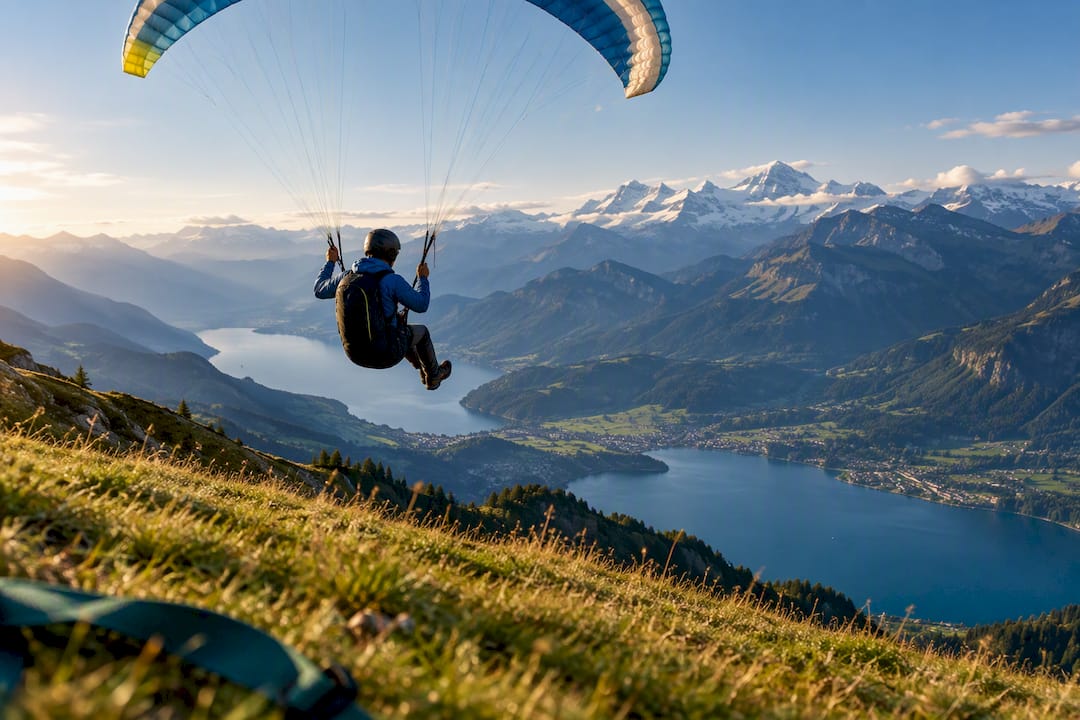
Interlaken sits between two lakes, Thun and Brienz, with the Jungfrau region rising directly behind it, which gives production teams an unusually compact range of terrain types within a short drive. Hiking trails through the Lauterbrunnen and Grindelwald valleys offer waterfall backdrops and dramatic cliff faces that work well for both wide establishing shots and closer character work. Paragliding launch sites above Interlaken itself provide aerial vantage points that production teams often use for practical aerial footage without drone restrictions, since the paragliders themselves are the subject.
Canyoning locations along the region’s gorges deliver tight, dramatic framing for action sequences, though they demand technical safety support beyond a standard crew. Winter productions gain access to ski terrain across the Jungfrau ski region, with groomed runs and off-piste backcountry both available depending on your permit and season.
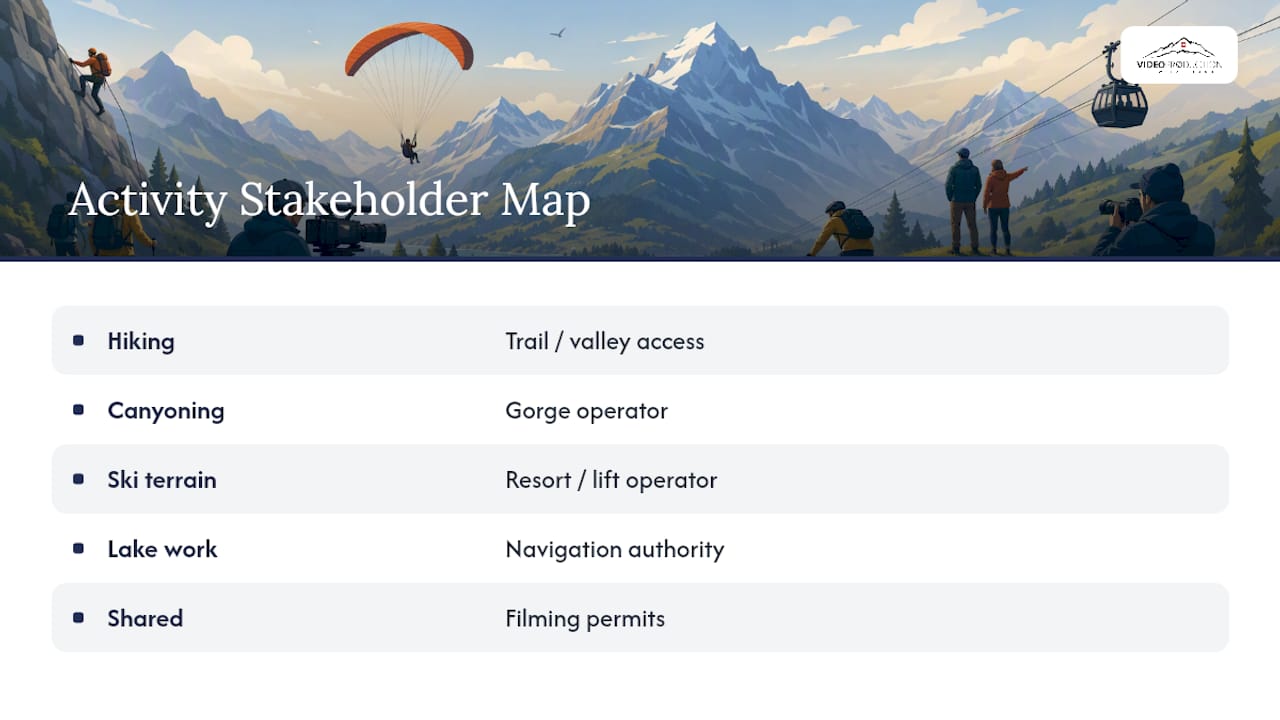
Each of these activity types brings its own stakeholder chain. A canyoning sequence needs the gorge operator’s sign-off in addition to any municipal permit, and a ski-terrain shoot needs coordination with the resort beyond a lift ticket. Water-based work on either lake adds navigation authority coordination on top of standard filming permits, particularly if boats or lakeside docks are part of the shot. Knowing which activity type you’re building a sequence around early in preproduction shapes which stakeholders you need to contact first.
What Do Outdoor Location Costs Look Like?
Cost structures for outdoor shoots in Interlaken vary widely by terrain, season, and how many separate operators need to sign off on your location. Alpine locations requiring cable car or gondola access typically carry a facility fee from the lift operator on top of any municipal permit cost, and that fee scales with how many cars or how much operating time your crew occupies.
Water locations on Lake Thun or Lake Brienz add navigation authority costs when boats are involved, plus potential dock or marina fees depending on where you’re launching from. Specialized gear drives cost more than location fees do in most budgets: a winch system, a support boat, or helicopter time for aerial establishing shots each carry day rates that dwarf a standard permit fee.
Insurance is a fixed cost regardless of activity type, though alpine and water locations typically require higher liability coverage than a standard urban permit. Overtime and weather contingency round out the picture. A single weather-driven reschedule on a mountain shoot can add a full day’s crew, transport, and accommodation cost, which is exactly why the contingency reserve discussed earlier matters more here than on a controlled set.
Rather than quote a flat day rate, most experienced local partners build a cost estimate around your specific location mix, once they know which peaks, lakes, or trails your script actually calls for. That’s a conversation worth having during your production cost planning phase, before you lock a shoot date.
When Is the Best Season for Each Activity?
Season shapes both access and visual character across every outdoor activity type in Interlaken, and getting this wrong can mean shooting green summer meadows when your script calls for snow.
Summer, roughly June through September, opens up the widest range of hiking and paragliding locations, with the longest daylight windows and the most stable weather for aerial work. Canyoning season runs closely alongside this window, since water flow and temperature both need to sit within a safe range for crew and talent.
Winter productions targeting ski terrain need to plan around the Jungfrau region’s operating season, typically late November through April, though exact dates shift year to year based on snowfall. Shoulder seasons, spring and early fall, offer a genuine advantage that many productions overlook: reduced tourist traffic means easier stakeholder negotiations and lower accommodation costs, even though weather becomes less predictable and some higher-altitude access points may still be limited.
Weather considerations compound at elevation. A clear morning at lake level can turn to fog or snow by the time your crew reaches a mountain location, so your schedule needs built-in flexibility regardless of which season you choose. This is exactly where a local production partner earns their keep, reading conditions that an international schedule built months in advance simply can’t anticipate.
How Do You Vet Outdoor Activity Providers for Safety?
Choosing the right operator partner for canyoning, mountain guiding, or paragliding support matters as much for your production’s safety record as for the footage itself. Look first for guides and operators certified under recognized Swiss mountain guide or canyoning association standards, since these certifications require ongoing training and adherence to established safety protocols.
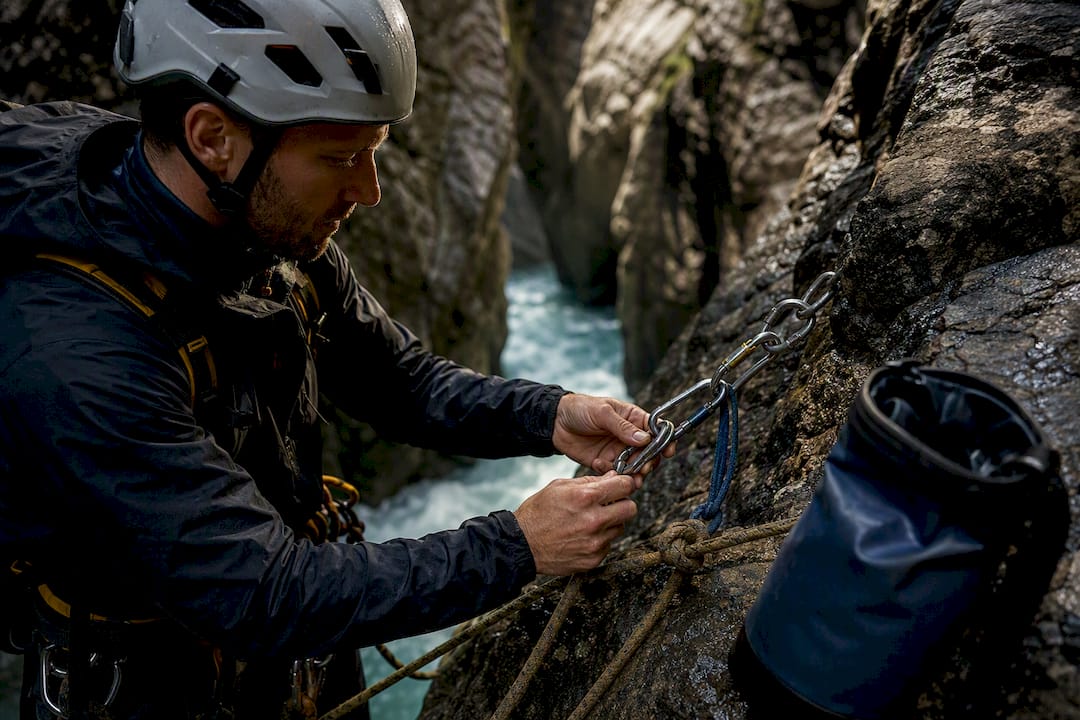
Ask any potential provider directly about their safety record and incident history, request proof of current certification, and confirm their insurance coverage extends to film production activity specifically, not just standard recreational guiding. A provider used to guiding tourists may not have experience managing a crew, extra equipment, and the slower pace that film production requires on technical terrain.
Cross-reference provider credentials with your production insurance broker before finalizing any agreement, since some policies require documented proof of guide certification to maintain coverage on technical terrain. Regional film commissions can also help here. Groups like the Film Commission Lucerne & Central Switzerland offer free facilitation, including help identifying vetted local operators and negotiating conditions that work for both the production and the site.
Reference checks matter more for outdoor activity providers than almost any other vendor category on your shoot. A single bad match between operator experience and your specific script needs, glacier travel versus groomed trail hiking, for instance, can compromise both safety and schedule.
How Long Does Each Outdoor Activity Actually Take?
Scheduling around outdoor activities requires accounting for preparation and travel time that dwarfs the actual shooting window in many cases. A hiking sequence might only need two hours of actual filming, but reaching a trailhead, briefing talent and crew on terrain hazards, and repositioning for coverage can extend the full day to six or eight hours.
Paragliding sequences depend heavily on wind and weather conditions at launch, so productions typically need to hold two to three days available even if the actual flight and camera work only requires a single clear-weather morning. Canyoning work runs similarly unpredictable: technical safety briefings and equipment setup can take a full morning before any actual filming begins, and the activity itself, once underway, moves at the pace safety protocols dictate rather than a shot list.
Ski terrain sequences need lift access windows factored into scheduling, since early morning slots before general lift operation often work best for clean shots without other skiers in frame. That kind of arrangement needs advance coordination with the resort, not something you can request the morning of.
Building realistic time estimates into your schedule from day one, rather than assuming outdoor activities compress into standard shot-list math, is one of the clearest signs a production has genuine local terrain experience versus one working from a generic schedule template.
How Should You Book Activities and Handle Cancellations?
Booking outdoor activity access in Interlaken works best when secured well ahead of your shoot dates, particularly for anything requiring a specific operator, guide, or lift company sign-off. Popular guides and canyoning operators often carry limited availability during peak summer months, and waiting until your permits clear before reaching out can mean your preferred provider is already booked elsewhere.
Cancellation policies vary significantly by provider type. Weather-dependent activities like paragliding typically offer more flexible rescheduling terms than fixed-infrastructure bookings like lift access, since operators understand conditions are outside anyone’s control. Always get cancellation and rescheduling terms in writing before finalizing any booking, particularly around how much notice is required and whether deposits are refundable versus credited toward a future date.
Build a buffer day into your schedule wherever weather-dependent activities are involved. A single unbookable morning shouldn’t cascade into losing your entire location window if your contract terms and schedule both account for the possibility upfront. This is precisely the kind of detail a Swiss filming regulations checklist helps producers track alongside their permit paperwork, since booking terms and permit terms often need to align on the same contingency dates.
Two Mistakes That Cost Productions the Most Time
The two mistakes I see most often on Interlaken shoots both come from underestimating how separate Swiss approval chains really are. The first is filing drone authorization too late, treating it as a formality that follows permit approval instead of running it in parallel from day one of the recce. Fix: submit certified pilot documentation and insurance alongside your airspace request during scouting, not after.
The second mistake is assuming a municipal permit covers private mountain infrastructure. It never does. Fix: secure written operator agreements and name an on-site liaison before you lock a shoot date. Talk to a local fixer early. It’s cheaper than a delayed shoot day.
— Pieter
How Videoproductionswitzerland Removes the Permit Guesswork
Videoproductionswitzerland is the alternative to piecing together permits, drone approvals, and mountain-operator agreements yourself through unfamiliar local contacts. Instead of chasing separate offices and hoping your drone pilot’s paperwork clears in time, you get one point of contact handling permit filing, drone authorization support, local crew sourcing, equipment logistics, location scouting, and transport and accommodation coordination together.
[
The path forward is straightforward: a free consultation to walk through your shoot’s scope, a needs assessment mapping out exactly which permits and stakeholders apply to your specific locations, then a quote and full execution handled locally while you focus on the creative work. Services scale from lighter support through Video Fixer Essentials up to full end-to-end management under Full Video Service, depending on how much of your production you want handled locally.
Check current production support packages and costs, or start with a consultation through Videoproductionswitzerland to scope your Interlaken shoot before you file a single permit.
Sources
FAQ
How Far in Advance Should We File Permits for Interlaken?
Aim to submit municipal permit applications several weeks before your shoot date, following the timeline Film Zurich recommends for public-space filming. Start drone authorization even earlier if restricted alpine or lake airspace is involved.
Do Drone Rules Differ From Standard Filming Permits?
Yes. Drone operations follow EU-aligned rules Switzerland adopted in 2023, requiring registration, certified pilots, and often a separate restricted-zone approval on top of your standard location permit.
Does a Municipal Permit Cover Filming on Mountain Lifts or Resort Property?
No. Municipal permits cover public land only. Any lift station, cable car, or resort property requires a separate written agreement directly with that operator.
What Does Videoproductionswitzerland Charge for Production Support?
Pricing depends on the scope of support your shoot needs, from permit handling alone up to full end-to-end management. Current package details are listed on the production costs page.
Can a Film Commission Help Reduce Permit Costs or Delays?
Regional film commissions often provide free facilitation, including location scouting and permit negotiation, which can speed up approvals and sometimes secure more favorable local conditions.
Recommended
