
How to Manage a Production Factory Efficiently and Effectively


Running a production factory means every second counts and every inefficiency costs real money. You might expect most factories to have a smooth system by now but nearly 30 percent of manufacturing time is wasted on inefficient processes according to industry studies. That giant gap is exactly where the smartest factories gain their edge by focusing on strategies that even established leaders often overlook.
Table of Contents
Quick Summary
Key Point | Explanation |
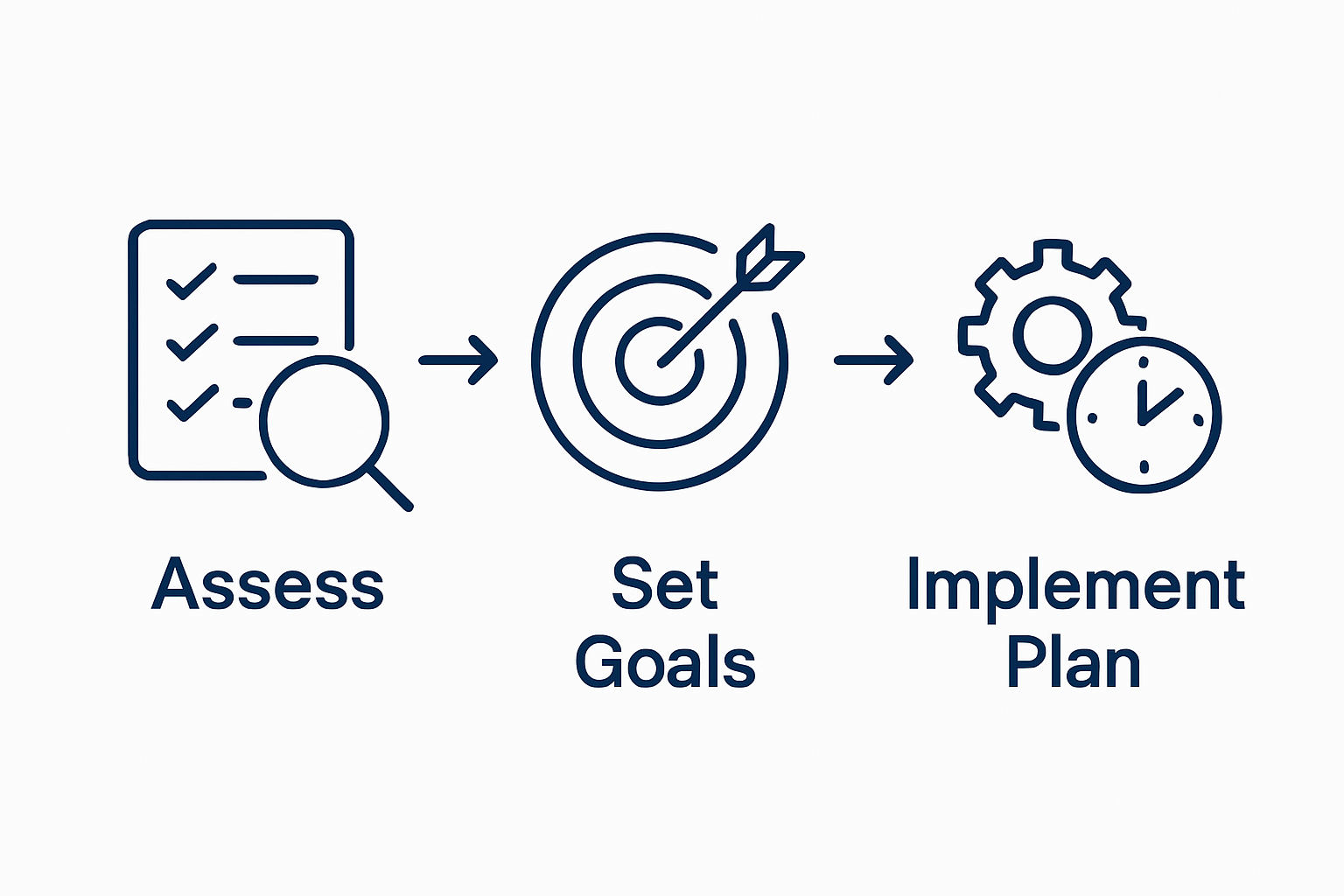
1. Conduct a thorough operational audit | A complete review helps identify strengths and weaknesses in your factory’s production workflow for strategic improvement. |
2. Set SMART production goals | Establish specific, measurable, achievable, relevant, and time-bound objectives to ensure productive alignment with business strategy. |
3. Create a detailed production plan | Transform strategic goals into actionable steps with clear resource allocation, timelines, and quality checkpoints for success. |
4. Monitor performance with real-time metrics | Implement robust tracking systems to identify issues promptly and uphold quality control within production processes. |
5. Foster continuous improvement culture | Encourage team feedback and adaptive strategies to refine operations and enhance efficiency in response to performance data. |
Step 1: Assess Current Operational Efficiency
Assessing your production factory’s current operational efficiency serves as the critical foundation for comprehensive improvement. This initial diagnostic step allows you to understand your existing performance landscape, identifying strengths and revealing opportunities for strategic enhancement.
Begin by conducting a comprehensive operational audit that maps your entire production workflow. This means meticulously examining each stage of manufacturing, from raw material intake to final product output. Key performance indicators will help you quantify current efficiency levels. Production managers should collect data on critical metrics like equipment utilization rates, production cycle times, labor productivity, and quality control performance.
Research from the National Academies Press emphasizes the importance of systematic performance measurement in industrial settings. By tracking specific operational metrics, you can establish a baseline understanding of your factory’s current capabilities.
Your operational assessment should include detailed documentation of existing processes. Create a comprehensive workflow diagram that visually represents each production stage, highlighting potential bottlenecks or inefficiencies. Pay special attention to areas with high variability in production times, recurring quality issues, or unexpected resource consumption.
Critical assessment tools for this process include:
Time and motion studies
Statistical process control charts
Equipment performance tracking software
Employee performance and productivity reports
Quality control inspection records
Ensure your assessment goes beyond surface level observations. Interview production line workers, supervisors, and technical staff to gather qualitative insights about operational challenges. Their frontline experience often reveals nuanced inefficiencies that quantitative metrics might overlook.
Below is a summary table of critical assessment tools used to evaluate current operational efficiency in a production factory, along with their primary purposes.
Assessment Tool | Purpose |
Time and motion studies | Analyze processes to identify workflow delays |
Statistical process control charts | Track process stability and detect variation |
Equipment performance tracking software | Monitor machine output and downtime |
Employee performance and productivity reports | Evaluate labor efficiency and output |
Quality control inspection records | Document defect trends and product quality |
Interviews with staff | Gather qualitative insights on hidden challenges |
Successful completion of this assessment phase means having a clear, data driven snapshot of your current operational performance. Your documentation should provide a transparent view of existing strengths and precise areas requiring targeted improvement strategies in subsequent optimization steps.
Step 2: Define Clear Production Goals and Objectives
Defining clear production goals and objectives transforms your factory’s operational vision from abstract concept to concrete strategy. This critical step bridges the gap between your initial operational assessment and targeted performance improvement. Learn more about creating effective production strategies to support this process.
Strategic goal setting requires a methodical approach that aligns organizational vision with practical manufacturing capabilities. Begin by translating your broad business objectives into specific, measurable production targets. These goals should address multiple dimensions of factory performance, including productivity, quality, cost efficiency, and operational reliability.
Research from the OECD emphasizes establishing SMART goals: Specific, Measurable, Achievable, Relevant, and Time-bound. For production environments, this means crafting objectives that are precise and actionable. For instance, instead of a vague goal like “improve production efficiency,” develop a targeted objective such as “increase manufacturing output by 15% within six months while maintaining current quality standards.”
Your goal-setting process should involve cross-functional collaboration, gathering input from production managers, quality control teams, equipment technicians, and frontline workers. This inclusive approach ensures goals are realistic and consider the practical challenges of your specific manufacturing environment.
Key considerations for defining production objectives include:
Current production capacity
Available technological resources
Workforce skills and capabilities
Market demand and competitive landscape
Financial constraints and investment potential
Document these goals with extreme clarity, creating a comprehensive implementation roadmap that outlines specific milestones, responsible team members, required resources, and measurement criteria. Establish a robust tracking mechanism that allows for regular performance review and adaptive strategy refinement.
Successful goal definition means having a precise, actionable blueprint that transforms your operational assessment into a strategic pathway for continuous improvement. Your objectives should serve as a dynamic guide, inspiring your team to pursue excellence while providing a clear framework for measuring progress.
Step 3: Implement a Structured Production Plan
Implementing a structured production plan transforms your strategic goals into actionable operational frameworks. This critical step translates the insights from your initial assessment and goal-setting into a comprehensive roadmap for manufacturing success. Learn more about creating effective production strategies to support your implementation.
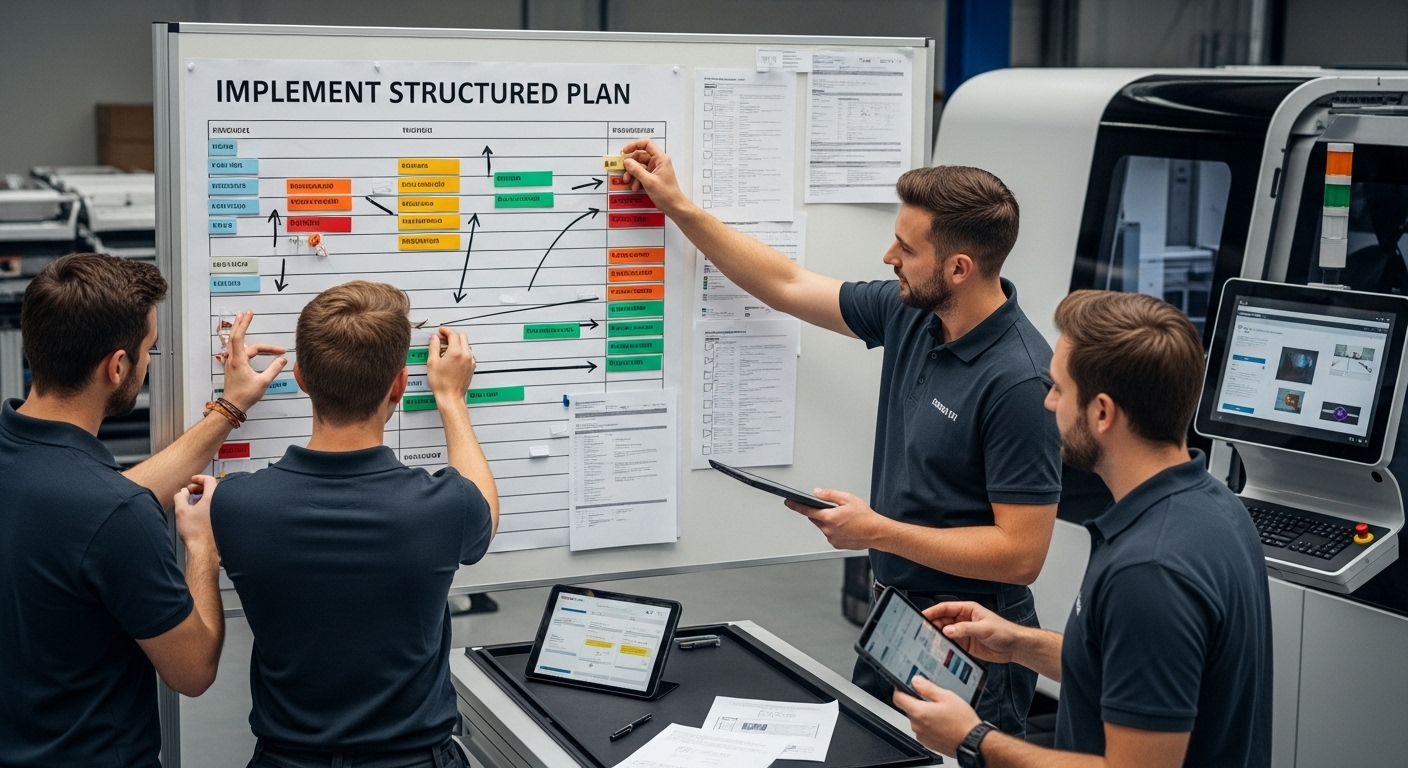
A robust production plan requires meticulous detailing of every manufacturing process, breaking down complex workflows into manageable, sequential steps. Resource allocation becomes paramount during this stage, requiring careful mapping of equipment, personnel, materials, and time across different production stages. Begin by creating a detailed workflow diagram that visualizes each production phase, identifying potential interdependencies and potential bottlenecks.
Research from the Journal of Sirindhornparidhat emphasizes the importance of integrating lean automation principles into factory management. This means designing your production plan with flexibility and efficiency as core considerations. Develop contingency protocols that allow rapid adaptation to unexpected challenges, such as equipment failure, material shortages, or sudden shifts in production demands.
Your structured plan should incorporate comprehensive performance tracking mechanisms. Implement real-time monitoring systems that provide immediate insights into production metrics, enabling swift corrective actions. This might involve investing in digital dashboards, automated tracking software, or integrated management information systems that offer granular visibility into each production stage.
Critical components of an effective production plan include:
Precise production schedule with clear timelines
Detailed resource allocation strategy
Quality control checkpoints
Risk mitigation protocols
Performance measurement criteria
Consider developing a modular production plan that allows for incremental adjustments. This approach enables continuous refinement based on actual performance data, creating a dynamic system that evolves with your factory’s changing needs. Engage production team members in the planning process, leveraging their frontline expertise to identify potential optimization opportunities.
Successful implementation means having a comprehensive, flexible production plan that serves as a living document. Your strategy should provide clear guidance while remaining adaptable to emerging challenges and opportunities in the manufacturing landscape.
The following table outlines key components of an effective production plan and the specific purpose each serves in ensuring a structured process.
Production Plan Component | Purpose |
Precise production schedule | Defines clear production timelines and targets |
Resource allocation strategy | Ensures optimal use of equipment, staff, and materials |
Quality control checkpoints | Maintains product standards at each stage |
Risk mitigation protocols | Prepares for and manages unexpected disruptions |
Performance measurement criteria | Tracks ongoing efficiency and identifies areas for adjustment |
Step 4: Optimize Resource Allocation and Workflow
Optimizing resource allocation and workflow represents the most nuanced stage of production management, transforming theoretical planning into practical operational excellence. Explore advanced workflow strategies to support your optimization efforts.
Strategic resource management demands a holistic approach that goes beyond simple task assignment. Begin by conducting a comprehensive audit of your current resource utilization, examining how equipment, personnel, materials, and time intersect throughout your production process. This means creating detailed mapping of each resource’s capacity, performance metrics, and potential bottlenecks.
Research from the Operations Research International Journal highlights the importance of integrated optimization models that account for production uncertainties. Implement dynamic allocation strategies that allow real-time adjustments based on changing production demands. This might involve developing flexible workforce scheduling, cross-training employees, and creating adaptable equipment deployment protocols.
Technology plays a crucial role in workflow optimization. Invest in advanced production management software that provides granular insights into resource performance. These digital tools enable predictive analysis, helping you anticipate potential constraints before they impact overall production efficiency. Look for systems that offer real-time tracking, performance visualization, and automated reporting capabilities.
Key optimization strategies include:
Implementing cross-functional training programs
Developing modular production line configurations
Creating flexible shift management systems
Establishing rapid reallocation protocols
Investing in adaptive technological infrastructure
Critical to successful optimization is developing a culture of continuous improvement. Encourage production team members to provide feedback, identifying inefficiencies and suggesting potential workflow enhancements. Regular performance reviews should focus not just on meeting targets, but on identifying innovative approaches to resource utilization.
Successful resource allocation means creating a dynamic, responsive production ecosystem. Your workflow should function like a living organism, capable of adapting quickly to internal and external challenges while maintaining consistent performance standards. The goal is not just efficiency, but a sustainable, resilient production environment that can navigate complex operational landscapes.
Step 5: Monitor Performance and Quality Control
Monitoring performance and implementing rigorous quality control represents the critical checkpoint in your production management strategy. This step transforms data into actionable insights, ensuring your factory maintains exceptional operational standards. Discover advanced performance tracking techniques to enhance your quality management approach.
Performance monitoring requires establishing a comprehensive measurement framework that captures both quantitative and qualitative production metrics. Develop a robust dashboard that tracks key performance indicators such as production efficiency, defect rates, equipment utilization, labor productivity, and cycle times. This holistic approach provides a 360-degree view of your manufacturing ecosystem.
Research from the National Institutes of Health emphasizes the significance of continuous process monitoring and preventive maintenance. Implement real-time data collection systems that allow immediate identification of potential issues. These systems should integrate automated alerts that notify management of any deviations from established quality standards, enabling rapid intervention and minimizing potential production disruptions.
Quality control goes beyond simple measurement. Create a structured inspection protocol that includes multiple verification stages throughout the production process. This means developing detailed quality checkpoints where products undergo systematic evaluation against predefined specifications. Invest in both technological and human-driven quality assessment methods, recognizing that advanced equipment and skilled human expertise complement each other.
Critical quality control components include:
Standardized product testing procedures
Comprehensive documentation of inspection results
Regular calibration of measurement equipment
Statistical process control techniques
Continuous staff training on quality standards
Encourage a culture of continuous improvement by implementing feedback loops between quality control teams, production managers, and frontline workers. Regular review meetings should analyze quality data, identifying trends, potential systemic issues, and opportunities for process refinement. This collaborative approach transforms quality control from a reactive function to a proactive strategic asset.
Successful performance monitoring means creating a responsive, data-driven production environment. Your quality control system should function as an intelligent, adaptive mechanism that consistently ensures product excellence while driving ongoing operational improvements.
Step 6: Adjust Strategies Based on Feedback and Results
Adjusting strategies based on feedback and results represents the most dynamic phase of production management, transforming data insights into actionable organizational improvements. Learn more about adaptive strategy implementation to enhance your approach to continuous optimization.
Strategic adaptation requires developing a responsive framework that translates performance data into meaningful organizational changes. Begin by establishing a comprehensive review process that systematically analyzes performance metrics, quality control reports, and operational feedback from all production team levels. This means creating structured mechanisms for collecting, evaluating, and prioritizing improvement opportunities.
Research from the National Academies of Sciences highlights the importance of integrating feedback into organizational actions. Develop a transparent decision-making process that allows quick yet thoughtful responses to identified challenges. This involves creating clear communication channels where frontline workers, middle management, and executive leadership can share insights and collaborate on potential strategy modifications.
Implement a data-driven approach to strategy adjustment that balances quantitative metrics with qualitative insights. Use advanced analytics tools to identify patterns and trends in production performance, but also create space for human expertise and intuitive understanding. Regular strategy review meetings should involve cross-functional teams, ensuring a holistic perspective on potential improvements.
Key components of effective strategy adjustment include:
Establishing quarterly performance review cycles
Creating a structured feedback collection mechanism
Developing rapid prototyping for proposed changes
Implementing pilot testing for strategic modifications
Building organizational flexibility into production processes
Cultivate an organizational culture that views strategy adjustment as a continuous, collaborative process rather than a reactive measure. Encourage team members at all levels to contribute improvement suggestions, creating a sense of collective ownership in the factory’s performance evolution. Recognize and reward innovative thinking that leads to meaningful operational enhancements.
Successful strategy adjustment means creating a living, breathing production management system that can rapidly respond to internal and external challenges. Your approach should transform feedback from a passive data collection exercise into an active driver of organizational excellence and continuous improvement.
Transform Factory Efficiency Into Seamless Video Production in Switzerland
If you found the steps in “How to Manage a Production Factory Efficiently and Effectively” valuable, you already know that successful operational management comes down to precise planning, dependable crew, and real-time adaptability. Factory managers face challenges like resource allocation, workflow bottlenecks, and strict performance targets. These obstacles closely mirror the complexity of executing high-quality international video productions. When shooting in Switzerland, finding reliable partners who can support logistics, coordinate local teams, and anticipate production snags is crucial to achieving your goals fast and stress-free.

Ready to replace uncertainty with true operational confidence? Trust Video Production Switzerland to deliver the logistical expertise and market knowledge you need for a smooth production journey. Experience our proven production strategies and see why brands worldwide rely on us for every phase, from permits to post-production. Take your first step today with a free local consultation and let us transform your next Swiss shoot into a showcase of efficiency. Visit https://videoproductionswitzerland.com to schedule your call now.
Frequently Asked Questions
What are the key steps to assess the operational efficiency of a production factory?
To assess operational efficiency, conduct a comprehensive operational audit that includes examining each manufacturing stage, collecting data on key performance indicators, and creating a workflow diagram that highlights bottlenecks or inefficiencies.
How can I define clear production goals for my factory?
Start by translating broader business objectives into specific, measurable production targets. Use the SMART criteria—Specific, Measurable, Achievable, Relevant, and Time-bound—to develop clear and actionable objectives.
What strategies can help optimize resource allocation and workflow in production?
Implement dynamic allocation strategies, utilize advanced production management software for real-time insights, and conduct regular reviews of resource utilization to identify inefficiencies and opportunities for adjustment.
How do I effectively monitor performance and maintain quality control in my factory?
Establish a comprehensive measurement framework that tracks key performance indicators and implement a structured inspection protocol. Use real-time data collection systems to identify issues quickly, engage in continuous training, and foster collaboration between quality control and production teams.
Recommended
