
How to Keep to a Budget for Film Projects in Switzerland


More than 60 percent of international filmmakers report budget overruns when filming outside their home country, especially American and European productions in Switzerland. The high cost of local permits, crew, and equipment can quickly overwhelm project finances. Getting the numbers right from day one helps prevent stressful surprises, allowing you to focus on creative goals instead of last minute financial fixes. This guide arms you with practical steps for keeping your Swiss production affordable while tackling permit issues and logistical challenges.
Table of Contents
Quick Summary
Key Point | Explanation |
1. Establish a Clear Budget | Define specific financial boundaries and prioritize critical production needs to avoid overspending. |
2. Research Local Costs | Gather accurate data on local expenses to ensure budget alignment with Swiss production specifics. |
3. Allocate for Essential Areas | Allocate funds for permits, crew, and equipment while ensuring flexibility for unexpected costs. |
4. Track Expenses Proactively | Implement real-time tracking to monitor spending and facilitate quick budget adjustments as needed. |
5. Conduct a Final Review | Audit final costs against the budget and ensure compliance, documenting any variances effectively. |
Step 1: Establish clear budget limits and priorities
Managing your film project’s budget starts with establishing rock solid financial boundaries before a single frame is shot. Film budgeting involves creating a detailed financial roadmap that guides every spending decision throughout production.
Begin by breaking down your total budget into distinct categories like above the line (creative talent costs) and below the line (direct production expenses). Allocate specific dollar amounts to each section while maintaining flexibility. For Swiss film productions, this means understanding local cost structures and potential variances. Track every potential expense from equipment rentals to location permits to crew accommodations.
Prioritize your critical production needs first. Identify which elements are absolutely essential versus nice to have. This might mean investing more in key talent or specialized equipment while finding cost savings in other areas. Document your budget priorities clearly to ensure all team members understand the financial constraints and creative vision.
Pro Tip: Always build a 10-15% contingency fund into your budget to handle unexpected expenses or last minute creative adjustments without derailing your entire production.
Here is a concise summary of common film budget categories and their main features:
Budget Category | Typical Expenses | Impact on Production |
Above the Line | Creative talent, directors | Defines creative direction |
Below the Line | Crew wages, equipment, locations | Enables operational output |
Contingency Fund | Unexpected costs, adjustments | Provides financial safety |
Permits & Licenses | Filming permissions, legal fees | Ensures compliance |
Step 2: Research local costs and sourcing options
Successfully managing your film budget in Switzerland requires a strategic approach to understanding local production expenses. Film budgeting necessitates thorough research into regional cost structures that can significantly impact your overall project spending.
Start by reaching out to local production companies and industry associations in Switzerland to gather precise information about current market rates. This means investigating costs for equipment rentals, crew wages, location permits, and specialized services unique to the Swiss market. Create a comprehensive spreadsheet tracking potential expenses across different production categories such as talent, technical resources, transportation, and accommodations. Pay special attention to regional variations between urban centers like Zurich and Geneva and more rural production locations.
Network with local film professionals who can provide insider insights into cost effective sourcing strategies. Some Swiss regions offer production incentives or have established relationships with equipment suppliers that could help reduce your overall expenses. Compare quotes from multiple vendors and dont hesitate to negotiate package deals that might offer more value for your production budget.
Pro Tip: Consider connecting with the Swiss Film Commission to access updated cost databases and potentially receive guidance on local production pricing structures that could save you significant funds.
Step 3: Allocate funds for permits, crew, and gear
Careful financial planning is critical when allocating your film production budget across essential categories like permits, crew, and equipment. Film budgets require specific segmentation for tracking operational expenses to maintain precise financial control throughout your Swiss production.

Break down your budget into three primary allocations. First, research permit costs which can vary significantly between Swiss cantons. Contact local municipal offices to understand exact filming permission expenses. For crew allocation, consider hiring local Swiss talent who understand regional production nuances and can potentially reduce overall staffing costs. Research standard daily rates for camera operators, sound technicians, and production assistants specific to the Swiss market.
Equipment rental represents another crucial budget component. Compare rental prices from multiple Swiss production houses and consider package deals that might offer discounted rates for comprehensive gear packages. Factor in potential transportation costs for specialized equipment and ensure you have contingency funds for unexpected technical requirements or last minute gear replacements. Look for local vendors who offer comprehensive equipment packages that could streamline your rental process and potentially reduce overall expenses.
Pro Tip: Always request itemized quotes from equipment rental companies and negotiate bulk rental rates to maximize your production budget efficiency.
Step 4: Track expenses and adjust spending proactively
Managing your film production budget requires consistent monitoring and strategic financial adjustments. Effective budget management involves continuously tracking expenses to avoid overspending and maintaining financial control throughout your Swiss production project.
Implement a real time tracking system that allows you to monitor expenses across different budget categories. Use digital spreadsheets or specialized production accounting software that can provide immediate visibility into your spending patterns. Create color coded tracking mechanisms where green indicates on budget expenses, yellow signals potential overruns, and red highlights critical financial risks. Schedule weekly financial review meetings with your production team to discuss current spending, identify potential cost saving opportunities, and make rapid adjustments before expenses spiral out of control.
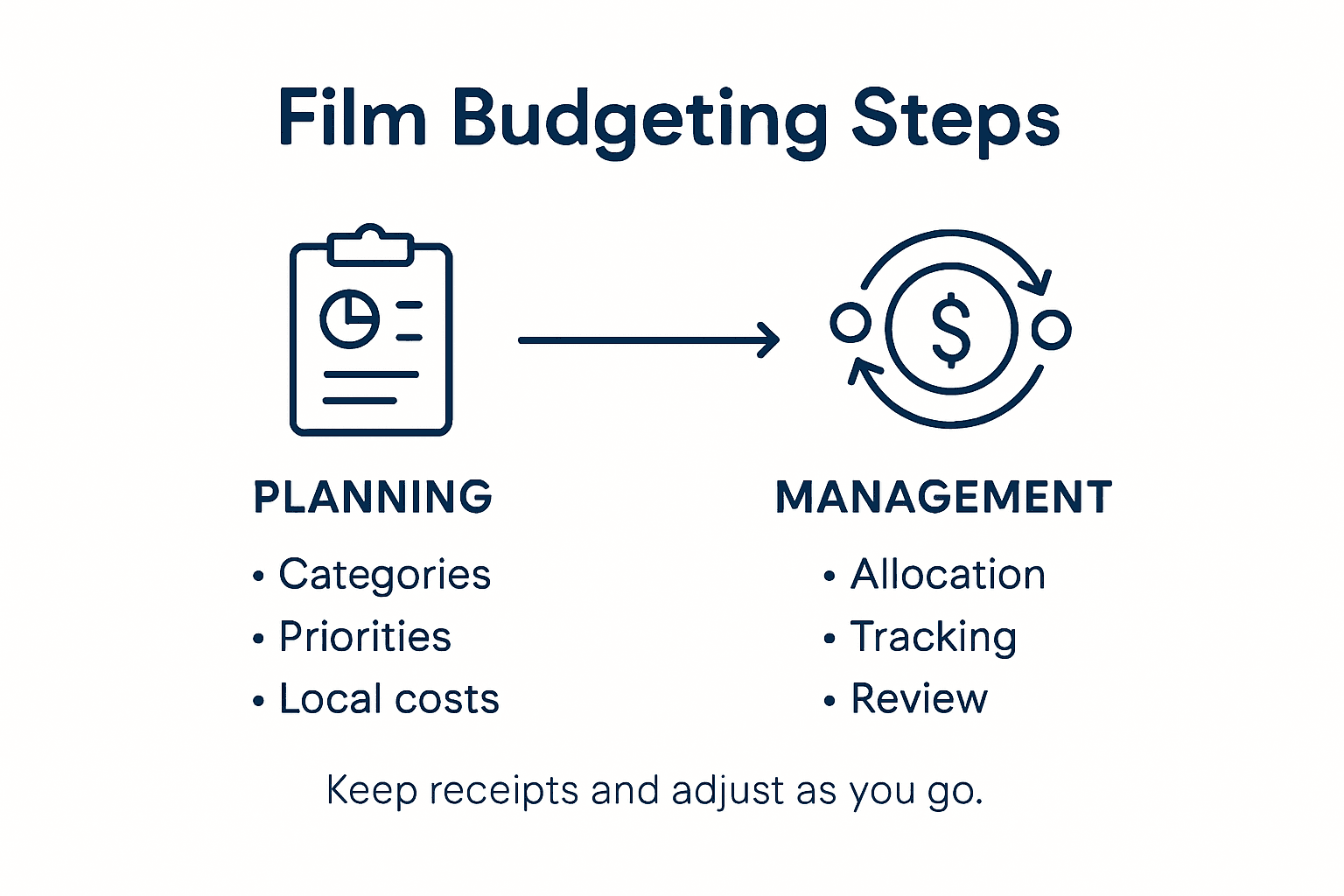
Develop a flexible budget approach that anticipates potential financial shifts. Allocate contingency funds in each major budget category and establish clear protocols for reallocating resources when unexpected expenses arise. This might mean shifting funds from less critical areas to priority production needs or negotiating alternative solutions with vendors to manage unexpected cost increases. Maintain open communication with your financial team and be prepared to make swift strategic decisions that preserve your overall production quality while maintaining fiscal discipline.
Pro Tip: Use percentage based tracking instead of absolute dollar amounts to create more adaptive budget management strategies that can quickly respond to changing production requirements.
This table compares expense tracking methods and their adaptive value during production:
Tracking Method | Adaptability | Visibility Level |
Digital Spreadsheets | Moderate | Real-time basic view |
Production Accounting App | High | Detailed instant view |
Weekly Team Review | Low | Periodic overview |
Step 5: Review final costs and ensure compliance
Completely reviewing your film production budget requires a systematic approach to validate expenses and confirm regulatory adherence. Final budget audits are essential for confirming that all expenses align with initial projections and contractual obligations throughout your Swiss production project.
Conduct a comprehensive financial reconciliation by comparing your initial budget projections against actual expenditures. Gather all financial documentation including invoices, receipts, and transaction records from every production phase. Create a detailed spreadsheet that breaks down spending across each budget category and highlights any significant variances. Pay special attention to areas where actual costs deviated from original estimates and document clear explanations for these differences.
Engage a professional auditor or financial consultant familiar with Swiss film production regulations to review your final financial report. This independent review will help validate that all expenses are compliant with local tax regulations, funding requirements, and industry standards. Look for potential tax credits or production incentives specific to Swiss film projects that might offset your overall production costs. Prepare a comprehensive financial summary that demonstrates transparent and responsible fiscal management to potential future investors or funding organizations.
Pro Tip: Digitize and securely store all financial documentation for at least seven years to ensure you can quickly respond to any potential financial inquiries or audits.
Master Your Film Budget with Proven Local Expertise
Keeping to a strict film budget in Switzerland can feel overwhelming when faced with complex permit costs, varied crew wages, and expensive equipment rentals. The challenge lies in managing these financial boundaries while maintaining creative vision and production quality. You need a partner who understands the nuances of the Swiss market and can help you allocate funds strategically for permits, crew, gear, and unforeseen expenses. At Video Production Switzerland, we specialize in providing reliable local crew, streamlined permit management, and cost-effective gear sourcing so you can focus on storytelling without financial stress.
Take control of your film production finances today by leveraging over 20 years of our logistical expertise. Start with a free consultation to craft a detailed plan tailored to your budget priorities and local cost structures. Discover how our expert team can help you navigate Swiss regulations and optimize your spending to keep your project on time and within budget. Visit Video Production Switzerland and learn more about our complete support for international filmmakers looking for seamless production management in Switzerland.
Frequently Asked Questions
How can I set a budget for my film project in Switzerland?
Start by categorizing your budget into ‘above the line’ and ‘below the line’ expenses. Allocate specific amounts for each category and maintain flexibility to adjust if needed.
What types of expenses should I include in my film budget?
Include costs for permits, crew, equipment rentals, location fees, and a contingency fund for unexpected expenses. Make a detailed list of potential expenses within each category to stay organized.
How can I find accurate cost information for local film production in Switzerland?
Research by connecting with local production companies and industry professionals. Compare quotes from equipment vendors and seek insights into regional cost variations to build a realistic budget.
How can I effectively track my film production expenses?
Implement a real-time tracking system using spreadsheets or accounting software to monitor expenditures across budget categories. Schedule regular reviews to assess spending patterns and make necessary adjustments.
What should I do if my film project expenses exceed the budget?
Be proactive by reallocating funds from less critical areas to cover overruns. Consider negotiating with vendors for better deals or finding cost-saving alternatives to maintain financial control.
Why is it important to review final costs at the end of a film project?
Reviewing final costs ensures that all expenses align with your initial budget and contractual obligations. Conduct a thorough reconciliation to identify variances and prepare for any necessary audits.
Recommended
