
How to Get Production Insurance: A Complete Step-by-Step Guide

Production insurance might seem straightforward and routine for film or media projects. Yet a single overlooked risk can lead to unexpected disaster, draining budgets and derailing entire productions. In fact, missing even minor documentation can delay insurance approval by up to two weeks. What most producers never realize is that getting covered is not just about signing a policy but about mastering a set of hidden steps that separate fully protected projects from those left exposed.
Table of Contents
Quick Summary
Key Point | Explanation |
1. Assess production risks thoroughly | Conduct a comprehensive inventory to identify specific protection needs and potential vulnerabilities for your project. |
2. Research specialized insurance providers | Look for companies experienced in media production insurance to ensure proper coverage and understanding of unique risks. |
3. Gather complete documentation | Compile all vital production documents to give insurers an accurate view of your project and its associated risks. |
4. Compare insurance quotes carefully | Evaluate quotes using a systematic approach to understand key differences in coverage, costs, and exclusions. |
5. Review policy details meticulously | Ensure all terms meet your needs before finalizing, consulting with experts to validate coverage and identify potential gaps. |
Step 1: Assess Your Production Needs and Risks
Assessing your production needs and risks forms the critical foundation for obtaining comprehensive production insurance. This initial step determines the specific protection your project requires and helps you understand potential vulnerabilities that could derail your creative vision.
Begin by conducting a thorough inventory of your production’s unique characteristics. This means examining every aspect of your project from equipment and personnel to locations and potential liabilities. Detailed documentation is key. Consider the scope of your production whether you are creating a short film, commercial, documentary, or large scale media project. Each type of production carries different risk profiles that will directly impact your insurance requirements.
Professional risk assessment involves systematically analyzing potential challenges. According to Ready.gov’s risk assessment guidelines, you should evaluate potential hazards by considering multiple dimensions:
Equipment damage or loss
Potential location risks
Personnel injury possibilities
Unexpected production interruptions
Legal and liability exposures
Next, categorize these risks by their potential financial and operational impact. Some risks might be minor inconveniences while others could completely halt production. Calculate potential costs associated with each risk scenario. This might include replacement equipment expenses, potential legal fees, medical costs for crew injuries, or revenue losses from production delays.
Consult with experienced production professionals or insurance brokers who specialize in media production. Their expertise can help you identify risks you might not have considered and provide nuanced insights into industry specific challenges. They can guide you through understanding complex insurance terminology and help match your specific production needs with appropriate coverage options.
By the end of this assessment, you should have a comprehensive document detailing your production’s unique risk landscape. This document will serve as a critical reference when discussing insurance options with potential providers, ensuring you receive tailored coverage that genuinely protects your project’s financial and creative interests.
Step 2: Research and Compare Insurance Providers
Researching and comparing insurance providers is a critical step in securing the right production insurance. This phase requires careful investigation and strategic evaluation to ensure you select a provider that understands the unique complexities of media production insurance.
Start by creating a comprehensive list of specialized entertainment and media insurance providers. Focus on companies with demonstrated experience in production insurance, not just general commercial insurers. Look for providers who have specific portfolios in film, television, commercial, and digital media production. Industry associations like the Producers Guild of America or local film commissions can provide recommendations for reputable insurance companies that specialize in media production coverage.
According to the Library of Congress research guide on insurance industry ratings, evaluating a provider’s financial stability is crucial. Investigate their financial ratings from independent agencies like A.M. Best, Standard & Poor’s, or Moody’s. These ratings provide insight into the company’s ability to pay claims and maintain financial strength during challenging circumstances.
Develop a detailed comparison matrix that goes beyond simple price considerations. Your evaluation should include multiple critical factors:
Breadth of coverage options
Specific experience with productions similar to yours
Claims processing reputation
Response time and customer support quality
Flexibility in policy customization
Reach out directly to potential insurance providers for comprehensive quotes and detailed policy information. Schedule consultations with their representatives to discuss your specific production needs. During these conversations, ask targeted questions about their understanding of media production risks, their claims process, and any unique coverage options they might offer for your specific type of project.
Carefully review policy documents, paying close attention to exclusions, deductibles, and specific coverage limits. Do not simply accept the first quote or recommendation. Professional insurance brokers who specialize in entertainment insurance can provide valuable guidance in navigating complex policy details and identifying potential gaps in coverage.
By the end of this research phase, you should have a clear, documented comparison of potential insurance providers. Your selection should be based on a holistic assessment of their expertise, financial stability, coverage options, and alignment with your specific production requirements. The goal is not just finding insurance but finding the right insurance partner for your project.
Step 3: Gather Necessary Documentation for Quotes
Gathering necessary documentation is a critical preparatory step that can significantly streamline your production insurance quote process. This stage requires meticulous organization and comprehensive record collection to provide insurance providers with a clear picture of your production’s scope and potential risks.
Start by compiling a comprehensive production portfolio that details every aspect of your project. This documentation serves as the foundation for accurate insurance quotes and demonstrates your professional preparedness. Include detailed information about your production, such as the project type, estimated budget, production duration, shooting locations, and the number of crew members involved.
According to the California Film Commission’s insurance documentation guidelines, you will need to prepare several key documents. Gather official production paperwork including shooting schedules, location permits, equipment lists, and crew rosters. Create digital and physical copies of these documents, ensuring they are easily accessible and well organized.
Prepare financial documentation that provides insight into your production’s financial structure. This includes:
Detailed production budget
Proof of funding or financial backing
Previous production financial statements
Tax documents related to your production company
Compile a comprehensive equipment inventory that includes make, model, and estimated value of all production equipment. This should cover cameras, lighting gear, sound equipment, transportation vehicles, and any specialized gear unique to your production. Take high quality photographs of equipment and maintain serial number records to support potential insurance claims.
Secure all necessary legal documents that demonstrate your production’s compliance and risk management strategies. This includes release forms, location agreements, talent contracts, and any permits required for your specific shooting locations. Organize these documents chronologically and create both digital and physical backup copies.
Prepare a detailed risk management plan that outlines potential safety protocols, emergency procedures, and mitigation strategies. Insurance providers will view this as a proactive approach to minimizing potential claims. Include information about safety training, equipment maintenance procedures, and contingency plans for unexpected production challenges.
By the end of this documentation gathering process, you should have a comprehensive file that tells the complete story of your production. This collection of documents will not only facilitate smoother insurance quote requests but also demonstrate your professionalism and preparedness to potential insurance providers.
Below is a checklist table to help you gather and organize all the necessary documentation before requesting insurance quotes for your production.
Document Type | Purpose | Notes |
Production Overview | Provides basic film/project information | Include type, duration, crew |
Shooting Schedules | Outlines production timeline and key dates | Required for scheduling analysis |
Location Permits | Confirms legal use of shooting locations | Must match production schedule |
Equipment Inventory | Details all major gear and assets | Include model, value, photos |
Financial Documentation | Shows funding, budget, and prior statements | Ensure documents are up-to-date |
Legal Agreements | Verifies compliance and reduces liabilities | Include contracts and releases |
Risk Management Plan | Demonstrates safety and contingency planning | Highlight safety protocols |
Step 4: Request and Review Insurance Quotes
Requesting and reviewing insurance quotes is a nuanced process that requires careful attention to detail and strategic comparison. This step transforms your previous research and documentation into concrete insurance options for your production.
Begin by sending your comprehensive documentation package to multiple insurance providers simultaneously. Contact at least three to four specialized media insurance providers to ensure a robust comparison. When reaching out, be prepared to provide detailed information about your production, including the specific documentation you carefully assembled in the previous step.
According to the National Association of Insurance Commissioners, understanding the quote details is crucial. Request that each provider break down their quote into clear, comprehensible sections. This allows for an apples-to-apples comparison of coverage options, ensuring you can effectively evaluate the nuances between different insurance proposals.
Develop a systematic approach to quote evaluation that goes beyond simply comparing prices. Create a comparison matrix that includes:
Total coverage amount
Specific policy exclusions
Deductible levels
Premium costs
Additional services or support
Schedule individual consultations with each insurance representative to discuss the quotes in depth. During these conversations, ask probing questions about coverage limitations, claim processing procedures, and any potential gaps in protection. Pay close attention to how each provider responds to your specific production scenarios. The quality of communication and depth of understanding can be as important as the quote itself.
Carefully review the fine print in each quote. Look for subtle differences in coverage that might not be immediately apparent. Some providers might offer additional benefits like legal support, emergency response services, or more flexible claim processing that could provide significant value beyond the base premium.
Consider the long-term implications of each quote. A slightly higher premium might provide substantially better coverage or more comprehensive protection for your specific production needs. Evaluate each quote not just on cost, but on the overall value and protection it offers your project.
By the end of this process, you should have a clear, annotated comparison of insurance quotes. Your selection should be based on a holistic assessment that balances comprehensive coverage, financial protection, and provider reliability. The goal is to choose an insurance solution that provides robust protection while aligning with your production’s budgetary constraints.
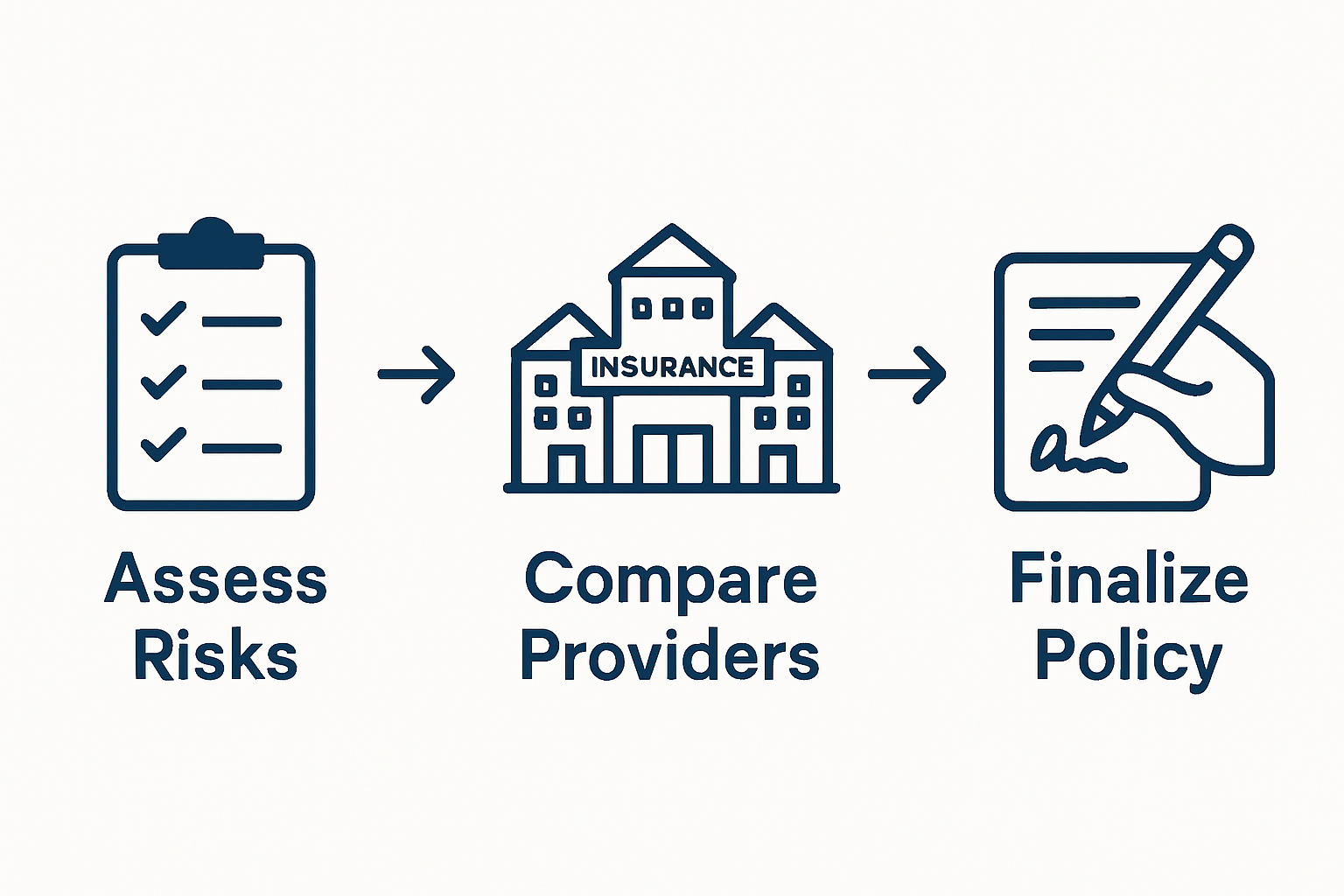
This table provides an at-a-glance overview of the main steps for getting production insurance, including each step’s focus and core outcome.
Step | Focus | Core Outcome |
Assess Needs and Risks | Identify vulnerabilities and needs | Understand unique coverage requirements |
Research Providers | Compare specialized insurers | Find reliable, experienced insurance partner |
Gather Documentation | Collect vital production paperwork | Enable accurate quotes and demonstrate prep |
Request & Review Quotes | Analyze proposals and differences | Choose best value and protection for project |
Finalize & Purchase Policy | Review, clarify, and complete sale | Secure active coverage before production |
Step 5: Finalize Policy and Complete Purchase
Finalizing your production insurance policy represents the critical moment where protection transforms from concept to concrete reality. This step requires meticulous attention to detail and a strategic approach to ensuring comprehensive coverage for your project.
Carefully review the final policy document with extreme precision. Do not rush through this process or assume all details are correct. Compare the final policy against the quotes and discussions you previously had with the insurance provider. Verify that every specific requirement for your production is explicitly documented, including coverage limits, exclusions, and special provisions that were part of your initial negotiations.
According to the Risk Management Agency’s insurance cycle guidelines, understanding and meeting specific policy deadlines is crucial. Establish a clear timeline for policy activation, premium payments, and required documentation submissions. Mark these dates in your production management calendar to ensure continuous and uninterrupted coverage.
Prepare the necessary financial documentation for policy purchase. This includes:
Detailed payment method information
Proof of production budget allocation
Authorized signatory documentation
Tax identification records
Schedule a final consultation with your insurance representative to walk through the policy details. During this meeting, request clarification on any terms that seem ambiguous and ensure you fully understand the scope of your coverage. Ask specific questions about claim filing procedures, emergency contact protocols, and any additional support services included with your policy.
Before making the final purchase, consult with your production’s legal advisor or entertainment industry insurance specialist. Their external perspective can provide an additional layer of scrutiny to the policy terms. They might identify subtle nuances or potential gaps in coverage that could be critical to your production’s financial protection.
Once you are completely satisfied with the policy details, complete the purchase through the agreed-upon payment method. Request multiple copies of the signed policy document for your production records. Ensure digital and physical copies are securely stored and accessible to key production team members who might need to reference the insurance details.
After purchase, distribute relevant insurance information to your production team. Create a brief overview document that highlights key coverage points, emergency contact information, and claim filing procedures. This ensures that every team member understands the production’s insurance protection and knows how to respond in potential incident scenarios.

Transform Production Insurance Challenges into Seamless Filmmaking Success
Facing the complex process of securing production insurance can be overwhelming, especially when your project relies on local logistics, trusted crew, and tight deadlines. As discussed in the article, meticulous documentation, detailed risk assessments, and understanding coverage options are crucial but they are only part of ensuring a successful shoot. On the ground in Switzerland, the unexpected can still disrupt your plans—permits, location risks, and coordination issues can make all your efforts vulnerable.
Protect your creative vision by partnering with Video Production Switzerland. With over 20 years of on-location experience, we help you minimize operational risks by handling everything from securing permits to sourcing reliable equipment and local crew. Want a production that stays on schedule, fully compliant, and stress free? Let our experts manage every logistical detail so you can focus on what matters most—your story. Book your free consultation here and take the first step toward a smooth, professionally managed shoot in Switzerland, backed by local expertise you can trust.
Frequently Asked Questions
What is production insurance?
Production insurance is a specialized type of insurance that protects film, television, and media productions from financial loss due to unforeseen events such as accidents, equipment damage, or liability claims.
Why do I need to assess my production needs and risks before getting insurance?
Assessing your production needs and risks helps identify specific vulnerabilities and coverage requirements for your project. It ensures you obtain comprehensive protection tailored to your unique situation.
What documents are necessary to request insurance quotes for a production?
You will need to prepare a comprehensive production portfolio, including detailed information about the project, official production paperwork, financial documentation, equipment inventory, legal documents, and a risk management plan.
How do I compare insurance quotes effectively?
To compare insurance quotes, develop a comparison matrix that includes total coverage amount, policy exclusions, deductibles, premium costs, and any additional services or support. Ensure you also consult with insurance representatives to clarify any ambiguities in the quotes.
