
How Do You Handle Stress or Tight Deadlines Effectively?


Balancing tight deadlines and relentless workloads can feel like an impossible juggling act. Yet studies show that over 60 percent of professionals report daily work-related stress. Surprisingly, what most people miss is that stress is not the real problem—it is the way you organize, plan, and communicate your workload that makes or breaks your experience.
Table of Contents
Quick Summary
Key Point | Explanation |
1. Assess your workload and priorities | Create a comprehensive inventory of all responsibilities to manage stress effectively and allocate resources efficiently. |
2. Develop a realistic timeline and goals | Break projects into smaller tasks with clear timelines to avoid overwhelm and ensure achievable progress. |
3. Organize tasks into manageable chunks | Segment larger responsibilities into smaller, actionable tasks to reduce stress and enhance productivity. |
4. Implement stress-reduction techniques | Integrate brief breaks, mindfulness practices, and physical movement into your routine to manage emotional and physical responses. |
5. Communicate effectively with your team | Establish clear communication channels and encourage open dialogue about workloads to reduce misunderstandings and stress. |
Step 1: Assess Your Current Workload and Priorities
Managing stress effectively begins with a clear, honest assessment of your current workload and priorities. This foundational step transforms overwhelming challenges into manageable tasks by providing strategic clarity. Understanding exactly what demands your attention helps you allocate energy and resources more efficiently.
Start by creating a comprehensive inventory of all your current responsibilities. This means documenting every professional and personal commitment, from major project deadlines to routine tasks. Write down everything without judgment, including work assignments, personal obligations, recurring meetings, and pending deliverables. The goal is complete transparency about your current commitments.
Next, categorize these tasks using a strategic prioritization framework. Urgent tasks require immediate attention, while important tasks contribute to long term goals. Not everything that seems urgent is truly critical. By distinguishing between these categories, you can prevent reactive stress and focus on meaningful work. The American Psychological Association recommends this approach as a fundamental stress management technique.
Consider using a simple matrix to classify tasks:
High Urgency and High Importance: Do these immediately
High Importance but Low Urgency: Schedule dedicated time
High Urgency but Low Importance: Delegate if possible
Low Urgency and Low Importance: Eliminate or postpone
Review your task list critically. Identify potential bottlenecks, overlapping deadlines, or unrealistic expectations. This assessment might reveal that you are overcommitted, which is a primary source of professional stress. Be prepared to have honest conversations with managers or teammates about workload redistribution or timeline adjustments.
Successful completion of this step means you have a clear, organized view of your responsibilities, understand their relative priorities, and can make informed decisions about time and energy allocation. Your stress management journey starts with this critical self awareness.
Step 2: Develop a Realistic Timeline and Goals
After assessing your workload, the next critical step in managing stress is developing a realistic timeline and setting achievable goals. This process transforms your task inventory into a structured roadmap that prevents overwhelm and creates a sense of controlled progress. Realistic planning is the bridge between good intentions and actual accomplishment.
Begin by breaking down larger projects into smaller, manageable tasks with specific timelines. Each task should have a clear start and end point, allowing you to track progress and maintain momentum. Consider the complexity of each task and allocate realistic time estimates. Avoid the common mistake of underestimating the time required, which often leads to increased stress and potential deadline failures.
American Psychological Association research suggests that setting clear, achievable goals directly correlates with reduced stress levels. To implement this effectively, use a planning approach that builds in buffer time. For every task, add approximately 20% additional time to account for unexpected challenges or interruptions.
This strategy prevents the panic that comes from rigid, unrealistic scheduling.
Utilize digital tools or traditional methods to create your timeline. Digital project management applications like Trello or Asana offer visual tracking capabilities, while a simple spreadsheet or physical planner can be equally effective. Choose a method that feels intuitive and matches your working style.
Consider these critical elements when developing your timeline:
Define specific, measurable objectives for each task
Establish realistic completion dates
Identify potential roadblocks in advance
Build flexible buffer periods
Create milestone checkpoints
Regularly review and adjust your timeline. Flexibility is key in effective stress management. If a task is taking longer than anticipated, do not view it as a failure but as an opportunity to recalibrate. Communicate proactively with teammates or supervisors about potential delays, demonstrating professionalism and commitment.
Successful timeline development means you have a clear, structured plan that feels achievable and provides a sense of control. Your timeline should inspire confidence, not generate additional anxiety. Remember, the goal is progress, not perfection.
Step 3: Organize Tasks into Manageable Chunks
Transforming your comprehensive task list into manageable chunks is a strategic approach to reducing stress and increasing productivity. This step is about breaking down complex projects into smaller, less intimidating segments that you can tackle with confidence and clarity. Chunking tasks creates a psychological advantage by making overwhelming work feel more approachable.
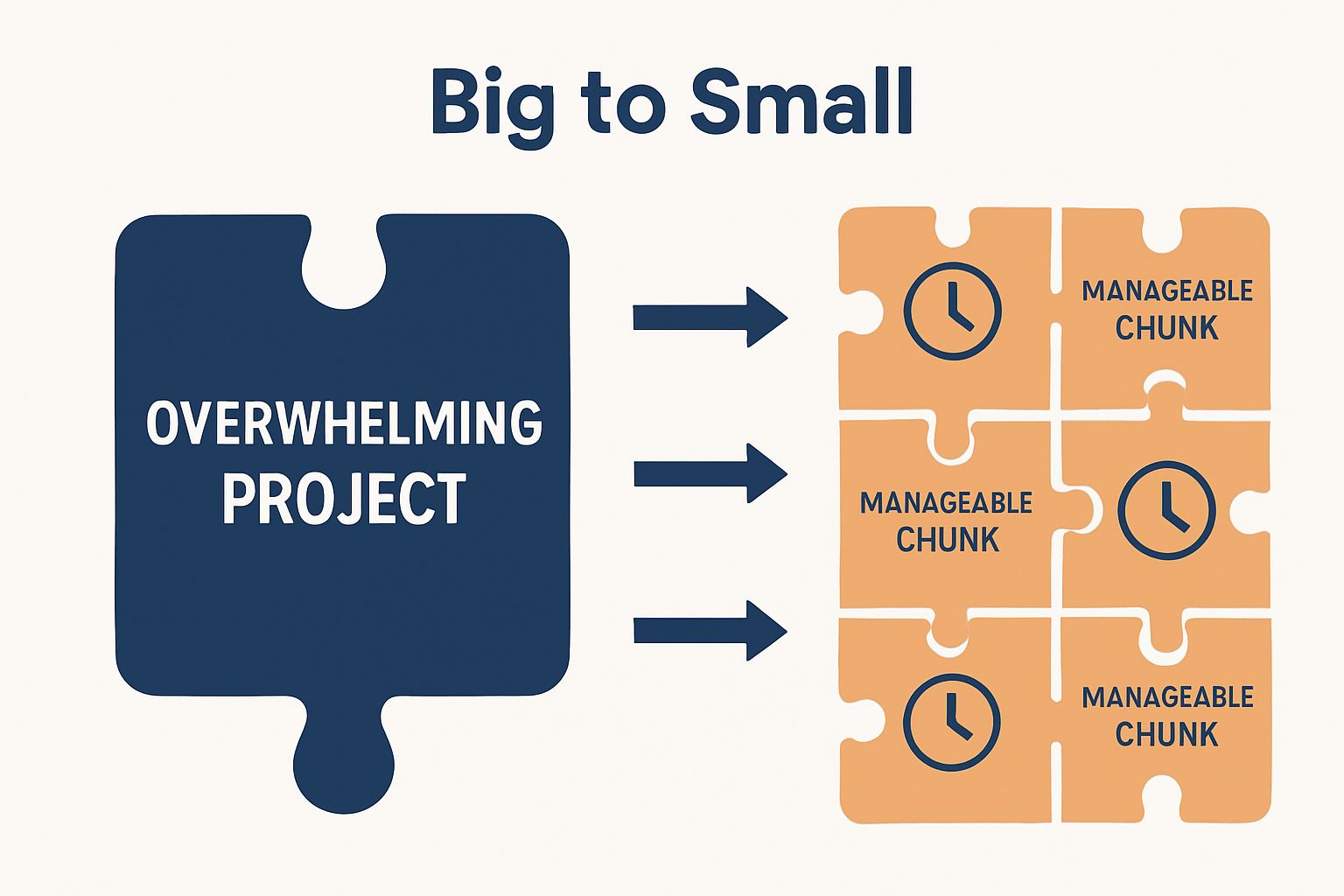
Begin by examining each project or major responsibility from your initial workload assessment. Look for natural subdivisions within each task. For instance, a large report might be broken down into research, drafting, editing, and final review stages. The key is to create segments that are specific enough to be actionable but not so small that they become meaningless.
Scientific research confirms that breaking tasks into smaller pieces significantly reduces psychological stress and improves overall performance. When you create these smaller chunks, aim to make each segment completable within a reasonable timeframe typically between 30 minutes to two hours. This duration helps maintain focus without causing mental fatigue.
Consider implementing a visual tracking method to monitor your progress. This might involve using a physical whiteboard, a digital project management tool, or a simple notebook where you can mark off completed chunks. Seeing tangible progress provides motivation and reduces anxiety about the overall workload.
Prioritize these chunks based on several key factors:
Deadline proximity
Complexity of the task
Dependencies between different project segments
Your current energy and focus levels
Be strategic about task sequencing. Some chunks may require completion before others can begin, while some can be worked on simultaneously. This approach allows for flexibility and prevents bottlenecks in your workflow. If a particular chunk seems too complex, break it down even further until it feels manageable.
Adapt your chunking strategy as you progress. Some tasks might require more time or effort than initially estimated, and that is perfectly normal. The goal is not perfection but consistent, steady progress. Regular review and adjustment of your task chunks ensure that you remain responsive to changing circumstances while maintaining a sense of control.
Successful task chunking means you have transformed a potentially overwhelming project into a series of achievable steps. Each completed chunk becomes a small victory, building momentum and confidence as you move toward your ultimate goal.
Step 4: Implement Stress-Reduction Techniques
As you navigate through challenging workloads, implementing effective stress-reduction techniques becomes crucial for maintaining mental clarity and professional performance. This step focuses on developing a personalized toolkit of strategies that help you manage emotional and physical responses to high-pressure situations. Stress management is not about eliminating stress entirely, but about building resilience and maintaining control.
National Institute of Mental Health recommends a holistic approach to stress reduction that integrates physical, mental, and emotional strategies. Start by incorporating short, intentional breaks into your workflow. These micro-pauses are not luxuries but essential reset moments that prevent burnout and maintain cognitive function. During these breaks, practice deep breathing exercises or brief mindfulness techniques that help recalibrate your nervous system.
Physical movement plays a critical role in stress management. Even brief periods of exercise can dramatically reduce stress hormones and improve mental clarity. Consider integrating short walks, stretching routines, or quick body weight exercises between work segments. These activities not only provide physical relief but also create mental distance from intense work environments.
Mindfulness and meditation techniques offer powerful tools for immediate stress reduction. Learn and practice simple techniques like box breathing (four-second inhale, hold, exhale, and pause) or progressive muscle relaxation. These methods can be performed discreetly at your workspace and provide immediate calming effects. Consistency matters more than duration when practicing these techniques.
Consider these practical stress-reduction strategies:
Practice 5-minute meditation sessions
Use short walking breaks between tasks
Maintain hydration and healthy nutrition
Create a calm workspace environment
Set clear boundaries between work and personal time
For professionals in high-stress creative fields like filmmaking, we have additional stress reduction techniques specifically tailored to your industry. Understanding and implementing these strategies requires self-awareness and commitment.
Here is a comparative table summarizing key stress-reduction techniques mentioned in this section, helping readers quickly review their options and benefits.
Technique | Description | When to Use | Benefits |
Short Meditation Sessions | 5-minute focused breathing or mindfulness exercises | During breaks or when feeling overwhelmed | Calms mind, restores focus |
Walking Breaks | Brief walks between tasks or meetings | After prolonged sitting or mental effort | Relieves physical tension, refreshes energy |
Hydration & Nutrition | Consuming water and healthy snacks regularly | Throughout the workday | Supports cognitive function, maintains energy |
Calm Workspace | Keeping workspace organized and free of distractions | At all times, especially under pressure | Reduces anxiety, encourages clarity |
Work-Life Boundaries | Setting clear cutoff times for work versus personal time | Outside of regular work hours | Prevents burnout, improves recovery |
Successful stress reduction is not about perfect execution but consistent practice. Pay attention to what techniques resonate most with you and integrate them naturally into your routine. Your goal is developing a personalized approach that helps you remain calm, focused, and productive under pressure.

Step 5: Communicate Effectively with Your Team
Effective communication is the backbone of successfully managing stress and meeting tight deadlines. When team members understand each other’s challenges, workloads, and expectations, the entire project becomes more fluid and less stressful. Communication is not just about speaking, but about creating a shared understanding that reduces uncertainty and potential conflicts.
Start by establishing clear, transparent channels of communication. This means selecting the right tools and platforms that allow for quick, efficient information exchange. Digital collaboration platforms like Slack, Microsoft Teams, or project management tools enable real-time updates and reduce misunderstandings. Choose a platform that allows for both group discussions and private messaging, giving team members flexibility in how they communicate.
Schedule regular, concise check-in meetings that focus on current challenges, progress, and potential roadblocks. These meetings should be structured but not rigid. The goal is to create an environment where team members feel comfortable sharing difficulties without fear of judgment. During these sessions, encourage open dialogue about workload distribution, potential bottlenecks, and support needs.
Researchers have consistently demonstrated that teams with transparent communication experience lower stress levels and higher productivity. Be proactive in your communication approach. This means not waiting for problems to escalate before discussing them. If you anticipate a potential delay or challenge, communicate this early and propose potential solutions.
Consider these communication best practices:
Be specific about task expectations
Use clear, concise language
Listen actively to team members
Provide constructive feedback
Acknowledge team members’ contributions
For professionals in creative fields like video production, we recommend exploring our detailed guide on team communication best practices to further refine your approach.
Successful team communication is an ongoing process of learning and adaptation. Pay attention to what works for your specific team dynamics. Some teams prefer more frequent, shorter check-ins, while others might benefit from less frequent but more comprehensive meetings. The key is finding a communication rhythm that reduces stress, increases transparency, and keeps everyone aligned toward common goals.
Step 6: Review and Adapt Strategies as Needed
Effective stress management is not a one-time solution but a dynamic process of continuous improvement. This final step focuses on developing a reflective approach that allows you to evaluate the effectiveness of your stress management strategies and make necessary adjustments. Flexibility is the key to long-term resilience in high-pressure environments.
Scientific research consistently demonstrates that regular strategy review is crucial for maintaining optimal performance. Begin by establishing a consistent review schedule, such as weekly or bi-weekly check-ins with yourself. During these personal assessment sessions, critically examine the stress management techniques you have implemented. What worked well? Where did you encounter challenges? Honest self-reflection is the foundation of continuous improvement.
Create a simple tracking system to document your experiences. This might involve a journal, spreadsheet, or digital note-taking app where you record your stress levels, productivity, and the effectiveness of different coping strategies. Look for patterns and trends. Perhaps certain techniques work better during specific types of projects or at particular times of the day. Your goal is to develop a nuanced understanding of your personal stress response and management capabilities.
Be prepared to experiment and iterate. Not every strategy will work perfectly from the start, and that is completely normal. Treat your stress management approach like a scientific experiment, where each attempt provides valuable information. If a particular technique does not yield the desired results, do not view it as a failure but as useful data that helps you refine your approach.
Consider these key review elements:
Track your stress levels and triggers
Assess the effectiveness of implemented techniques
Identify patterns in your stress responses
Be open to trying new stress management methods
Celebrate small improvements and successes
Professionals seeking deeper insights might want to explore our comprehensive guide on adaptive stress management techniques to further develop their personal strategy.
Successful strategy adaptation is about maintaining a growth mindset. Recognize that stress management is a skill that can be learned, refined, and improved over time.
The following checklist table provides a structured way to review and adapt your stress management strategies by tracking the most important review elements from this section.
Review Element | What to Track | Frequency | Purpose |
Stress Levels & Triggers | Noting daily stress scale and situations | Weekly or bi-weekly | Identify high-stress periods and causes |
Technique Effectiveness | Which methods reduced stress | Weekly reflection | Determine what works best |
Pattern Identification | Trends in stress responses or time of day | Ongoing | Uncover recurring issues |
Openness to New Methods | Whether you tried new techniques | Monthly | Encourage experimentation |
Celebrating Improvements | Noting small wins and progress | Ongoing | Build positive momentum |
Your ability to reflect, adjust, and remain flexible will ultimately determine your long-term success in handling stress and tight deadlines. |
Tackle Stressful Deadlines With Expert Swiss Production Support
Struggling with unpredictable challenges, tight deadlines, or overwhelming logistics during your shoot in Switzerland? It is easy to lose clarity and control when your energy is drained by permits, gear management, and endless coordination instead of focusing on your creative vision. Our platform understands the pressure that comes from high-stakes timelines and complex responsibilities especially when producing content abroad. We can help you regain confidence and keep your projects moving forward, stress-free.
Let Video Production Switzerland turn your stress and urgency into smooth execution. From sourcing a reliable local crew and handling all permits to seamless equipment rental and on-time transport, we specialize in transforming overwhelming work into manageable chunks. See how our expert logistical support aligns with proven stress-reduction strategies for filmmakers and brands. Ready to eliminate bottlenecks and regain your peace of mind? Get your free consultation now and unlock a smoother, more controlled production experience today.
Frequently Asked Questions
How can I assess my current workload to manage stress effectively?
Begin by creating a comprehensive list of all your professional and personal commitments. Document everything without judgment and categorize tasks based on urgency and importance to understand what truly demands your attention.
What steps should I take to develop a realistic timeline for my tasks?
Break larger projects into smaller tasks with specific start and end points, and allocate realistic time estimates for each. Add a buffer of approximately 20% extra time to account for unexpected challenges to help you stay on track.
How can I chunk my tasks to reduce stress when facing tight deadlines?
Examine each project and break it down into smaller, specific segments that can typically be completed within 30 minutes to two hours. This approach makes overwhelming tasks feel more manageable and provides a sense of accomplishment as you complete each chunk.
What are effective stress-reduction techniques I can implement during high-pressure projects?
Incorporate intentional breaks and physical movement throughout your workday to reset and recharge. Practicing brief mindfulness or breathing exercises during these breaks can significantly alleviate stress and improve focus.
How should I communicate with my team to reduce stress during tight deadlines?
Establish clear and open channels of communication using tools that facilitate both group discussions and private messaging. Schedule regular check-ins to discuss challenges and progress, fostering an environment where team members feel comfortable sharing their struggles and solutions.
How can I review and adapt my stress management strategies over time?
Set a regular schedule for self-assessment, like weekly or bi-weekly, to evaluate what stress management techniques are effective. Track your stress levels and adjust your strategies based on what works best for you to improve your resilience and maintain productivity.
Recommended
