
7 Key Tips for Hassle-Free Film Crew Accommodation in Switzerland

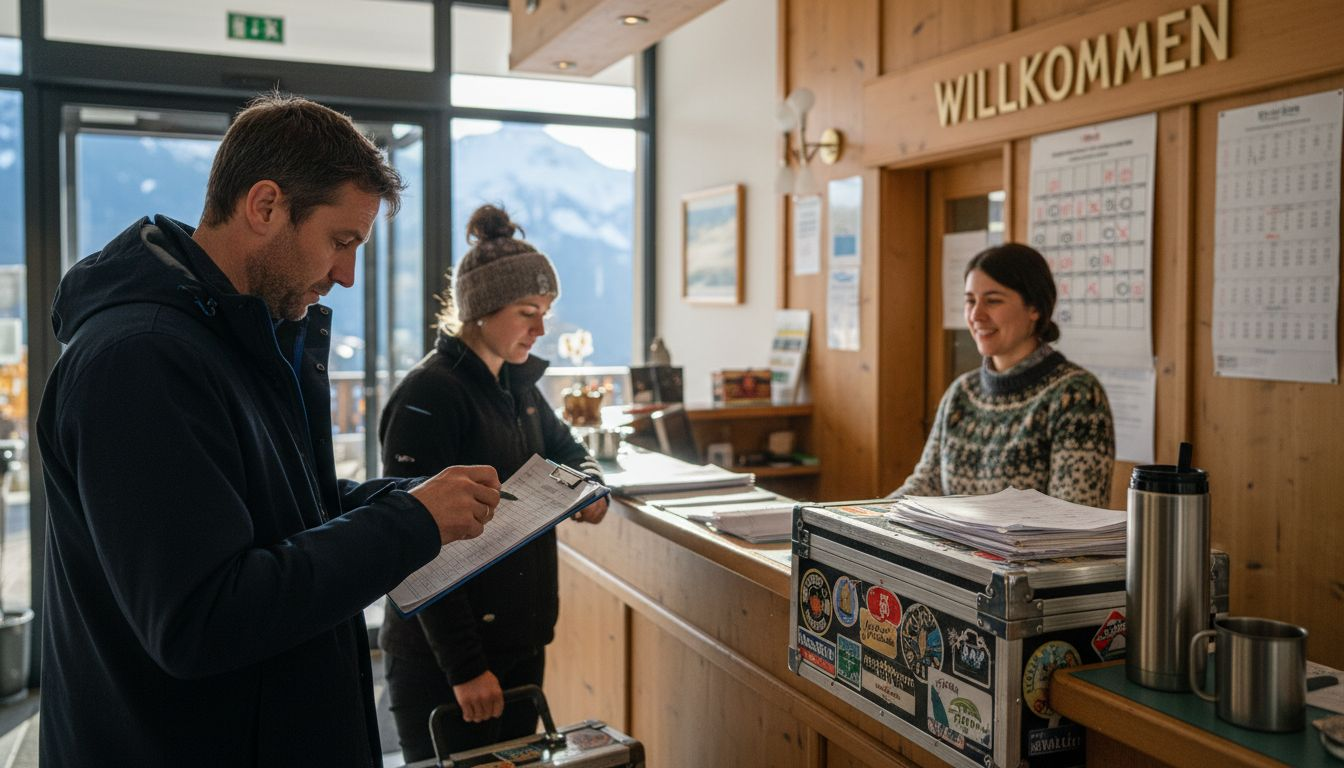
Coordinating accommodation for an international film crew in Switzerland comes with its own set of challenges. You need to balance comfort, proximity to beautiful Swiss locations, and shifting production needs—without letting your budget spiral out of control. Finding the right fit for your crew means making decisions that affect both morale and your bottom line.
The right approach covers much more than just finding enough beds. When you select spaces designed for groups and match accommodations to your crew’s actual needs, you avoid last-minute stress and costly changes. Focusing on details like location access, booking flexibility, and must-have amenities makes every shooting day smoother and more productive.
Get ready to discover actionable steps that will help you book smarter, keep your crew happy, and overcome common pitfalls. You are about to learn the insider strategies that make international productions in Switzerland run seamlessly, one practical tip at a time.
Table of Contents
Quick Summary
Takeaway | Explanation |
1. Assess Crew Needs Early | Identify crew roles, preferences, and requirements at least 4-6 weeks in advance to avoid mismatches and cancellations. |
2. Choose Proximity to Locations | Select accommodations within 20-30 minutes of shooting sites to reduce travel fatigue and improve on-set productivity. |
3. Prioritize Flexible Booking | Negotiate group rates and flexible cancellation policies to adapt to unexpected changes without financial penalties. |
4. Check Amenities for Comfort and Work | Ensure accommodations provide necessary workspaces and relaxation amenities to support crew productivity and recovery. |
5. Plan Special Requests in Advance | Communicate specific crew needs and logistical requirements early to streamline arrangements and ensure smooth operations. |
1. Assess Crew Needs and Room Requirements Early
The foundation of smooth crew accommodation starts with knowing exactly who you are housing and what they need before you even arrive in Switzerland. Many international producers make the mistake of booking rooms first and then figuring out the crew roster later, which inevitably leads to mismatches, cancellations, and wasted money. When you assess crew needs upfront, you avoid costly scrambling and ensure every team member has what they actually require for a focused, productive shoot.
Your crew needs assessment should address several key factors. Start by identifying how many people you are bringing and which roles they fill, since different positions have different priorities. A camera operator might prefer proximity to your shooting location to arrive early for setup, while a production assistant could be based further away if transportation is arranged. You should also determine dietary restrictions, accessibility requirements, and whether your crew needs single or shared rooms based on their contracts and preferences. Consider the length of stay, how many crew will be present at any given time if there is turnover, and whether team members will need quiet time for post-shoot work like log reviewing or color grading. The more specific you are about these details, the easier it becomes to match crew with accommodations that feel personal rather than generic.
Timing matters significantly here. You should complete this assessment at least 4 to 6 weeks before your shoot begins, giving you enough runway to source appropriate accommodations without premium rush fees. Once you have your crew profile locked down, communicate directly with each team member to confirm their exact needs rather than assuming. One seasoned production manager I know books a simple spreadsheet tracking crew names, roles, dates, specific needs, and any special requests, then shares it with her accommodation partner before negotiations begin. This prevents the awkward situation where you discover two days before arrival that your production designer needs a kitchenette for meal prep, or your steadicam operator requires ground floor access. Building this foundation transforms accommodation from a logistical headache into a strategic advantage.
Pro tip: Create a detailed crew roster spreadsheet 6 weeks ahead that lists each person’s role, arrival and departure dates, specific room requirements, dietary needs, and any accessibility or comfort preferences, then share it directly with your accommodation provider to ensure perfect matching from day one.
2. Choose Accommodations Close to Shooting Locations
Location proximity is one of those decisions that feels like a minor detail until your crew starts arriving exhausted after 90 minute commutes before dawn shoots. When you place accommodations strategically near your actual filming locations, you eliminate one of the biggest stressors on a production: travel fatigue. Your crew arrives fresher, stays more focused during long shoot days, and you avoid the cascade of problems that come from tired, frustrated team members. This single choice transforms the entire rhythm of your shoot.
The practical math is straightforward. If your shoot location is in the mountains outside Interlaken and your accommodations are in Zurich, your crew loses hours each day just traveling. That means earlier wake up times, higher stress levels, and reduced creative energy when they arrive on set. Beyond the obvious fatigue factor, commute times also impact your shooting schedule flexibility. When your team is close by, you can adjust call times based on weather or other production needs without worrying about transportation logistics collapsing. You gain the ability to extend shooting windows or pivot quickly if a location offers better light or conditions. Proximity also reduces your daily transportation costs and the wear on vehicles or rental equipment used for shuttle runs.
Start by mapping your primary shooting locations before you even begin your accommodation search. Identify the geographic center of your shoot days, then search for hotels, guesthouses, or rental apartments within 20 to 30 minutes of that core area. Switzerland’s excellent public transportation network means you do not always need accommodations within walking distance, but proximity to transit hubs matters significantly. If you are shooting in multiple locations across different regions, cluster your crew accommodations strategically around the longest or most intensive shoot days. A production manager working on Alpine footage told me she books accommodations closest to the location where the team will spend the most days, then arranges transportation for the secondary locations, which actually costs less than spreading accommodations thin across multiple areas. This approach keeps your core team grounded and connected while maintaining the flexibility you need.
Pro tip: Use a map tool to identify the geographic center point of all your shooting locations, then search for accommodations within a 25 minute radius of that center point to maximize crew comfort and minimize daily travel time.
3. Consider Local Transportation and Accessibility
Transportation infrastructure can make or break crew morale on an international shoot, and Switzerland presents a unique opportunity because of its exceptional public transit system. When you choose accommodations with strong access to trains, buses, and regional transit options, you give your crew independence and flexibility they would not have in many other countries. Your team can explore the area, handle personal errands, and move between locations without constant reliance on production vehicles or shuttle services. This autonomy reduces friction and creates a more positive overall experience during what can be an exhausting shoot schedule.
The accessibility question goes beyond just public transportation availability. You need to verify that your chosen accommodations are actually reachable by the transit methods available to your crew. A hotel near a train station sounds ideal until you realize the station has multiple levels with stairs and no elevator access. If you have crew members with mobility challenges, older team members, or anyone carrying substantial equipment, ground floor rooms near transit stops become critically important. Think through the full journey your team will take each day. Does the accommodation have accessible parking if some crew will drive? Is there luggage storage for early arrivals before check in time? Can the front desk arrange transportation if someone gets sick or needs to leave early? These details sound minor until your focus puller needs to get to a hospital at 2 AM or your production assistant’s back injury flares up and stairs become impossible.
Research the specific transit options available near your chosen accommodation areas well before booking. Switzerland’s public transportation network operates with remarkable efficiency, but not all small towns have the same frequency or coverage as major cities like Zurich or Geneva. Talk directly with potential accommodations about transportation logistics and accessibility features rather than relying on website photos alone. A production coordinator I know always visits accommodations virtually via video call with the property manager, specifically asking them to show entrance areas, room layouts, and nearby transit stops. This transforms an abstract booking into a concrete understanding of what your crew will actually experience. When your crew arrives without transportation stress, they bring energy and focus to the set instead of frustration.
Pro tip: Before booking any accommodation, verify it is within 10 minutes walking distance of a major transit hub and ask the property manager directly about accessibility features, elevator access, and luggage storage to ensure your entire crew can arrive and depart smoothly.
4. Prioritize Flexible Booking and Group Rates
Film production schedules shift. Weather delays shoots, locations change, crew members get sick, or post production timelines compress and suddenly your accommodation dates need adjustment. This reality makes flexible booking terms absolutely non negotiable for international productions. When you lock into rigid cancellation policies or inflexible rates, you absorb unnecessary financial risk that could have been avoided. Conversely, when you negotiate accommodations that allow modifications without massive penalties, you gain the breathing room that keeps your production sane and your budget protected.
Group rates represent one of your most powerful negotiating tools, yet many producers fail to leverage them effectively. Hotels and guesthouses understand that block bookings for 15 crew members create stable, predictable revenue compared to individual bookings that might cancel. This predictability gives them confidence to offer discounts ranging from 15 to 30 percent below standard nightly rates, depending on your group size and length of stay. Beyond the discount itself, group bookings often come with flexibility built in. A property manager expecting a coordinated production crew is far more willing to accommodate last minute adjustments, early check ins for equipment, or late checkouts for final packing. They also tend to provide better support when issues arise because they understand your stakes and want the production to succeed. The key is presenting yourself as a professional production entity booking multiple rooms at once, not as individual travelers who happen to be there simultaneously.
When you approach accommodations, start the conversation by stating your full group size, exact dates, and willingness to sign a group agreement that locks in your commitment. This honesty upfront opens doors. Ask directly about flexible cancellation policies and whether they offer production discounts. Many properties have rates they do not advertise to individual bookers but will discuss with production coordinators representing substantial bookings. A production manager I know always negotiates a clause allowing changes to individual room assignments within 48 hours of arrival without penalty, which handles the inevitable last minute crew swaps or arrivals that shift by a day. She also secures the right to modify total room count within 10 percent of her original booking, protecting herself against unexpected crew changes while maintaining the group rate discount.
Pro tip: When booking group accommodations, request written confirmation of your group rate discount, flexible cancellation terms for the block booking, and the ability to adjust individual room assignments up to 48 hours before arrival to handle typical production changes without penalty.
5. Check Amenities for Work and Rest Balance
Your crew will spend downtime at their accommodations, and what they find there directly impacts their energy levels and morale throughout the shoot. A basic hotel room with nothing but a bed and a television creates a hollow feeling after intense shooting days, leaving crew members restless or exhausted with no real recovery happening. When you choose accommodations that offer thoughtful amenities supporting both productivity and genuine rest, you create an environment where your team can decompress meaningfully, handle urgent work if needed, and actually recover between shifts. This balance between work capability and rest quality transforms how your crew performs on set.
The specific amenities that matter depend on your crew composition and shoot intensity, but several categories consistently emerge as important. Your team needs reliable, fast wifi and dedicated workspace because email correspondence, footage review, and creative problem solving do not stop when shooting ends for the day. A room with only a bed and desk becomes unusable when your editor needs to log footage or your production manager needs to handle vendor communications. Beyond work setup, your crew craves genuine rest amenities. A good gym or fitness facility helps release physical tension from long days holding equipment or standing on feet for 12 hours. Access to quality restaurants or kitchenette facilities matters tremendously because eating processed hotel room service every night compounds exhaustion. Outdoor space or walking areas provide crucial mental breaks and fresh air access. Some crew members will value a quiet reading area or dedicated common spaces where they can decompress with colleagues, while others will want complete privacy. The key is offering variety so different personality types find what they need.
When evaluating accommodations, ask specific questions about workspace quality beyond “does it have a desk.” Can the desk actually accommodate a laptop and external monitors if needed? Is the wifi speed sufficient for video file transfers, or is it the basic connectivity that works for browsing but struggles with production work? Does the property have quiet common areas or will your crew member trying to rest encounter a loud bar scene? A location manager I know always requests a video walkthrough of a sample room to assess lighting quality, noise levels from hallways or nearby streets, and whether amenities actually function properly. She also confirms that work areas have good ergonomic seating because back pain from hunching over a tiny desk undermines recovery just as much as actual work stress does.
Pro tip: Before booking, request a video tour of a standard room and specifically ask about wifi speeds measured in Mbps, workspace desk size and chair quality, availability of common quiet areas, fitness facilities, and nearby dining options so your crew can genuinely rest and recover between shoots.
6. Leverage Local Partners for Trusted Recommendations
Online reviews and booking platforms give you a surface level understanding of accommodations, but they cannot tell you how a property actually functions during a film production or what hidden issues emerge under real world shooting conditions. Local partners who work regularly with international production crews have tested accommodations under pressure and know which ones deliver reliability when it matters most. By tapping into these trusted networks, you gain access to institutional knowledge that saves you months of trial and error and protects you from expensive mistakes.
Local production companies, fixers, and location managers operating in Switzerland have accumulated years of direct experience with specific hotels, guesthouses, and rental properties. They know which accommodations handle last minute changes gracefully, which ones have genuinely reliable wifi despite what their website claims, and which properties have hidden issues like thin walls or unreliable hot water that online reviews miss. Beyond property knowledge, local partners understand the cultural context of Swiss hospitality and can help you navigate communication styles and expectations that might differ from your home country. They can also provide context about seasonal variations, special events that might impact availability, or neighborhood factors that affect crew comfort. When a local fixer recommends a specific accommodation, they are essentially staking their reputation on it because they know you will share feedback with other producers. This creates accountability that commercial review platforms simply do not have.
The practical way to leverage this is to start conversations with local partners early in your pre production process. Ask them directly which accommodations they have used successfully and why they trust those specific properties. Ask about specific properties you are considering and whether they have heard feedback from other productions. Many local partners will already have preferred vendor relationships and can facilitate introductions or negotiations on your behalf. When you work with experienced production support services like those offering localized video production strategies, they come with existing accommodation networks refined through dozens of international shoots. A production manager I know always requests three personal recommendations from her local Swiss partner before she books anything, and she specifically asks about accommodations that handled crew of her exact size and shoot duration. She then cross references those recommendations with online reviews to confirm consistency, using local insight as the primary filter.
Pro tip: Contact your local production partner or fixer at least six weeks before your shoot and ask for three specific accommodation recommendations based on your crew size, budget, and location needs, then verify their suggestions against recent online reviews to confirm consistency before booking.
7. Plan for Permits and Special Requests in Advance
Accommodation planning intersects with broader production logistics in ways many producers overlook until problems emerge at the last moment. Special requests from crew members, parking permits for production vehicles, early check ins for equipment delivery, and accessibility accommodations all require advance coordination with your accommodation provider. When you plan these details early, you transform what could become accommodation nightmares into smooth, expected logistics that your property manager handles as a normal part of the process.
Special requests fall into several critical categories that demand different lead times and negotiation approaches. Some are personal accommodations like dietary restrictions, accessibility needs, or room preferences based on health conditions or personal requirements. Others are production related, such as needing a storage room for equipment, requesting ground floor access for early morning gear setup, or requiring extended checkout times for final packing. Parking presents its own complexity because many Swiss accommodations have limited or paid parking that needs to be arranged separately from room bookings. Early arrival situations also require advance planning because standard check in times rarely align with production schedules. If your crew is arriving at 6 AM to begin setup, you cannot expect the property to have rooms ready at that hour unless you have negotiated it weeks in advance. Understanding how filming permits work helps you anticipate which crew members might need special accommodations or access arrangements for their specific roles on set.
The timing for these conversations matters significantly. You should communicate all special requests and logistical needs when you initially book your group accommodations, not as afterthoughts days before arrival. Create a comprehensive list detailing every special need, production requirement, and logistical consideration, then share it with your accommodation provider in writing so there is clear documentation of what you have requested and what they have agreed to provide. A production coordinator I know builds a detailed accommodation logistics sheet listing each crew member, their room preferences, parking needs, any dietary restrictions, required arrival times, and any production equipment storage or access requirements. She shares this with the property manager at least three weeks before arrival, then confirms receipt and confirms again one week out. This redundant communication approach ensures nothing falls through the cracks and gives the property manager time to prepare or flag any requests they cannot accommodate before you arrive on Swiss soil.
Pro tip: Create a detailed special requests and logistics list at least four weeks before your shoot, including crew dietary needs, accessibility requirements, parking arrangements, early arrival access, equipment storage, and checkout timing, then share it in writing with your accommodation provider and confirm receipt twice before arrival.
Below is a comprehensive table summarizing effective strategies and considerations for international production crew accommodation planning in Switzerland.
Strategy | Implementation Steps | Key Benefits |
Assess Crew Needs Early | Evaluate crew roles, preferences, dietary requirements, and accessibility requirements 6 weeks before arrival; compile this information in a detailed spreadsheet and communicate with accommodations. | Ensures personalized room arrangements, avoids mismatches, and reduces logistical costs. |
Prioritize Location Proximity | Select accommodations within a 20-30 minute radius of the primary shooting locations and near public transportation hubs. | Reduces travel fatigue, enhances scheduling flexibility, and cuts transportation costs. |
Leverage Local Partners | Work with experienced local production coordinators or fixers for accommodation recommendations based on real-world experiences. | Offers reliable options vetted under production conditions, ensuring smooth crew experiences. |
Opt for Flexible Bookings | Negotiate flexible cancellation policies, group rates, and adjustable room assignments during the booking phase. | Adapts to unpredictable production changes while minimizing financial risk. |
Specify Amenities | Evaluate properties for high-speed internet, adequate workspace, fitness facilities, and personable rest areas. | Supports crew productivity, comfort, and recovery during the shoot. |
Plan Logistics and Special Requests | Communicate and document detailed needs (e.g., early check-ins, parking, dietary requests) with providers three weeks in advance. | Provides clarity for accommodations, avoiding last-minute complications. |
This table encapsulates the essential aspects of ensuring effective and efficient crew lodging during film production in Switzerland.
Streamline Your Film Crew Accommodation for Stress-Free Shoots in Switzerland
Navigating the complexities of crew accommodation can drain your time and energy before your production even begins. From choosing locations close to shooting sites to securing flexible group rates and managing special requests, every detail shapes your crew’s comfort and focus. At Video Production Switzerland, we understand these challenges and offer expert logistical support tailored to your specific crew needs. Our local knowledge and over 20 years of experience ensure that your accommodation plans are proactive, flexible, and perfectly aligned with your shoot schedule.
Ready to eliminate last-minute accommodation headaches and safeguard your production budget? Connect with our team early to benefit from strategic planning, trusted local partnerships, and comprehensive solutions that cover everything from permits to transportation. Discover how partnering with Video Production Switzerland transforms accommodation logistics into a production advantage. Start now with a free consultation and experience smooth, hassle-free shoots backed by true local expertise.
Frequently Asked Questions
How can I assess my crew’s accommodation needs effectively?
Start by creating a detailed crew roster that outlines each member’s role, arrival and departure dates, specific room requirements, dietary preferences, and accessibility needs. Complete this assessment at least 4 to 6 weeks before your shoot to avoid last-minute problems.
What factors should I consider when choosing accommodation locations?
Ensure that your accommodations are close to your primary shooting locations to reduce travel time and fatigue for your crew. Map your filming sites to find hotels or guesthouses within a 20 to 30-minute radius to maximize comfort and flexibility during production.
How can I negotiate flexible booking options for crew accommodations?
When booking accommodations, emphasize that you are coordinating a group stay and request flexible cancellation policies. You can secure better terms by asking for discounts based on your group size and ensuring modifications can be made without penalties at least up to 48 hours before arrival.
What amenities should I look for to support both work and rest for my crew?
Choose accommodations that offer strong wifi, adequate workspace, fitness facilities, and dining options. Prioritize properties that provide different relaxation areas so crew members can confidently unwind and recuperate between long shooting days.
How do I leverage local recommendations for accommodations?
Engage local partners or production fixers early in your planning process to gain insights on which accommodations have proven reliable for past productions. Ask for at least three recommended properties and cross-reference their suggestions with online reviews for consistency.
What special requests should I plan for in advance?
Compile a list of special requests including dietary needs, early check-ins, and equipment storage requirements. Share this comprehensive list with your accommodation provider at least four weeks before your shoot to ensure they can accommodate all logistical details smoothly.
Recommended
