
Create a Creative Brief for Video Production Easily


Every successful video project begins with a strong foundation, yet nearly 60 percent of teams skip key planning steps and risk missing their mark. For any american business or creator, understanding the audience and setting clear goals are what separate standout content from forgettable clips. With a focused approach to project goals, messaging, and visual choices, you can build videos that truly resonate and drive results rather than get lost in the noise.
Table of Contents
Quick Summary
Key Insight | Explanation |
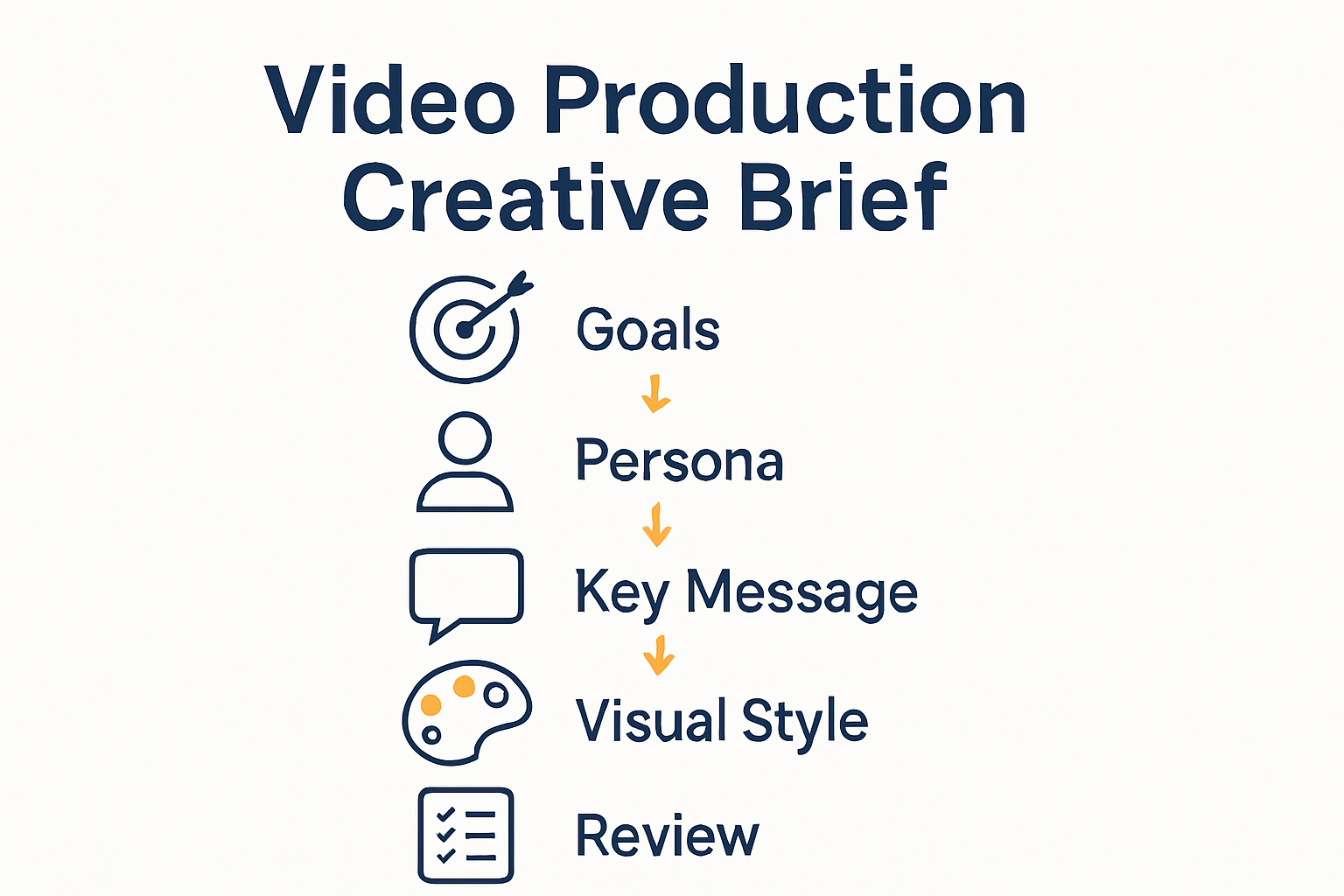
1. Define Clear Project Goals | Establish what message you want to convey and action desired from viewers. |
2. Identify Your Target Audience | Develop detailed audience personas using data for tailored content. |
3. Clarify Key Messages | Simplify core ideas into strong, memorable statements for effective communication. |
4. Choose Appropriate Visual Style | Align visual elements with audience preferences to enhance emotional connection. |
5. Validate Creative Brief | Review the brief with stakeholders to ensure alignment with project vision and make adjustments if needed. |
Step 1: Identify Project Goals and Target Audience
Creating a successful video production starts with crystal clear project goals and a well defined target audience. According to Al Jazeera, developing comprehensive audience personas is essential for tailoring video content that truly resonates.
To begin mapping your project goals, ask yourself a series of strategic questions. What core message are you trying to communicate? Who needs to hear this message? What specific action do you want viewers to take after watching? Your goals might range from brand awareness and education to direct sales conversion or emotional storytelling. Next, dive into audience research by building a detailed demographic profile. Walden University recommends examining key characteristics like age, gender, income level, cultural background, and media consumption habits.
Pro tip: Don’t just guess about your audience. Use actual data from market research, social media insights, and customer surveys to build accurate audience personas. The more specific you can be about who will watch your video, the more effectively you can craft a message that speaks directly to their needs and interests. As you move forward, keep refining your understanding of both your project goals and target audience to ensure your video production hits the mark.

Step 2: Define Key Messages and Core Concepts
Defining the key messages and core concepts for your video production is a critical step that will determine how effectively your story communicates with viewers. Arxiv research emphasizes that clarity and focus are essential when conveying a project’s vision through video.
Start by distilling your project’s most important ideas into their simplest, most powerful form. According to Scribd, the best core messages can often be summarized in a single compelling sentence. Ask yourself: What is the fundamental story or emotion you want to communicate? What single thought should viewers remember after watching? Break down your core message into three to five key points that support your central narrative. These points should be specific, memorable, and directly aligned with the project goals and target audience you previously identified.
Pro tip: Test your key messages with a small group of people who represent your target audience. Their feedback can help you refine your concepts and ensure they truly resonate. If multiple people struggle to understand or connect with your message, it might be too complex or unfocused. Aim for clarity that feels both intellectually engaging and emotionally authentic.
Your goal is to create a message that not only informs but also inspires and motivates your viewers.
Step 3: Establish Visual Style and Tone Preferences
Selecting the right visual style and tone for your video production is more than an aesthetic choice. It is a strategic decision that directly impacts how your message connects with viewers. FYC Studio emphasizes that aligning visual elements with your target audience’s preferences is crucial for creating a truly resonant video experience.
Begin by creating a mood board that captures the emotional landscape of your project. Consider the visual language that will best communicate your key messages. Are you aiming for a professional and sleek look? A warm and inviting feel? A high energy and dynamic approach? Your visual style should reflect both your brand identity and your audience’s expectations. Think about color palettes, lighting techniques, camera angles, and graphic design elements that will support your core narrative. For instance, a corporate training video will look dramatically different from a youth lifestyle commercial.
Pro tip: Always create visual style samples and test them with a small segment of your target audience. Their feedback can reveal nuanced preferences you might have missed. Pay attention to emotional reactions not just intellectual responses. A visual style that makes your audience feel something is far more powerful than one that merely looks good. As you move forward, remember that your visual choices are a language of their own speaking directly to your viewers emotions and intellect.
Step 4: Outline Production Requirements and Deliverables
Defining clear production requirements and deliverables transforms your creative vision into a tangible roadmap for success. Resources highlight the critical importance of determining project purpose, identifying target audience, and meticulously planning logistics to ensure smooth project execution.
Start by creating a comprehensive checklist that breaks down every aspect of your production. According to CDNX, this should include specific details about product concepts, project goals, and appropriate delivery mediums. Consider documenting requirements such as equipment needs, crew roles, shooting locations, technical specifications, post production requirements, and final deliverable formats. Be as specific as possible your budget, timeline, and expected output formats. Will you need a 30 second commercial, a full length documentary, or multiple versions for different platforms?
Pro tip: Build flexibility into your requirements. While specificity is crucial, leave room for creative adaptation. Your understanding the video production brief can help you create a document that guides without constraining. Think of your production requirements as a strategic framework that provides direction while allowing creative teams the space to innovate and respond to unexpected opportunities during filming.
Step 5: Review and Validate the Creative Brief
The final step of creating your creative brief is a critical validation process that ensures every element aligns perfectly with your project vision. Scribd emphasizes the importance of confirming that all key components such as target audience, core message, and media format are well defined and strategically connected.
Take a systematic approach to reviewing your creative brief. Read through each section critically, asking yourself whether the document truly captures the essence of your project. Does the target audience profile feel authentic? Are the key messages clear and compelling? Do the visual style preferences genuinely reflect your brand identity? Involve key stakeholders in this review process to gain multiple perspectives. Ask team members to challenge assumptions and identify potential gaps or inconsistencies. Look for areas where the brief might be too vague or overly restrictive.
Pro tip: Create a validation checklist that includes specific questions for each section of your creative brief. For a deeper understanding of this process, check out our complete guide to film production project management.
Remember that a great creative brief is a living document. Be prepared to make adjustments as your project evolves, but always maintain the core strategic vision that guides your production from concept to final deliverable.
Streamline Your Creative Brief Into Seamless Video Production Success
Crafting a clear creative brief is essential for defining your project goals, pinpointing your target audience, and shaping your key messages. Yet turning this powerful vision into reality can be overwhelming without expert guidance and local insights. If you want to avoid common pitfalls such as unclear visual style decisions or logistical headaches from permits and equipment sourcing, partnering with professionals makes all the difference.
At Video Production Switzerland, we specialize in transforming your creative brief into a flawlessly executed shoot. Our experienced team understands the crucial details like aligning visual tone with audience preferences, managing complex shoot logistics, and securing trusted local crews. We help you focus on your message while we handle the production roadmap with precision and care.
Ready to bring your creative brief to life with confidence and ease Start with a free consultation today at Video Production Switzerland where your project vision is matched with expert local production support Keep your video project on track, on budget, and exactly as you imagined. Discover how streamlined production planning and trusted execution can turn your ideas into stunning, effective videos.
Frequently Asked Questions
What are the first steps to create a creative brief for video production?
Start by identifying your project goals and target audience. Define what core message you want to communicate and outline who needs to hear it, ensuring clarity right from the beginning.
How do I define key messages for my video production?
To define key messages, distill your project’s most important ideas into simple, memorable points. Focus on capturing the fundamental story or emotion you want to convey, ideally summarizing it in a single sentence supported by three to five key points.
What should I include in my visual style and tone considerations?
Determine the visual style and tone that best communicates your key messages, considering elements like color palettes, lighting, and graphic design. Create a mood board to visually represent the emotional aspects of your project and ensure it aligns with your target audience’s preferences.
How can I outline production requirements and deliverables effectively?
Create a comprehensive checklist that details every aspect of your production, such as equipment needs, crew roles, and shooting locations. Be sure to specify your budget and timeline, while also allowing flexibility for creative adaptation during the process.
What steps should I take to review and validate my creative brief?
Systematically review your creative brief by checking each section to ensure it aligns with your project vision. Involve key stakeholders in the review process, invite their feedback, and be ready to make adjustments as needed to refine your brief further.
Recommended
