
Automating Video Editing: Transforming Production Efficiency

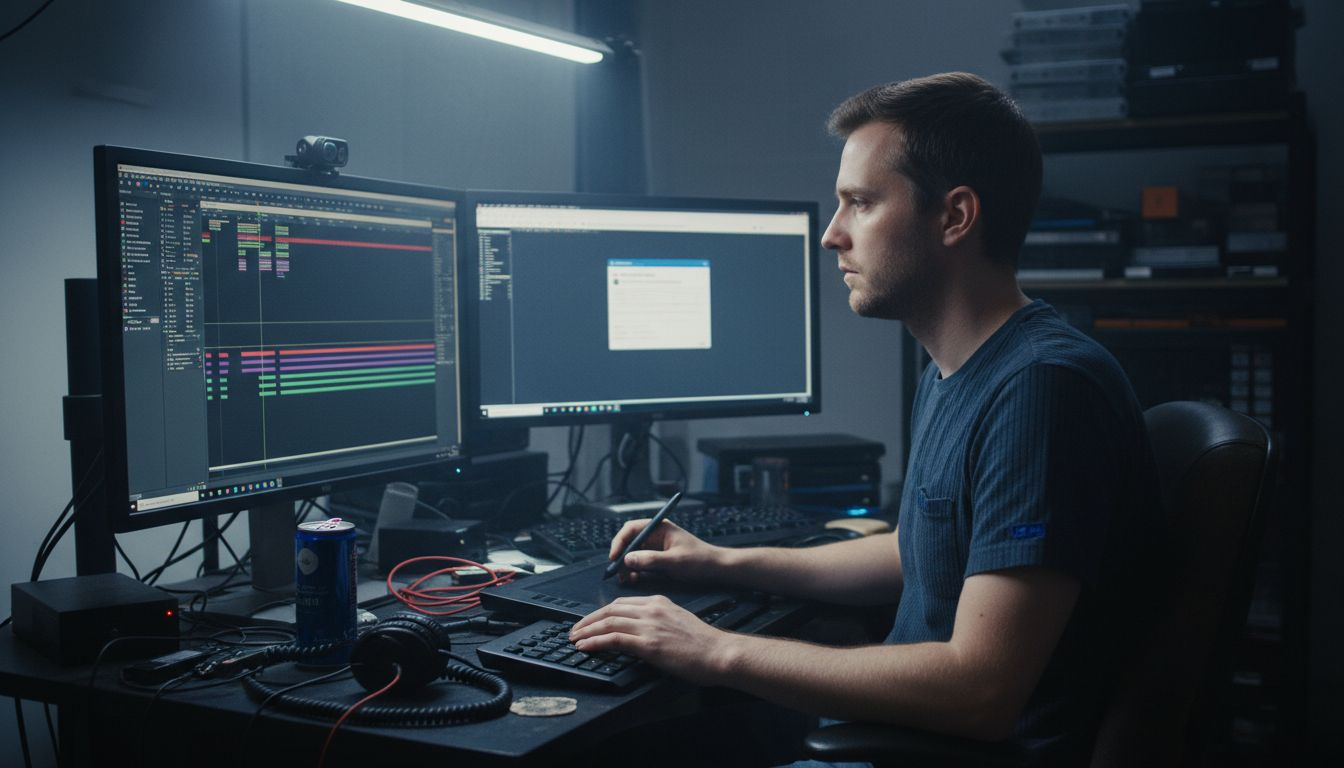
Over seventy percent of american, European, and Asian filmmakers now rely on automated systems to accelerate post-production. For those juggling tight deadlines and cross-border logistics in Switzerland, the demand for intelligent video editing solutions has skyrocketed. Video editing automation is redefining creative workflows by reducing tedious manual work and enabling global teams to deliver cohesive content faster than ever. Discover how emerging tools can transform efficiency for international filmmakers and brand managers navigating the complex Swiss filmmaking landscape.
Table of Contents
Key Takeaways
Point | Details |
Video Editing Automation Enhances Efficiency | Automation tools streamline repetitive tasks, enabling faster video production while maintaining quality. |
AI Tools Augment Creativity | Advanced AI editing systems support editors by providing intelligent suggestions, allowing for a focus on creative decisions. |
Legal and Ethical Considerations are Vital | The rise of AI in video editing highlights important legal issues like copyright and consent that creators must navigate carefully. |
Gradual Integration of Automation is Recommended | Start by applying automation to simple tasks to build confidence and understand the technology’s capabilities before scaling. |
What Is Video Editing Automation?
Video editing automation represents a transformative technological approach that leverages software and artificial intelligence to streamline complex post-production workflows. At its core, automation reduces manual intervention by using intelligent systems to perform repetitive editing tasks with precision and speed. Modern intelligent video editing tools now leverage advanced technologies like computer vision and metadata analysis to facilitate smart video manipulation.
The fundamental goal of video editing automation is to optimize production efficiency by minimizing time-consuming manual processes. This includes automatically cutting segments, re-sequencing clips, adding transitions, and applying effects without constant human intervention. Non-linear editing systems have dramatically democratized these capabilities, enabling filmmakers and content creators to work more strategically by reducing technical overhead.
Key characteristics of video editing automation include intelligent clip selection, automatic color correction, smart audio synchronization, and AI-powered editing recommendations. While current technologies cannot fully replace human creativity, they significantly augment an editor’s capabilities by handling routine tasks and providing intelligent suggestions. These tools analyze video content, understand contextual relationships, and make sophisticated editing decisions that previously required extensive manual review.
Pro tip: Start integrating automation tools gradually by first automating simple, repetitive tasks like color grading or basic transitions to build confidence in the technology.
Types of Automated Editing Solutions
Automated video editing solutions represent a diverse spectrum of technological innovations designed to streamline post-production processes. Sophisticated AI systems now offer intelligent capabilities ranging from basic adjustments to advanced creative interventions, transforming how video content is manipulated and refined.
These solutions can be categorized into several key types. Metadata-driven editing utilizes contextual information to make intelligent editing choices, while computer vision technologies enable automatic scene detection, object recognition, and intelligent reframing. Advanced editing tools now leverage natural language processing to analyze dialogue, emotional content, and transcript-based editing strategies, allowing for more nuanced automated editing approaches.
The most innovative automated editing solutions focus on complex tasks previously reserved for human editors. These include intelligent clip selection, automatic pacing adjustments, color grading optimization, and even preliminary rough cut generation. While current technologies cannot fully replace human creativity, they significantly augment an editor’s workflow by handling repetitive tasks and providing intelligent suggestions that reduce overall production time and complexity.
Here’s a summary of the main types of automated video editing solutions and how they impact modern filmmaking:
Solution Type | Key Technology | Typical Usage | Workflow Impact |
Metadata-driven | Contextual analysis | Scene sorting, clip selection | Speeds up manual review |
Computer vision | Object/scene detection | Intelligent reframing, timing | Improves visual coherence |
Natural Language Processing | Dialogue and emotion analysis | Transcript-based editing | Enhances narrative structure |
Pro tip: Evaluate automated editing tools by testing them on smaller projects first, focusing on specific repetitive tasks to understand their strengths and limitations before integrating them into larger production workflows.
How AI Video Editors Work in 2026
Emerging AI video editing technologies are revolutionizing post-production workflows by automating increasingly complex editing tasks with unprecedented precision. By 2026, artificial intelligence is projected to handle up to 70% of routine editing processes, dramatically transforming how visual storytellers approach content creation. These advanced systems go far beyond basic mechanical editing, integrating sophisticated machine learning algorithms that can understand narrative structures and creative intent.

Prompt-based editing represents a groundbreaking development in AI video production. Creators can now provide high-level creative directions, and intelligent systems will autonomously execute intricate visual effects, scene transitions, and stylistic modifications. The technology enables remarkable capabilities such as multicam synchronization, automatic silence removal, intelligent clip search, and rapid rough cut generation. This approach fundamentally shifts the editor’s role from technical executor to creative director and AI collaboration specialist.
The most sophisticated AI video editing platforms in 2026 will feature nuanced understanding of storytelling principles, emotional narrative arcs, and contextual visual coherence. These systems will not merely follow algorithmic rules but will interpret creative intent, suggesting edits that enhance narrative flow and emotional impact. Editors will need to develop new skills in prompt engineering, AI pipeline management, and creative machine collaboration to maximize these powerful technological capabilities.
Pro tip: Invest time in learning prompt engineering and AI interaction techniques to stay competitive in the evolving video production landscape.
Benefits and Limitations of Automation
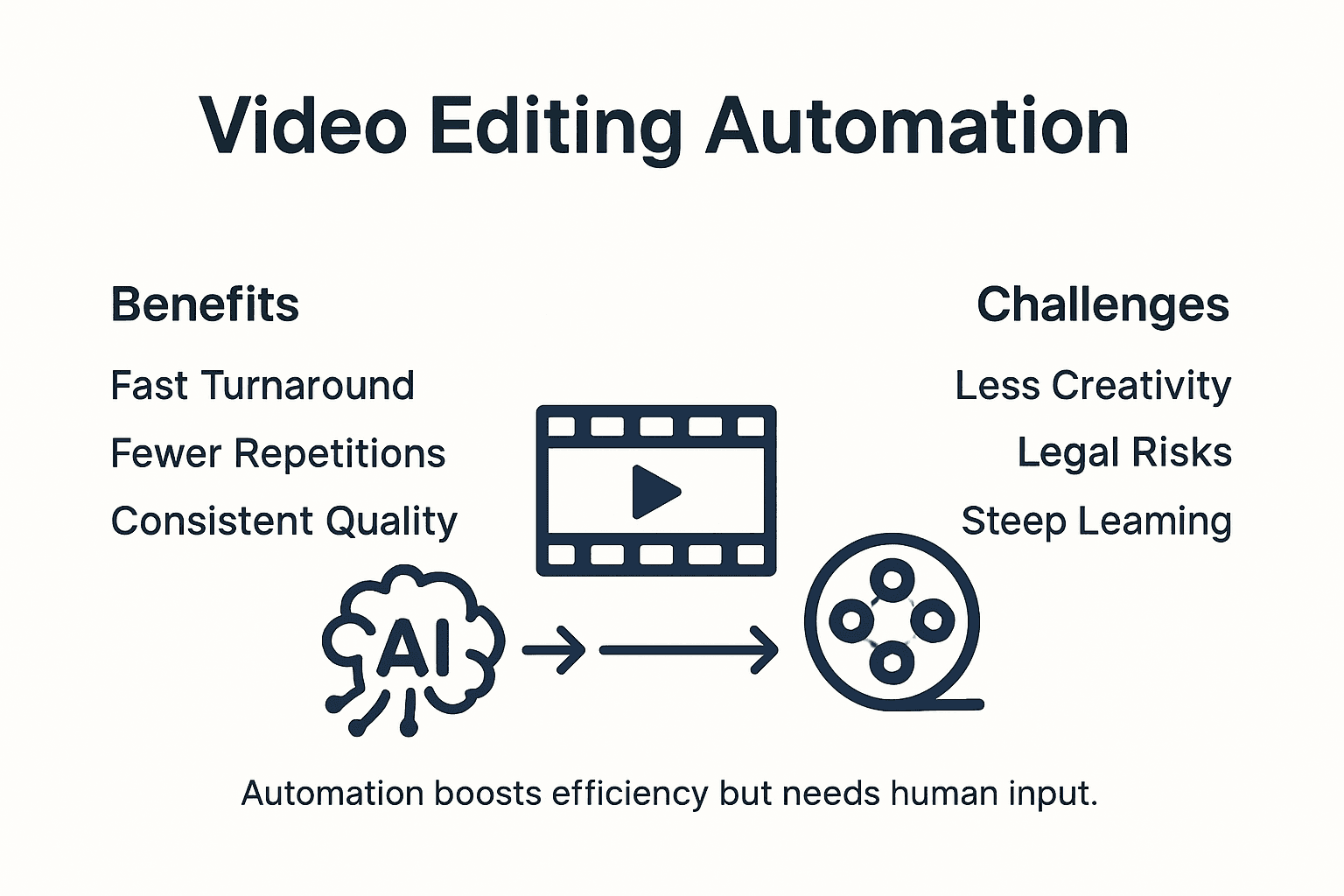
AI editing technologies have fundamentally transformed video production workflows by offering unprecedented efficiency and precision. These advanced systems can rapidly detect errors, suggest improvements, and handle repetitive tasks with remarkable consistency. By automating time-consuming processes like color correction, audio cleanup, and transition selection, video production teams can dramatically reduce manual workload and accelerate project timelines.
Workflow efficiency represents the most significant benefit of video editing automation. Organizations can achieve faster content production, lower operational costs, and improved scalability. However, these technologies are not without complexity. Despite their impressive capabilities, AI editing solutions currently struggle with nuanced creative decisions that require deep emotional intelligence and artistic interpretation. The tools are designed to augment human creativity rather than completely replace skilled editors.
The most sophisticated automated editing platforms balance technical precision with creative flexibility. While they excel at detecting technical imperfections and streamlining routine tasks, current AI systems face substantial limitations in understanding contextual subtleties and maintaining consistent artistic vision. Ethical considerations also emerge, particularly around data usage, potential bias in automated systems, and the preservation of creative authenticity in machine-driven editing processes.
The following table highlights the major benefits and limitations of AI-driven editing solutions for video production teams:
Benefit | Limitation | Business Impact |
Accelerated turnaround | Creative nuance not automated | Quicker delivery to clients |
Error detection | Potential algorithmic bias | Higher technical quality |
Cost reduction | Challenges with authenticity | Lower operational expenses |
Pro tip: Treat AI editing tools as collaborative partners, using their efficiency for technical tasks while reserving complex creative decisions for human expertise.
Common Pitfalls and Legal Concerns
Digital video creator tools are navigating an increasingly complex ethical and legal landscape that challenges traditional intellectual property and privacy frameworks. The rapid advancement of artificial intelligence in video production introduces unprecedented risks around copyright infringement, digital consent, and potential misuse of automated technologies. These challenges demand a sophisticated approach to understanding emerging legal boundaries and protecting creative rights.
Intellectual property disputes represent a critical concern in AI-driven video editing. Global regulatory frameworks struggle to definitively establish ownership of AI-generated content, creating uncertainty for creators and production companies. Multinational productions face additional complexity, as legal standards vary significantly across different jurisdictions, requiring nuanced understanding of international intellectual property laws and digital content regulations.
The most significant legal challenges emerge from AI’s capacity to generate synthetic media, including deepfakes and digital replicas. Consent and authenticity become paramount concerns, with potential risks of privacy violations, algorithmic bias, and unauthorized digital representations. Production teams must develop robust governance protocols that prioritize transparency, obtain explicit permissions, and implement strict ethical guidelines to mitigate potential legal vulnerabilities.
Pro tip: Develop a comprehensive legal and ethical checklist for AI-generated content, including explicit consent protocols, ownership documentation, and clear usage permissions before integrating automated editing technologies.
Real-World Use Cases for Filmmakers
Generative AI technologies are dramatically transforming filmmaking by enabling unprecedented creative possibilities across production stages. Independent filmmakers and studio professionals now leverage advanced artificial intelligence to generate complex visual elements, create virtual characters, and streamline sophisticated post-production workflows. These innovative tools allow creators to experiment with storytelling techniques that were previously prohibitively expensive or technically impossible.
The most compelling use cases emerge in visual effects and character development. Facial motion capture and digital actor technologies now enable filmmakers to generate incredibly nuanced digital representations, manipulate performances, and create hybrid human-AI generated content. AI applications in film production extend beyond visual manipulation, providing robust capabilities in pre-production planning, script analysis, and automated scene assembly that significantly reduce production timelines and operational costs.
Advanced AI tools are revolutionizing creative workflows by offering intelligent solutions for complex filmmaking challenges. These technologies can generate 3D assets, create morphing effects, seamlessly integrate AI-generated elements with real footage, and provide dynamic scene reconstruction. Filmmakers can now experiment with narrative techniques and visual styles that were previously constrained by traditional production limitations, opening entirely new dimensions of storytelling and visual expression.
Pro tip: Start integrating AI tools incrementally by first experimenting with specific, low-risk production elements to build confidence and understand the technology’s creative potential.
Boost Your Video Production Efficiency with Trusted Local Support
The article highlights how video editing automation is transforming production by reducing repetitive tasks and accelerating workflows with AI-powered solutions. Yet, even with advanced editing technologies handling technical elements, managing on-location logistics, crew coordination, and permit acquisition remains a critical challenge for seamless project execution. This is where expert local knowledge and reliable coordination make all the difference.
VideoProductionSwitzerland.com specializes in delivering stress-free, fully managed production services across Switzerland. With over 20 years of experience, they provide trusted crew sourcing, equipment rentals, location scouting, transportation, and permit handling to ensure your shoot stays on schedule and meets high-quality standards. Their client-centric approach perfectly complements automated editing workflows by removing operational headaches so you can focus on creative direction and storytelling.
Explore how Video Production Switzerland’s services can empower your next project with smooth production logistics and reliable local expertise.
Ready to maximize your production speed and quality? Partner with a local team that understands the unique demands of international video projects. Visit Video Production Switzerland now for a free consultation and start turning your automated video editing workflows into flawless final products.
Frequently Asked Questions
What is video editing automation?
Video editing automation uses software and artificial intelligence to streamline repetitive editing tasks, reducing manual intervention and improving production efficiency.
How do AI video editors improve workflow for filmmakers?
AI video editors enhance workflow by handling time-consuming processes like color correction, audio synchronization, and clip selection, allowing filmmakers to focus on creative decisions and reduce overall production time.
What types of automated editing solutions are available?
Automated editing solutions include metadata-driven editing, computer vision technologies for scene detection, and natural language processing that enables transcript-based editing to enhance narrative structure.
What are the main benefits and limitations of AI video editing?
The main benefits include accelerated turnaround times and improved technical quality, while limitations can involve the loss of nuanced creative decision-making and potential algorithmic bias.
Recommended
