
Ziplining in Interlaken: Logistics for Filmmakers

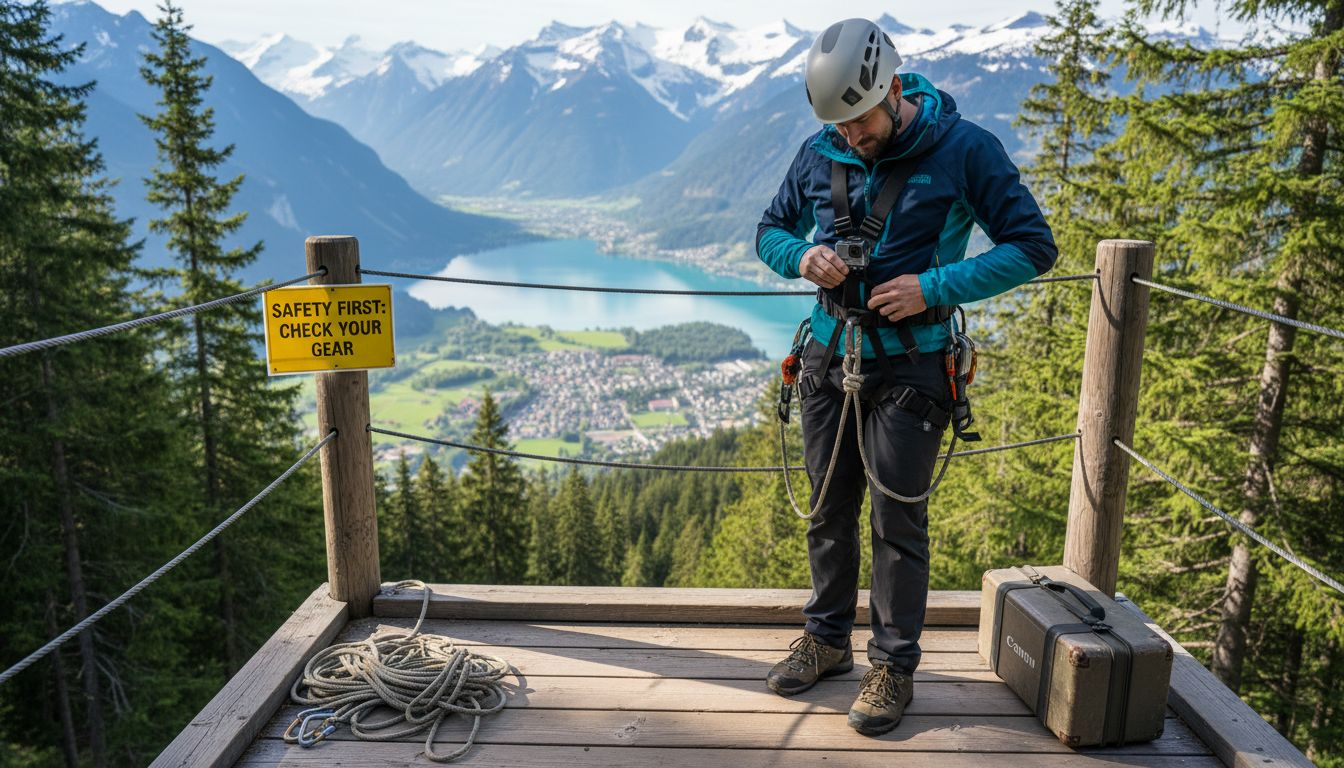
Securing the right location for a ziplining shoot can make or break your production schedule. Interlaken stands out for its nine rope courses, offering over 160 thrilling obstacles and zip lines set high in the treetops with epic Swiss mountain views. For international filmmakers, this setting combines technical challenge and breathtaking visuals, while professional safety protocols and flexible access help simplify logistics for smooth, stress-free filming.
Table of Contents
Key Takeaways
Point | Details |
Unique Adventure Experience | Ziplining in Interlaken offers diverse challenges suitable for various skill levels, ideal for both adventurers and filmmakers. |
Filming Opportunities | The park provides breathtaking backdrops and detailed structures, making it a prime location for dynamic visual narratives. |
Safety Protocols | Comprehensive safety briefings and equipment checks are mandatory to ensure participant safety during all activities. |
Logistical Planning | Advance coordination with park management is essential for securing filming permits and optimizing production logistics. |
What Ziplining in Interlaken Involves
Ziplining in Interlaken represents an extraordinary adventure nestled within the breathtaking Bernese Oberland landscape. This alpine adventure park offers a remarkable experience that combines adrenaline, natural beauty, and technical challenge for filmmakers seeking unique shooting locations. Nine distinct ropes courses create a complex network of aerial challenges suspended up to 20 meters above ground.
The park features an impressive array of obstacles designed to challenge participants across multiple skill levels. Adventurers can navigate through approximately 160 different challenges, including zip lines, suspended wooden bridges, swing platforms, and Tarzan-style rope swings. These courses are strategically designed to provide progressively complex routes that accommodate everything from novice climbers to experienced adventure seekers.
For filmmaking professionals, this environment offers extraordinary visual opportunities. The intricate rope structures, dramatic mountain backdrops, and varied terrain provide dynamic shooting locations that can capture both high-intensity action sequences and serene landscape perspectives. Each course presents unique angles and movement possibilities that could translate into compelling visual narratives.
Safety remains paramount in these aerial experiences. Participants receive comprehensive safety briefings and are equipped with professional-grade harnesses, carabiners, and protective gear before attempting any obstacles. The entire experience typically spans 2.5 to 3 hours, allowing ample time for exploration and potential film production setup.
Pro tip: Coordinate with park management in advance to secure exclusive filming permissions and understand specific logistical requirements for professional video production.
Types of Zipline Experiences Available
Interlaken’s zipline experiences represent a diverse range of aerial adventures designed to cater to various skill levels and age groups. Nine distinct ropes courses offer an intricate network of challenges that transform the alpine landscape into an extraordinary playground for adventure seekers and filmmakers alike.
The park’s course configurations span multiple difficulty levels, creating a comprehensive adventure environment. Beginners can explore gentler routes, including a specialized butterfly path suitable for children, while advanced participants can tackle more demanding challenges. Adult-oriented courses reach heights of 20 meters and include dynamic obstacles like giant swings, speed lines achieving velocities up to 50 km/h, and complex aerial navigation routes that test physical agility and mental focus.
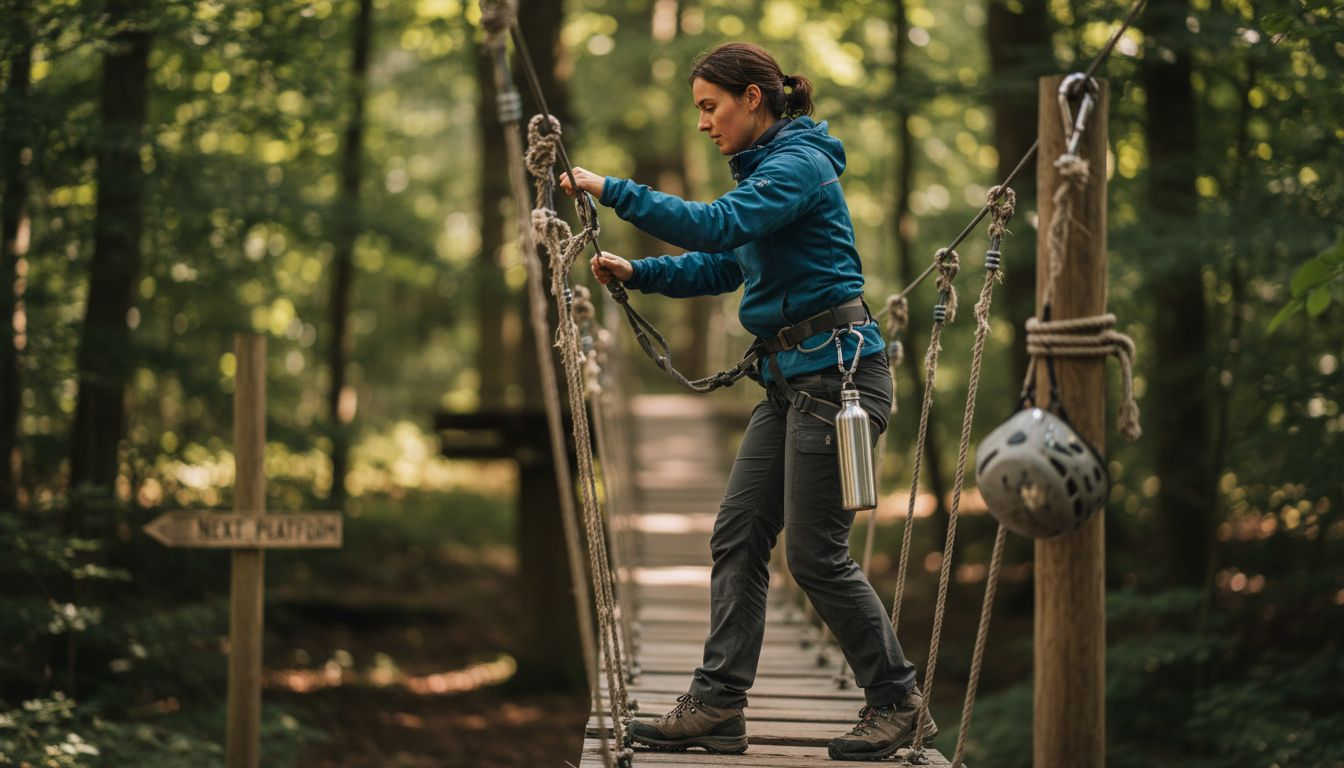
For filmmaking professionals, these varied experiences present unique opportunities for capturing dynamic visual narratives. The courses include specialized elements such as jump nets, slacklines, vertical rush platforms, and base jump simulators. These features not only provide thrilling experiences for participants but also offer cinematographers extraordinary perspectives for action sequence filming. The varied terrain, complex rope structures, and dramatic mountain backgrounds create a multifaceted environment perfect for capturing high-intensity adventure footage.
Safety remains a cornerstone of these zipline experiences. Every course is professionally supervised, with comprehensive safety briefings and top-tier protective equipment provided to all participants. Instructors ensure that each experience, regardless of difficulty level, maintains the highest standards of participant security while delivering an exhilarating aerial adventure.
The table below compares zipline course features to help filmmakers select optimal shooting locations:
Course Type | Height Range | Key Obstacles | Filming Potential |
Beginner | Up to 5 meters | Butterfly course, bridges | Safe, stable shots of families |
Intermediate | 5-15 meters | Rope swings, platforms | Action shots, scenic panoramas |
Advanced | Up to 20 meters | Base jump, speed lines | Dramatic aerial sequences, stunts |
Children’s Course | Low to mid height | Gentler swings, small zips | Playful, close-up participant shots |
Pro tip: Request detailed course maps and obstacle specifications in advance to strategically plan your film production and identify the most cinematically compelling routes.
Permit and Safety Rules for Shoots
Filming in the Interlaken Ropes Park requires meticulous preparation and strict adherence to comprehensive safety protocols. Professional production teams must navigate a complex landscape of regulatory requirements and safety guidelines to ensure successful and legally compliant video shoots in this challenging aerial environment.
Permit acquisition involves multiple critical steps. Filmmakers must first contact park management to secure official permissions, which typically require detailed production plans, risk assessments, and proof of comprehensive insurance coverage. The park management reserves the right to review and potentially reject filming proposals that do not meet their stringent safety standards. Key documentation requirements include crew credentials, equipment specifications, proposed filming routes, and contingency plans for potential emergency scenarios.
Safety regulations are non-negotiable in this high-risk environment. All crew members must undergo mandatory safety briefings and equipment training before accessing any aerial course. Professional-grade safety harnesses, helmets, and communication equipment are mandatory, with park instructors conducting thorough equipment checks before any filming activities commence. Weather conditions play a critical role, with park authorities maintaining the absolute authority to suspend or cancel filming activities if environmental conditions pose potential risks.
Specialized filming permissions require demonstrating comprehensive understanding of the park’s technical challenges. Production teams must prove technical competence in aerial cinematography, including proficiency in managing complex rope structures, understanding weight distribution dynamics, and maintaining strict adherence to designated safe zones. Additional requirements may include providing evidence of specialized insurance coverage specifically addressing aerial filming risks.
Pro tip: Request a comprehensive safety and permit consultation with park management at least 30 days before your planned shooting date to ensure smooth logistical coordination.
Scouting and Accessing Zipline Locations
Zipline location scouting in Interlaken demands strategic planning and precise coordination. Accessing the High Ropes Park requires film crews to navigate multiple logistical considerations, beginning with transportation and park management communication. The park’s proximity to Interlaken West station provides convenient access, making initial reconnaissance relatively straightforward for production teams.
Navigation and transportation represent critical initial steps for film crews. Professional teams should plan multiple site visits, understanding that each scouting expedition requires advance booking and coordination with park management. Public transportation offers reliable routes to the location, with train connections providing seamless access. Filmmakers must factor in additional time for safety briefings, equipment checks, and comprehensive location assessment, which can significantly impact production scheduling.
Technical location assessment involves multiple comprehensive evaluation criteria. Cinematographers must analyze aerial perspectives, understand rope course configurations, and identify potential shooting angles that capture the dramatic landscape. Detailed mapping becomes crucial, with crews needing to understand precise course layouts, altitude variations, and potential camera mounting positions. Weather considerations play a substantial role, with park management emphasizing the importance of comprehensive environmental planning and contingency strategies for variable conditions.
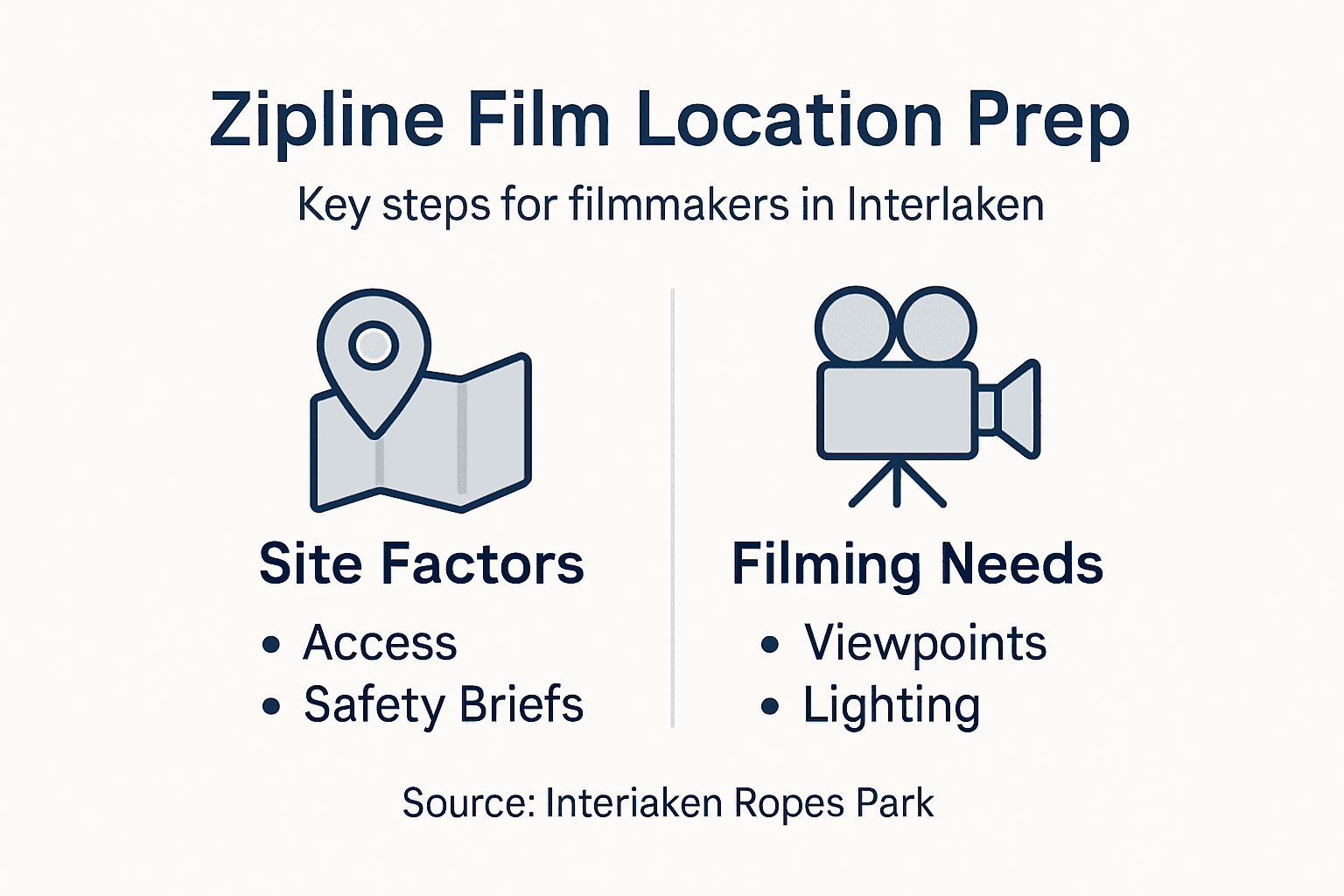
Professional preparation extends beyond basic location scouting. Film crews must compile detailed documentation including course maps, potential camera positions, equipment weight restrictions, and safety protocol requirements. Comprehensive pre-production communication with park management ensures smooth logistical execution, minimizing potential production delays and ensuring regulatory compliance throughout the filming process.
Pro tip: Request comprehensive course maps and conduct a preliminary site visit during similar lighting conditions to your planned shoot to accurately assess cinematographic potential.
Common Filming Challenges and Solutions
Ziplining cinematography in Interlaken presents complex technical challenges that demand sophisticated problem solving. Employing a local film fixer can dramatically streamline the production process by providing expert navigation through logistical complexities unique to aerial filming environments.
Technical challenges begin with equipment selection and deployment. Specialized camera stabilization systems must withstand dynamic aerial movements while maintaining precise framing and image quality. Cinematographers need ruggedized equipment capable of handling sudden wind shifts, rope movement, and potential moisture exposure. Weight restrictions imposed by zipline infrastructure further complicate gear selection, requiring lightweight yet high-performance camera packages that can be securely mounted without compromising participant safety.
Permitting and regulatory compliance represent another significant hurdle for production teams. Each aerial course requires comprehensive risk assessments, detailed filming plans, and explicit approval from park management. Crews must demonstrate technical competence, provide comprehensive insurance documentation, and develop extensive safety protocols that address potential equipment failure, participant interaction, and environmental variables. Successful navigation of these requirements demands meticulous pre-production planning and proactive communication with local authorities.
Film crews must also anticipate unpredictable environmental factors that can instantly disrupt shooting schedules. Weather conditions in the Alpine region can change rapidly, necessitating flexible shooting strategies and backup plans. Cinematographers need contingency approaches that allow quick equipment protection, route modifications, and potential shoot rescheduling without compromising overall production timelines or budget constraints.
Here is a quick overview of major filming challenges at Interlaken Rope Park and effective strategies to address them:
Challenge | Impact on Production | Solution |
Equipment instability | Shaky or unusable footage | Use stabilized, ruggedized cameras |
Weather unpredictability | Delays, gear damage | Plan multiple backup shooting days |
Permit requirements | Legal and access restrictions | Complete all documentation ahead of schedule |
Safety regulations | Delayed crew access | Attend briefings, use park-approved gear |
Pro tip: Develop a comprehensive equipment protection and backup strategy that includes waterproof housing, rapid deployment covers, and redundant camera systems to mitigate potential environmental disruptions.
Streamline Your Ziplining Film Production in Interlaken with Expert Local Support
Navigating the complex logistics of ziplining shoots in Interlaken demands precision and local expertise. From securing permits and managing rigorous safety regulations to scouting challenging aerial locations and overcoming unpredictable weather, every step requires seamless coordination. If you aim to capture those dramatic aerial sequences without stress or delays, partnering with professionals who understand the unique demands of the Interlaken Rope Park can make all the difference.
Take advantage of over 20 years of proven experience offered by Video Production Switzerland. We specialize in full-service solutions including permit acquisition, trusted crew sourcing, advanced equipment provisioning, and detailed location scouting tailored to your ziplining project needs. Don’t let logistical hurdles slow down your shoot—contact us now to ensure your production runs safely, smoothly, and on schedule in the stunning Swiss Alps.
Frequently Asked Questions
What safety protocols are in place for ziplining?
Safety protocols include comprehensive briefings, mandatory use of professional-grade harnesses and helmets, and thorough equipment checks conducted by instructors before any activity.
How can filmmakers obtain permission to shoot at the zipline park?
Filmmakers must contact park management to secure official filming permissions, which involve submitting detailed production plans, risk assessments, and proof of insurance coverage.
What are the key filming challenges when shooting at a zipline park?
Key challenges include equipment stability during dynamic movements, weather unpredictability affecting schedules, and strict safety regulations requiring thorough planning and compliance with permit requirements.
How can a film crew prepare for varying weather conditions during a shoot?
Film crews should develop flexible shooting strategies, including backup plans, to quickly adjust to changing weather conditions, as well as implement equipment protection measures to guard against moisture and wind.
Recommended
