
What Does a Production Coordinator Do in Film?


Managing a film shoot in Switzerland means dealing with a maze of logistics and local requirements that can easily stall your creative vision. For international filmmakers and production managers, working with a skilled production coordinator is often the difference between seamless progress and frustrating delays. By acting as the central hub for communication, overseeing documentation, and supporting permit applications, the production coordinator provides the organizational strength that keeps every project running smoothly.
Table of Contents
Key Takeaways
Point | Details |
Production Coordinator’s Role | Production coordinators are essential for managing the administrative and logistical backbone of film production, ensuring smooth operations across departments. |
Core Responsibilities | Key tasks include documentation management, travel logistics, and effective communication to maintain production flow. |
Essential Skills | A combination of technical knowledge and interpersonal skills is crucial, including proficiency in software and strong communication abilities. |
Risk Management | Proactive risk management strategies are vital to mitigate challenges such as budget overruns and logistical issues in production. |
Defining the Production Coordinator Role
In the complex world of film production, the production coordinator serves as a critical organizational linchpin. This professional manages the intricate administrative and logistical infrastructure that keeps film productions running smoothly. Production coordinators play a key role in bridging communication between various departments, ensuring that every critical task is tracked and executed with precision.
Typically, a production coordinator operates from the production office, acting as a central hub of information and communication. Their responsibilities include distributing scripts, maintaining crew lists, managing transportation logistics, and supporting the production manager in coordinating daily operational requirements. Unlike creative roles like directors or producers, production coordinators focus on the critical behind-the-scenes work that transforms creative vision into practical reality.
The role demands exceptional organizational skills, strong communication abilities, and a comprehensive understanding of film production workflows. Production coordinators must track multiple moving parts simultaneously, from scheduling and budget management to equipment coordination and crew communication. They are often the first point of contact for resolving logistical challenges and ensuring that production timelines remain on track. Their work requires meticulous attention to detail, quick problem solving, and the ability to remain calm under pressure.
Pro Tip: Invest in robust project management software and develop a systematic filing system to track production documents and communications efficiently.
Key Responsibilities in Video Production
Production coordinators have a multifaceted role that encompasses numerous critical responsibilities in video production. Production workflow management requires them to handle complex administrative tasks that form the backbone of successful film and video projects. Their primary objective is to ensure seamless communication and logistical coordination across all production departments.
The core responsibilities of a production coordinator include comprehensive documentation management, communication facilitation, and operational support. They are responsible for distributing critical documents like scripts, crew lists, and call sheets, ensuring every team member has the most current information. Transportation logistics represent another crucial area, where coordinators must arrange travel and accommodation for cast and crew, track equipment movement, and coordinate location access and permissions.
Beyond administrative tasks, production coordinators play a pivotal role in problem solving and maintaining production momentum. They track budgetary expenses, monitor production schedules, coordinate between different departments, and serve as a central communication hub. This requires exceptional organizational skills, the ability to multitask effectively, and maintaining calm under pressure. Production coordinators must be adept at anticipating potential challenges and developing proactive solutions to keep the production moving forward smoothly.
Pro Tip: Develop a comprehensive digital filing system with cloud backup to ensure all production documents remain organized, accessible, and secure throughout the project.
Essential Skills and Qualifications Needed
Successful production coordinators must possess a unique combination of technical knowledge and interpersonal skills. Film production skills encompass both hard and soft competencies that are critical to managing complex production environments. A strong foundation in organizational systems, communication technologies, and project management forms the backbone of their professional capabilities.
Technical qualifications typically include proficiency in production management software, budgeting tools, scheduling platforms, and digital communication systems. Most employers require a bachelor’s degree in film production, media studies, or a related field, with coursework covering production logistics, communication theory, and media technologies. Many production coordinators also benefit from specialized certifications in project management or digital production workflows, demonstrating their commitment to professional development and technical expertise.
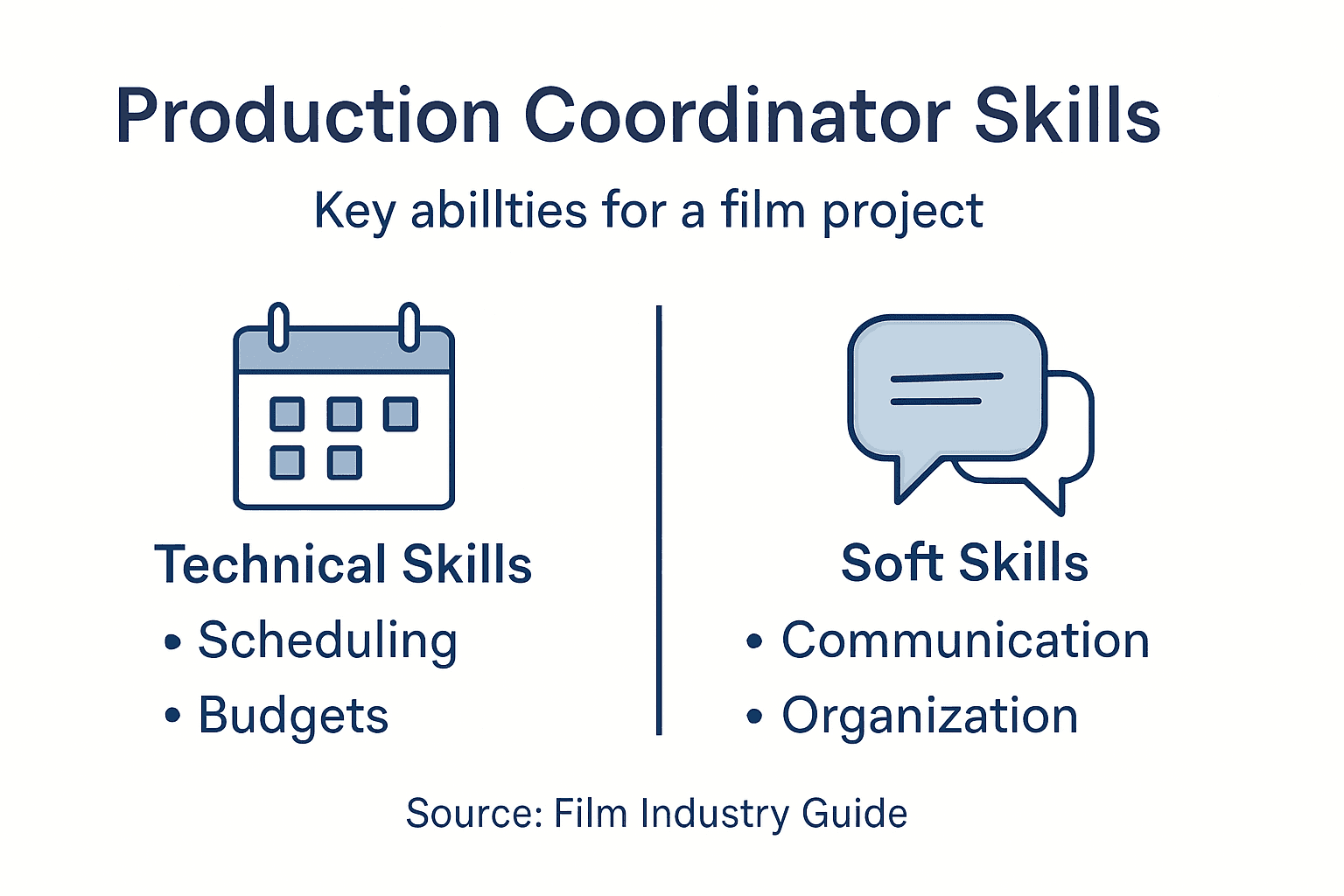
Soft skills represent another crucial dimension of a production coordinator’s qualifications. Exceptional communication abilities, stress management, multitasking skills, and rapid problem solving are non-negotiable in this demanding role. Production coordinators must demonstrate remarkable adaptability, with the capacity to navigate high-pressure environments while maintaining composure and professional effectiveness. Strong interpersonal skills enable them to interact effectively with diverse teams, from creative professionals to technical crew members, ensuring smooth communication and collaborative productivity.
Here’s a summary of essential production coordinator skills and their practical benefits:
Skill Category | Key Skill | Benefit to Production |
Technical | Software proficiency | Streamlines scheduling and budgeting |
Technical | Document management | Improves information accessibility |
Interpersonal | Team communication | Reduces misunderstandings |
Interpersonal | Stress management | Maintains calm under tight deadlines |
Organizational | Multitasking | Handles overlapping responsibilities |
Organizational | Problem solving | Prevents and addresses disruptions |
Pro Tip: Create a comprehensive digital portfolio showcasing your production coordination projects, highlighting your organizational skills and successful project outcomes to differentiate yourself in a competitive job market.
Film Logistics: Permits, Crew, and Gear
Production coordinators are the critical orchestrators of film logistics, managing the complex web of permits, crew arrangements, and equipment procurement. Filming permit requirements represent one of the most intricate aspects of production management, demanding meticulous attention to local regulations and municipal guidelines. Each location presents unique challenges that require comprehensive research and proactive planning to ensure legal compliance and smooth shooting operations.
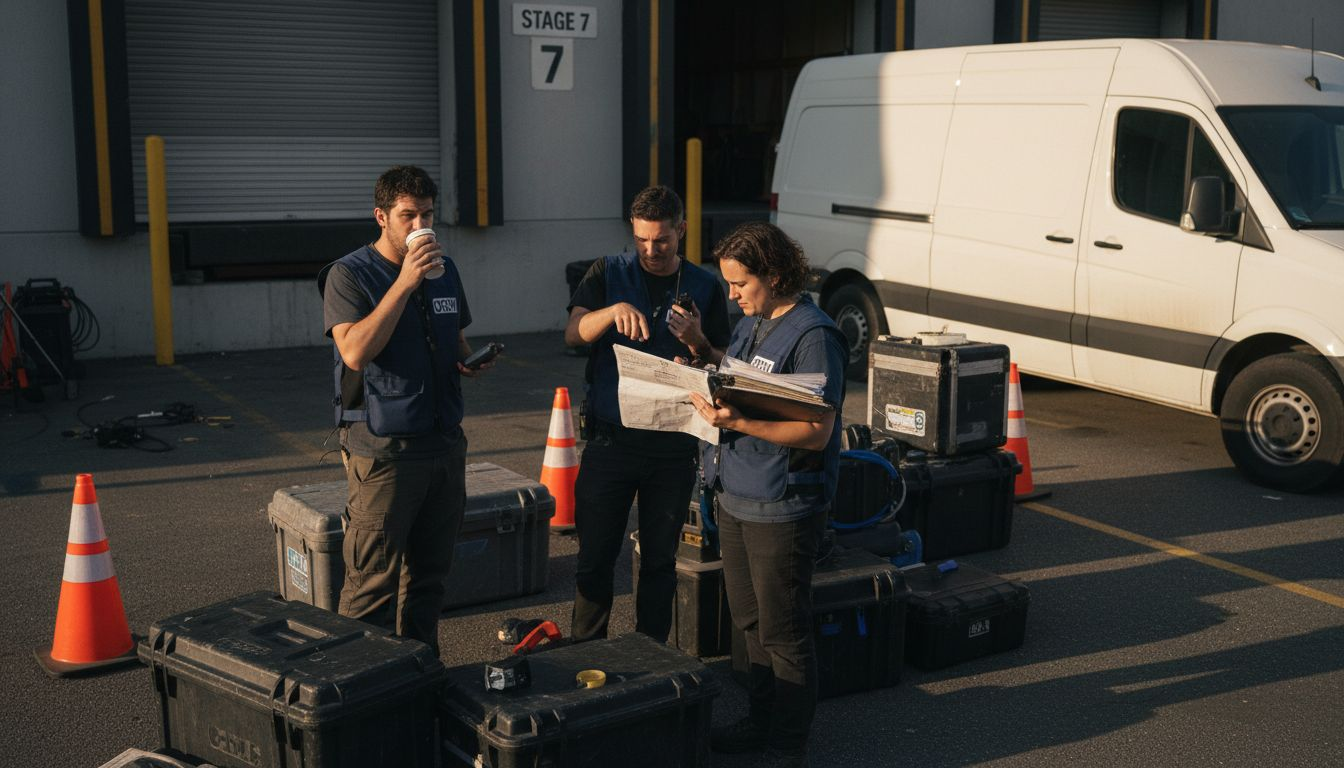
Crew management involves strategic sourcing, hiring, and coordination of personnel across multiple departments. Production coordinators must develop comprehensive crew lists, manage contracts, coordinate transportation and accommodation, and ensure that each team member understands their specific role and responsibilities. This process requires extensive networking, understanding of union regulations, and the ability to match skilled professionals with the unique demands of each production project.
Equipment logistics represent another critical domain where production coordinators excel. They must track, source, and coordinate the procurement and transportation of specialized film gear, ensuring that all technical equipment arrives on time, meets production specifications, and remains properly maintained throughout the shooting schedule. This involves complex negotiations with rental houses, careful budgeting, and developing contingency plans for potential equipment failures or unexpected technical challenges.
Here’s how different aspects of film logistics impact production success:
Logistics Aspect | Main Challenge | Impact if Managed Well |
Permits | Navigating regulations | Legal compliance ensured |
Crew Management | Sourcing and coordination | Optimal team performance |
Equipment | Timely procurement | Uninterrupted filming process |
Pro Tip: Develop a comprehensive digital tracking system for permits, crew contracts, and equipment inventories to streamline logistics and minimize potential production disruptions.
Risks, Challenges, and Best Practices
Production coordinators navigate a complex landscape of potential risks and challenges that can derail even the most carefully planned film projects. Project risk management strategies are essential for mitigating unexpected complications that could compromise production timelines and budgets. These risks range from logistical nightmares like equipment failures and scheduling conflicts to more nuanced challenges involving team dynamics and communication breakdowns.
Financial risks represent a significant concern for production coordinators. Budget overruns can quickly spiral out of control, requiring meticulous financial tracking and proactive management. This involves creating detailed contingency plans, maintaining flexible resource allocation, and developing robust communication channels that allow for rapid problem solving. Coordinators must anticipate potential financial challenges, such as unexpected equipment repairs, location permit fees, or last-minute crew changes that could impact the overall production budget.
Communication and interpersonal challenges are equally critical in film production environments. Production coordinators must expertly navigate complex team dynamics, managing expectations across creative and technical departments while maintaining a calm and solution-oriented approach. This requires exceptional emotional intelligence, the ability to mediate conflicts, and a talent for translating technical requirements into clear, actionable instructions that keep the production moving forward efficiently. Successful coordinators develop a comprehensive understanding of each team member’s role and potential pain points, allowing them to preemptively address potential friction points before they escalate.
Pro Tip: Develop a comprehensive digital risk management dashboard that tracks potential production challenges in real-time, enabling proactive problem solving and minimizing unexpected disruptions.
Streamline Your Film Production with Expert Coordination Support
Managing the complex logistics, permits, and crew coordination is a challenge every production coordinator faces daily. If you recognize the pressure of juggling schedules, securing filming permits, and organizing equipment and transportation to keep your project on track this is where professional support can make all the difference. At Video Production Switzerland, we specialize in relieving these exact pain points with over 20 years of experience ensuring your shoot runs smoothly and on time.
Take the stress out of producing your next film by partnering with a trusted local expert who understands the critical importance of seamless communication, thorough permit handling, and reliable crew sourcing. Visit our main site to get a free consultation and discover how our tailored services provide effective logistical management so you can focus on creative execution without disruption. Don’t let coordination challenges hold your project back act now to secure your professional production support today.
Frequently Asked Questions
What are the main responsibilities of a production coordinator in film?
Production coordinators are responsible for managing administrative tasks, facilitating communication between departments, handling transportation logistics, distributing critical documents like scripts and call sheets, and tracking budgetary expenses to ensure smooth film production.
What skills are essential for a successful production coordinator?
Essential skills for production coordinators include strong organizational abilities, exceptional communication skills, problem-solving capabilities, proficiency in production management software, and the ability to manage multiple tasks effectively under pressure.
How does a production coordinator assist with film logistics?
Production coordinators manage various logistical elements, including coordinating permits, sourcing and arranging crew members, and tracking equipment procurement to ensure all components of the production come together seamlessly.
How can production coordinators effectively manage risks during a film project?
Production coordinators can manage risks through meticulous budget tracking, clear communication channels, developing contingency plans, and utilizing digital tracking systems to monitor potential challenges in real-time.
Recommended
