
What Is a Post Production Company and Why It Matters


Many American filmmakers are surprised to learn that post production accounts for over 60 percent of the average project’s total effort and budget. Understanding what post production companies really do matters because common myths still linger, often causing costly mistakes or missed creative opportunities. From demystifying their true role to explaining essential skills and technology, this guide brings much-needed clarity for anyone navigating the American media industry.
Table of Contents
Key Takeaways
Point | Details |
Role of Post Production Companies | Post production companies transform raw footage into polished media, enhancing storytelling through various technical services. |
Misconception of Editing | Post production involves more than editing; it includes sound design, color grading, and visual effects integration. |
Core Workflow and Roles | The post production process consists of organized stages requiring collaboration among editors, sound designers, and VFX artists. |
Importance of Technology and Skills | Mastery of advanced software tools and continuous skill development are crucial for success in post production. |
Defining Post Production Companies and Common Myths
Post production companies are specialized professional services that transform raw media footage into polished, refined final products across film, television, advertising, and digital media. These technical and creative teams work behind the scenes to craft compelling visual narratives by manipulating, enhancing, and perfecting recorded material. Video post production companies play a crucial role in translating unprocessed recordings into professional-grade media experiences.
Unlike common misconceptions, post production is far more than simple editing. The process encompasses intricate technical and artistic operations including color grading, sound mixing, visual effects integration, motion graphics design, audio restoration, and final content packaging. Professional post production requires sophisticated software, advanced technical skills, and creative vision to transform basic recordings into engaging multimedia experiences that capture audience attention.
The workflow of a post production company typically involves multiple complex stages. Initial processes include organizing and logging raw footage, creating rough cuts, and developing preliminary narrative structures. Subsequent stages involve detailed editing, visual effects composition, color correction, sound design, and final rendering. Technical precision meets creative storytelling as professionals carefully adjust every visual and auditory element to create seamless, impactful media content.
Pro Tip - Strategic Partnership: When selecting a post production company, prioritize teams with diverse technical capabilities and a strong portfolio demonstrating adaptability across different media formats and creative styles.
Types of Post Production Services Explained
Post production services represent a comprehensive suite of technical and creative processes that transform raw video content into polished, professional media experiences. Comprehensive post-production workflows encompass multiple specialized services designed to enhance visual storytelling and technical quality across different media platforms.
The primary post production services include several critical components. Video editing forms the foundational service, involving precise assembly of footage, narrative structuring, and sequence refinement. Sound design represents another crucial element, where audio professionals meticulously balance dialogue, sound effects, and musical elements to create immersive auditory experiences. Color correction and grading services ensure visual consistency, adjusting exposure, contrast, and color palette to achieve a cohesive aesthetic that matches the project’s creative vision.

Additional specialized post production services include visual effects (VFX) integration, motion graphics design, and advanced animation techniques. VFX artists use sophisticated software to add digital elements, create complex environmental simulations, and generate realistic computer-generated imagery that seamlessly blends with live-action footage. Motion graphics designers craft animated text, logos, and dynamic visual elements that enhance storytelling and provide engaging visual communication strategies.
Pro Tip - Service Selection: When choosing a post production company, request detailed portfolio examples that demonstrate their range of technical capabilities and creative problem-solving across different project types and media formats.
Core Workflow and Key Industry Roles
The post production workflow represents a meticulously structured process that transforms raw media into polished, professional content through carefully coordinated stages. Digital video workflow processes typically involve systematic approaches that require precise collaboration and technical expertise across multiple specialized roles.
The core workflow consists of several critical stages that demand unique skill sets from industry professionals. Initial organization involves cataloging and reviewing raw footage, creating preliminary selects, and establishing the foundational narrative structure. Editing professionals then craft the primary sequence, making critical decisions about pacing, narrative flow, and visual storytelling. Sound designers simultaneously work on audio elements, balancing dialogue, integrating sound effects, and creating immersive auditory experiences that complement the visual narrative. Color grading specialists ensure visual consistency, adjusting exposure, color balance, and creating specific aesthetic moods that enhance the project’s emotional impact.
Key industry roles extend beyond traditional editing positions to include highly specialized technical experts. Visual effects artists generate complex digital imagery, motion graphics designers create animated elements, and compositing professionals blend multiple visual layers into seamless sequences. Audio engineers fine-tune sound quality, while post production supervisors coordinate the entire process, ensuring technical and creative elements align with the project’s overall vision. Each role requires advanced technical skills, creative problem-solving, and deep understanding of sophisticated digital tools and storytelling techniques.
Here’s a summary of common post production industry roles and their main responsibilities:
Role | Core Responsibility | Key Impact |
Video Editor | Assembles footage, refines sequences | Shapes narrative and pacing |
Sound Designer | Mixes dialogue, effects, music | Enhances emotional and auditory impact |
Colorist | Performs color correction and grading | Ensures visual consistency and mood |
Visual Effects Artist | Creates digital and CGI elements | Adds realism and creativity |
Post Supervisor | Oversees workflow and quality control | Aligns all creative and technical aspects |
Pro Tip - Career Development: Aspiring post production professionals should focus on developing a diverse skill set, mastering multiple software platforms, and building a comprehensive portfolio that demonstrates technical versatility and creative innovation.
Essential Skills and Technology in Post Production
Post production professionals must master an increasingly complex technological landscape that demands both technical proficiency and creative adaptability. Video post production workflow essentials require comprehensive understanding of advanced digital tools and rapidly evolving software platforms that transform raw media into compelling visual narratives.
The core technological skills essential for modern post production include advanced proficiency in specialized software ecosystems. Professional editing software like Adobe Premiere Pro, Final Cut Pro, and Avid Media Composer represent critical platforms where visual storytelling is crafted. Color grading technologies enable precise visual manipulation, allowing professionals to create specific emotional tones and maintain visual consistency across complex projects. Advanced sound design tools such as Pro Tools and Audition provide sophisticated audio engineering capabilities, enabling intricate sound mixing, restoration, and spatial audio design that elevate multimedia experiences.
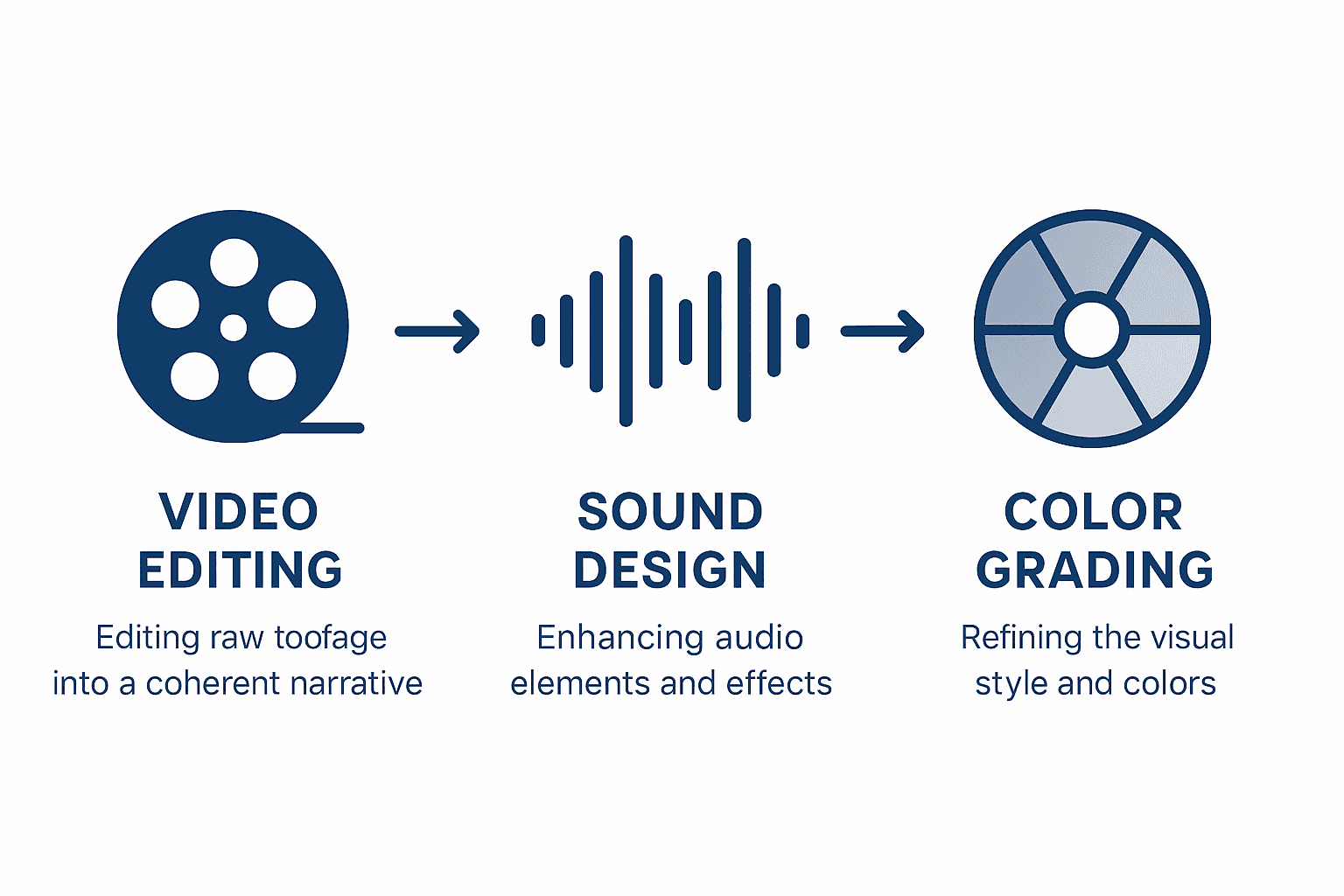
Emerging technologies are dramatically reshaping post production capabilities, introducing artificial intelligence and machine learning algorithms that automate complex tasks. Visual effects artists now leverage advanced rendering technologies that generate photorealistic digital environments, while AI-powered tools can automatically perform color correction, audio cleanup, and even generate preliminary edit sequences. Motion graphics designers utilize sophisticated animation software that integrates 3D rendering, procedural animation, and real-time rendering technologies, pushing creative boundaries beyond traditional linear editing approaches. These technological advances require professionals to continuously update their skills, maintaining a delicate balance between technical expertise and creative innovation.
Below is a reference table of essential post production software and their primary functions:
Software Platform | Main Use | Typical User |
Adobe Premiere Pro | Video editing and sequencing | Editors, filmmakers |
DaVinci Resolve | Advanced color grading and correction | Colorists, editors |
Avid Pro Tools | Professional sound design and mixing | Audio engineers |
Adobe After Effects | Motion graphics and VFX integration | VFX and graphics artists |
Pro Tip - Skill Development: Invest in continuous learning through online certification programs, attend industry workshops, and maintain an active portfolio that demonstrates proficiency across multiple software platforms and emerging technological trends.
Cost Structure and Critical Hiring Considerations
Understanding the complex cost dynamics of post production requires a nuanced approach to budgeting and resource allocation. Video production agency strategies reveal that project expenses are influenced by multiple interconnected factors beyond simple hourly rates or service packages.
Cost structures in post production typically break down into several key components. Project complexity represents the primary pricing driver, with factors including total footage volume, required technical services, and desired final output quality. Editing rates can range from $50 to $250 per hour depending on the professional’s expertise and project intricacy. Sound design and color grading often command premium pricing, with specialized professionals charging between $100 and $350 per hour for high-end services. Visual effects work can escalate costs dramatically, with complex sequences potentially requiring $500 to $1,500 per finished minute of content.
Critical hiring considerations extend far beyond simple cost calculations, demanding comprehensive evaluation of technical proficiency, creative compatibility, and professional reputation. Potential post production partners should demonstrate a robust portfolio showcasing diverse project experiences, technological adaptability, and consistent quality delivery. Technical skill assessment should include detailed reviews of software proficiency, understanding of current industry standards, and ability to handle complex creative challenges. Communication skills, project management capabilities, and demonstrated reliability are equally important selection criteria that can significantly impact project success.
Pro Tip - Cost Management: Request detailed project proposals with transparent breakdown of services, establish clear scope boundaries, and negotiate flexible packages that allow incremental adjustments based on evolving project requirements.
Elevate Your Post Production Experience With Expert Local Support
Understanding the complexities of what a post production company truly offers can make all the difference in your project’s success. This article highlights crucial elements like color grading, sound design, and seamless workflow coordination that transform raw footage into captivating stories. Yet navigating these intricate processes while managing logistical challenges in a foreign environment can overwhelm even seasoned filmmakers.
At Video Production Switzerland, we address these pain points by combining deep technical knowledge with expert local crew sourcing, permit facilitation, and full logistical coordination. With over 20 years of experience, our comprehensive video production solutions reduce stress and enable creative teams to focus on storytelling without worrying about permits, equipment malfunctions, or schedule delays. Our precise project management ensures your post production partners have everything needed to deliver flawless results.
Ready to streamline your post production process and bring your vision to life with trusted local expertise? Visit us now at Video Production Switzerland for a free consultation and discover how we can support your project from shoot to final cut. Don’t let logistical hurdles limit your creative ambition. Act today for smooth, on-time, and professional video production support in Switzerland.
Frequently Asked Questions
What is a post production company?
A post production company specializes in transforming raw media footage into refined final products for film, television, advertising, and digital media. They handle technical and creative processes like editing, color correction, sound design, and visual effects integration.
Why is post production important?
Post production is essential because it enhances the quality of raw footage, adding structure, narrative flow, and visual appeal. This process ensures that media content is polished and engaging, significantly impacting audience experience and perception.
What services are typically offered by post production companies?
Common services offered by post production companies include video editing, sound design, color correction, visual effects integration, motion graphics design, and final content packaging, all aimed at improving the overall quality of the media.
How do post production companies determine their pricing?
Pricing in post production is influenced by various factors, including project complexity, the volume of footage, type of services required, and the professional’s expertise. Hourly rates can range widely based on these elements, especially for specialized services.
Recommended
