
Understanding Pre Production for Documentary Filmmaking


Pre production for documentaries is often where the magic starts and groundwork sets the tone for everything that follows. Most people expect the big creative moments to happen behind the camera or in the editing room. But over 80 percent of documentary success is decided during pre production long before a single shot is filmed. The unexpected part is that all the creativity and emotion people see on screen actually depend on invisible hours spent planning, researching, and mapping out every detail from the start.
Table of Contents
Quick Summary
Takeaway | Explanation |
Thorough research is essential | Conduct extensive background investigations to validate your documentary’s core premise and narrative structure. |
Develop a clear narrative vision | Create initial narrative frameworks and explore multiple storytelling perspectives to enhance emotional impact. |
Plan for logistical challenges | Anticipate potential production complications by developing contingency strategies and securing necessary permissions. |
Build trust with subjects | Establish ethical frameworks and supportive environments to foster genuine storytelling during interviews. |
Effective planning increases success | Invest time in pre production to create robust frameworks that enhance storytelling quality and resonate with audiences. |
What is Pre Production for Documentaries?
Pre production for documentaries represents the foundational planning phase where filmmakers transform abstract creative concepts into structured, actionable strategies for documentary storytelling. This critical stage involves comprehensive research, strategic preparation, and meticulous groundwork that sets the trajectory for the entire documentary project.
The Conceptual Framework of Documentary Pre Production
At its core, pre production for documentaries is about developing a robust roadmap that guides the entire filmmaking process. This phase goes far beyond simple logistical planning and delves into deep investigative work that shapes the documentary’s narrative arc, research methodology, and potential storytelling approaches. Explore our guide on understanding video pre production planning to gain deeper insights into this crucial phase.
Key elements of pre production include:
Narrative Research: Conducting extensive background research on the documentary’s subject matter
Subject Identification: Locating and vetting potential interview subjects and key characters
Story Development: Crafting initial narrative structures and potential storytelling angles
Strategic Planning and Preparation
Successful documentary pre production requires filmmakers to anticipate potential challenges and develop comprehensive strategies. According to Documentary Organization of Canada, effective pre production involves creating detailed project blueprints that account for creative vision, budgetary constraints, and logistical complexities.
Documentary pre production is not merely a preparatory stage but a critical intellectual and creative process where filmmakers:
Validate the documentary’s core premise
Build comprehensive research databases
Develop nuanced understanding of the subject matter
Create preliminary shooting schedules
Secure necessary permissions and clearances
Establish potential funding and distribution pathways
By investing significant time and energy into pre production, documentary filmmakers dramatically increase their project’s potential for compelling storytelling, authentic representation, and eventual success.
The rigor applied during this initial phase often determines the documentary’s narrative depth, emotional resonance, and overall impact.
The Importance of Pre Production in Documentary Filmmaking
Documentary filmmaking demands extraordinary preparation, and pre production serves as the critical foundation that transforms potential storytelling into compelling visual narratives. This phase is far more than administrative groundwork it represents the intellectual and creative scaffolding that supports the entire documentary project.
Mitigating Production Risks and Challenges
Effective pre production functions as a strategic risk management approach, allowing filmmakers to anticipate and address potential challenges before they become insurmountable obstacles. Check our comprehensive guide on video pre production checklists to understand how systematic planning can prevent costly mistakes.
Risk mitigation in documentary pre production involves:
Identifying potential logistical complications
Developing contingency strategies
Securing necessary legal permissions
Assessing financial feasibility
Creative and Narrative Development
According to the International Documentary Association, pre production is where documentaries truly begin to take shape. This phase allows filmmakers to deeply explore their subject matter, developing nuanced narrative structures and identifying the most compelling storytelling approaches.
Key creative advantages of thorough pre production include:
Establishing a clear narrative vision
Conducting comprehensive background research
Developing intricate character profiles
Mapping potential emotional arcs of the documentary
The investment of time and intellectual energy during pre production directly correlates with the documentary’s potential for authentic, impactful storytelling. By meticulously planning and researching, filmmakers create a robust framework that supports artistic integrity, reduces production uncertainties, and increases the likelihood of creating a documentary that resonates deeply with audiences.
Key Components of Documentary Pre Production
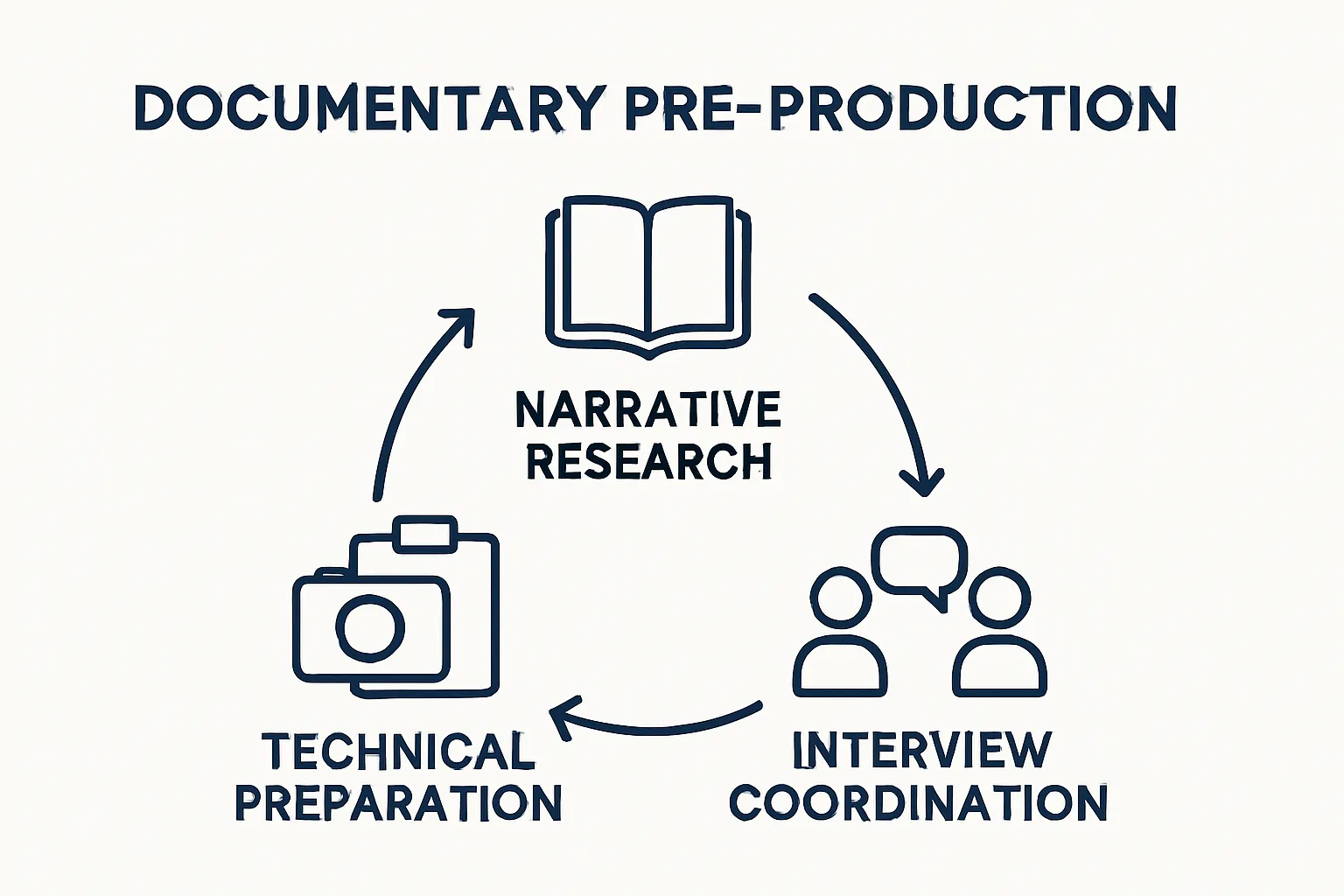
Documentary pre production is a multifaceted process that requires filmmakers to simultaneously manage creative vision, research depth, technical planning, and logistical considerations. Understanding the core components ensures a structured approach to transforming complex real world stories into compelling visual narratives.
Research and Story Development
The foundational component of documentary pre production centers on comprehensive research and narrative exploration. This stage involves deep investigative work that goes beyond surface level information gathering. Learn more about video production planning strategies to understand how systematic research drives creative storytelling.
Key research elements include:
Conducting extensive background investigations
Identifying primary and secondary source materials
Developing initial narrative hypotheses
Exploring potential storytelling perspectives
Technical and Logistical Preparation
According to Documentary Campus, technical and logistical preparation represents a critical pre production phase that determines a documentary’s feasibility and production quality. This component involves creating comprehensive production frameworks that address practical challenges and resource management.
Critical technical preparation aspects encompass:
Equipment selection and procurement
Location scouting and permissions
Budget development and financial planning
Crew recruitment and team assembly
Legal clearance and rights management
Subject and Interview Coordination
Successful documentaries rely on authentic human experiences, making subject and interview coordination a crucial pre production component. Filmmakers must establish trust, develop ethical interview strategies, and create supportive environments that enable genuine storytelling.
This phase involves carefully:
Identifying and vetting potential interview subjects
Developing comprehensive interview approaches
Creating ethical participation frameworks
Building rapport and trust with documentary participants
By meticulously addressing these key components, documentary filmmakers create a robust foundation that transforms raw potential into powerful, authentic storytelling experiences.
To help clarify the main components of documentary pre production, the table below organizes core areas and describes their primary focuses.
Component | Primary Focus |
Narrative Research | Background investigations, validating premise |
Story Development | Creating narrative structures, mapping storytelling angles |
Technical & Logistical Preparation | Equipment, budget, crew, locations, permissions |
Subject & Interview Coordination | Identifying subjects, building trust, ethical frameworks |
Risk Assessment | Contingency planning, legal clearance, financial feasibility |
Resource Management | Allocating funds, scheduling, efficiency strategies |
How Pre Production Shapes Filmmaking Outcomes
Documentary filmmaking is a complex narrative journey where pre production serves as the critical navigation system, determining the trajectory and ultimate potential of the final film. The strategic decisions and methodical groundwork established during this phase directly influence the documentary’s artistic quality, narrative coherence, and emotional impact.
Narrative Trajectory and Storytelling Potential
Pre production is where raw documentary concepts transform into structured storytelling frameworks. Filmmakers use this phase to explore narrative depth, identify compelling perspectives, and develop sophisticated storytelling strategies. Discover comprehensive video production planning insights to understand how strategic preparation shapes narrative outcomes.
Narrative shaping during pre production involves:
Identifying core thematic elements
Exploring multiple storytelling perspectives
Developing nuanced narrative structures
Anticipating potential emotional resonance
Resource Optimization and Production Efficiency
According to Production Management Journal, pre production directly correlates with production efficiency and resource management. Meticulous planning during this phase allows filmmakers to allocate resources strategically, minimize unexpected expenses, and maintain creative momentum.
Key resource optimization strategies include:
Precise budget allocation
Strategic equipment selection
Efficient crew scheduling
Comprehensive risk assessment
Streamlined logistical planning
Authenticity and Ethical Representation
Pre production plays a pivotal role in establishing ethical frameworks and ensuring authentic representation of documentary subjects. This phase requires filmmakers to develop profound understanding, build trust with participants, and create supportive environments that encourage genuine storytelling.
Ethical considerations during pre production encompass:
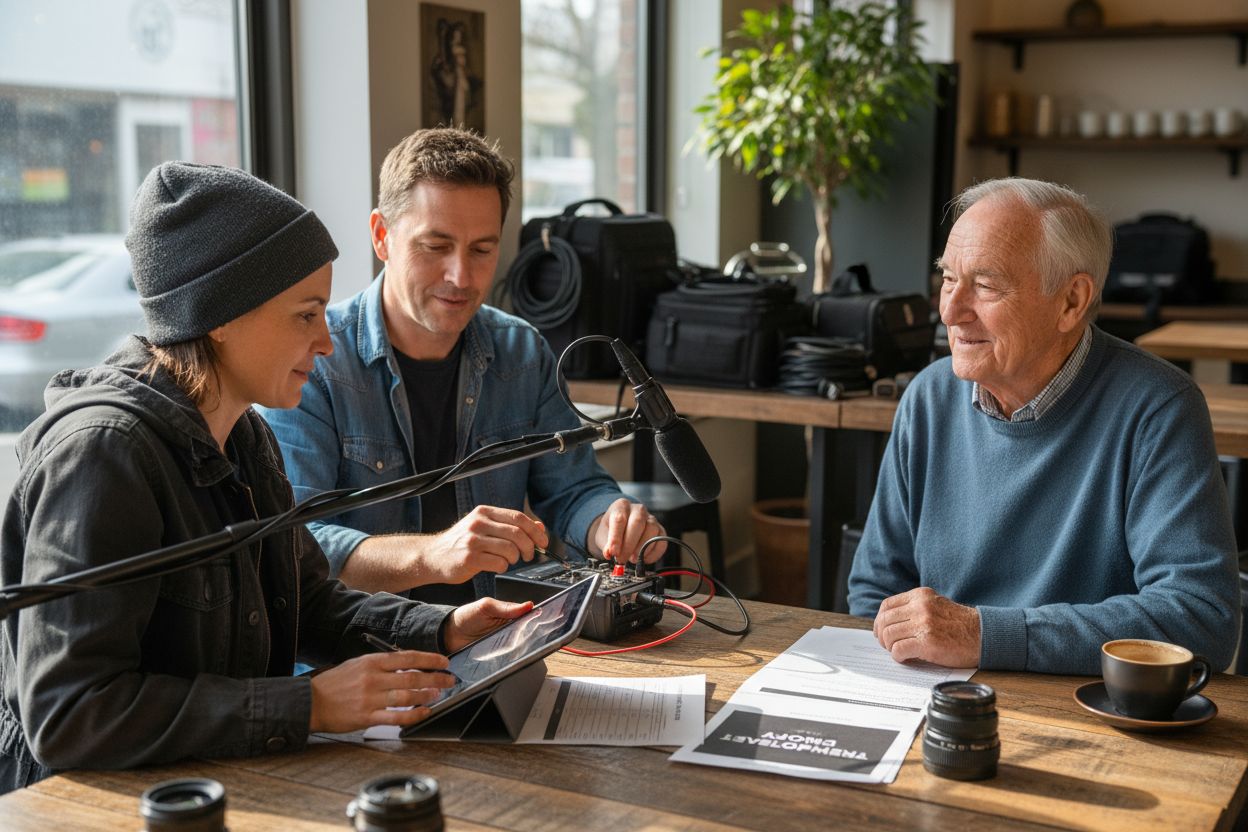
Developing transparent participant engagement protocols
Establishing clear communication expectations
Creating safe and respectful interview environments
Ensuring informed consent processes
Maintaining subject dignity and narrative integrity
By recognizing pre production as more than a preparatory stage, documentary filmmakers transform initial concepts into powerful, meaningful storytelling experiences that resonate deeply with audiences.
The following table summarizes how key aspects of pre production shape the outcome of a documentary, connecting each outcome to the strategies and impacts mentioned in the content.
Aspect | Key Pre Production Strategy | Impact on Final Film |
Narrative Trajectory | Story research, structure development | Strong narrative coherence and emotional impact |
Resource Optimization | Detailed budgeting, scheduling, equipment plans | Efficient production and minimized delays |
Authenticity & Ethics | Building trust, ethical protocols | Genuine representation and participant dignity |
Creative Development | Exploring storytelling perspectives | Enhanced artistic quality and audience resonance |
Ready to Eliminate Pre Production Headaches for Your Documentary?
If you have ever struggled with last-minute permit snags, finding a reliable local crew, or getting lost in the details of technical and logistical prep, you know how quickly a well-planned documentary can run into problems. Our article on pre production highlights just how vital detailed groundwork, research, and risk management are for documentary success. But translating that expert planning into reality in an unfamiliar country like Switzerland can be overwhelming.
Make your next project effortless. Partner with Video Production Switzerland for local insight, trusted crew, seamless permits, and on-the-ground support throughout Switzerland. Our client-centric team removes the barriers to production so you can focus on authentic storytelling and creativity. Take your first step by visiting our main site and discover how our production process and free consultation can help you start strong and stay on track. The earlier you secure your local expert partner, the smoother your shoot will be.
Frequently Asked Questions
What is pre production in documentary filmmaking?
Pre production in documentary filmmaking is the planning phase where filmmakers develop strategies, conduct research, and establish groundwork that serves as a roadmap for the entire documentary project.
Why is pre production important for documentaries?
Pre production is crucial as it helps filmmakers identify potential challenges, validate the documentary’s premise, create narrative structures, and ensure effective resource management, ultimately leading to compelling storytelling.
What are the key components of documentary pre production?
Key components of documentary pre production include narrative research, technical and logistical preparation, and subject and interview coordination to ensure a structured approach to storytelling.
How does pre production impact the final documentary film?
Pre production shapes the narrative trajectory, optimizes resources, and establishes ethical frameworks that directly influence the documentary’s artistic quality, coherence, and emotional impact.
Recommended
