
Film Commission First: Hire Swiss Crew via Local Temporary Staffing


For film and video work in Switzerland, local temporary staffing agencies means specialist firms and networks that supply short-term crew and on-site production logistics, not general office temp agencies. The fastest path forward is to contact the relevant regional film commission and prepare a one-page shoot brief to send to Filmstaff or a local production-support partner. Commissions provide free introductions and permit guidance; a local partner handles sourcing and day-to-day coordination.
TL;DR:
Booking heads of department at least six to eight weeks in advance is essential to secure specialist crew, while general crew can be booked with a four-week lead time.
Regional film commissions provide free connections and permit guidance, but actual crew sourcing is best handled through local agencies or databases like Filmstaff.
Work permits are required for non-EU/EFTA crew members, with EU and EFTA nationals needing online registration about a week before work begins.
Permit processing is faster when coordinated through regional film commissions, especially for location permits, drone flights, and managing multiple approval authorities.
Pricing for crew sourcing varies by scope, with tiered services from short-term single-role hires to full production management, requiring early consultation to meet deadlines.
Table of Contents
What local temporary production staffing agencies in Switzerland do
This guide is about one thing only: hiring short-term film and video crew in Switzerland, not clerical or industrial temp placements. The Swiss market for production support covers camera operators, grips, sound technicians, production assistants, and heads of department (HODs), along with the logistics that keep a shoot moving once crew is booked.
A typical engagement includes:
Daily or weekly hires for camera, grip, sound, and production assistant roles.
Basecamp coordination, including parking, power, and crew catering on location.
Equipment referrals and contacts at local rental houses.
Credential checks against databases like Filmstaff, which many Swiss freelancers use as their primary listing.
Swiss film crews work overwhelmingly freelance, and professional associations back the directories that help verify who is reliable. An agency or production-support partner makes the most sense when you need multiple roles filled fast, when you lack local contacts, or when the shoot spans several cantons with different permit rules. For a single specialist hire with a known name, going directly to that freelancer or a fixer can be quicker and cheaper.
How to find vetted short-term film crew across Switzerland
Start with the regional commissions before searching databases on your own. The Switzerland Film Commission network connects four main film commissions and four regional contacts covering the whole country, and each one offers free introductions to location owners, permit offices, and local crew. Regional offices such as the Film Commission Lucerne & Central Switzerland typically support productions from early planning through wrap, at no cost to the production.
Contact the regional film commission covering your shoot location and request crew and vendor introductions.
Write a short brief with dates, deliverables, location, budget range, and insurance needs.
Search Filmstaff for role-specific candidates and cross-check their listed credentials.
Ask rental houses and any confirmed HODs for referrals, since department heads usually know who is free and who delivers.
Call references, then confirm contracts, rates, and insurance in writing before locking dates.
Timelines matter more than most international producers expect. Heads of department and specialist technicians are often booked six or more weeks out, general crew and production assistants need at least four weeks of lead time, and last-minute cover is available but usually comes at a premium rate. Zurich, Central Switzerland, and Ticino each have their own pool of regulars, so a referral from one region does not always transfer to another.
Pro Tip: Send your brief to the film commission and Filmstaff on the same day. Commissions respond quickly with introductions, and running both channels in parallel shortens your shortlist by a week or more.
Permits, work authorizations, and logistics for short-term hires
Work authorization timing shapes your whole schedule, so plan it before you book flights. EU and EFTA crew members can work in Switzerland through an online notification procedure covering up to 90 days per calendar year. Registering about a week before work starts is the common practice to avoid last-minute snags. Crew from outside the EU or EFTA need short-term work permits arranged well ahead of the shoot, since processing takes time and cannot be rushed through at the last minute.
Permit authority in Switzerland is split between municipalities and cantons, and sometimes private landowners or rail operators get involved too. Filming on public streets usually needs a municipal permit, while protected areas, mountain locations, or rail infrastructure can pull in cantonal or third-party approval. This is exactly why regional film commissions exist: they know which office to call and can bundle requests instead of leaving a production team to track down five different permit holders.

A commission-coordinated request typically clears faster than one filed directly with a municipality, because commissions already have standing relationships with the relevant offices, according to the Film Commission Central Switzerland.
Drone work adds another layer. The Federal Office of Civil Aviation regulates radio equipment and operational authorization for drone flights, and some locations require transponder or ADS-B coordination before a drone can legally fly. Beyond permits and airspace, a local partner typically manages:
Basecamp permits and power provision for generators or grid hookups.
Mountain transport, since cable cars and closed roads need separate arrangements.
Negotiated accommodation and catering rates for crew staying multiple nights.
Vetting checklist and questions to ask before you hire
Before signing anyone, ask for proof of liability insurance, written day rates with a cancellation policy, and references from a recent, similar shoot. Third-country hires also need their identity and permit documents confirmed before travel, not after arrival.
Confirm a replacement policy in case a crew member no-shows on the day.
Check local transport experience, especially for mountain or rail-dependent locations.
Ask about language capabilities on set and familiarity with your camera or sound package.
A short interview covers the essentials: availability for your exact dates, two or three recent comparable projects, how replacements are handled, and the invoicing and payment schedule. Score each candidate on reliability, local knowledge, price transparency, and insurance coverage, and weight reliability above the lowest day rate. A crew member who shows up prepared and on time is worth more than a small discount that falls apart on shoot day.
Pro Tip: Treat vague insurance answers as a hard stop. A professional with real liability coverage can produce the certificate within a day, and anyone who stalls on that question is telling you something.
Watch for red flags: no verifiable references, insurance details that change between emails, or payment terms that shift after you’ve already confirmed dates.
What 20 years of Swiss production logistics teaches you
The biggest mistake international teams make is treating the film commission as an afterthought instead of the first call. We’ve watched productions lose two or three days to a parking dispute or a basecamp permit that could have been cleared in an afternoon if the regional commission had been looped in from the start.
Secure your heads of department first, then build the rest of the crew around their recommendations. Confirm permit timelines before you book international flights, not after, since a delayed notification can push your whole shoot window. The productions that run smoothly are rarely the ones with the biggest budget. They’re the ones that got the paperwork and the key hires locked early.
— Pieter
How we help you hire short-term crew in Switzerland
Film commissions open doors, but someone still has to manage sourcing, permits, and the dozens of logistics decisions that come up once cameras are rolling. That’s the gap we fill. We combine local crew knowledge with hands-on permit coordination to help your shoot run smoothly, minimizing the back-and-forth that often slows down production management.
[
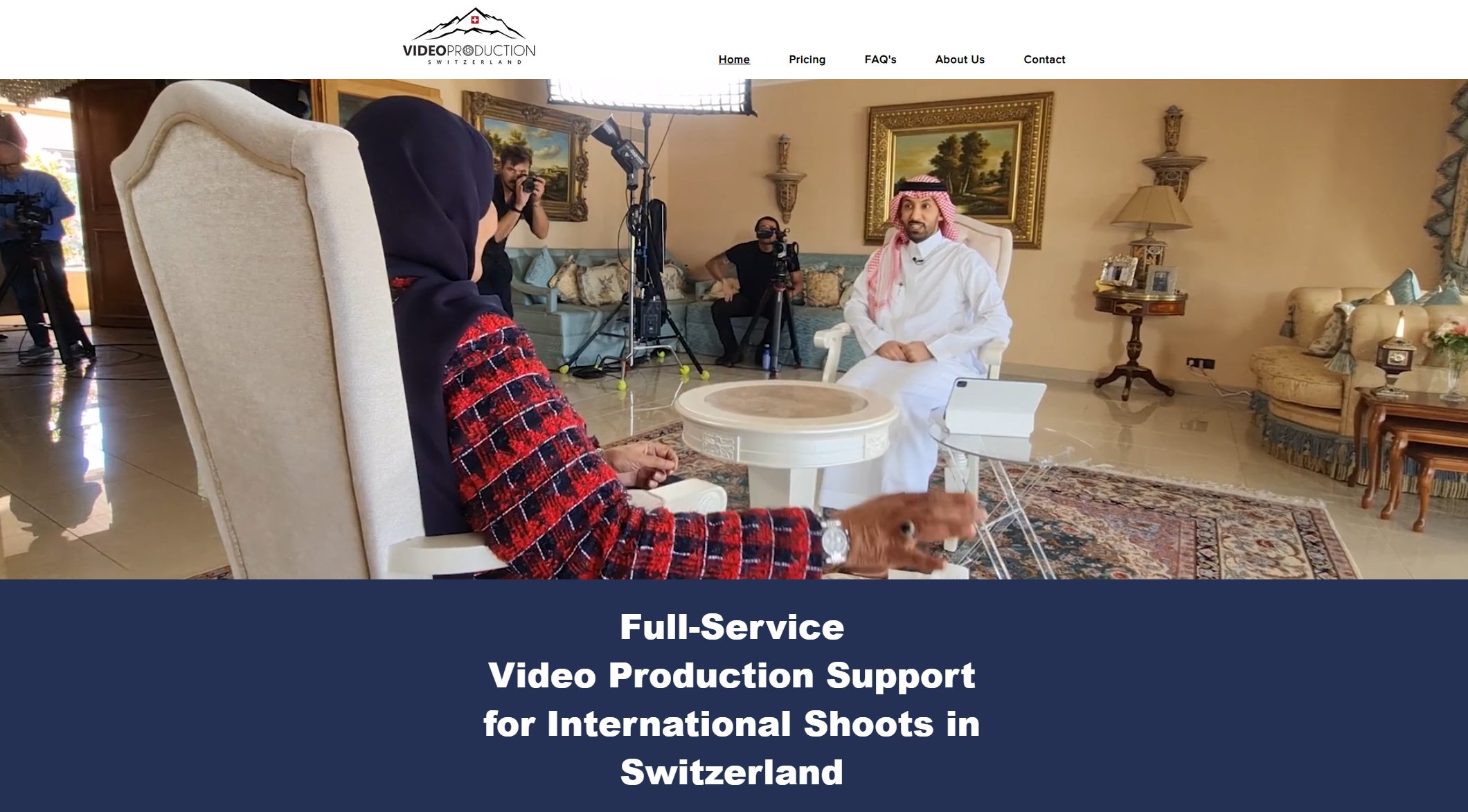
Our services can scale with the size of your shoot, offering options such as support for short shoots needing a single local contact, assistance for mid-size productions with multiple roles and locations, and comprehensive support covering permits through on-site execution.
Service tier | Best suited for |
Video Fixer Essentials | Short, single-location shoots |
Video Support Pro | Mid-size shoots with multiple roles |
Full Video Service | Full production management, start to finish |
Step | What happens |
1 | Free consultation and needs assessment |
2 | Crew sourcing and permit coordination |
3 | On-site execution and logistics support |
Our process starts with a free consultation to assess what your shoot actually needs, followed by crew sourcing, permit coordination, and on-site execution handled by people who already know the local offices and vendors. Client testimonials and answers to common booking questions are posted on our video production FAQ page, and full pricing detail for each tier lives on our video production costs page.
Pro Tip: Reach out before you lock your shoot dates. Permit timelines and crew availability both move faster when logistics planning starts alongside, not after, your creative planning.
Ready to move forward? Request a proposal and we’ll walk through your shoot dates, crew needs, and permit requirements on the first call.
FAQ
What’s the difference between a temp staffing agency and a film commission?
A film commission offers free introductions, location contacts, and permit guidance, while a local production-support partner or crew database like Filmstaff handles the actual sourcing and logistics of hiring crew. Most international productions use both: the commission to open doors, and a local partner to manage the hiring and day-to-day coordination.
How far ahead should I book Swiss film crew?
Heads of department and specialist technicians are typically booked six or more weeks ahead, and general crew or production assistants need at least four weeks of notice. Last-minute cover is available but tends to carry a higher rate.
Do international crew members need a work permit in Switzerland?
EU and EFTA nationals can work under an online notification procedure for up to 90 days per calendar year, with registration recommended about eight days before work starts. Crew from outside the EU or EFTA need a short-term work permit arranged well in advance, since processing is not instant.
Who handles drone permits for aerial filming in Switzerland?
The Federal Office of Civil Aviation regulates drone operations and radio equipment, and some locations require operational authorization or transponder coordination before a flight is legal. Confirm these requirements early, since clearance can take longer than a standard filming permit.
What does Videoproductionswitzerland charge for crew sourcing and logistics support?
Pricing depends on shoot size and scope and is laid out by tier, from Video Fixer Essentials for short shoots to Full Video Service for complete production management, on our video production costs page. A free consultation is the starting point for an exact quote.
Sources
Authoritative links and production hubs to contact
Switzerland Film Commission: national network for regional introductions and support.
Film Commission Lucerne & Central Switzerland: free regional production support.
Filmstaff: database for sourcing vetted Swiss freelance crew.
BAKOM drone rules: FOCA requirements for aerial filming.
Videoproductionswitzerland: request a consultation for crew and logistics support.
For readers hiring crew from outside the EU or EFTA, immigration and work-permit specialists can help navigate visa documentation ahead of a shoot. If you need short-term camera or drone equipment on top of crew, rental best practices for creatives cover what to check before booking. For more on the hiring process itself, see our guide to hiring Swiss crew and our breakdown of on-location logistics support.
Recommended
