
Understanding Mobile Network Switzerland: Key Insights


Switzerland’s mobile networks have built a reputation for fast, reliable service and top-notch coverage. Most people are surprised to learn that over 99 percent of the population enjoys high-speed mobile access, even in remote alpine regions. Yet that massive reach is only part of the story because the latest innovation is not just about connecting people but about powering the next era of media and technology in ways few countries can match.
Table of Contents
Quick Summary
Takeaway | Explanation |
Switzerland has three main mobile operators. | Swisscom, Sunrise, and Salt provide extensive coverage and competitive services across the country. |
4G and 5G networks are widely available. | Switzerland boasts 98% coverage for 4G and is rapidly expanding its 5G infrastructure, enhancing connectivity capabilities. |
Mobile networks are crucial for media production. | High-speed mobile connectivity supports remote workflows, real-time collaboration, and efficient data transfers essential for media professionals. |
Advanced technologies enhance network performance. | Operators invest in cellular architecture, wireless protocols, and coverage solutions to ensure reliable, high-speed communications for users. |
Future networks will integrate AI and sustainability. | Emerging technologies will optimize mobile networks for efficiency and environmental sustainability, transforming them into intelligent ecosystems. |
What is the Mobile Network Landscape in Switzerland?
Switzerland’s mobile network landscape represents a sophisticated and technologically advanced telecommunications ecosystem. With a robust infrastructure and three primary national mobile network operators, the country provides comprehensive wireless connectivity that meets high standards of performance and reliability.
National Mobile Network Operators
The Swiss mobile network is primarily dominated by three key players: Swisscom, Sunrise, and Salt. According to the Swiss Federal Office of Communications, these operators collectively provide extensive nationwide coverage, ensuring that urban centers and rural regions have access to high-speed mobile internet and communication services.
Key characteristics of these operators include:
Comprehensive 4G/LTE coverage across the country
Rapidly expanding 5G network infrastructure
Competitive pricing and diverse mobile plan options
High-quality signal strength and reliability
Network Technology and Infrastructure
Switzerland has consistently been at the forefront of mobile network technology. The country boasts an impressive 98% population coverage for 4G networks and is aggressively rolling out 5G technology.
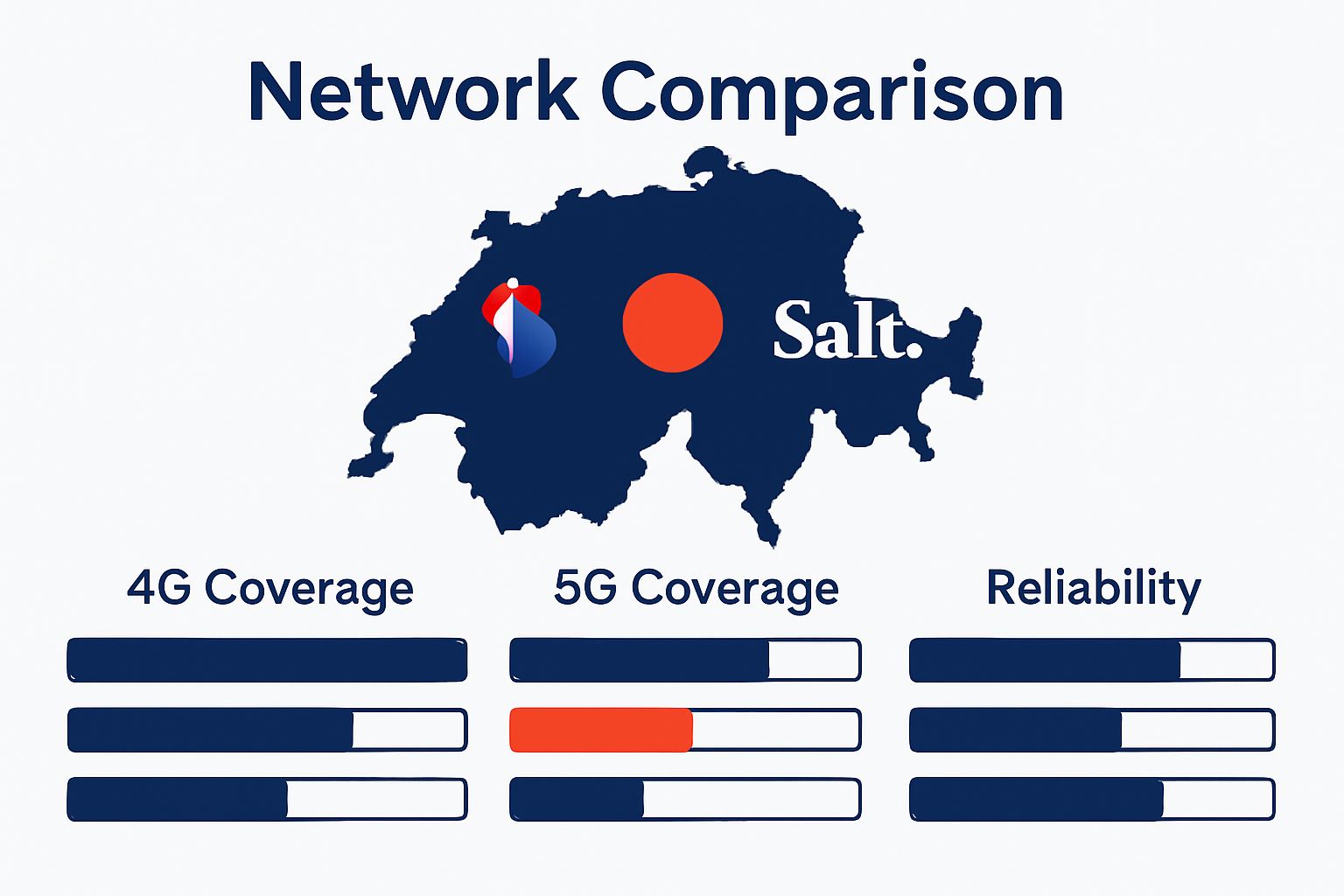
Below is a table comparing the three main mobile network operators in Switzerland, summarizing key characteristics mentioned in the article.
Operator | Network Coverage | 5G Availability | Signal Reliability | Distinguishing Features |
Swisscom | Nationwide, urban/rural | Rapid expansion | High | Largest operator, advanced tech |
Sunrise | Nationwide, urban/rural | Rapid expansion | High | Competitive pricing, strong presence |
Salt | Nationwide, urban/rural | Rapid expansion | High | Diverse mobile plans, growing share |
For filmmakers and media professionals, understanding the mobile network landscape is crucial. Learn more about network considerations for media production in Switzerland. The high-quality mobile networks enable seamless communication, data transfer, and connectivity essential for professional media operations across the country’s diverse geographical terrain.
The mobile network ecosystem in Switzerland is characterized by continuous technological advancement, robust competition among operators, and a strong commitment to providing cutting-edge wireless communication services to businesses and consumers alike.
Why Mobile Networks Matter for Media Production
In the rapidly evolving landscape of media production, mobile networks have transformed from supplementary communication tools to critical infrastructure for professional content creation. These networks now serve as lifelines that enable real-time collaboration, remote workflows, and seamless data transmission across diverse production environments.
Enabling Remote Production Workflows
Research from the European Commission highlights how mobile networks support sophisticated media production strategies. Modern media teams leverage high-speed mobile connectivity to execute complex production tasks from virtually anywhere. Remote filming, live broadcasting, and instant file transfers have become standard capabilities powered by advanced mobile network technologies.
Key advantages for media production include:
Instant video and audio file uploads
Real-time collaborative editing
Live streaming capabilities
Geographically flexible production teams
Critical Technical Infrastructure
For media professionals, mobile networks represent more than communication channels. They are sophisticated technical platforms that enable rapid content creation, transmission, and distribution. High-bandwidth networks allow media teams to stream high-definition video, conduct remote interviews, and manage complex production logistics with unprecedented efficiency.
Learn more about minimizing production costs through smart technological strategies, where mobile network optimization plays a crucial role. The ability to maintain constant connectivity, transfer large media files quickly, and coordinate team activities remotely directly impacts production budgets and project timelines.
As media production becomes increasingly digital and decentralized, mobile networks will continue to be fundamental in driving innovation, reducing operational complexities, and providing creative professionals with the technological flexibility needed to compete in a dynamic global marketplace.
How Mobile Networks Operate: Key Technologies Explained
Mobile networks represent complex technological ecosystems that enable wireless communication through intricate systems of transmission, signal processing, and data routing. Understanding the underlying technologies provides crucial insights into how seamless connectivity is achieved across diverse geographical landscapes.
Cellular Network Architecture
According to the International Telecommunication Union, mobile networks operate through a sophisticated cellular architecture divided into interconnected geographic zones called “cells.” Each cell contains a base station that manages communication within its specific radius, enabling mobile devices to transfer data and maintain continuous connectivity while moving between different coverage areas.
Key components of cellular network architecture include:
Base stations with transmission towers
Cellular signal repeaters
Mobile switching centers
Routing and authentication systems
Spectrum allocation mechanisms
Wireless Communication Protocols
Wireless communication protocols form the foundational language through which mobile networks transmit information. Modern networks utilize advanced protocols like LTE (Long-Term Evolution) and 5G, which enable high-speed data transmission, reduced latency, and increased network capacity. These protocols transform electromagnetic signals into comprehensible digital information, allowing seamless voice, text, and multimedia communication.
Read our comprehensive guide on network technologies for media production, which explores how these protocols impact professional communication strategies. The continuous evolution of these protocols drives improvements in network speed, reliability, and overall performance.
As technological innovation accelerates, mobile networks will continue to transform, integrating more intelligent routing mechanisms, enhanced security protocols, and increasingly sophisticated data transmission technologies that push the boundaries of wireless communication.
Understanding Coverage and Connectivity in Switzerland
Mobile network coverage in Switzerland represents a pinnacle of technological infrastructure, characterized by extensive geographical reach and sophisticated connectivity solutions. The country’s unique topographical challenges demand robust and innovative mobile network strategies that ensure seamless communication across diverse landscapes.
Geographical Coverage Dynamics
According to the Swiss Federal Office of Communication, Switzerland achieves remarkable network coverage, with over 99% of the population having access to high-speed mobile networks. This impressive statistic is particularly noteworthy given the country’s complex terrain, which includes mountainous regions, urban centers, and remote alpine zones.
Key aspects of Swiss mobile network coverage include:
Near-total population coverage
Advanced infrastructure in urban and rural areas
High-speed data transmission capabilities
Robust signal strength across challenging terrains
Continuous network infrastructure investments
Connectivity Performance Metrics
Swiss mobile networks distinguish themselves through exceptional performance metrics. Network reliability and data transmission speeds are consistently ranked among the highest globally. Mobile operators have strategically deployed advanced technologies like 4G/LTE and rapidly expanding 5G networks to ensure professional-grade connectivity across different environments.
Learn more about network technologies tailored for media production, which highlights the critical importance of reliable mobile infrastructure for professional workflows. The combination of comprehensive coverage and high-performance networks makes Switzerland an ideal location for media production and international communication.
The following table presents performance metrics and coverage factors that define Swiss mobile networks, offering a reference for evaluating their reliability for media production and communication needs.
Metric/Figure | Description |
98% 4G population coverage | High-speed 4G/LTE available to nearly all residents |
Over 99% total coverage | Near-total population access, including remote alpine regions |
Data transmission speed | Among highest globally, supports media workflows |
Signal strength | Robust, even in mountainous and rural areas |
5G rollout | Aggressive expansion, especially in urban centers |

As technological innovation continues, Swiss mobile networks will undoubtedly maintain their reputation for excellence, driving forward connectivity solutions that meet the increasingly sophisticated demands of global digital communication.
The Future of Mobile Networks: Trends and Innovations
Mobile network technologies are experiencing unprecedented transformation, driven by emerging technological paradigms that promise to revolutionize wireless communication and digital connectivity. These innovations extend far beyond traditional telecommunications, positioning mobile networks as critical infrastructure for global digital ecosystems.
Emerging Network Technologies
According to the International Telecommunication Union, next-generation mobile networks will be characterized by ultra-high-speed connectivity, advanced artificial intelligence integration, and unprecedented levels of network intelligence. The progression from current 5G technologies toward 6G represents a quantum leap in wireless communication capabilities.
Key emerging network technology trends include:
Edge computing integration
Artificial intelligence network management
Enhanced spectrum utilization
Quantum communication protocols
Increased network virtualization
Sustainable and Intelligent Connectivity
Future mobile networks are being designed with sustainability and efficiency at their core. Advanced technologies will enable networks to dynamically adjust power consumption, optimize signal transmission, and create more environmentally responsible telecommunications infrastructure. Machine learning algorithms will play a crucial role in predicting network performance, managing resources, and preventing potential disruptions.
Explore our comprehensive guide on technological innovations for media production, which highlights how cutting-edge network technologies are transforming professional workflows. The convergence of artificial intelligence, advanced spectrum technologies, and intelligent routing mechanisms will create mobile networks that are not just communication channels, but adaptive, self-optimizing digital platforms.
As technological boundaries continue to expand, mobile networks will evolve from passive infrastructure to intelligent, responsive ecosystems that anticipate user needs and dynamically reconfigure themselves to deliver unprecedented levels of connectivity and performance.
Ready to Take Control of Your Swiss Production Logistics?
Understanding the reach, speed, and reliability of mobile networks in Switzerland is crucial for filmmakers and media teams who cannot afford delays or miscommunications. As described in our article, consistent network quality directly impacts your ability to upload footage instantly and coordinate remote crews across urban and alpine locations. Many international producers struggle with gaps in local knowledge, difficult terrains, and the stress of aligning connectivity with seamless production logistics. These challenges can quickly derail project timelines and increase costs.

You do not have to face these obstacles alone. At Video Production Switzerland, we combine robust local infrastructure knowledge with over 20 years of hands-on production experience. We solve connectivity and coordination pain points for you. Our trusted crew members and logistical experts specialize in navigating permits, sourcing high-quality equipment, and delivering steady results in even the most remote Swiss regions. If you want a smooth, on-time shoot free from network uncertainties, schedule your free consultation today. Take the first step to secure flawless production support that matches Switzerland’s world-class network standards.
Frequently Asked Questions
What are the main mobile network operators in Switzerland?
Switzerland has three primary mobile network operators: Swisscom, Sunrise, and Salt. Each operator offers extensive nationwide coverage and competitive mobile plans suitable for various needs.
How does mobile network coverage perform across different terrains in Switzerland?
Mobile network coverage in Switzerland is exceptional, with over 99% of the population having access to high-speed mobile networks. The advanced infrastructure guarantees robust connectivity even in challenging terrains, including mountainous regions.
What are the benefits of using 5G technology for media production in Switzerland?
5G technology provides significantly higher data speeds, reduced latency, and enhanced connectivity, which are crucial for real-time collaboration and content creation. To leverage these benefits, plan your media production workflows around areas with 5G coverage to improve efficiency and reduce downtime.
How do mobile networks support remote production workflows?
Mobile networks enable instant file transfers, live streaming, and real-time collaborative editing, which are essential for remote production. Implement high-speed mobile connectivity to streamline your production tasks and enhance team collaboration, especially for on-the-go decision-making.
What technologies contribute to the high performance of mobile networks in Switzerland?
Swiss mobile networks utilize advanced technologies, including LTE and 5G protocols, to provide high-speed data transmission and strong signal reliability. Regularly assess your network usage and consider upgrades to maximize the advantages of these technologies for your communication needs.
How are mobile networks evolving to meet future connectivity demands?
Emerging trends such as artificial intelligence integration and improved spectrum utilization are shaping the future of mobile networks. Stay informed about these advancements to prepare for increased network efficiency and adaptability, which can enhance your operational capabilities.
Recommended
