
6 Key Switzerland Video Production Trends 2025

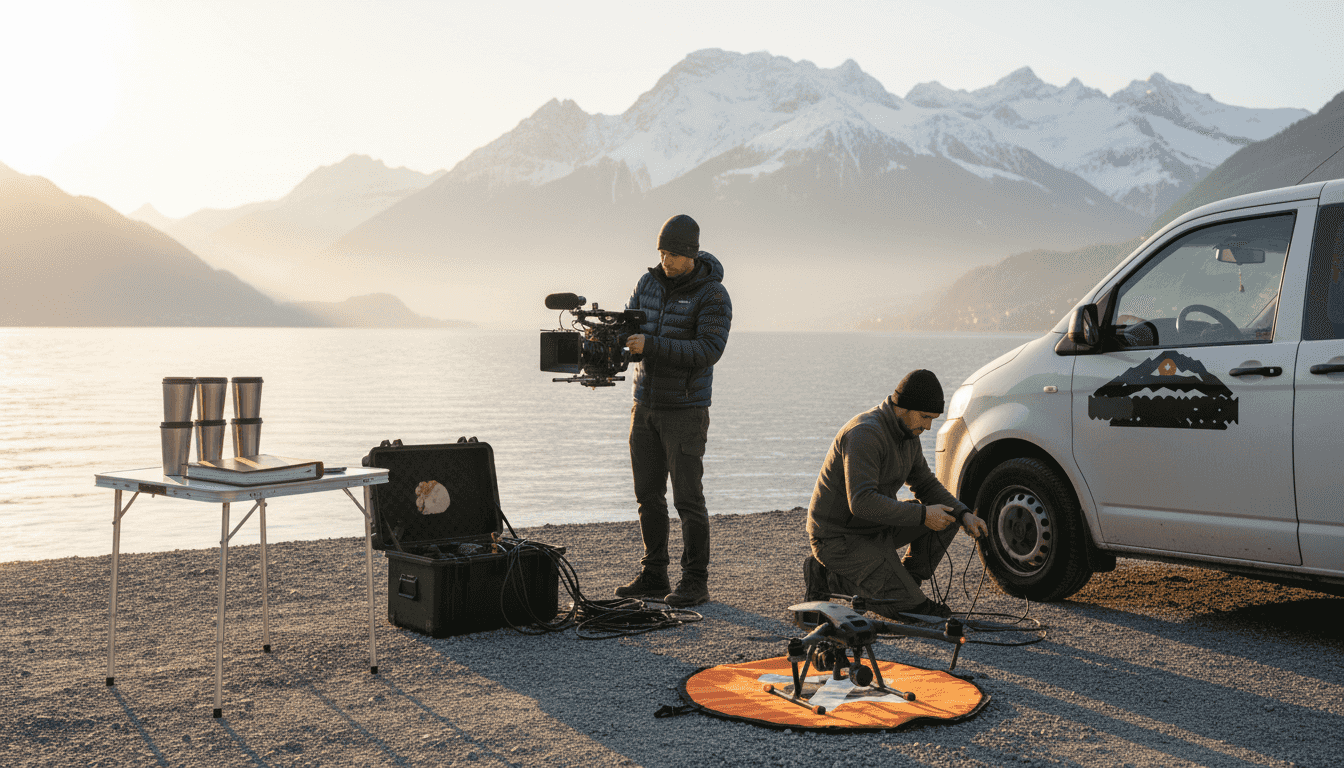
Shooting a film or commercial in Switzerland can be both rewarding and challenging, especially when you face complex regulations, unique labor market demands, and the fast pace of new technology. As an international producer, you need more than just a beautiful location—you want your production to run smoothly, stay on budget, and satisfy local authorities. The difference lies in understanding the finer details that set Switzerland apart in 2025.
This list will give you practical guidance for every stage of your Swiss production—from sustainability expectations to advanced drone regulations and the new ways crews are working. You’ll see how to meet legal requirements, find the right local talent, and make the most of cutting-edge technology around Swiss sets.
You’ll learn proven steps to avoid permit issues, manage multilingual teams, and access the local insights that make all the difference on a shoot. Read on to find strategies that will safeguard your project and help you unlock the full potential of filming in Switzerland.
Table of Contents
Quick Summary
Takeaway | Explanation |
1. Embrace Sustainable Practices | Implementing eco-friendly approaches aligns with Swiss values and enhances production efficiency, ultimately lowering costs and promoting corporate responsibility. |
2. Hire Local Swiss Crews | Utilizing local talent minimizes training time and fosters better communication with authorities, enhancing production continuity and reliability. |
3. Understand Drone Regulations | Familiarizing yourself with Switzerland’s drone regulations streamlines aerial cinematography planning and prevents unexpected delays during production. |
4. Leverage Multilingual Talent | Accessing a multilingual workforce allows for authentic performances and smoother communications, enhancing audience connection and market reach. |
5. Simplify Permit Processes | Engage with local production support to navigate streamlined permit systems effectively, ensuring timely access to locations and minimizing disruptions. |
1. Adopting Sustainable Filmmaking Practices in Switzerland
Switzerland’s strict environmental regulations and reputation for ecological responsibility make it the perfect location to pioneer sustainable filmmaking. When you film here, sustainability isn’t just a marketing advantage—it’s increasingly expected by local authorities, crew members, and conscious brands.
Sustainable filmmaking reduces waste, lowers your production footprint, and often cuts costs. International producers working in Switzerland find that implementing green practices aligns with both Swiss values and their own corporate responsibility goals.
Why Sustainability Matters on Swiss Sets
Swiss environmental standards are among the world’s strictest. Local permits increasingly require waste management plans and carbon footprint assessments. Crews in Switzerland understand sustainable practices because they’ve grown up with this environmental consciousness.
Your production benefits from:
Reduced permit friction by demonstrating environmental commitment
Crew respect when working with Swiss professionals who value responsible filmmaking
Cost savings through efficient resource management and waste reduction
Brand alignment with modern audience expectations around corporate responsibility
Regulatory compliance without last-minute scrambling for solutions
Sustainable filmmaking in Switzerland isn’t an extra expense—it’s the foundation of responsible production that protects both the environment and your project timeline.
Practical sustainability starts with your crew and equipment choices. When you partner with local production support experienced in Swiss operations, your team understands which vendors offer eco-friendly gear, how to source sustainable materials, and where waste management services operate efficiently.
Sustainable video production best practices show concrete ways to reduce environmental impact while maintaining production quality. Your location manager can identify filming sites that minimize ecosystem disruption. Your transport coordinator can consolidate crew movement to reduce carbon emissions.
Small decisions compound across a shoot. Digital call sheets instead of printed ones. Reusable containers for craft services. LED lighting that reduces energy consumption. Partnering with venues that compost organic waste. These aren’t complicated—they’re practical choices that experienced Swiss crews implement as standard procedure.
Swiss locations offer another sustainability advantage: compact geography and excellent public transportation. Your crew can reach most Swiss filming sites via train or bus, reducing vehicle emissions dramatically. Location scouts know which hotels operate with certified green practices, and which catering companies prioritize local, seasonal ingredients.
Pro tip: Discuss your sustainability goals during your initial consultation—experienced Swiss production teams can identify cost-effective green solutions specific to your shoot’s location, timeline, and budget without compromising creative vision.
2. Rising Demand for Local Swiss Production Crews
International producers shooting in Switzerland increasingly prioritize local crew talent. This isn’t random preference—it reflects real economic shifts and industry trends reshaping how productions operate in 2025.
Swiss companies are investing in domestic production capacity as economic stability returns to manufacturing and industrial sectors. This expansion creates demand for skilled local labor, including audiovisual production crews who understand Swiss workflows, regulations, and cultural nuances that outsiders simply cannot replicate.
Why Local Crews Matter More Than Ever
Swiss production professionals bring institutional knowledge that accelerates your shoot. They know permit officers personally, understand seasonal filming restrictions, and maintain relationships with vendors who deliver reliability.
The labor market data shows growing demand for skilled professionals in creative fields. Employers across Switzerland emphasize retaining talent through competitive wages and superior work conditions. For your production, this means access to professionals who chose Switzerland because they’re committed to quality work and long-term careers, not just quick gigs.
Local crews provide these tangible advantages:
Faster problem-solving through established vendor relationships and regulatory knowledge
Seamless communication with local authorities about permits and location requirements
Cultural understanding that prevents costly misinterpretations or scheduling conflicts
Equipment reliability because crews maintain relationships with trusted rental companies
Continuity if you return for additional shoots or revisions
Swiss production crews reduce friction. They’re not learning your location as they work—they’re executing your vision within a system they’ve mastered.
When you hire local crews, you’re accessing professionals shaped by Switzerland’s precision-focused manufacturing culture. Swiss workers expect excellence and deliver it consistently. Your gaffer knows exactly which power distribution configurations work with Swiss electrical standards. Your production manager understands municipal processes without requiring explanations.
This efficiency compounds across production days. Your crew arrives prepared, anticipates problems, and solves them quietly. Shoot days start on schedule. Equipment functions as specified. Permits process smoothly because someone on your team knows the right person at the municipal office.
The best Swiss film crews combine technical expertise with deep local knowledge. When international producers partner with local production support experienced in assembling Swiss teams, they gain access to vetted professionals who’ve worked together successfully on previous shoots.
Your budget stretches further with local crews. No relocating international specialists. No premium rates for flying in experts who could be replaced by locals performing equally well. Swiss crew members stay in their homes, reducing accommodation costs while increasing job satisfaction and retention.
Pro tip: During your initial production consultation, discuss crew preferences and specialization needs—experienced Swiss production coordinators can match your project with crew members whose experience directly aligns with your shoot requirements, ensuring compatibility and reducing coordination delays.
3. Advances in Drone and Aerial Cinematography Regulations
Drone cinematography delivers stunning aerial shots that transform productions. Switzerland’s regulatory framework has evolved significantly, creating clearer pathways for international producers to legally capture aerial content without delays or permit headaches.
Swiss drone regulations now align with European Union standards through the EASA framework. This harmonization means regulations are more predictable, better documented, and increasingly streamlined for legitimate productions. Understanding these advances helps you plan realistic timelines and budgets for aerial work.
What Changed in Switzerland’s Drone Regulations
Switzerland transitioned to EU-aligned drone rules in 2023, establishing clear categories for different types of operations. The regulatory environment continues evolving in 2025 with enhanced international cooperation and new frameworks supporting innovation.
Key regulatory requirements for drone cinematography include:
Mandatory operator registration for drones with cameras or weighing 250 grams or more
Maximum flight altitude of 120 meters in standard operations
Liability insurance of CHF 1 million for drones over 250 grams
Flight restrictions over people and sensitive zones
Specific category authorization for higher-risk operations through FOCA
These requirements sound strict, but they’re designed to work with your production schedule, not against it. Drone laws in Switzerland define clear operating parameters that let you plan with certainty.
Clear regulations aren’t obstacles—they’re the foundation of legal drone operations that protect your production, crew, and the public.
International cooperation developments in 2025 mean your Swiss drone operations integrate smoothly with other countries’ airspace management systems. If your production spans multiple locations across Europe, Swiss regulatory cooperation makes logistics simpler.
New frameworks for UAV applications demonstrate Swiss commitment to supporting legitimate drone use. This includes tourist drone operations and specialized applications like plant protection. The regulatory environment actively encourages responsible drone cinematography.
Hiring experienced local production support handles regulatory complexity for you. Your production coordinator knows which operations require specific category authorization and which fall under standard rules. They manage documentation, liaise with FOCA when necessary, and ensure your drone operator holds proper certifications.
This expertise prevents costly delays. Instead of discovering permit issues mid-production, everything’s confirmed during pre-production planning. Your aerial shots happen on schedule because regulatory requirements are addressed before cameras roll.
The 120-meter altitude limit affects creative choices but doesn’t eliminate drone cinematography. Most visually compelling aerial shots work within this parameter. Swiss locations offer dramatic elevation changes that create impressive perspectives even at standard altitudes.
Pro tip: Discuss drone work requirements during initial consultation so your production team can verify certifications, arrange necessary permits, and confirm insurance coverage before your operator arrives in Switzerland, preventing last-minute regulatory surprises.
4. Technological Upgrades: 8K, Virtual Sets, and Remote Direction
Cinema technology is transforming faster than ever. International producers shooting in Switzerland now access cutting-edge tools that compress timelines, expand creative possibilities, and fundamentally change how filmmaking works on set.
8K capture, virtual production environments, and remote direction capabilities represent a shift from traditional filmmaking. These aren’t luxury additions anymore—they’re practical solutions that solve real production challenges while delivering superior image quality.
How Virtual Production Changes Everything
Virtual production integrates real-time computer graphics with live-action filming on LED volumes. Your actors perform against dynamic digital backdrops rendered in real-time, eliminating green screen compositing delays and giving you immediate visual feedback during shooting.
This technology combines several powerful elements:
Real-time rendering using game engines like Unreal Engine for instant visual responses
Advanced camera tracking that synchronizes physical camera movement with virtual environment depth
Motion capture integration for seamless character and object interaction
8K and higher resolution output for cinema-quality final products
Dynamic backgrounds that respond to lighting, camera angle, and performer movement
The practical benefit is dramatic. Your director sees final composite shots during filming, not weeks later in post-production. If something doesn’t work visually, you adjust immediately rather than scheduling reshoots.
Virtual production doesn’t replace real filmmaking—it enhances it by showing you exactly what you’re creating before final delivery.
These advances require sophisticated technical infrastructure. Real-time video processing at 8K relies on adaptive computing optimization that reduces latency between physical cameras and virtual elements. Equipment integration becomes seamless, allowing cinema cameras and LED walls to operate efficiently in synchronized workflow.
Remote direction represents another critical advancement. Your director provides real-time feedback from anywhere globally. Instead of being physically on set, directors communicate with crew via advanced monitoring systems. This flexibility matters for international productions juggling multiple locations and time zones.
Remote direction capabilities include:
Live video feeds from multiple camera angles and perspectives
Real-time communication with crew for immediate direction adjustments
Visual monitoring of lighting, framing, and performance simultaneously
Record and playback for reviewing takes during production
Collaborative tools connecting distributed creative teams
For Swiss productions, remote direction enables international creative teams to participate fully. Your Hollywood director oversees the shoot from Los Angeles while your Swiss production coordinator manages on-set logistics. Everyone sees identical feeds, hears directions clearly, and maintains creative cohesion across distance.
Implementing these technologies requires experienced technical crews who understand both traditional filmmaking and digital workflows. Swiss production support familiar with virtual production infrastructure can coordinate LED volume rental, motion capture setup, and real-time rendering systems.
Pro tip: Discuss 8K, virtual set, and remote direction requirements during pre-production planning so your technical coordinator can secure appropriate equipment, verify compatibility with your shoot specifications, and arrange crew training before cameras roll.
5. Streamlining Permits and Location Access in 2025
Permits and location access represent the biggest operational headaches in international productions. Switzerland’s streamlined approach in 2025 makes securing these approvals faster and more predictable than ever before.
Modernized permit systems reduce bureaucratic friction. Digital submissions replace paper forms. Municipal offices respond faster. Location scouts have clearer guidelines. The result is productions that move forward on schedule instead of stalling while paperwork processes.
Why Permits Matter More Than You Think
Permits aren’t just legal boxes to check. They determine whether you can film at your chosen locations, when you can shoot, what equipment you can use, and what safety measures you must implement.
Missing or delayed permits cascade into production nightmares:
Shoot day cancellations when municipal authorities deny access
Equipment confiscation if you use unauthorized filming gear
Crew fines for violating location agreements
Schedule delays while waiting for approvals
Budget overruns from rescheduling and emergency solutions
Experienced Swiss production support prevents every one of these problems. They know exactly which locations require permits and which don’t. They understand municipal approval timelines and can accelerate them through established relationships.
Streamlined permits aren’t lucky breaks—they’re the result of professional coordination with people who’ve navigated this system hundreds of times.
Swiss municipalities in 2025 have digitized many permit processes. Online submissions reduce processing time. Municipal officials can review documents faster. Approvals come through weeks earlier than traditional paper-based systems allow.
Location access improvements extend beyond permits. Production coordinators now have better tools for securing agreements with property owners, hotels, and public spaces. Digital platforms make location contracts clearer and faster to negotiate.
Knowing how to get filming permits involves understanding municipal requirements and submission procedures. Swiss locations vary dramatically in their permit requirements. A public square might require municipal approval but no property owner permission. A private garden needs only property owner consent. A protected archaeological site requires specialized heritage authority approval.
Your production coordinator navigates these distinctions automatically. They know which location types trigger which approvals. They bundle permit applications efficiently, submitting everything simultaneously rather than sequentially.
This coordination saves weeks. Instead of learning permit requirements location by location, your team gets a comprehensive application package. Everything’s accurate, complete, and submitted to the correct offices with proper timing.
Location scouts in 2025 benefit from improved mapping tools and clearer municipal guidelines. Candidates locations come pre-screened for permit feasibility. Your director sees options that are already vetted for legal and logistical viability.
Pro tip: Communicate your location preferences and filming schedule during initial consultation so permit specialists can begin municipal outreach immediately, securing approvals before your crew arrives and ensuring shoot days proceed without access delays.
6. Integrating Multilingual Talent for Global Reach
Switzerland’s multilingual workforce represents a competitive advantage most international producers overlook. Your production gains access to talent fluent in German, French, Italian, and English—often within the same crew.
This linguistic diversity transforms how you create content for global audiences. Instead of filming one version and translating later, you capture authentic performances across multiple languages simultaneously. Your actors deliver genuinely localized dialogue rather than dubbed performances that feel foreign to local viewers.
Why Multilingual Production Matters
Audiences connect with content in their native language. Dubbed versions feel inauthentic. Subtitled content loses nuance in comedic timing and emotional delivery. Multilingual production captures genuine performances that resonate across markets.
Swiss talent brings multiple language capabilities as standard. Your production designer speaks German and French fluently. Your script supervisor understands Italian dialogue nuances. Your location manager navigates communication effortlessly across linguistic boundaries.
This capability offers distinct advantages:
Authentic performances in each target language without dubbed revoicing
Simultaneous shooting of multiple language versions reducing production time
Natural dialogue that preserves cultural context and humor
Crew communication without translation delays or misunderstandings
Market expansion into additional regions without post-production complications
Multilingual production isn’t an afterthought—it’s a strategic advantage that opens markets and deepens audience connection simultaneously.
Casting becomes more flexible when your crew speaks multiple languages. Your director can cast the best performer for each role without worrying about language barriers. Swiss actors often work fluently across German, French, and English, giving you casting flexibility that simplified productions can’t match.
Production coordination simplifies dramatically. Your Swiss production team communicates with permits offices in their preferred language. They negotiate with location owners in local dialects. They manage crew discussions without translation services creating delays or misunderstandings.
Creating effective localized video requires understanding how cultural and linguistic elements shape audience perception. Swiss production professionals understand these nuances intimately. They know which cultural references work in German-speaking markets versus French-speaking regions. They understand how local customs affect location availability and crew scheduling.
Your script benefits from multilingual expertise. Swiss writers catch cultural missteps that international writers miss. They ensure dialogue sounds natural in each language rather than translated awkwardly. They adapt humor and references for each target market without losing your creative vision.
Post-production efficiency increases when you’ve captured multiple language versions during principal photography. You avoid expensive ADR sessions where actors re-record dialogue in studios. You eliminate timing problems that plague dubbed content. Your final product delivers authentic performances across every market.
Pro tip: Discuss your target markets and language requirements during initial consultation so your production coordinator can assemble multilingual crew members and identify Swiss actors whose language capabilities align with your project scope.
Below is a comprehensive table summarizing the main approaches and insights into sustainable filmmaking practices, crew utilization, technology advancements, and regulatory aspects discussed throughout the article.
Topic | Details | Benefits |
Sustainable Filmmaking Practices | Switzerland prioritizes eco-friendly film production, requiring waste management plans and green equipment. | Environmental protection, cost savings, and alignment with audience expectations. |
Advantages of Local Swiss Crew Utilization | Swiss crews possess deep cultural and regulatory knowledge, enhancing production efficiency and problem-solving capabilities. | Improved logistics, regulatory compliance, and continuity for long-term projects. |
Advances in Drone Regulations | Harmonized rules with EU standards streamline aerial cinematography while ensuring safety and legal compliance. | Clear guidance allows seamless integration of aerial shots into production frameworks. |
Language Integration and Multilingual Talent | Switzerland’s multilingual professionals add significant production versatility, enabling authentic and localized performances in German, French, Italian, and English. | Expands market reach and reduces overall costs by simultaneously shooting versions for multiple audiences. |
Technological Innovations in Filmmaking | Incorporation of virtual studios, 8K cameras, and remote direction capabilities enhance production quality and efficiency. | Greater creative control and streamlined workflows reduce delays and optimize on-set activities. |
Streamlined Permitting Processes | Modernized digital systems and experienced local guidance simplify permit acquisition and location access. | Faster approval processes ensure production runs smoothly without unnecessary delays. |
Elevate Your 2025 Swiss Video Production with Local Expertise and Seamless Logistics
Navigating the evolving landscape of video production in Switzerland requires a partner who understands your challenges like sustainability demands, multilingual talent coordination, and complex permit processes. From managing drone regulations to integrating cutting-edge virtual production technology, you need reliable local support that turns these hurdles into smooth opportunities. Our team specializes in assembling expert Swiss crews, securing permits quickly, and coordinating logistics so your international shoot stays on schedule and on budget.
[
Discover how trusted local knowledge and over 20 years of hands-on experience can save your production time and cost. Visit Video Production Switzerland now to schedule your free consultation and explore tailored solutions designed to meet the unique demands highlighted in the “6 Key Switzerland Video Production Trends 2025” article. Don’t let permit delays or coordination challenges hold back your creative vision. Start planning today with your seamless Swiss production partner at https://videoproductionswitzerland.com.
Frequently Asked Questions
What are the current sustainable filmmaking practices in Switzerland?
Sustainable filmmaking practices in Switzerland focus on reducing waste, lowering production footprints, and aligning with local environmental standards. To adopt these practices, consult with local production teams who can guide you on eco-friendly gear and waste management solutions tailored to your shoot and timeline.
How can I hire local Swiss production crews for my project?
To hire local Swiss production crews, discuss your project needs and preferences during the initial consultation. Local crews bring essential knowledge of regulations and cultural nuances, increasing efficiency and enhancing your overall production experience.
What are the latest regulations for drone cinematography in Switzerland?
The latest drone regulations in Switzerland require operator registration for drones weighing over 250 grams and adherence to specific flight restrictions. Ensure compliance by consulting with your production coordinator to verify that all necessary permits and insurance are secured before your drone operations begin.
How can virtual production technology impact my project?
Virtual production technology can significantly speed up your filming process by allowing real-time visual adjustments and immediate feedback during shoots. To integrate this technology, discuss your technical requirements with your production team to ensure you have the right equipment and crew trained in these advanced workflows.
What steps should I follow to streamline permit applications for filming?
To streamline permit applications, work closely with your production coordinator who understands local requirements and can efficiently bundle your applications. Begin this process as early as possible, allowing for at least a few weeks in advance to avoid delays on shooting days.
How do I include multilingual talent in my production?
Including multilingual talent in your production allows for authentic performances in various languages. During your initial discussions, specify your target languages and let your production team identify actors and crew members who can meet these language needs seamlessly.
Recommended
