
Networking Events Switzerland: A Production Partner Guide

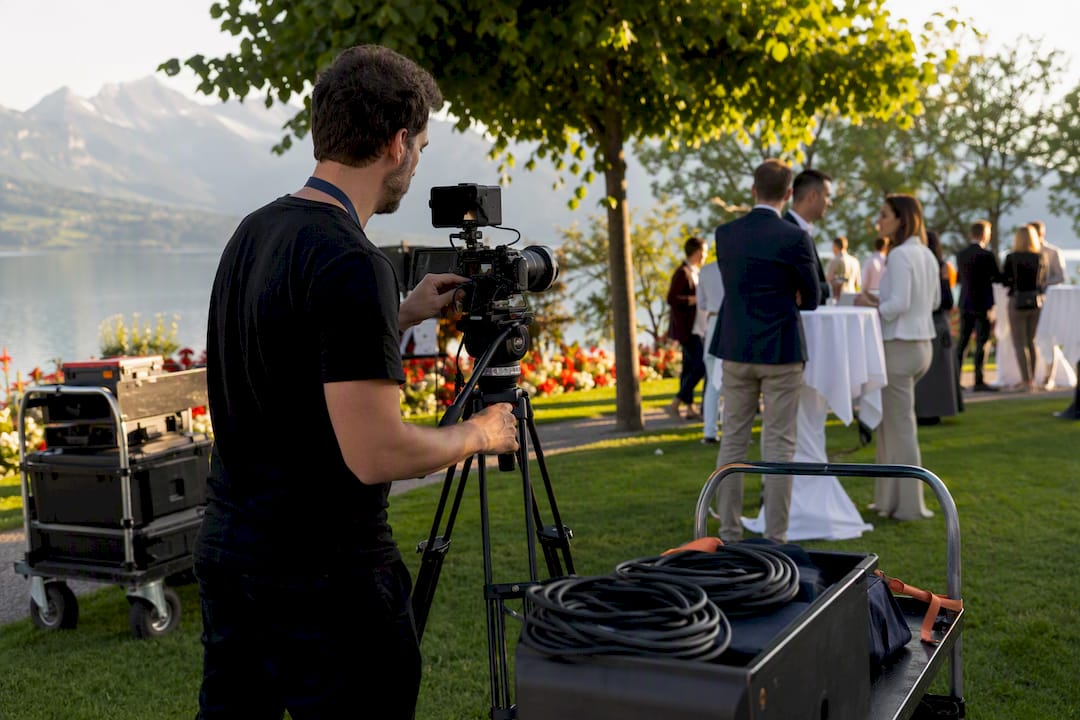
Hire a Swiss full-service production partner to handle permits, crew, and livestreaming for networking events in Switzerland. That single decision removes the biggest risk in corporate event coverage: getting shut down mid-shoot because nobody filed the right paperwork with the right canton. A qualified partner, such as Videoproductionswitzerland, delivers a defined set of services from the first call:
Permit filing and liaison with local authorities, including guidance shaped by bodies like Film Commission Zurich
Local crew sourcing sized to your event, from a two-person run-and-gun team to a full multi-camera unit
Multi-camera capture built around keynote moments, panel discussions, and networking floor coverage
Broadcast-quality audio, including wireless lavaliers and room mics for panel Q&A
Livestreaming with backup connectivity, plus fast-turnaround highlight edits
Drone shots require separate clearance under FOCA rules, something a local partner already factors into scheduling.
TL;DR:
Permits are required for shoots over one hour, when using infrastructure, or with more than five crew members on public sites, often taking several weeks to months to process.
Early permit submission—ideally immediately after signing venue contracts—is crucial to avoid delays or rejections from cantonal authorities.
Crew size and equipment tiers must scale with event complexity, with larger conferences requiring eight or more staff and more advanced technical setups.
Livestream reliability depends on redundant internet connections, such as pairing fiber with 4G or 5G backup, especially for multi-camera broadcasts.
Hiring a local Swiss full-service production partner simplifies permit handling, crew sourcing, logistics, and post-event editing within established timelines and budgets.
Table of Contents
Which Permits Do Networking Events in Switzerland Need?
Permit requirements in Switzerland hinge on four triggers: shoot duration, use of infrastructure, crew size, and whether the space is public or private. Film Commission Zurich requires a permit once a shoot runs longer than one hour, involves lighting rigs or tripods classified as infrastructure, or brings more than five crew members onto a public site. A cocktail-hour networking mixer filmed with a two-person crew and a single camera often clears without formal authorization. A conference with a stage, multiple cameras, and a livestream truck almost never does.
Lead times matter more than most organizers expect. A simple notification, covering short, low-impact shoots, typically needs about 14 days’ notice. A simplified authorization, for slightly larger setups, runs closer to six weeks. A full application, required for anything with significant infrastructure or extended access to a public venue, can take about three months to clear.
Pro Tip: Submit your permit application the moment your venue contract is signed, not after your run-of-show is finalized. Authorities process paperwork on their timeline, not yours.
Basel-Stadt runs a comparable tiered system. Its own code of practice waives permits for minimal, portable gear, requires 14-day notification for short shoots, and pushes six-week or three-month lead times for longer or more complex setups.
Venue-specific quirks catch first-time organizers off guard:
Heritage sites and protected gardens, like Zurich’s Chinese Garden, often need special seasonal approval.
Public swimming facilities generally require filming outside opening hours or during the off-season.
Any special activity involving stunts or fake weapons must be explicitly declared on the application, since Basel-Stadt can bill a production for police response to a false alarm.
Drone footage adds another layer entirely: FOCA aviation rules sit on top of cantonal filming permits, so aerial shots need their own lead time. Our guide to drone laws in Switzerland walks through what that approval process actually involves.
How Do You Manage Crew and Logistics On-Site?
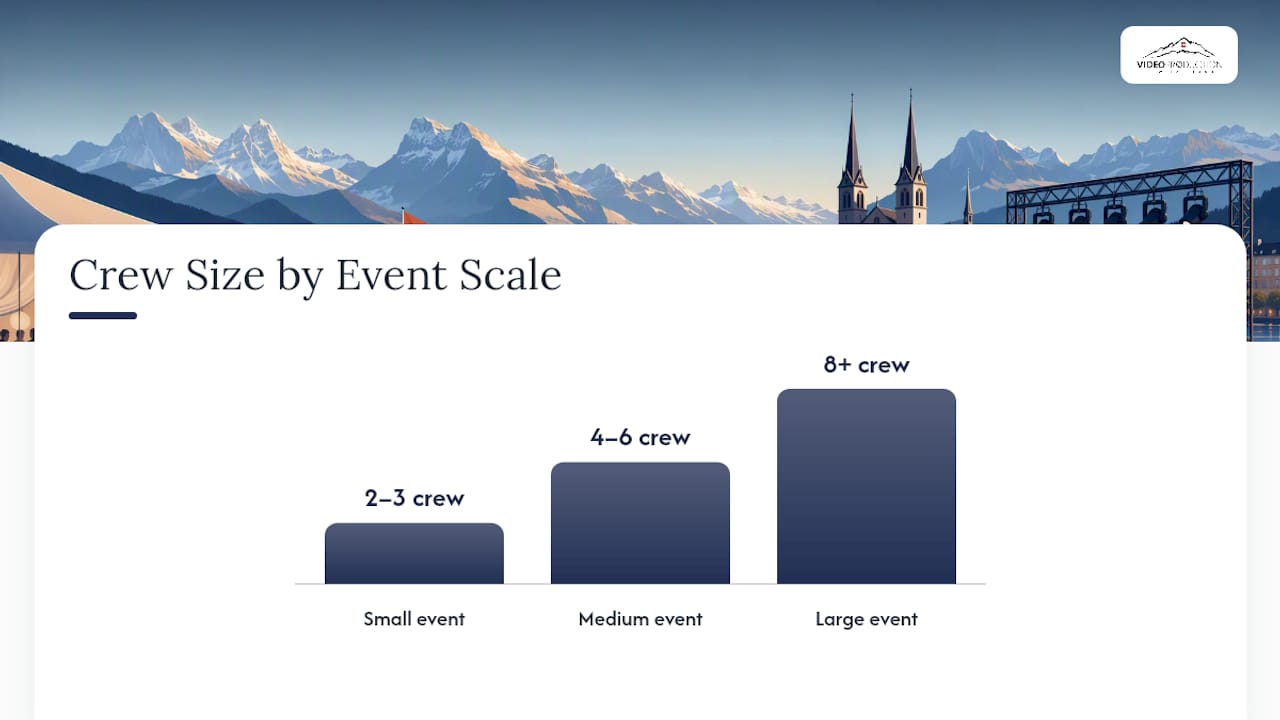
Crew size scales with event size, and getting it wrong in either direction costs money. A small networking event, under 50 attendees, typically runs on a two-to-three-person crew: one camera operator, one audio technician, and one producer managing the room. A medium event with a stage and panel format usually needs four to six people, adding a second camera and a dedicated livestream engineer. Large conferences with multiple breakout rooms and a main stage often require eight or more crew members working in parallel.
Equipment footprint follows the same logic. A single-camera interview setup draws modest power and takes up little floor space. A full multi-camera livestream rig, with switcher, monitors, and backup recording, needs dedicated power circuits and enough room to avoid blocking foot traffic. Venue AV coordination has to happen before load-in, not during it, especially in older Swiss venues where power access is inconsistent.
Flown-in specialists, colorists, drone pilots, or senior directors, bring their own logistics: flights, accommodation near the venue, and sometimes work authorization paperwork depending on nationality and shoot length. A local partner handles this coordination directly, which is one of the practical advantages of hiring Swiss-based crews instead of flying in an entire team.
Confirm venue power capacity and outlet locations at least two weeks before the shoot
Request a floor plan showing ingress, egress, and staging areas
Build a shot list around unmissable moments: keynote openings, award presentations, panel transitions
Set a contingency plan for weather if any portion happens outdoors
Location scouting produces concrete deliverables: a marked floor plan, a shot list tied to the agenda, and a written contingency plan. Our location management guide covers what a proper scouting report should include before crew ever arrives.
What Technical Setup Does Livestreaming Require?
Not every networking event needs the same technical package, and choosing the wrong tier wastes budget in one direction or leaves gaps in coverage in the other.
Record-only works for internal events where footage gets edited later and no live audience is watching remotely. Multi-camera capture adds a second or third angle, useful for panels where cutting between speaker and audience reaction matters. Broadcast-grade livestreaming is the top tier: dedicated encoding hardware, a redundant internet connection, and platform-specific delivery to Zoom, Teams, YouTube, or LinkedIn Live.
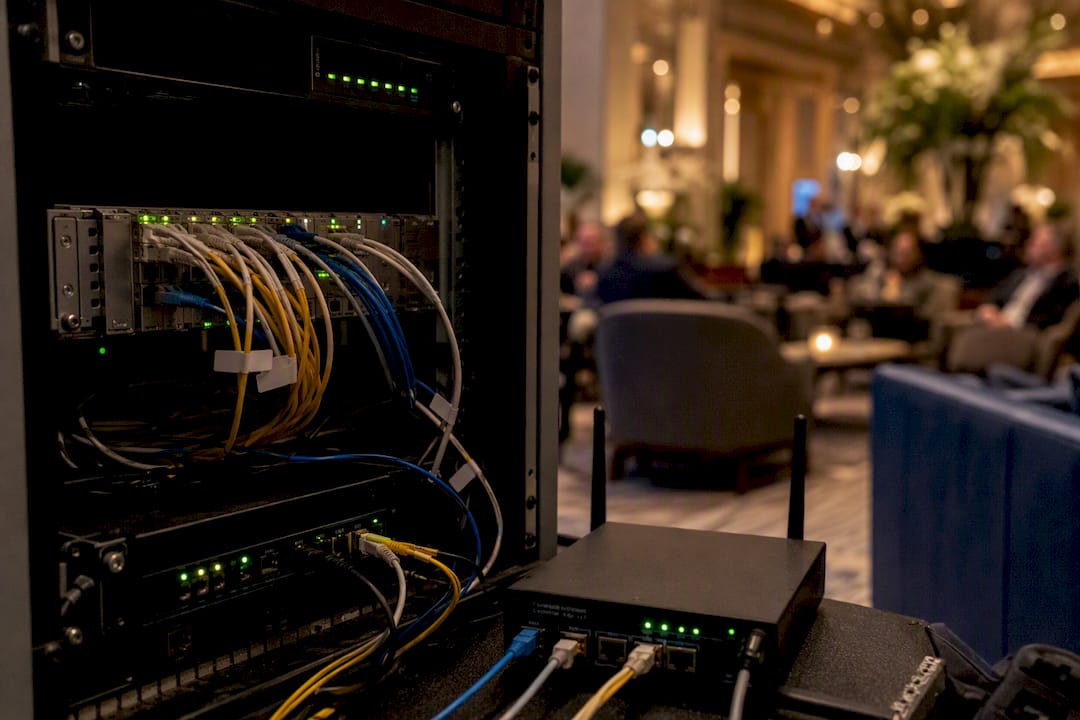
Connectivity is where livestreams actually fail. A single internet line is a single point of failure, so any serious broadcast setup runs a primary fiber connection alongside a 4G or 5G backup that switches over automatically if the primary drops. Encoding choices depend on the destination platform: LinkedIn Live and YouTube handle different bitrate and resolution requirements than a Teams webinar feed.
Drone shots, when the venue and permits allow them, add production value to exterior establishing shots or large outdoor networking receptions, but they need FOCA clearance planned weeks ahead, not requested the week of the event.
Turnaround expectations vary by deliverable:
Speaker highlight clips for social media: same day to 24 hours
Full event highlight reel: 24 to 72 hours
Complete, fully edited event video: one to two weeks
This planning → recording → post-production model is standard across Swiss event production providers, and it’s worth building your internal approval timeline around those same windows.
What Does Budgeting and Timeline Actually Look Like?
Cost drivers for a networking event shoot stack in a predictable order:
Crew size and roles — a two-person team costs a fraction of an eight-person multi-camera unit.
Equipment tier — record-only gear is inexpensive; broadcast-grade livestream kits with redundant encoding cost significantly more.
Travel and accommodation — flying in specialists adds flights, hotels, and per diem costs that a local crew avoids entirely.
Drone licensing and FOCA compliance — aerial add-ons carry their own permit and insurance costs.
Rush edit fees — same-day highlight reels typically cost more than a standard one-to-two-week edit turnaround.
A realistic timeline starts at booking, roughly eight or more weeks before the event, to leave room for permit lead times, which can run from two weeks to three months depending on complexity. Highlight reels land 24 to 72 hours after the event; full edits follow in one to two weeks.
When requesting quotes, decide upfront whether you want fixed-package pricing or a bespoke quote built around your specific run-of-show, and supply the same brief to every vendor so quotes are actually comparable. Any contract should spell out the scope of work, insurance coverage, and cancellation terms before you sign.
How Do You Engage a Swiss Production Partner?
Start with a written brief covering the event date, venue, expected audience size, AV requirements, streaming platform targets, and your deliverable deadlines with approval windows for each edit.
Then ask direct questions: What insurance do they carry? What’s their permit experience in this specific canton? Can they share crew CVs and a sample scope of work? What’s their backup plan if a camera or internet connection fails mid-event?
Expect the vendor to request a floor plan, venue access rules, and your speaker list and schedule before finalizing a quote. Our crew hiring guide breaks down what qualified local crew credentials actually look like.
Pro Tip: A vendor who can’t name the specific canton office they file permits with is a red flag. Local permit experience isn’t optional, it’s the entire value of hiring locally.
Vague answers about insurance or permit history
No references from past corporate events
Reluctance to share a written SOW before deposit
A Producer’s View on Swiss Event Coverage
Most permit rejections we see trace back to one thing: someone booked the venue before checking filming rules, then scrambled six weeks before the event. That’s backwards. With over 20 years navigating Swiss cantonal offices, client testimonials consistently point to the same relief, permits handled quietly in the background while the client focuses on the agenda, not the paperwork.
— Pieter
Get a Free Consultation for Your Swiss Event Shoot
Videoproductionswitzerland is the direct alternative to piecing together permits, crew, and livestream gear through separate local contacts. One point of contact manages permit filing with the correct cantonal office, sources crew sized to your event, arranges equipment and power coordination, and delivers highlight edits on the turnaround your communications team actually needs. Our on-location support services cover transport, accommodation, and venue liaison so nothing gets missed between booking and event day.
[
Every engagement starts with a free consultation to review your date, venue, and deliverables. Check current pricing for typical package ranges, or visit the main site to start your consultation and get a quote built around your specific event.
Key Takeaways
Successful networking event production in Switzerland depends on early permit filing, correctly sized local crew, and redundant livestream infrastructure.
Point | Details |
Check permit triggers early | Shoots over one hour, using infrastructure, or with more than five crew often need formal authorization. |
Plan for lead times | Notification requires roughly two weeks, while full applications may need several months for processing. |
Size crew to event scale | Small events run on two to three people; large conferences often need eight or more. |
Build in connectivity redundancy | Pair a primary fiber connection with a 4G or 5G backup for any livestream. |
Hire a local full-service partner | Videoproductionswitzerland manages permits, crew, and delivery timelines from one point of contact. |
Sources
Recommended
