
Logistics for International Productions: A 2026 Field Guide


TL;DR:
Effective international film logistics require centralized authority, early planning, and customs compliance to stay on schedule and budget. Rigorous coordination, local expertise, and contingency plans minimize delays, costs, and operational risks for successful productions abroad.
Logistics for international productions is the integrated coordination of cross-border transport, customs compliance, personnel scheduling, and equipment management to deliver film and video shoots on time and within budget. Production managers who treat logistics as an afterthought pay for it in customs holds, reshoots, and blown schedules. Integrated logistics planning aligned with shooting calendars can save 15–20% on European production costs. That figure represents real budget that stays on screen instead of disappearing into freight surcharges and last-minute fixes. Industry standards like the ATA Carnet exist precisely because the cost of getting this wrong is not theoretical. Videoproductionswitzerland has spent over 20 years managing exactly these challenges for international crews shooting in Switzerland.
What are the main components of international production logistics?
International production logistics breaks down into five core areas, each of which can derail a shoot if handled poorly.
Cross-border transportation. Air freight moves equipment fast but costs more. Sea freight is economical for large loads but requires weeks of lead time. Ground transport works well within regions but demands route planning across multiple regulatory environments.
Customs clearance and documentation. The ATA Carnet is the industry standard for temporary duty-free import of film equipment. Failing to use it correctly triggers costly border delays and, in some cases, full equipment seizure.
Shipping calendar alignment. Shipping timelines must map directly to the shooting calendar. Aligning these two calendars creates financial and operational advantages that reactive planning cannot replicate.
Technical standards and equipment compatibility. NTSC and PAL are not interchangeable. Sending NTSC-configured monitors into a PAL region without pre-testing creates on-set failures that cost hours.
Local labor laws and union regulations. Ignoring local labor rules risks fines, work stoppages, and damaged relationships with local vendors that affect every shoot day.
Local crew and fixers. Vetted local fixers embedded within the line production framework resolve permit issues, vendor disputes, and location access problems faster than any remote coordinator can.
Pro Tip: Run visa processing, equipment routing, and location permissions in parallel from day one of pre-production. Sequential planning is the single biggest cause of avoidable delays on international shoots.
How does global supply chain management apply to international film productions?
Global supply chain management is the discipline of connecting suppliers, logistics providers, and end customers through a coordinated network that balances cost, speed, quality, and risk. Film production logistics follows the same logic, with equipment vendors, freight forwarders, local crews, and post-production facilities replacing the traditional manufacturer-to-retailer chain.

The most useful concept to borrow from supply chain management is visibility. Teams with connected workflows detect shipment milestones and potential issues before they become critical delays. A production that knows its camera package cleared customs in Zurich on monday morning can confirm the Tuesday call sheet with confidence. A production that finds out about a customs hold on Tuesday morning cannot.
The table below maps standard supply chain elements to their film production equivalents.
Supply chain element | Film production equivalent |
Supplier network | Equipment vendors, rental houses, local gear hubs |
Logistics provider | Freight forwarder, entertainment logistics specialist |
Compliance management | ATA Carnet, work permits, location licenses |
Inventory visibility | Real-time equipment tracking and customs status |
Exception workflow | Escalation plan for customs holds, crew illness, weather |
End customer | Director, studio, brand client |
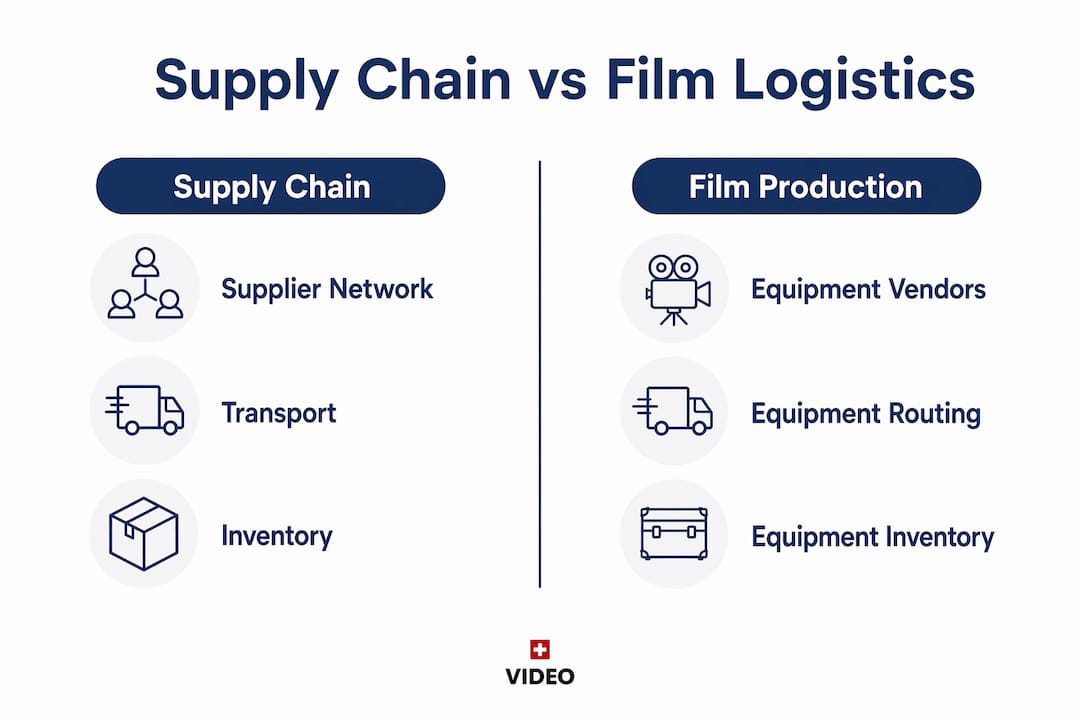
Exception workflows and escalation rules built in advance allow productions to respond to port congestion or shipping delays without rebuilding procedures from scratch. The productions that survive disruptions are the ones that planned for them before the first flight was booked.
Pro Tip: Segment your vendors by supply risk before pre-production ends. Critical items like camera bodies and sound packages need backup sourcing plans. Secondary items like expendables can be sourced locally on arrival.
What are the challenges and risks specific to international film production logistics?
The gap between a well-planned international shoot and a chaotic one is almost always a logistics failure, not a creative one. These are the risks that production managers encounter most often.
Customs clearance failures. Productions that skip the ATA Carnet process or complete paperwork incorrectly face equipment holds that can last days. The cost in expedited shipping fees and lost production time runs into the thousands.
Technical incompatibilities. NTSC equipment in PAL regions, voltage mismatches, and codec incompatibilities are entirely preventable. They appear on set because no one ran a technical compatibility check during pre-production.
Fragmented authority. Fragmented command structures at location lead to reactive, expensive decisions and schedule collapse. When no single person owns execution authority, every department head makes independent calls that conflict with each other.
Currency and overtime exposure. Currency fluctuations affect vendor contracts denominated in local currency. Overtime costs compound when schedules slip because logistics failed to deliver equipment on time.
Cultural and language barriers. Local vendor coordination breaks down when the production team has no shared language or cultural context with suppliers. A local fixer with real relationships solves in one phone call what a foreign coordinator cannot solve in a week.
Poor fixer integration. Hiring a fixer without embedding them inside the production’s decision-making structure wastes their value. They need authority to act, not just a phone number to call.
Line producers on cross-continent shoots function as execution authorities who own risk management across currency, scheduling, and permissions. Understanding this role is the foundation of any international shoot that runs on time. For a detailed breakdown of what this role requires, the guide on line producer responsibilities covers the full scope.
Pro Tip: Establish a centralized base camp with full execution authority before any location activates. The base camp is where all decisions clear, all escalations land, and all schedule changes originate. Without it, you are managing a crisis, not a production.
What are best practices for executing efficient international production logistics?
The productions that run well abroad share a common structure. They plan early, centralize authority, and build contingency into every layer of the logistics chain.
Establish the base camp first. The base camp is the command center where all execution decisions centralize before locations activate. Every department reports to it. Every schedule change clears through it. Productions that skip this step spend their shoot days reacting instead of executing.
Run parallel planning tracks. Visas, equipment routing, location permits, and crew travel windows must all move forward simultaneously. Waiting for one approval before starting the next adds weeks to pre-production timelines.
Pre-clear equipment and use local gear hubs. Equipment leapfrogging uses local rental hubs and pre-cleared imports to bypass customs holds entirely. Shipping a full camera package across three borders is slower and riskier than sourcing locally and flying in only what cannot be rented.
Embed vetted local fixers within line production. A fixer with real authority inside the production structure resolves permit issues, vendor conflicts, and location access problems on the same day. A fixer kept at arm’s length resolves nothing quickly.
Lock budgets and schedules globally before filming begins. Budget changes made during production in a foreign country cost more than the same changes made at home. Lock the numbers, enforce them, and build contingency buffers before the first travel day.
Build alternate routing plans. Every critical shipment needs a backup route. Port congestion, weather events, and customs backlogs are predictable in the aggregate even when the specific instance is not.
Use specialized entertainment freight services. Standard freight services lack the climate control, white-glove handling, and custom packaging that high-value production equipment requires. Using a general freight provider for a camera package is a risk that specialized entertainment logistics eliminates.
For a deeper framework on production planning and control, the full planning guide covers how to structure pre-production logistics from the first location scout through wrap day. Building a capable team also matters. The resource on assembling a production team offers practical guidance on structuring the right crew for complex shoots.
Key Takeaways
Effective logistics for international productions requires centralized authority, parallel planning, and customs compliance built into pre-production before a single flight is booked.
Point | Details |
ATA Carnet is non-negotiable | Proper use prevents costly customs holds and equipment seizure at borders. |
Centralized base camp prevents chaos | All execution decisions must clear through one command center before locations activate. |
Parallel planning saves weeks | Visas, permits, equipment routing, and crew travel must run simultaneously, not sequentially. |
Local gear hubs reduce customs risk | Equipment leapfrogging bypasses border delays and cuts shipping costs on international shoots. |
Integrated logistics saves 15–20% | Aligning shipping and shooting calendars reduces European production costs significantly. |
Why logistics authority matters more than logistics coordination
After working on international productions across multiple countries, the pattern I see most often is this: productions that fail abroad do not fail because of bad creative decisions. They fail because no one owned logistics with real authority.
Coordination is not the same as authority. A coordinator sends emails and follows up. An execution authority makes binding decisions, enforces the schedule, and absorbs the risk when things go wrong. The line producer role exists for exactly this reason, and productions that treat it as an administrative function pay for that mistake on set.
The other thing I have learned is that local expertise is not a nice-to-have. It is the difference between a shoot that clears a permit in 48 hours and one that waits three weeks. Switzerland, for example, has specific cantonal permit requirements that vary by location. A local partner who has navigated those requirements dozens of times is not just helpful. They are the reason the shoot happens on schedule.
Logistics is where creative ambition either gets protected or gets destroyed. Invest in it before you invest in anything else.
— Pieter
International production support in Switzerland
Videoproductionswitzerland handles the full logistics chain for international crews shooting in Switzerland, from permits and customs coordination to local crew sourcing and equipment management.
[
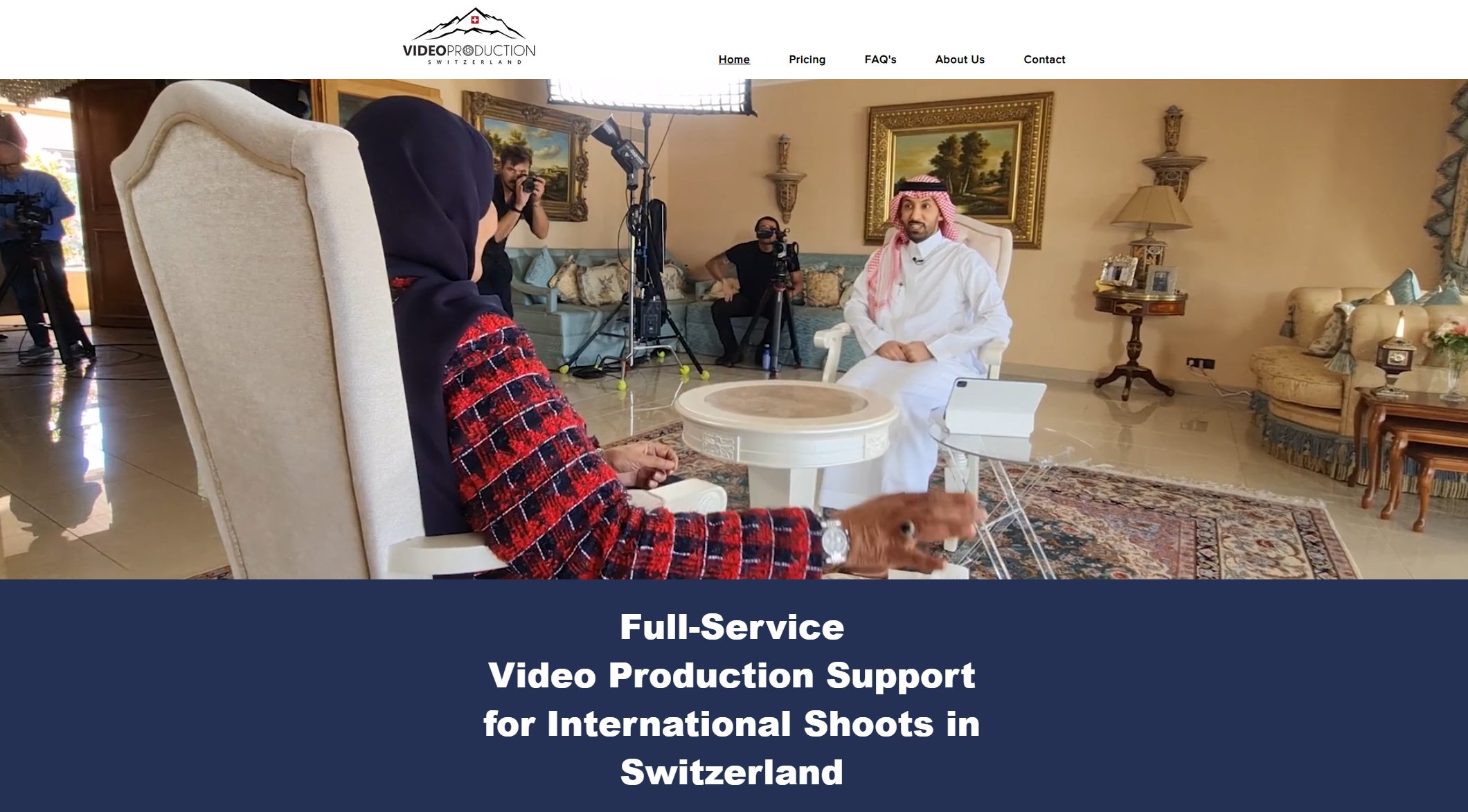
With over 20 years of experience in the Swiss market, the team takes on the coordination work that typically costs productions time and money when managed remotely. That includes ATA Carnet support, cantonal permit applications, vetted local crew, and transportation logistics across Swiss locations. For productions planning their budget, the Switzerland production pricing page breaks down cost structures clearly. For full-service support from pre-production through wrap, international production services covers everything the team manages on your behalf.
FAQ
What is logistics for international productions?
Logistics for international productions is the integrated planning of cross-border transport, customs compliance, equipment management, and personnel scheduling to deliver film shoots on time and within budget. It covers everything from ATA Carnet documentation to local crew coordination.
Why is the ATA Carnet important for film productions?
The ATA Carnet is the industry-standard document for temporary duty-free import of film equipment across borders. Without it, productions face customs holds, expedited shipping fees, and potential equipment seizure.
How much can good logistics planning save on a production?
Integrated logistics planning aligned with shooting schedules can save 15–20% on European production costs. Those savings come from better freight rates, fewer delays, and reduced overtime exposure.
What is a base camp in international film production?
A base camp is the centralized command center where all execution decisions are made before and during a shoot. It prevents fragmented authority and reactive decision-making that cause schedule collapse on location.
How do local fixers improve international production logistics?
Local fixers embedded within the line production structure resolve permits, vendor issues, and location access problems faster than remote coordinators can. Their value depends on being given real authority to act, not just an advisory role.
Recommended
