
Crew Hotel Guide for Film Productions Shooting in Switzerland

A crew hotel, in the production sense, is the block of rooms a shoot books for its cast and crew near a Swiss filming location, not a layover property for airline staff. The fastest path to securing one: negotiate a block booking directly with the property (or through a group sales desk), and pair that with a local production housing coordinator who already knows which Swiss hotels handle gear, vehicles, and odd-hour call sheets without friction. Two moves start the process today:
Finalize your room count by category (talent, department heads, crew) and your shoot dates, even as rough estimates.
Request a free consultation with a local logistics partner like Videoproductionswitzerland to get proposals moving before your prep window closes.
Key Takeaways
Securing a production-ready crew hotel in Switzerland depends on block negotiation, verified physical access, and a local coordinator who can manage both before problems reach the shoot floor.
Point | Details |
Negotiate room-only rates | Push for single-occupancy en-suite rooms and block discounts rather than bundled breakfast packages. |
Plan for partial inventory | Expect hotels to guarantee roughly half their rooms; line up a secondary property in advance. |
Verify physical access early | Measure truck and barrier heights before signing, not after the grip truck arrives. |
Align permits with accommodation | Build cantonal filming permit timelines alongside your hotel contract, not after it. |
Work with a local coordinator | Videoproductionswitzerland manages hotel contracting, permits, and transport as one coordinated service. |
Table of Contents
What Makes a Hotel Production-Ready in Switzerland?
Most hotels can rent you rooms. Far fewer can actually support a shoot day. The difference shows up in details that never make it onto a booking site, and missing one of them costs you hours you don’t have on day one.
Start with connectivity and room type. Crews need high-speed Wi-Fi that survives a dozen laptops uploading dailies at once, plus single-occupancy en-suite rooms as the baseline, not an upgrade. For shoots running past two or three weeks, ask about kitchenette units or laundry access. Nobody wants to pay dry-cleaning rates for six weeks of wardrobe basics.
Then check the building itself, not just the room:
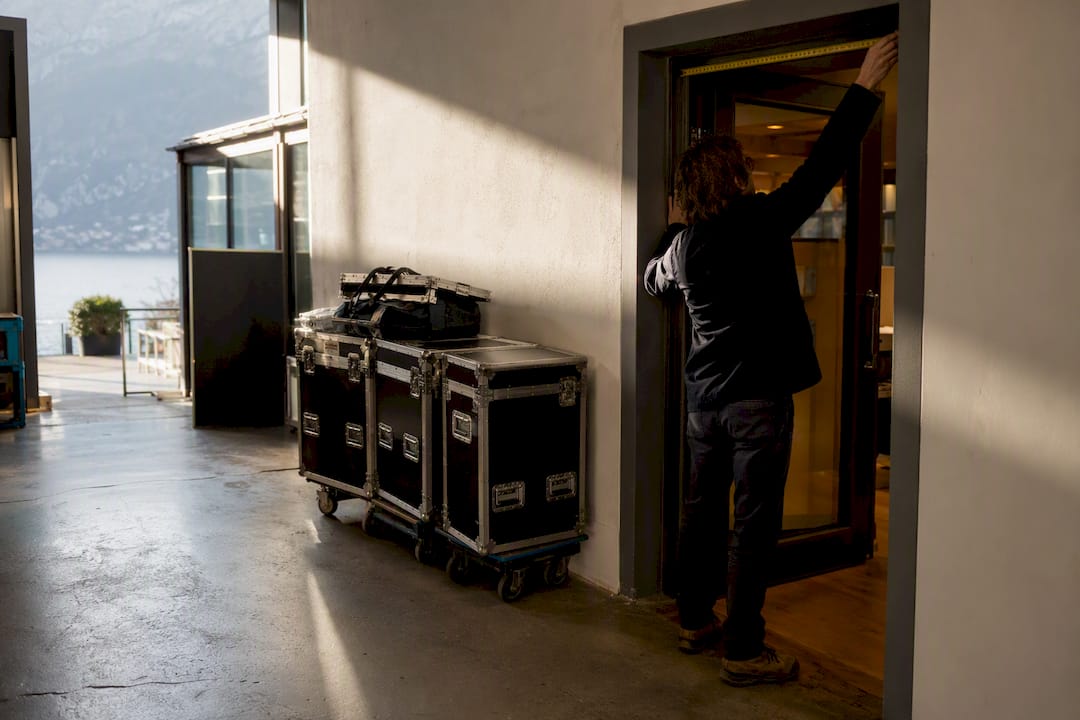
Loading access and truck clearance. Confirm the height of any garage barrier or covered drop-off before your grip truck shows up and can’t get through.
Secure, nearby parking. Production vehicles need a lot that’s close, monitored, and large enough for the fleet, not a shared lot three blocks away.
Ground-floor or service-entrance access. Carrying lighting kits through a lobby full of guests slows everyone down and irritates hotel management fast.
Auxiliary space. A meeting room doubles as a wardrobe or production office; some properties will hold one for the run of the shoot.
One dedicated hotel contact. A single person who knows your rooming list beats rotating front-desk staff who don’t.
On contract terms, push for room-only rates rather than bundled breakfast packages, since per diems usually cover meals anyway, and ask for block discounts tied to your room count. Industry guidance on film-friendly accommodation recommends exactly this structure: room-only pricing, single-occupancy en-suite as standard, and negotiated discounts scaled to block size. Flexible check-in and clear attrition terms round out the list.
Pro Tip: Ask for a walk-through with someone from your locations department before signing, not just a photo set from the hotel’s sales deck. Hallway width and elevator size matter more than the lobby ever will.
How Do You Source and Negotiate a Room Block?
Sourcing rooms for a Swiss shoot works best as a defined process, not a series of phone calls made under deadline pressure.
Start by defining your requirements on paper: room counts by category, exact duration, whether talent needs separate housing from crew, and how meals or per diems factor into the deal. Vague requests get vague quotes.
Issue RFPs early. Send requests to hotel group sales desks or route them through a housing coordinator who already has relationships built. For a 30-day shoot, start 60 to 90 days out; for anything past 90 days, add another month of lead time to account for negotiation and contract review.
Negotiate guarantees and attrition. Lock in the number of rooms the hotel guarantees, and understand what percentage you can release without penalty if the schedule shifts.
Price the concessions. Shuttle service, meeting space, and laundry access all carry real cash value; treat them as negotiating chips, not freebies.
Set a billing cadence. Weekly invoicing beats one lump sum at wrap, when nobody remembers which department booked the extra suite in week four.
The scale here is often bigger than first-time producers expect. A mid-budget series can contract 40 to 60 rooms across 90 days with meal buyouts layered on top of the room rate, and extended-stay properties tend to keep production rate cards on hand for exactly this kind of booking.
Once the block is running, protect it operationally:
Run daily rooming lists against actual occupancy.
Reconcile nightly counts against the contract during the shoot, not after wrap.
Flag no-shows or early departures immediately so attrition penalties don’t pile up unnoticed.
A production housing coordinator who works in Switzerland can carry most of this negotiation, and a well-run accommodation service for video production teams will already have current rate cards for the region you’re shooting in.
Which On-Site Logistics Checks Prevent Shoot-Day Delays?
Booking the block is only half the job. The property’s physical layout can quietly sabotage a shoot day if nobody checks it in advance.
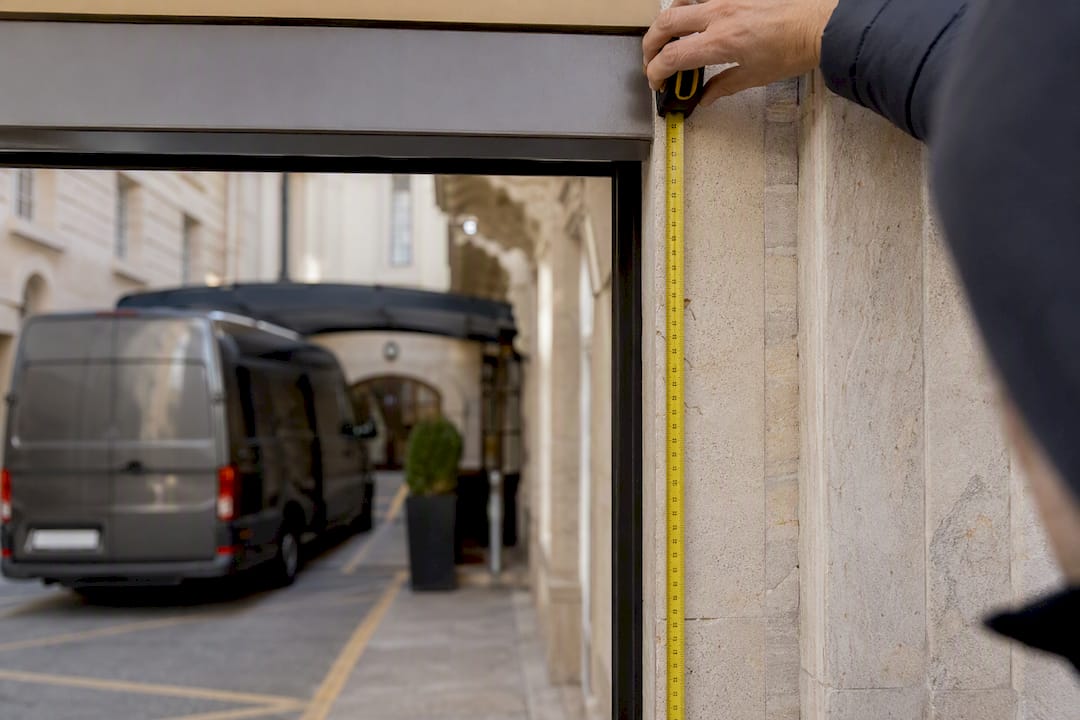
Vehicle access is the most common failure point. Measure your craft service truck and grip truck heights against every barrier, gate, or covered entrance at the hotel, and confirm an alternative parking arrangement exists if the primary lot won’t fit your fleet. A site visit or photoshoot of the loading area before contracting catches mis-measured clearances that would otherwise cause a costly reroute on day one.
Staging matters just as much. Confirm loading windows with hotel management, ask about secure storage for expensive kit overnight, and reserve a staging room if wardrobe and makeup need dedicated space near the rooms rather than a shared conference area two floors down.
When talent and crew share a property, security and privacy protocols need to be explicit before anyone checks in:
Request exclusive floor access or a separate wing for talent where the property allows it.
Confirm who at the hotel can authorize access changes on short notice.
Set daily shuttle timetables and luggage handling procedures with one named hotel point of contact.
Pro Tip: Walk the loading route yourself with a tape measure, even if the hotel swears the clearance is fine. Sales desks quote generously; trucks don’t care.
How Do You Plan a Multi-Hotel Strategy for a Full Crew?
Hotels rarely guarantee more than about 50% of their total room inventory to a single group, which means a full crew almost always needs a backup property lined up before contracts close, not after a shortfall appears.
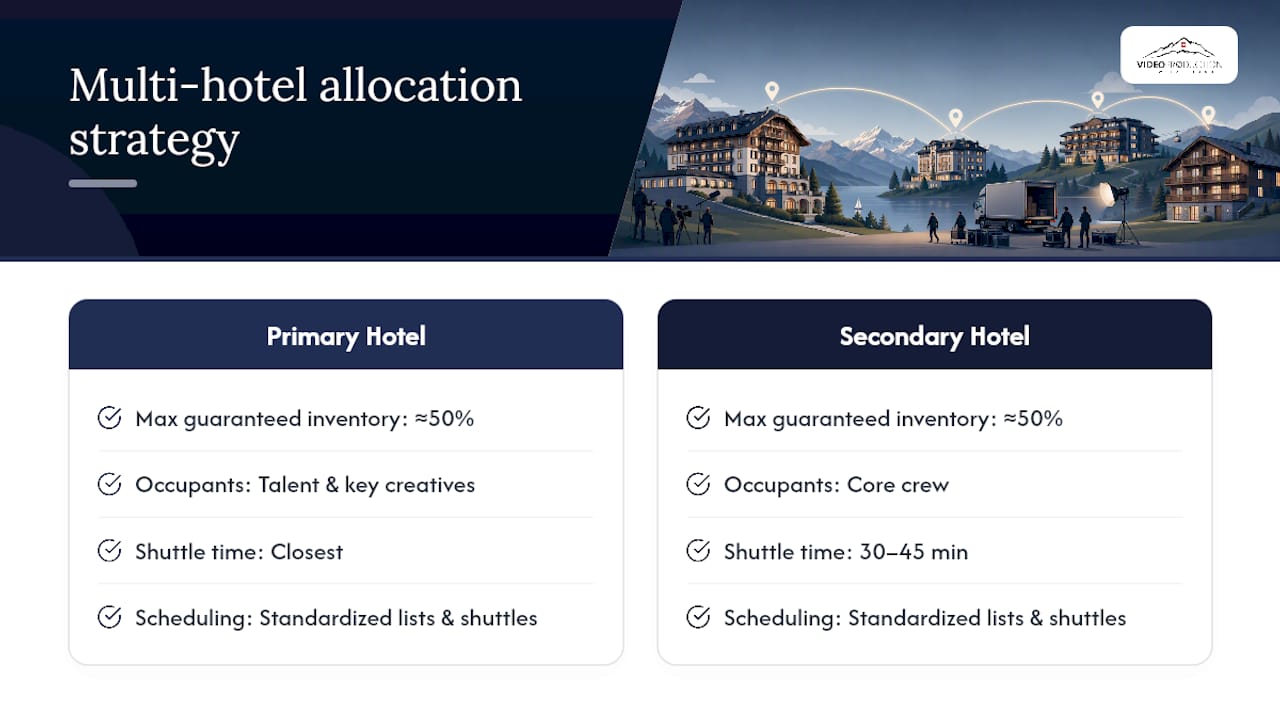
A workable split: house talent and key creatives at the closest or highest-tier property, and place core crew at an extended-stay hotel within 30 to 45 minutes. Standardize the rooming list format and shuttle schedule across both properties so call times don’t drift, and negotiate cross-property concessions (shared shuttle contracts, matched laundry rates) where the hotels are willing.
Your master agreement should define attrition separately for each property and require daily pick-up reconciliation across both, so a shortfall at one location doesn’t quietly become a billing dispute at wrap.
Why Partner With Local Production Housing Support?
Twenty years of booking Swiss shoots teaches you where the friction actually lives: not in finding a hotel, but in getting one that understands loading docks, odd call times, and last-minute room swaps without a fight.
Videoproductionswitzerland handles the parts that eat producer time: crew sourcing, permit handling, location scouting, transport coordination, and hotel contracting, all under one point of contact instead of five vendors who don’t talk to each other. The process runs in three stages: a free consultation, a needs assessment covering room counts and location proximity, then full sourcing and on-site coordination through wrap.
Local crew sourcing and vetted equipment rental
Permit handling across cantonal jurisdictions
Location scouting matched to your accommodation radius
Full on-location support for transport, hotel contracting, and daily logistics
Industry practice increasingly leans on exactly this kind of coordinator for complex or multi-site bookings, since a local partner reduces both risk and the administrative load on your own production office. Visit Videoproductionswitzerland to start the consultation before your prep window narrows.
What Permits or Regulations Affect Crew Accommodations in Switzerland?
Swiss accommodation rules for productions split across two layers: hotel registration requirements and cantonal filming permits, and the two rarely get coordinated by the same office.
Every guest staying in a Swiss hotel, including production crew, gets registered under standard identification requirements, which is routine but worth flagging to international crew members who aren’t used to handing over a passport at check-in. That part is administrative, not a production risk.
The bigger variable is filming permits, which are issued cantonally, sometimes municipally, and can carry conditions tied to crew presence near a location, noise curfews, or vehicle access windows that indirectly affect where crew needs to be housed. A permit that restricts loading hours near a historic district, for instance, can force you toward a hotel with earlier or later shuttle flexibility than you originally planned. Work permits for non-EU/EFTA crew members are a separate track entirely, handled through cantonal labor authorities, and timelines for those can run longer than your hotel negotiation.
None of this is exotic, but it does mean your accommodation plan and your permit plan need to be built together, not sequentially. A coordinator who has filed Swiss permits before will flag these overlaps early instead of after your block is already contracted.
Where Can You Find Reliable Crew Hotel Providers in Switzerland?
Three channels consistently produce workable leads for Swiss crew accommodation, and most productions end up using a combination of all three.
Group sales desks at extended-stay and business-focused hotel chains are the most direct route. These desks handle block contracts regularly and can usually turn around a proposal within a few business days if you give them firm dates and room counts up front. Independent guides like the crew accommodation resource published for Swiss shoots collect region-specific options worth cross-checking against your location map.
Production tech platforms built around long-stay coordination, such as POSTHIVE, are increasingly used to manage lodging logistics alongside broader workflow tools, which helps when a production is juggling multiple departments’ housing needs at once. Industry associations also publish useful context on what production-ready venues should offer; the American Film Association’s coverage of independent production trends is a reasonable starting point for understanding shifting expectations around production space.
The fastest route, though, remains a local coordinator who already has standing relationships with Swiss group sales desks. Cold outreach from an international production office rarely gets the same rate or the same flexibility on attrition terms.
Where Conventional Crew Hotel Advice Falls Short
Most accommodation checklists treat a crew hotel like a spreadsheet problem: count the rooms, compare the rates, sign the block. That framing misses where Swiss shoots actually lose time and money.
The real risk sits in the gap between what a sales desk promises and what the building can physically support on shoot day. A hotel can guarantee 50 rooms and still bottleneck your entire morning if nobody measured the garage clearance for your grip truck. Conventional advice treats vehicle access and permit timing as afterthoughts; on the ground, they’re the two things most likely to blow a call time.
What deserves priority instead: confirm physical logistics before you fall in love with a rate, and build your permit timeline alongside your accommodation timeline rather than after it. Producers who treat these as sequential steps consistently discover the mismatch too late to fix cheaply. A coordinator who has walked Swiss loading docks before is worth more than a marginally better room rate, because the rate doesn’t matter if the truck can’t get in.
Let Videoproductionswitzerland Handle Your Crew Hotel Booking
You’ve seen how many moving parts a Swiss crew hotel block actually involves: contract negotiation, vehicle clearance checks, permit timing, and a backup property in case one hotel can’t cover your full crew. Videoproductionswitzerland runs all of it under one point of contact instead of leaving your production office to chase five separate vendors.
[
The team handles accommodation sourcing, permit filings across Swiss cantons, transport coordination, and daily on-site logistics as one connected service, not a patchwork of subcontractors. That means your production manager gets a single status update instead of five inboxes to monitor during prep. Every engagement starts with a free consultation to map your room counts, shoot dates, and location radius, and you can review cost breakdowns for video production support before committing to a package. Reach out through Videoproductionswitzerland to get your room block and permit timeline moving in the same conversation.
Sources
Recommended
