
Crew Accommodation in Switzerland: A Practical Guide

What are the best crew accommodation options in Switzerland?
The best crew accommodation in Switzerland combines affordability, practical amenities, and locations that actually work for rotating schedules. Workers, contractors, and flight crews generally have three solid options to choose from:
Workers’ hotels like Workers’ Hotel St. Joseph: budget-friendly, purpose-built for long stays, with free parking and central access
Furnished apartments: move-in-ready units with utilities included, suited for crews staying 30 nights or longer
Shared crew housing: group-configured properties with multiple beds, ideal for larger project teams rotating on and off site
Switzerland crew lodging works best when it’s booked through a provider who understands operational needs, not just nightly rates. Flight crews need flexible check-in times. Contractors need truck parking and secure tool storage. Workers on multi-week assignments need reliable Wi-Fi and laundry access. Standard hotels rarely deliver all of that without friction. For production teams specifically, film crew accommodation tips can help you avoid the most common booking mistakes before you land.
What does Workers’ Hotel St. Joseph offer crew members?
Workers’ Hotel St. Joseph is one of the most recognized affordable crew housing options in Switzerland, built specifically for contractors and workers who need reliable, no-frills lodging for extended stays. The property keeps costs low without cutting the amenities that actually matter on a long assignment.
Key features include:
Free parking: critical for contractors arriving with vehicles or equipment
Central location: easy access to public transit and work sites
Clean, functional rooms: configured for single or shared occupancy depending on crew size
Communal areas: shared spaces for downtime between shifts
Long-term pricing: rates structured for weeks or months, not just overnight stays
Security is a consistent priority at crew-specific properties like this. Controlled entry, on-site staff, and clear house rules reduce the friction that comes with mixing transient guests and long-stay workers. For crews with rotating members, the ability to swap occupants without penalty or administrative chaos is a genuine operational advantage. Specialized workforce accommodation providers also manage invoicing in CHF or EUR and handle logistics like secure storage, which cuts overhead for project managers significantly.
How does location affect crew accommodation convenience in Switzerland?
Location is where affordable crew housing either earns its value or costs you time every single day. Switzerland’s transport network is excellent, but proximity to airports, rail hubs, and work sites still separates a good crew stay from an exhausting one.
Key location factors to evaluate:
Airport proximity: crews based near Zurich Airport or Geneva Airport cut transit time on early departures and late arrivals
Rail and tram access: Switzerland’s public transit is precise, so a property within walking distance of a main station removes the need for rental cars
Nearby essential services: grocery stores, pharmacies, and medical centers within a short walk reduce daily friction for crews on tight schedules
Neighborhood safety: crew members often return late after long shoot days or shifts; well-lit, low-crime neighborhoods matter
Accessibility features: ramps, elevators, and accessible bathrooms are legally required in newer Swiss properties and should be confirmed before booking for any crew member with mobility needs
Switzerland’s rental market varies sharply by canton. Zurich and Geneva are the most expensive and competitive for short-term housing, while cities like Basel, Bern, and Lugano offer better value with comparable transit access. For crews assigned to pharmaceutical corridors or financial districts, properties in Zug or Basel often sit closer to the actual work site than anything in central Zurich.
Pro Tip: Book accommodation based on your first shoot day’s location, not the city center. A 20-minute transit advantage every morning adds up fast across a two-week assignment.
How do you book crew accommodation and what do guests say?
Booking Switzerland crew lodging directly through the property or a managed accommodation provider is almost always faster than going through a general travel platform. Most crew-specific properties accept group inquiries by phone or email and can configure rooms, parking, and billing to match your project’s structure.
A straightforward booking process looks like this:
Contact the property directly with crew size, arrival date, and expected duration
Confirm room configuration, parking needs, and any accessibility requirements
Request a group invoice in CHF or EUR for clean accounting
Clarify the modification and cancellation policy before signing, especially for rotating crews
Guest feedback for crew-specific accommodations consistently highlights three deciding factors: affordability relative to standard hotels, on-site security, and staff who understand the irregular hours that come with field work. One pattern that appears repeatedly in guest reviews is the value of having a single point of contact who can handle last-minute crew swaps without charging change fees.
For production teams managing accommodation alongside permits and logistics, accommodation services for video production teams outlines how consolidated booking reduces administrative overhead on complex shoots.
What Swiss regulations affect short-term crew stays?
Switzerland’s posted worker rules catch a lot of crews off guard. The rule allows foreign employees to work for up to 8 days per calendar year in Switzerland without a work permit, but registration through the State Secretariat for Migration is mandatory if work exceeds that, with notification required at least 8 calendar days before the assignment starts.
Work start date, not entry date: the 8-day calculation is based on when work actually begins, so contracts and site addresses must be confirmed before booking travel
Sector exemptions do not apply to construction or hospitality: these industries must register from Day 1, with no 8-day buffer
Late notifications carry real consequences: sanctions can include work stoppage and administrative penalties, plus a higher likelihood of inspection
90-day annual cap: the notification procedure covers up to 90 working days per calendar year per worker and per company
Pro Tip: Build the 8-day lead time into your contracting process. A signed assignment letter, confirmed site address, and defined scope should exist before you book flights, not after.
Which accommodation types suit different crew sizes and stay lengths?
Crew size and assignment length are the two variables that determine which type of Switzerland crew lodging actually makes sense. A solo contractor on a two-week assignment has completely different needs from a 20-person production team rotating over three months.
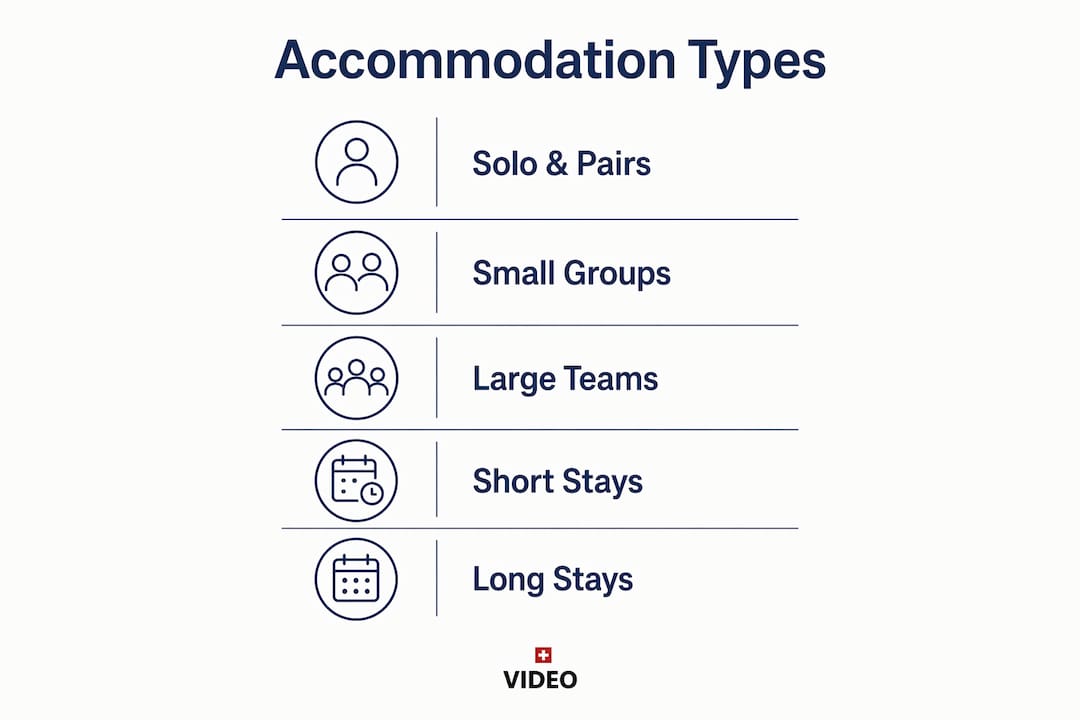
For solo workers and pairs, a furnished studio or single room in a workers’ hotel covers the basics without overpaying for space. For small crews of 3–8, a furnished apartment with multiple bedrooms consolidates the group under one roof, simplifies logistics, and usually costs less per person than individual hotel rooms. For large crews of 10 or more, purpose-built workforce housing with bed-level management, shared kitchens, and on-site parking is the only format that scales without creating administrative chaos.
Stay length shapes the contract type as much as the property type. Short assignments under two weeks work fine with nightly or weekly rates. Anything beyond 30 days should be contracted at a monthly rate in the company name, with CHF or EUR invoicing for clean accounting.
What does crew accommodation typically cost in Switzerland?
Switzerland is expensive, and crew housing is no exception. The national average net rent across all apartment sizes was CHF 1,485 per month at the end of 2024. In Zurich and Geneva, a one-bedroom equivalent runs CHF 1,900–2,400 per month, while more affordable cities like Bern, Basel, and Lugano offer lower rents for comparable spaces.
For crew-specific housing, the per-person nightly rate at a workers’ hotel typically runs below what a standard business hotel charges, especially when parking and utilities are included. Furnished apartments on 30-plus-day contracts often cost 20–30% less per night than equivalent short-stay rates. Budget-conscious crews should also factor in the video production costs that stack alongside accommodation, since housing is rarely the only line item that surprises international teams.
How do accommodation options compare across different budgets?
Budget shapes your options, but it doesn’t have to limit your crew’s comfort or operational efficiency.
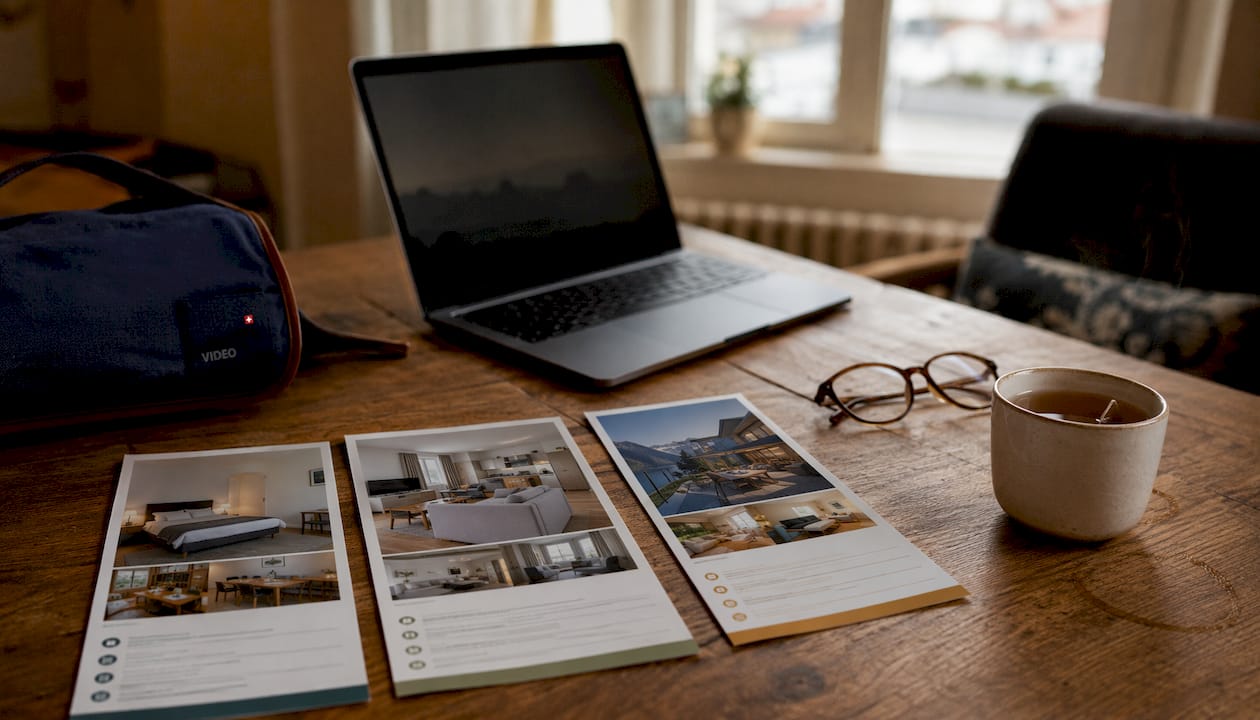
Budget tier: Workers’ hotels and shared crew housing in mid-sized Swiss cities like Bern, St. Gallen, or Lugano. Lower per-person costs, free parking common, utilities included. Best for contractors and tradespeople on extended assignments.
Mid-range tier: Furnished apartments in Basel, Lausanne, or Winterthur. More privacy, full kitchen access, and monthly invoicing in the company name. Suits small production crews and rotating technical staff.
Premium tier: Managed corporate housing in Zurich or Geneva. Arrival coordination, flexible swap logistics, and multi-city portfolio management under one account team. Suited to large international crews with complex rotation schedules.
The gap between budget and premium is real, but the right choice depends on your work location, not your preference. A premium property in central Zurich is a poor value if your shoot site is 40 minutes away in Winterthur.
How should you choose accommodation based on your work location and schedule?
Start with your work site address, not the city name. Switzerland’s geography means that “Zurich” covers everything from the airport in Kloten to neighborhoods 30 minutes by tram from the center. Pinning your accommodation to the actual job site address, then mapping transit options from there, saves more time than any amenity upgrade.
Schedule matters just as much. Flight crews with early departures need properties within 15 minutes of the airport, full stop. Contractors on rotating shifts need 24-hour access and no noise restrictions on late arrivals. Production crews with gear need loading access and secure overnight parking. Match the property’s operational reality to your schedule before you commit to a booking.
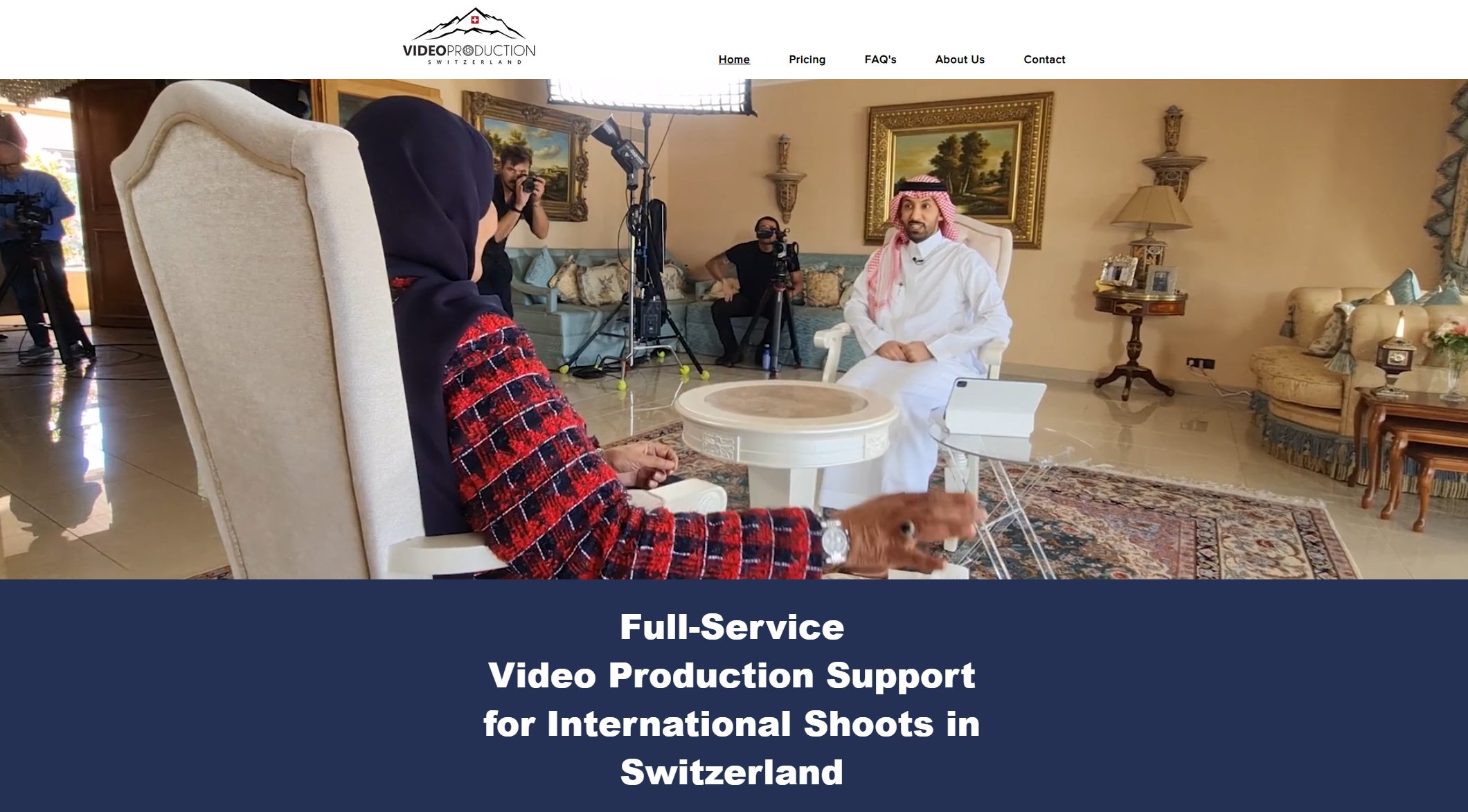
For international teams managing accommodation alongside permits, gear, and logistics, working with a local partner who handles all of it under one roof removes the juggling entirely. Videoproductionswitzerland coordinates full production support for international crews in Switzerland, including accommodation sourcing, permit handling, and on-the-ground logistics, so your team stays focused on the work.
[
Key Takeaways
The most reliable crew accommodation in Switzerland pairs affordable, purpose-built lodging with locations matched to your actual work site and schedule.
Point | Details |
Workers’ Hotel St. Joseph | Offers free parking, central access, and long-term rates built for contractors and workers. |
Swiss 8-day rule | Foreign employees can work up to 8 days per calendar year without a work permit, with registration required for work beyond that. Notify via Easygov.ch at least 8 calendar days before work starts; construction and hospitality crews must register from Day 1. |
Rental costs by city | National average net rent was CHF 1,485/month in 2024; Zurich and Geneva run CHF 1,900–2,400 for a one-bedroom equivalent. |
Crew size determines format | Solo workers suit hotel rooms; groups of 10-plus need purpose-built workforce housing with bed-level management. |
Location over city name | Book based on your work site address and schedule, not the nearest major city center. |
Recommended
