
Best Company to Transfer 8mm Film to Digital: Complete Guide


Choosing the right 8mm film to digital service is not just a nostalgic project for many American families. With over 10 million American households still holding reels of vintage film, preserving these memories professionally matters more than ever. This step-by-step guide helps you compare leading services, understand essential technology, and secure the highest quality digital preservation for your treasured family history.
Table of Contents
Quick Summary
Key Insight | Explanation |
1. Research Film Conversion Services | Investigate multiple providers, focusing on reviews and comparisons to find a reputable conversion service. |
2. Assess Technology and Quality | Evaluate the provider’s technologies and capabilities, including scanning resolution and restoration features, before choosing a service. |
3. Prepare Your Film Properly | Inspect and clean your film reels carefully to ensure they arrive in the best condition for conversion. |
4. Initiate the Order Smoothly | Contact your chosen service for a quote and follow their submission guidelines closely to avoid any issues. |
5. Verify and Archive Digital Files | After conversion, check the digital files for quality and create multiple backups to protect your memories. |
Step 1: Research Top 8mm Film to Digital Companies
Researching the best 8mm film to digital conversion services requires strategic investigation and careful comparison. Your goal is to find a reliable provider who can transform your precious analog memories into high-quality digital formats while preserving image integrity and historical details.
Start by exploring comprehensive review platforms and specialized film conversion websites. Industry experts have compiled detailed guides evaluating leading 8mm film to digital conversion services that can streamline your research process. Look for companies with transparent pricing, positive customer reviews, sample conversion work, and technological capabilities that match your specific film preservation needs. Key factors to assess include scanning resolution, file format options, restoration capabilities, turnaround time, and pricing structures.
Compare at least 3-5 professional services before making a final decision. Request sample conversions when possible and carefully review their technical specifications. Check whether they specialize in vintage film formats and offer different quality tiers to match your budget and preservation requirements.
Professional tip: Request digital sample previews from multiple providers to directly compare conversion quality before committing to a full project. This allows you to assess color accuracy, image sharpness, and overall preservation technique without risking your entire film collection.
Step 2: Evaluate Service Options and Technology
Evaluating 8mm film to digital conversion services requires a comprehensive understanding of available technologies and service options. Your primary goal is to identify a provider that can deliver high-quality digital preservation matching your specific film restoration needs.
Advanced film transfer technologies now offer multiple options for converting vintage film formats with varying levels of complexity and quality. Professional services typically utilize specialized film scanners that capture high resolution digital images while minimizing physical film damage. Key technological considerations include scanning resolution (typically ranging from standard definition to 4K), frame stabilization capabilities, color correction technologies, and digital file format options such as MP4, MOV, or AVI.
When comparing service options, assess the provider’s technical expertise by reviewing their equipment, sample conversion work, and specialized film handling processes. Some services offer additional restoration features like dust and scratch removal, color enhancement, and frame rate stabilization. Request detailed information about their scanning methodologies, preservation techniques, and the specific equipment used to ensure your vintage films receive professional grade treatment.
Professional tip: Always request a sample conversion of a short film segment before committing to a full project. This allows you to directly evaluate the service’s image quality, color accuracy, and digital preservation capabilities without risking your entire film collection.
Here’s a comparison of common digital file formats offered for 8mm film transfers:
File Format | Device Compatibility | Typical Use Cases |
MP4 | Most devices, PCs, mobile | Home viewing, sharing online |
MOV | Apple devices, Mac software | Professional editing, archiving |
AVI | Older Windows systems | Basic playback, legacy systems |
ProRes | High-end editing suites | Advanced editing, preservation |
Step 3: Prepare Your 8mm Film for Submission
Successfully transferring your 8mm film to digital requires careful preparation and meticulous handling. Your primary objective is to ensure your film arrives in optimal condition for professional conversion, maximizing the potential for high-quality digital preservation.
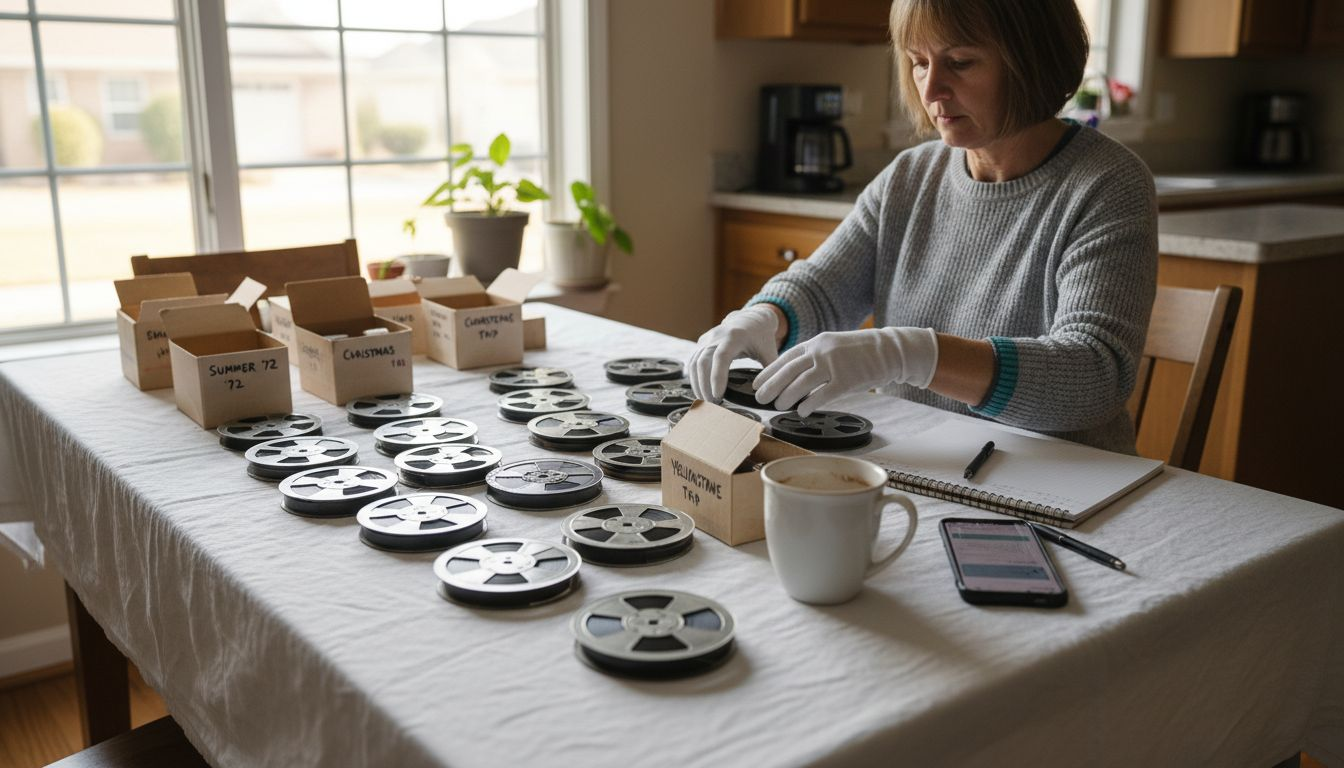
Comprehensive film preparation involves several critical steps to protect and preserve your vintage film reels, beginning with careful inspection and cleaning. Start by examining each film reel for signs of physical damage such as brittleness, mold, or tape residue. Gently remove any dust or debris using specialized film cleaning tools or soft microfiber cloths designed specifically for archival film preservation. Be extremely cautious during handling to prevent additional scratching or tearing.
Organize your film reels systematically before submission by creating a detailed inventory. Sort films chronologically or by event, and consider creating a protective container or archival sleeve for each reel. Note any specific characteristics or unique identifiers that might help the conversion service understand the historical context of your films. Check that film edges are intact and that the film stock has not degraded significantly, which could impact the digital transfer quality.
Professional tip: Always wear clean white cotton gloves when handling vintage film to prevent natural skin oils from causing additional damage to the delicate film surface.
Step 4: Initiate the Transfer Order with Preferred Company
Starting your 8mm film digital conversion process requires careful communication and strategic order placement. Your goal is to ensure a smooth transition from analog to digital preservation with minimal risk to your precious memories.
Comprehensive film transfer services typically offer detailed online ordering processes designed to streamline your submission, allowing you to easily initiate your project. Begin by contacting your chosen conversion service and requesting a detailed quote based on the total number of film reels and desired digital output format. Most professional services provide multiple options including standard definition, high definition, and 4K digital transfers. Carefully review their submission guidelines and prepare all necessary documentation about your film collection.
Prepare a comprehensive inventory of your film reels before submission, including specific details about each reel such as approximate length, condition, and estimated year of recording. Request a secure shipping package from the conversion service and follow their specific packaging instructions to protect your films during transit. Many services offer prepaid shipping labels and specialized protective containers to ensure your vintage films arrive safely at their digital conversion facility.
Professional tip: Take clear photographs of your film reels before shipping as a personal record and to help the conversion service understand the specific characteristics of your collection.
Step 5: Verify Digital Results and Archive Safely
Successfully converting your 8mm film to digital is just the first step in preserving your precious memories. Your ultimate goal is to ensure the highest quality digital preservation and create a long-term archival strategy that protects these irreplaceable historical recordings.
Comprehensive digital archiving requires meticulous verification and strategic storage techniques to maintain the integrity of your converted film memories, beginning with a thorough quality check of the digital files. Immediately after receiving your digital transfer, review each file carefully on multiple devices and screens to confirm image quality, color accuracy, and sound clarity. Check for any potential conversion artifacts, frame skipping, or unexpected color shifts that might have occurred during the digitization process. Create multiple backup copies of your digital files using different storage mediums such as external hard drives, cloud storage services, and archival grade optical discs.
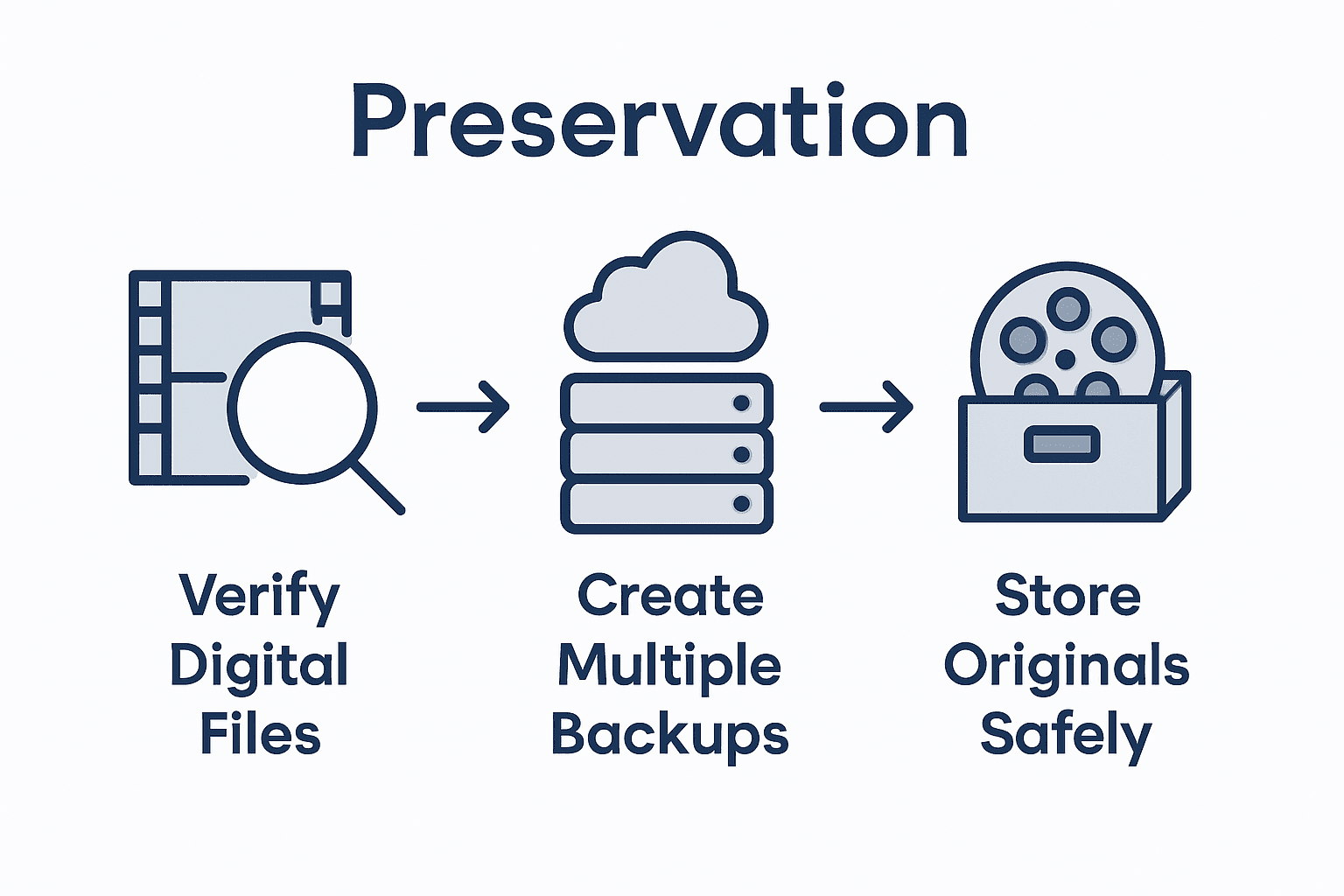
Develop a systematic digital preservation strategy that includes regular file migration and backup rotation. Store your digital files in cool, dry environments with minimal exposure to direct sunlight or magnetic interference. Use professional grade storage media designed for long term digital archiving, and consider creating redundant backup systems that keep your memories safe across multiple physical and cloud storage platforms. Regularly verify the integrity of your digital files by performing periodic checks and migrations to ensure continued accessibility.
Professional tip: Create at least three independent backup copies of your digitized films stored in different physical locations to maximize preservation chances and protect against potential data loss.
Below is a quick reference guide to digital archiving strategies for your newly converted 8mm films:
Strategy | Benefits | Recommended Frequency |
Multiple Backups | Reduces risk of data loss | Maintain 3+ separate copies |
Cloud Storage | Remote access and disaster recovery | Update with each new transfer |
External Hard Drives | High capacity, rapid access | Replace every 5 years |
Regular File Checks | Ensures long-term file integrity | Test files annually |
Preserve Your Precious 8mm Films with Trusted Professional Support
Transferring vintage 8mm film to digital can be a challenging and delicate process. You want to protect every frame while ensuring outstanding image quality and color accuracy. At the same time, managing logistics and technical details may feel overwhelming, especially if you are preparing significant film collections for professional conversion. Common concerns include safely handling fragile reels, choosing the right file formats, and verifying digital results without risking your irreplaceable memories.
Video Production Switzerland offers expert logistical and project management services tailored for complex film and video productions in Switzerland. With over 20 years of experience coordinating local crews, sourcing trusted equipment, and ensuring smooth execution, they bring the reliability needed to support your 8mm film digitization journey. Whether you need guidance on preparing your reels for shipment or assistance coordinating with professional conversion services, their client-centric approach helps reduce stress and maximize quality outcomes. Start with a free consultation to assess your needs and secure seamless handling of your valuable film assets.
Learn more about our comprehensive video production solutions and discover how expert local support can turn your 8mm film transfer project into a successful, worry-free experience.
Ready to protect and preserve your cherished 8mm film memories with professional expertise? Visit Video Production Switzerland today to begin your journey toward flawless digital preservation and experienced local support.
Frequently Asked Questions
What should I look for when choosing a company to transfer 8mm film to digital?
Look for companies that offer transparent pricing, positive customer reviews, and advanced scanning technologies. Compare at least 3-5 services for criteria such as image quality, turnaround time, and restoration options.
How can I prepare my 8mm films for digital conversion?
To prepare your films, inspect and clean each reel carefully, removing dust or debris. Organize the reels systematically and note any specific characteristics to help the conversion service understand your films’ historical context.
What file formats should I consider for my digitized 8mm films?
Common file formats include MP4 for easy home viewing, MOV for professional editing, and AVI for basic playback. Choose a format that best meets your future viewing and editing needs.
How do I verify the quality of my digital transfer after conversion?
Check each digital file for image quality, color accuracy, and sound clarity on multiple devices. Perform this verification immediately upon receiving your files to ensure everything meets your expectations.
What are the best practices for archiving my newly digitized 8mm films?
Develop a digital preservation strategy that includes multiple backups stored in different locations. Perform regular integrity checks on your files to ensure long-term accessibility and avoid potential data loss.
How long does it typically take to receive the digitized files after placing an order?
Turnaround times can vary by company, but expect to receive your digital files within 30-60 days after your order is processed. Make sure to ask for the specific timeframe when you place your order.
Recommended
